spoon
CN → US| HS Code | Tariff Rate | Origin | Destination | Doc |
|---|---|---|---|---|
| 3924104000 | 13.4% | CN | US | Official Doc |
| 9016006000 | 38.3% | CN | US | Official Doc |
| 9016002000 | 38.9% | CN | US | Official Doc |
Product Images
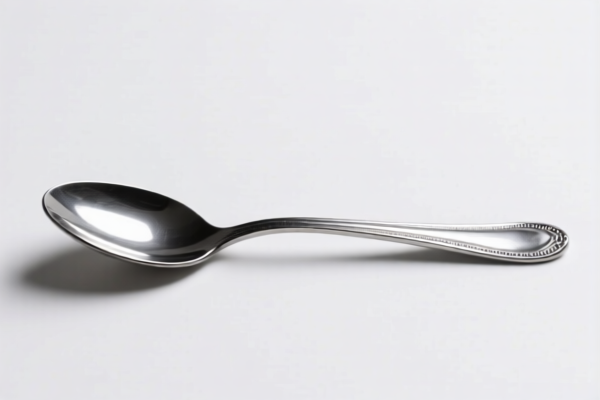
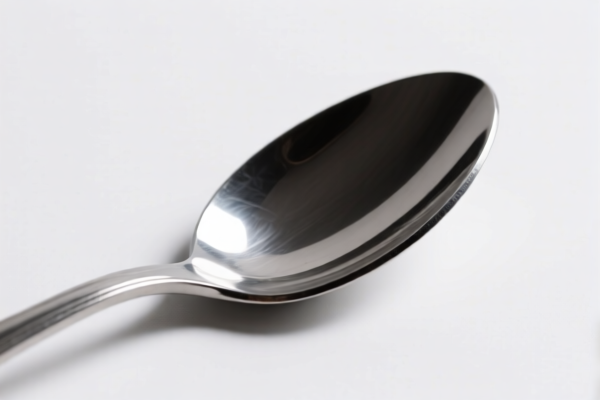
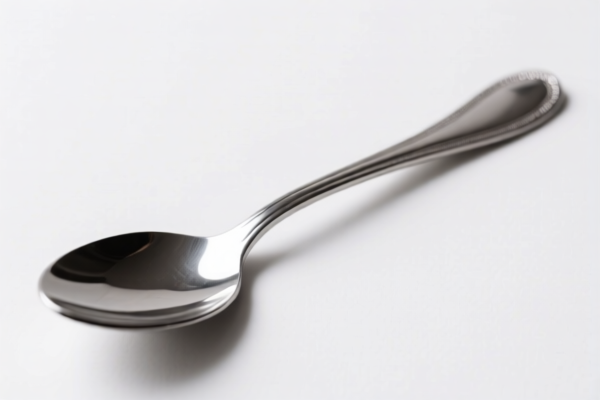

AI Analysis
🥄 Spoon (Spoon Scales & Spatulas)
🌐 HS Code Reference & Customs Clearance Guide | 2026 Latest Tariff Analysis | Professional-Level Strategy
📌 I. Product Definition: What Kind of "Spoon" Are We Talking About?
In international trade, the term "Spoon" is deceptively simple. It spans two vastly different categories: Consumer Tableware and Precision Measuring Instruments. The difference lies in function and material.
Category A: Spoon Scales / Spoon Scales (Kitchen Gadgets)
Digital devices shaped like a spoon or spatula, equipped with weight sensors, LCD displays, and batteries. Used for baking, weighing ingredients, or jewelry.
Category B: Plastic/Silicone Spoons (Tableware)
Simple utensils made of plastic or silicone, used for serving or eating. No electronic components, no weighing function.
⚠️ Critical Distinction:
- If it has batteries, sensors, and a digital display → It is a Scale/Weighing Device (HS 9016).
- If it is just a piece of plastic/silicone → It is Tableware (HS 3924).
- Misclassification Risk: Declaring a Spoon Scale as Tableware to avoid Section 301 tariffs is fraud and will result in severe penalties.
📦 II. HS Code Classification Details (2026 Latest Tariff Authority)
| HS Code | Product Description | Application Scenario | Key Feature |
|---|---|---|---|
3924.10.40.00 |
Plastic Tableware: Spoons & Forks | Plastic/Silicone serving spoons, baby spoons, kitchen utensils. | ❌ No electronics, no weighing. |
9016.00.60.00 |
Spoon Scales: Sensitivity ≥ 5cg | Baking scales, jewelry scales shaped like spoons. | ✅ High precision mechanical/electronic hybrid. |
9016.00.20.00 |
Electronic Scales: Other | Spoon scales with complex electronic induction, digital LCD, auto-tare. | ✅ Full electronic sensing function. |
🔍 Key Reminder:
- "Spoon Scale" is NOT tableware. Even if it looks like a kitchen tool, its primary function is measurement.
- If the scale has digital display + battery + sensor, it generally falls under 9016.00.20.00 (Electronic).
- If it is a mechanical balance or has very specific sensitivity criteria, it may fall under 9016.00.60.00.
💰 III. 2026 Latest Tariff Rate Breakdown (Including Surcharges)
✅ Applicable Country: United States (US)
✅ Origin: China (CN)
✅ Effective Date: Current Section 301 & IEEPA provisions apply
🎯 1. 3924.10.40.00 —— Plastic Tableware (SPOONS ONLY)
| Item | Content |
|---|---|
| Base Tariff | 3.4% |
| Section 301 Surcharge | 0.0% (Excluded/Not applied in this specific dataset entry) |
| IEEPA 122 Clause | +10% |
| Total Effective Rate | 13.4% |
| Tax Calculation | CIF Value × 13.4% |
| De Minimis Eligibility | ⚠️ Yes (for shipments <$800, but subject to inspection) |
| Legal Basis Path | Base Tariff: 3.4% + IEEPA 122 Clause: 10% |
📌 Interpretation:
- This is the lowest tax burden option.
- ONLY applies to non-electronic plastic/silicone spoons.
- Warning: If you misdeclare a Spoon Scale as "Plastic Spoon" to get 13.4%, Customs may classify it as 9016 (38%+) and impose penalties.
🎯 2. 9016.00.60.00 —— Spoon Scales (Sensitivity ≥ 5cg)
| Item | Content |
|---|---|
| Base Tariff | 3.3% |
| Section 301 Surcharge | +25.0% |
| IEEPA 122 Clause | +10% |
| Total Effective Rate | 38.3% |
| Tax Calculation | CIF Value × 38.3% |
| De Minimis Eligibility | ❌ No (Subject to strict scrutiny) |
| Legal Basis Path | Base: 3.3% + Sec 301: 25% + IEEPA: 10% |
📌 Interpretation:
- Applies to spoon scales with high precision (sensitivity 5 centigrams or better).
- High tax burden due to Section 301 tariffs on Chinese electronics/mechanical goods.
🎯 3. 9016.00.20.00 —— Electronic Spoon Scales
| Item | Content |
|---|---|
| Base Tariff | 3.9% |
| Section 301 Surcharge | +25.0% |
| IEEPA 122 Clause | +10% |
| Total Effective Rate | 38.9% |
| Tax Calculation | CIF Value × 38.9% |
| De Minimis Eligibility | ❌ No |
| Legal Basis Path | Base: 3.9% + Sec 301: 25% + IEEPA: 10% |
📌 Interpretation:
- Most common category for digital baking spoon scales.
- Highest tax rate in this dataset.
- Includes scales with auto-tare, LCD screen, and battery.
🛠️ IV. Customs Clearance Practical Advice (Real-World Pitfall Guide)
✅ 1. Documentation Checklist (Must-Haves)
| Document | Required | Description |
|---|---|---|
| ✅ Product Specs Sheet | ✔️ | Must clearly state: Is it a scale? Does it have sensors? |
| ✅ Circuit Diagram/Schematic | ✔️ | If claiming 9016, provide proof of electronic components. |
| ✅ Photos (Front & Back) | ✔️ | Show buttons, display, battery compartment (if any). |
| ✅ Commercial Invoice | ✔️ | Description must match HS Code exactly (e.g., "Digital Spoon Scale"). |
| ✅ Packing List | ✔️ | Item weight, dimensions, material (Plastic vs. Electronic). |
✅ 2. Declaration Strategy (Key Mantra)
🔥 "Look Like a Spoon? Check the Brain! No Brain = 3924, Has Brain = 9016!"
| Scenario | Correct HS Code | Incorrect Action | Consequence |
|---|---|---|---|
| Silicone Spatula/Spoon | 3924.10.40.00 |
Declare as Scale | Unnecessary 25% Sec 301 tax + Audit risk |
| Digital Spoon Scale | 9016.00.20.00 |
Declare as Plastic Spoon | Customs Fraud: Back taxes + Penalties + Seizure |
| Mechanical Spoon Balance | 9016.00.60.00 |
Declare as Scale | Correct, but verify sensitivity claim |
✅ 3. Special Cases & Solutions
| Situation | Handling Advice |
|---|---|
| Hybrid Products (e.g., Spoon + Measuring Cups in One Pack) | Declare Separately. Spoons as 3924, Cups as 3924 or 9016 depending on function. Do NOT bundle into one line item if functions differ. |
| "Smart" Spoon (App-connected, Nutrient Analysis) | Definitely 9016 (Electronic). Do not misclassify as tableware. |
| Sample vs. Commercial | Samples still subject to duty. Use De Minimis (<$800) only if eligible and compliant. |
| Origin Shift | If sourced from Vietnam/Malaysia, check for Section 301 Exclusions. May reduce Sec 301 (25%) to 0%, lowering total tax significantly. |
🌍 V. Global Market Comparison (2026)
| Country/Region | Recommended HS Code | Tariff (China Origin) | Certification | Notes |
|---|---|---|---|---|
| 🇺🇸 USA | 9016.00.20.00 |
38.9% | FCC + FDA (if food contact) | High tariff barrier for scales. |
| 🇺🇸 USA | 3924.10.40.00 |
13.4% | FDA + LFGB | Low tariff for simple plastic spoons. |
| 🇪🇺 EU | 9016.00.20.00 |
~4-6% + VAT | CE + RoHS | No Section 301 equivalent. |
| 🇨🇳 China | 9016.00.20.00 |
8-10% | N/A | Import tax for domestic distribution. |
| 🇬🇧 UK | 9016.00.20.00 |
~5% + VAT | UKCA | Post-Brexit rules apply. |
📌 Conclusion:
- USA is the most challenging market due to Section 301 tariffs.
- Differentiation is Key: Ensure your product description matches the physical reality. A "Scale" is a "Scale," no matter how spoon-shaped it is.
📌 VI. Common Errors & Pitfalls (Blood & Tears)
❌ Error 1: Calling a Digital Spoon Scale a "Plastic Spoon" to avoid 25% Sec 301 tax.
👉 Result: Customs detects sensor/battery → Re-classifies to 9016 → Back taxes + 25% penalty + Possible seizure.
❌ Error 2: Declaring a Plastic Spoon as a "Scale" when it has no function.
👉 Result: Unnecessary tax increase (from 13.4% to 38.9%) + Delayed clearance for "proof of function."
❌ Error 3: Vague Description: "Spoon."
👉 Result: Customs Officer uses their best judgment → Often defaults to 3924 for low-value items, but risks audit if value is high. Be Specific.
✅ Correct Declaration Examples:
- ✅
"Plastic Kitchen Spoon, Silicone Head, No Electronics, Model ABC"→3924.10.40.00- ✅
"Digital Electronic Spoon Scale, 500g Capacity, LCD Display, Battery Operated, Model XYZ"→9016.00.20.00
🎯 VII. Conclusion: Precision in Classification Saves Money!
🎯 Remember the Mantra:
🔹 "No Electronics? 3924 (13.4%). Has Electronics? 9016 (38.9%)."
🔹 "Don't Lie About Function! Customs Checks Sensors."
🔹 "13.4% vs 38.9%: A 25.5% Difference, Every Time!"
📌 Pro Tip:
If you are selling Spoon Scales to the US, consider:
1. Sourcing from Non-China Origins (Vietnam, Thailand) to avoid Section 301 (25%).
2. Pre-Ruling: Apply for a Customs Ruling to confirm your HS Code classification.
3. Value Engineering: If the scale has minor features, can it be simplified to a non-electronic version? (Unlikely for "Digital" scales, but possible for "Mechanical" ones).
📣 Take Action Now:
📞 Audit Your Product: Is it a Spoon or a Scale?
📄 Update Your Invoice: Be specific.
🚀 Clear Your Goods: Avoid the 38.9% trap if possible, or prepare for it if it’s a Scale.
✨ Professional Customs Clearance Starts with Accurate Classification!
💼 Your Profit Margin Depends on the Correct HS Code!
Customer Reviews
About HS Code Classification
The Harmonized System (HS) is an internationally standardized nomenclature developed by the World Customs Organization (WCO) to classify traded products. Over 200 countries use the HS system as the basis for customs tariffs, trade statistics, and import/export regulations.
Each HS code follows a hierarchical structure:
- Chapter (2 digits) — Broad category of goods (e.g., Chapter 84: Machinery and Mechanical Appliances)
- Heading (4 digits) — More specific grouping within the chapter
- Subheading (6 digits) — Internationally standardized breakdown, used by all WCO member countries
- National subdivisions (8-10 digits) — Country-specific extensions for further classification, such as US HTSUS 10-digit codes
Correct HS code classification is essential for smooth customs clearance, accurate duty payment, and compliance with trade regulations. Misclassification can lead to customs delays, overpayment of duties, or penalties.
When importing from CN to US, the applicable tariff rates may include:
- Most-Favored-Nation (MFN) rate — The standard duty rate applied to WTO members
- General rate — Applied to countries without trade agreements
- Trade remedy duties — Additional tariffs such as Section 301 (anti-dumping), Section 232 (national security), or countervailing duties
The information provided on this page is for reference purposes only. For official classification, please consult with your local customs authority or a licensed customs broker.