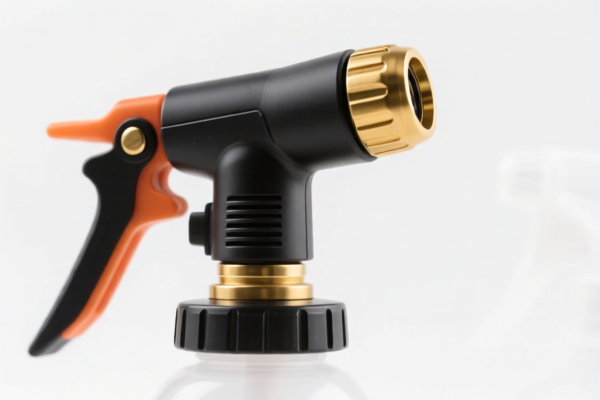
spray nozzle
CN → US| HS Code | Tariff Rate | Origin | Destination | Doc |
|---|---|---|---|---|
| 8481809050 | 37.0% | CN | US | Official Doc |
| 8481909085 | 85.0% | CN | US | Official Doc |
| 8421290005 | 35.0% | CN | US | Official Doc |
| 8424201000 | 37.9% | CN | US | Official Doc |
| 8424209000 | 35.0% | CN | US | Official Doc |
Product Images



AI Analysis
💧 Spray Nozzles (Fluid Injection Devices)
🌐 HS Code Reference & Clearance Guide | 2026 Latest Tariff Analysis | Professional Customs Strategy
📌 I. Product Definition & Classification: What Exactly Is a "Spray Nozzle"?
A Spray Nozzle is a precision device used to atomize or direct fluid flow (fuel, chemicals, water, etc.). In international trade, its classification depends entirely on its primary function and structural integration. It is generally categorized into two main streams:
1. Fuel System Components (Valves/Injectors):
Nozzles specifically designed for fuel injection systems (e.g., diesel engine injectors). These function as valves that control the precise metering and spraying of fuel.
2. Spraying Equipment & Nozzles (Sprayers):
Nozzles used for agricultural, industrial cleaning, painting, or general fluid distribution. These are often classified as spraying appliances or their parts.
⚠️ Key Classification Distinction:
- If the nozzle is an integral part of a fuel injection system (controlling fuel flow like a valve) →归入 Chapter 8481 (Valves) or 8484 (Parts) depending on specificity.
- If the nozzle is a standalone spraying device (like a garden sprayer nozzle or industrial spray gun tip) →归入 Chapter 8424 (Spraying Appliances).
- If the nozzle is a generic part for a valve or sprayer without specific function →归入 Generic Parts codes.
📦 II. HS Code Classification Details (2026 Latest Tariff Authority Mapping)
Based on the provided data, here are the 5 specific HS Codes applicable to Spray Nozzles, along with their logical justification and tax implications.
| HS Code | Product Description | Classification Logic | Total Tax Rate | Tax Breakdown |
|---|---|---|---|---|
8481.80.90.50 |
Fuel Injection Nozzle (Valve Type) | Treated as a valve-like apparatus within piping/fuel systems. Its primary function is controlling fluid pressure and flow, aligning with valve definitions. | 37.0% | Base: 2.0% Additional (Sec 301): 25.0% 122 Clause Tariff: 10% |
8481.90.90.85 |
Nozzle Part for Valves (General Parts) | Classified as a part/accessory for valves/nozzle devices. Falls under the "catch-all" category for other parts. | 85.0% | Base: 0.0% Additional (Sec 301): 25.0% 122 Clause Tariff: 10% Steel/Aluminum/Copper Surtax: 50% |
8421.29.00.05 |
Nozzle for Mechanical Liquid Processing | Viewed as a mechanical component for liquid handling/treatment. Compatible with mechanical fluid processing apparatus. | 35.0% | Base: 0.0% Additional (Sec 301): 25.0% 122 Clause Tariff: 10% |
8424.20.10.00 |
Spray Gun/Nozzle (Specific Match) | Matches spray guns and similar apparatus in both function and form. Likely a specific type of industrial or agricultural spray gun assembly. | 37.9% | Base: 2.9% Additional (Sec 301): 25.0% 122 Clause Tariff: 10% |
8424.20.90.00 |
Spray Gun/Nozzle (General Match) | Matches spray guns and similar devices broadly. Used when specific sub-categories don't apply, but function is clearly spraying. | 35.0% | Base: 0.0% Additional (Sec 301): 25.0% 122 Clause Tariff: 10% |
🔍 Critical Insight:
- Valve Logic (8481): If the nozzle's main job is regulating fuel/liquid pressure in a high-pressure system, it mimics a valve. This can sometimes result in lower base tariffs but carries specific material surcharges if made of steel/aluminum. - Sprayer Logic (8424): If the nozzle is for dispensing (paint, water, pesticide) rather than metering in an engine, it belongs here. This is the most common category for general industrial/agricultural nozzles. - The "Parts" Trap (8481.90/8424.90): If you classify a standalone nozzle as a "part" rather than a complete apparatus, you may fall into "other parts" categories, which often have 0% base tariff but high附加税s (like the 50% material surtax).
💰 III. 2026 Latest Tariff Rate Breakdown (Detailed Policy Analysis)
✅ Applicable Country: United States (US)
✅ Origin: China (CN)
✅ Effective Date: November 10, 2025 onwards
🎯 1. 8481.80.90.50 —— Fuel Injection Nozzle (Valve Classification)
Best for: High-pressure diesel/gasoline injectors.
| Item | Detail |
|---|---|
| Base Tariff | 2.0% |
| Section 301 Tariff | +25.0% |
| 122 Clause Tariff | +10.0% |
| Total Effective Rate | 37.0% |
| Calculation Basis | CIF Value × 37% |
| Material Surcharge? | ❌ No specific mention of steel/aluminum surcharge in this line item (unlike 8481.90). |
📌 Explanation:
This classification leverages the "Valve" category. The base duty is low (2%), but the cumulative additional tariffs (35%) make it expensive. However, it avoids the potential 50% material surtax that applies to "parts" in some valve categories.
🎯 2. 8481.90.90.85 —— Nozzle Parts (Catch-All Parts)
Best for: General nozzle components for valves.
| Item | Detail |
|---|---|
| Base Tariff | 0.0% |
| Section 301 Tariff | +25.0% |
| 122 Clause Tariff | +10.0% |
| Material Surtax | +50.0% (If made of Steel, Aluminum, or Copper) |
| Total Effective Rate | 85.0% (for metal parts) |
| Calculation Basis | CIF Value × 85% |
📌 Warning:
- This is the highest risk category.
- If the nozzle is made of steel, aluminum, or copper, an additional 50% is levied on top of the other tariffs.
- Even if non-metal, the rate is 35%, but the material surtax makes it prohibitively expensive for most hardware nozzles.
🎯 3. 8421.29.00.05 —— Mechanical Liquid Processing Component
Best for: Nozzles integrated into larger mechanical filtration or treatment units.
| Item | Detail |
|---|---|
| Base Tariff | 0.0% |
| Section 301 Tariff | +25.0% |
| 122 Clause Tariff | +10.0% |
| Total Effective Rate | 35.0% |
| Calculation Basis | CIF Value × 35% |
📌 Strategy:
Useful if the nozzle is sold as part of a "mechanical liquid processing apparatus" rather than a standalone valve or sprayer. Rate is competitive (35%).
🎯 4. 8424.20.10.00 —— Specific Spray Gun/Nozzle
Best for: Industrial spray guns, agricultural sprayers.
| Item | Detail |
|---|---|
| Base Tariff | 2.9% |
| Section 301 Tariff | +25.0% |
| 122 Clause Tariff | +10.0% |
| Total Effective Rate | 37.9% |
| Calculation Basis | CIF Value × 37.9% |
📌 Note:
This is for specific, identifiable spray appliances. Higher base rate than generic sprayers, but functionally precise.
🎯 5. 8424.20.90.00 —— General Spray Gun/Nozzle
Best for: Standard spray nozzles (paint, water, cleaning).
| Item | Detail |
|---|---|
| Base Tariff | 0.0% |
| Section 301 Tariff | +25.0% |
| 122 Clause Tariff | +10.0% |
| Total Effective Rate | 35.0% |
| Calculation Basis | CIF Value × 35% |
📌 Strategy:
This is often the most cost-effective classification for general-purpose spray nozzles (non-fuel). It has 0% base duty and avoids the 50% material surcharge found in valve parts categories.
🛠️ IV. Customs Clearance Practical Advice (Pitfall Avoidance Guide)
✅ 1. Documentation Checklist (Essential)
| Document | Required | Purpose |
|---|---|---|
| ✅ Product Specification Sheet | ✔️ | Must clearly state: Function (Spray vs. Fuel Injection), Material, Pressure Rating, Flow Rate. |
| ✅ Technical Diagram/Blueprint | ✔️ | Proves whether the item is a standalone appliance (8424) or a valve component (8481). |
| ✅ Product Photos (Labeled) | ✔️ | Show nozzles individually or as part of a system. Label with model number. |
| ✅ Commercial Invoice | ✔️ | Description must match HS Code logic (e.g., "Spray Nozzle for Agricultural Sprayer" vs. "Fuel Injector Component"). |
| ✅ Packing List | ✔️ | Ensure no "free samples" or mixed shipments that could trigger inspection. |
✅ 2. Classification Strategy (Key Formulas)
🔥 "Function Defines Code, Material Defines Surtax, Precision Saves Money!"
| Scenario | Recommended HS Code | Total Tax | Reason |
|---|---|---|---|
| Diesel Engine Injector | 8481.80.90.50 |
37.0% | Functionally a valve. Avoids 50% material surtax of 8481.90. |
| General Paint/Water Nozzle | 8424.20.90.00 |
35.0% | Best balance. 0% base, no material surcharge. |
| Spray Gun Assembly | 8424.20.10.00 |
37.9% | Specific appliance classification. |
| Nozzle as Spare Part for Valve | 8481.90.90.85 |
85.0% | ❌ AVOID unless unavoidable. The 50% metal surtax kills profitability. |
| Nozzle in Liquid Filter Unit | 8421.29.00.05 |
35.0% | Good alternative for industrial processing contexts. |
✅ 3. Critical Warnings & Pitfalls
| ❌ Mistake | ✅ Correct Approach | Consequence |
|---|---|---|
| Misclassifying Fuel Nozzles as "Parts" | Classify as 8481.80.90.50 (Valve) |
Avoids 85% tax. Misclassification leads to 85% duty + penalties. |
| Ignoring Material Composition | Declare exact materials (Plastic, Ceramic, Steel) | If steel/aluminum nozzles are in 8481.90, you pay +50% extra. |
| Vague Description | Use precise terms: "Atomizing Spray Nozzle for Paint" | Vague terms trigger manual review, delaying clearance and increasing inspection risk. |
| Splitting Shipments | Consolidate under one HS Code where possible | Splitting parts vs. complete units can trigger additional duties on each component. |
🌍 V. Global Market Comparison (2026 Update)
| Market | Recommended HS Code | Est. Total Duty (China Origin) | Notes |
|---|---|---|---|
| 🇺🇸 USA | 8424.20.90.00 |
35.0% | Best for general nozzles. Avoid 8481.90 (85%). |
| 🇺🇸 USA | 8481.80.90.50 |
37.0% | For fuel injectors. |
| 🇪🇺 EU | 8424.30.00 |
0% | Generally low duty for spraying equipment. |
| 🇨🇳 China | 8424.20.10 |
Varies | Import duties apply, but no 301/122 surcharges. |
| 🇯🇵 Japan | 8424.10.00 |
0-6% | Competitive rates for spray apparatus. |
📌 Conclusion:
- The USA is the most complex market due to Section 301 and 122 Clause tariffs.
- Strategic Classification is key: Prefer8424(Spraying Appliances) for general nozzles to avoid the 50% material surcharge in valve parts.
- For fuel systems,8481.80is safer than8481.90.
📌 VI. Common Errors & Lessons Learned (Blood & Tears)
❌ Error 1: Declaring a Steel Fuel Injector Nozzle as 8481.90.90.85 (Part).
👉 Result: 85% Total Duty.
💡 Fix: Use 8481.80.90.50 (Valve Function) → 37%. Savings: 48%!
❌ Error 2: Declaring a Plastic Spray Nozzle as 8421.29.00.05 without context.
👉 Result: Possible reclassification to 8424.20.90.00 (Same rate 35%, but better compliance).
💡 Fix: Use 8424.20.90.00 for clear "spray" function.
❌ Error 3: Missing the 122 Clause implication.
👉 Result: All above codes include a 10% 122 Clause Tariff.
💡 Fix: Factor this into pricing. It applies to almost all Chinese-origin machinery parts.
🎯 VII. Conclusion: Smart Classification, Higher Profits!
🎯 Remember the Golden Rules:
🔹 "Valve vs. Sprayer: Choose 8424 for General, 8481 for Fuel."
🔹 "Parts Trap: Avoid 8481.90 if you want to survive the 50% Metal Surtax!"
🔹 "Total Tax: 35% is the Sweet Spot. 85% is the Death Zone."
📌 Pro Tip:
If your nozzles are made of plastic or ceramic, you can safely use 8424.20.90.00 (35%) or 8421.29.00.05 (35%) without fearing the material surcharge.
For metal fuel nozzles, stick to 8481.80.90.50 (37%) rather than the parts category.
📣 Immediate Action Plan:
📞 Step 1: Confirm material composition (Plastic, Steel, Ceramic).
📞 Step 2: Define primary function (Spraying vs. Fuel Metering).
📞 Step 3: Select HS Code (8424.20.90.00or8481.80.90.50).
📞 Step 4: Apply 122 Clause (10%) + Sec 301 (25%) in your cost model.
🚀 Clear Customs Smoothly, Maximize Margin, Export with Confidence!
✨ Professional Clearance Starts with Accurate Classification!
💼 Every Percentage Point Saved is Pure Profit!
Customer Reviews
About HS Code Classification
The Harmonized System (HS) is an internationally standardized nomenclature developed by the World Customs Organization (WCO) to classify traded products. Over 200 countries use the HS system as the basis for customs tariffs, trade statistics, and import/export regulations.
Each HS code follows a hierarchical structure:
- Chapter (2 digits) — Broad category of goods (e.g., Chapter 84: Machinery and Mechanical Appliances)
- Heading (4 digits) — More specific grouping within the chapter
- Subheading (6 digits) — Internationally standardized breakdown, used by all WCO member countries
- National subdivisions (8-10 digits) — Country-specific extensions for further classification, such as US HTSUS 10-digit codes
Correct HS code classification is essential for smooth customs clearance, accurate duty payment, and compliance with trade regulations. Misclassification can lead to customs delays, overpayment of duties, or penalties.
When importing from CN to US, the applicable tariff rates may include:
- Most-Favored-Nation (MFN) rate — The standard duty rate applied to WTO members
- General rate — Applied to countries without trade agreements
- Trade remedy duties — Additional tariffs such as Section 301 (anti-dumping), Section 232 (national security), or countervailing duties
The information provided on this page is for reference purposes only. For official classification, please consult with your local customs authority or a licensed customs broker.