spray sterilizer
CN → US| HS Code | Tariff Rate | Origin | Destination | Doc |
|---|---|---|---|---|
| 3402905030 | 38.7% | CN | US | Official Doc |
| 3808945095 | 40.0% | CN | US | Official Doc |
| 3924104000 | 13.4% | CN | US | Official Doc |
| 3924905650 | 20.9% | CN | US | Official Doc |
| 3402505100 | 35.0% | CN | US | Official Doc |
| 3808594000 | 40.0% | CN | US | Official Doc |
Product Images
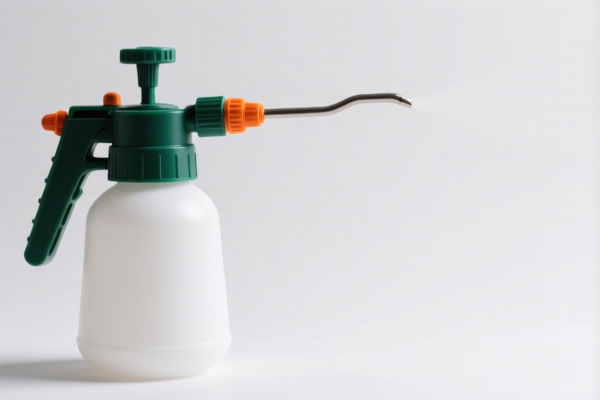
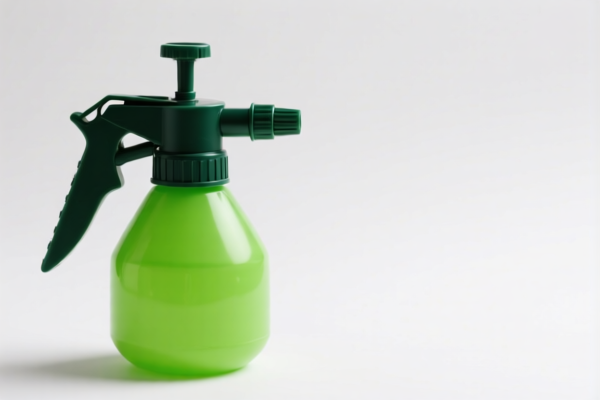
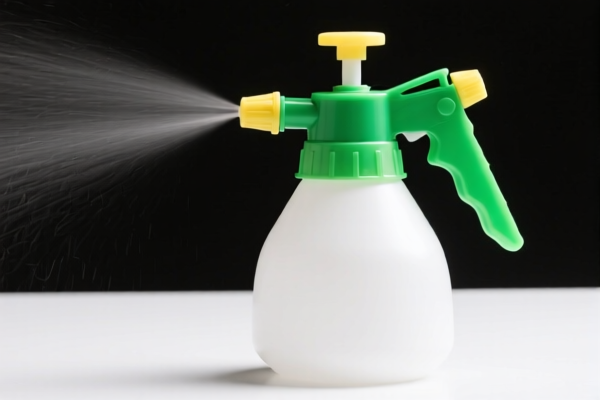
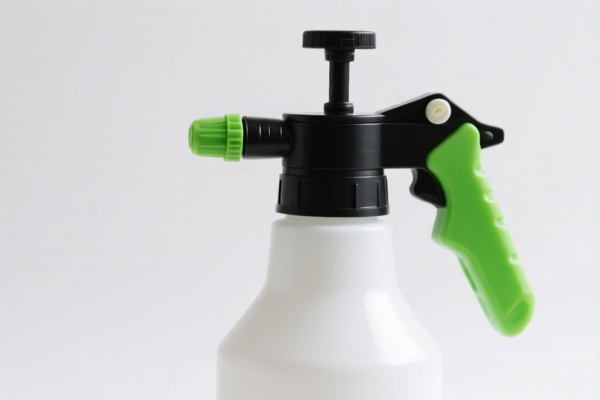
AI Analysis
🧴 Spray Sterilizer (Disinfectant Spray)
🌐 HS Code Classification & Customs Clearance Guide | 2026 Tariff Breakdown | Strategic Compliance Strategy
📌 I. Product Definition: What is a "Spray Sterilizer"?
A Spray Sterilizer is a consumer or industrial chemical product used for杀菌 (bactericidal), disinfection, and hygiene purposes. In international trade, its classification depends heavily on composition (chemical vs. biological), form (liquid, powder, aerosol), and packaging.
⚠️ Critical Distinction:
- Is it a Chemical Disinfectant (e.g., alcohol, bleach, quaternary ammonium)? → Likely Chapter 34 or Chapter 38.
- Is it a Pharmaceutical/Biological Preparation? → Likely Chapter 30 (Not in data, but possible).
- Is the Packaging the primary value driver? → Likely Chapter 39 (Plastic containers).📌 Key Note: For import into the US from China, the classification significantly impacts the Total Tax Rate due to Section 301 and IEEPA tariffs.
📦 II. HS Code Classification Matrix (Based on Provided Data)
| HS Code | Product Description | Key Characteristics | Primary Use |
|---|---|---|---|
3402.90.50.30 |
Chemical Preparations for Washing/Cleaning | Contains surfactants/cleaning agents; disinfection is secondary or combined with cleaning. | Household cleaning, floor disinfectants. |
3808.94.50.95 |
Other Disinfectants | Specifically classified as "Disinfectants" per HS logic; may be biological or chemical. | General surface disinfection, healthcare settings. |
3924.10.40.00 |
Tableware/Kitchenware (Plastic) | Packaging-focused: Plastic spray bottles/containers used for hygiene. | Only if declared as empty plastic containers. |
3924.90.56.50 |
Other Plastic Tableware/Household Items | Plastic household items/hygiene supplies (non-kitchenware). | Plastic hygiene accessories. |
3402.50.51.00 |
Organic Surface Active Agents | Organic surfactants; cleaning agents with disinfectant properties. | Industrial cleaning, heavy-duty sanitizers. |
3808.59.40.00 |
Other Disinfectants (Preparations) | Formulated disinfectant preparations; no material/conflict. | Ready-to-use liquid disinfectants. |
🔍 Important Insight:
- Chemicals vs. Containers: If you import filled spray bottles, you MUST classify based on the liquid content (3402 or 3808 series), NOT the plastic bottle (3924 series). Misclassifying filled goods as packaging leads to severe penalties.
- 3402 vs. 3808:
-3402= Cleaning/Washing preparations (even if they disinfect).
-3808= Pure disinfectants/pesticides/biocides.
💰 III. 2026 Tariff Rate Breakdown (US Imports from China)
✅ Applicable Country: United States (US)
✅ Origin: China (CN)
✅ Effective Date: 2025/2026 Tariff Schedule
🎯 1. 3402.90.50.30 – Chemical Preparations for Washing/Cleaning
| Item | Detail |
|---|---|
| Base Tariff | 3.7% |
| Section 301 Add-on | +25.0% |
| IEEPA Add-on (122 Clause) | +10.0% |
| Total Effective Rate | 38.7% |
| De Minimis Exemption? | ❌ NO (Value > $800 threshold triggers full duty) |
| Legal Basis | Section 301 + IEEPA Executive Order |
📌 Explanation:
This classification treats the product primarily as a cleaning agent. Even though it disinfects, the "washing/cleaning" function places it in Chapter 34. The high tax rate is due to combined US trade actions.
🎯 2. 3808.94.50.95 – Other Disinfectants
| Item | Detail |
|---|---|
| Base Tariff | 5.0% |
| Section 301 Add-on | +25.0% |
| IEEPA Add-on (122 Clause) | +10.0% |
| Total Effective Rate | 40.0% |
| De Minimis Exemption? | ❌ NO |
| Legal Basis | Section 301 + IEEPA Executive Order |
📌 Explanation:
This is the most accurate HS Code for a dedicated disinfectant spray. The base rate is slightly higher (5% vs 3.7%), leading to a higher total tax (40% vs 38.7%).
⚠️ Strategy: If your product is labeled primarily as a cleaner (e.g., "Clean & Disinfect"),3402.90.50.30(38.7%) is cheaper than3808.94.50.95(40.0%).
🎯 3. 3924.10.40.00 – Plastic Tableware/Household Items (Packaging Only)
| Item | Detail |
|---|---|
| Base Tariff | 3.4% |
| Section 301 Add-on | 0.0% |
| IEEPA Add-on (122 Clause) | +10.0% |
| Total Effective Rate | 13.4% |
| De Minimis Exemption? | ❌ NO (if imported as finished goods) |
| Legal Basis | IEEPA only |
📌 CRITICAL WARNING:
This rate ONLY applies if you import EMPTY plastic spray bottles or if the product is classified as a "household item" (not the chemical).
- Risk: Importing filled disinfectant spray under this code is smuggling/misdeclaration. Customs will reclassify to 3808/3402 and impose back duties + fines.
- Use Case: Only for empty containers or plastic hygiene accessories (e.g., pump heads, caps).
🎯 4. 3924.90.56.50 – Other Plastic Household Items
| Item | Detail |
|---|---|
| Base Tariff | 3.4% |
| Section 301 Add-on | +7.5% |
| IEEPA Add-on (122 Clause) | +10.0% |
| Total Effective Rate | 20.9% |
| De Minimis Exemption? | ❌ NO |
| Legal Basis | Section 301 + IEEPA |
📌 Explanation:
Similar to above, this is for plastic household/health items not specifically tableware. Again, not applicable for chemical liquids unless declared as empty plastic parts.
🎯 5. 3402.50.51.00 – Organic Surface Active Agents
| Item | Detail |
|---|---|
| Base Tariff | 0.0% |
| Section 301 Add-on | +25.0% |
| IEEPA Add-on (122 Clause) | +10.0% |
| Total Effective Rate | 35.0% |
| De Minimis Exemption? | ❌ NO |
| Legal Basis | Section 301 + IEEPA |
📌 Explanation:
This code is for organic surfactants. If your spray is primarily a cleaning detergent with disinfectant properties, this may be the lowest tax option (35.0%).
⚠️ Condition: Must be classified as a "surface active agent" (surfactant) rather than a pure disinfectant.
🎯 6. 3808.59.40.00 – Other Disinfectant Preparations
| Item | Detail |
|---|---|
| Base Tariff | 5.0% |
| Section 301 Add-on | +25.0% |
| IEEPA Add-on (122 Clause) | +10.0% |
| Total Effective Rate | 40.0% |
| De Minimis Exemption? | ❌ NO |
| Legal Basis | Section 301 + IEEPA |
📌 Explanation:
Functionally similar to3808.94.50.95. Used for formulated disinfectant preparations that don’t fit other specific subheadings. Same high tax burden (40%).
🛠️ IV. Customs Clearance Practical Advice
✅ 1. Documentation Checklist (Mandatory for US Customs)
| Document | Required? | Notes |
|---|---|---|
| Commercial Invoice | ✅ | Must clearly state: "Spray Sterilizer," "Disinfectant," and HS Code. |
| Product Specification Sheet | ✅ | Include active ingredients (e.g., Ethanol 70%, Quaternary Ammonium), concentration, and pH. |
| Safety Data Sheet (SDS) | ✅ | Mandatory for chemical imports. Must be ISO 11014 compliant. |
| EPA Registration Number | ✅ | Critical: Disinfectants sold in the US must be EPA-registered. Provide EPA Reg. No. |
| Bill of Lading | ✅ | Mark as "Hazardous Material" if flammable (e.g., alcohol-based). |
| Certificate of Origin | ✅ | To verify China origin for tariff calculation. |
📌 EPA Compliance Alert:
If you claim it’s a "Disinfectant" (3808series), the EPA must approve the product. Selling an unregistered disinfectant is illegal.
If you classify as "Cleaning Agent" (3402), you may avoid EPA registration only if no antimicrobial claims are made on the label.
✅ 2. Classification Strategy: How to Lower Taxes?
| Strategy | Recommended HS Code | Total Tax | Risk Level |
|---|---|---|---|
| Lowest Tax (Cleaning Focus) | 3402.50.51.00 |
35.0% | Medium (Must prove surfactant nature) |
| Balanced (Clean & Disinfect) | 3402.90.50.30 |
38.7% | Low (Common for household sprays) |
| Pure Disinfectant (High Precision) | 3808.94.50.95 |
40.0% | Low (Requires EPA Reg) |
| Packaging Only (Empty Bottles) | 3924.10.40.00 |
13.4% | High (Illegal if filled) |
🔥 Pro Tip:
If your product is labeled "Multi-Surface Cleaner & Disinfectant", argue for3402.90.50.30(38.7%) over3808(40.0%). The "cleaning" function justifies Chapter 34, saving 1.3% in total tax.
✅ 3. Common Pitfalls & Avoidance
| Mistake | Consequence | Solution |
|---|---|---|
Misclassifying filled bottles as plastic packaging (3924) |
Customs seizure, fines, back taxes (up to 40%) | Always declare chemical content first. |
| Missing EPA Registration | Product refused entry, destroyed | Ensure EPA Reg. No. is on label and invoice. |
| Incorrect SDS | Delays, questions from CBP | Provide up-to-date, 16-section SDS in English. |
| Ignoring Section 301 | Unexpected high bills | Plan for 25% + 10% add-ons in cost calculations. |
🌍 V. Global Market Comparison (2026)
| Market | Recommended HS Code | Base Duty | Add-ons (China) | Total Est. | Notes |
|---|---|---|---|---|---|
| 🇺🇸 USA | 3402.90.50.30 / 3808.94.50.95 |
3.7–5.0% | +25% (301) +10% (IEEPA) | 38.7–40.0% | Strict EPA/HS enforcement. |
| 🇨🇳 China | 3402.90.90.00 |
5–10% | None | ~5–10% | No Section 301. |
| 🇪🇺 EU | 3808.94.00 |
6.5% | None | 6.5% | REACH compliance required. |
| 🇬🇧 UK | 3808.94.00 |
6.5% | None | 6.5% | Post-Brexit tariffs similar to EU. |
📌 Conclusion:
The US market is the most expensive for Chinese disinfectant sprays due to 301 tariffs + IEEPA.
- Strategy: Consider tariff engineering (e.g., emphasizing cleaning over disinfection) or sourcing from non-China countries if volume is high.
📌 VI. Final Recommendations
- Label Carefully:
- If you want lower tax (38.7%), label as "Surface Cleaner with Disinfecting Properties".
-
If you want regulatory compliance (EPA), label as "Disinfectant" but expect 40% tax.
-
Pre-Ruling:
-
Apply for a Customs Ruling from CBP to confirm HS Code before shipping. This avoids surprises at the border.
-
EPA Compliance:
-
Never sell a "disinfectant" in the US without an EPA Registration Number. Use "Sanitizer" or "Cleaner" only if no antimicrobial claims are made.
-
Cost Calculation:
- Always budget for 38.7–40.0% total duty for US imports. Do not underestimate the impact of Section 301 and IEEPA.
🎯 Summary: The "Spray Sterilizer" Tax Hierarchy
| Rank | HS Code | Total Tax | Best For |
|---|---|---|---|
| 🥇 Lowest | 3402.50.51.00 |
35.0% | Surfactant-heavy cleaners |
| 🥈 Balanced | 3402.90.50.30 |
38.7% | Clean & Disinfect sprays |
| 🥉 Standard | 3808.94.50.95 / 3808.59.40.00 |
40.0% | Pure disinfectants |
✨ Pro Tip:
3.3% Difference between3402.90.50.30(38.7%) and3808.94.50.95(40.0%) can save thousands of dollars on large shipments. Choose wisely based on product formulation and labeling.
📞 Need Help?
Consult a licensed customs broker and provide your SDS and label for pre-shipment classification review.
🚀 Compliance Saves Money. Misclassification Costs Millions.
Customer Reviews
About HS Code Classification
The Harmonized System (HS) is an internationally standardized nomenclature developed by the World Customs Organization (WCO) to classify traded products. Over 200 countries use the HS system as the basis for customs tariffs, trade statistics, and import/export regulations.
Each HS code follows a hierarchical structure:
- Chapter (2 digits) — Broad category of goods (e.g., Chapter 84: Machinery and Mechanical Appliances)
- Heading (4 digits) — More specific grouping within the chapter
- Subheading (6 digits) — Internationally standardized breakdown, used by all WCO member countries
- National subdivisions (8-10 digits) — Country-specific extensions for further classification, such as US HTSUS 10-digit codes
Correct HS code classification is essential for smooth customs clearance, accurate duty payment, and compliance with trade regulations. Misclassification can lead to customs delays, overpayment of duties, or penalties.
When importing from CN to US, the applicable tariff rates may include:
- Most-Favored-Nation (MFN) rate — The standard duty rate applied to WTO members
- General rate — Applied to countries without trade agreements
- Trade remedy duties — Additional tariffs such as Section 301 (anti-dumping), Section 232 (national security), or countervailing duties
The information provided on this page is for reference purposes only. For official classification, please consult with your local customs authority or a licensed customs broker.