spring ropes
CN → US| HS Code | Tariff Rate | Origin | Destination | Doc |
|---|---|---|---|---|
| 4016996050 | 37.5% | CN | US | Official Doc |
| 5604909000 | 40.0% | CN | US | Official Doc |
| 5604100000 | 41.3% | CN | US | Official Doc |
| 9506910030 | 22.1% | CN | US | Official Doc |
| 9506996080 | 21.5% | CN | US | Official Doc |
| 4016993510 | 35.0% | CN | US | Official Doc |
Product Images


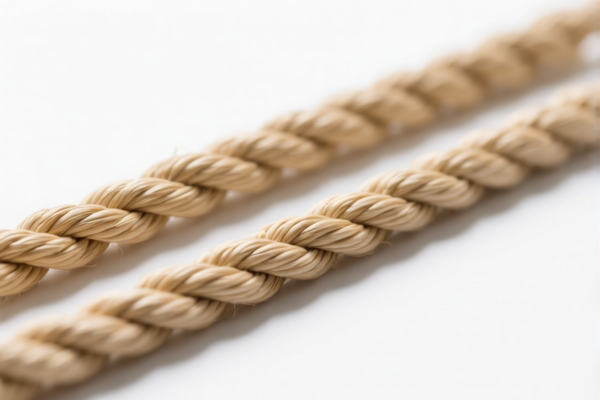

AI Analysis
🎢 Spring Ropes & Elastic Bands (Elastic Cords / Rubber Bungees)
🌐 HS Code Reference & Customs Clearance Guide | 2026 Latest Tariff Breakdown | Professional Entry Strategy
📌 I. Product Definition & Classification: What Exactly Are "Spring Ropes"?
In international trade, "Spring Ropes" is a generic term that usually refers to elastic cords, rubber bungee cords, or textile-covered elastic lines. Their classification depends entirely on their material composition and physical structure.
1. Pure Rubber/Plastic Elastic Bands (e.g., Rubber Bands):
Made primarily of vulcanized rubber, without significant textile covering. These are classified as rubber articles.
2. Textile-Covered Elastic Cords (e.g., Bungee Cords):
Consist of a rubber core covered or encased with textile material (nylon, polyester, etc.). These are classified as textile articles or rubber-infused textile goods, depending on the dominant material and specific tariff rules.
⚠️ Key Distinction Point:
- If it’s a simple rubber band (like those used for bundling paper) → It’s a Rubber Product (4016...).
- If it’s a braided cord with rubber elasticity, often used for camping, cargo tying, or fitness → It’s a Textile/Rubber Composite (5604...).
- If it’s a gym equipment component (e.g., resistance bands for fitness machines) → It might fall under Sports Equipment (9506...).
📦 II. HS Code Classification Details (2026 Latest Tariff Authority Cross-Reference)
Based on the provided data, here are the three primary classification paths for "Spring Ropes" and their corresponding tax implications for US Imports from China.
| HS Code | Product Description | Applicable Scenario | Material/Structure Feature |
|---|---|---|---|
4016.99.60.50 |
Rubber articles, other | General-purpose rubber elastic bands or non-specific rubber parts | Pure Rubber: Vulcanized or elastic rubber; no textile covering. |
5604.90.90.00 |
Textile threads/cords impregnated/coated with rubber | Rubber lines/cords where textile is the visible structural layer | Textile-Covered: Rubber line/rope covered with textile material. |
5604.10.00.00 |
Rubber thread and cord, textile covered | Specific rubber lines/ropes made with textile coverings | Rubber-Core: Core is rubber, covered by textile; fits "rope/cord" form. |
9506.91.00.30 |
General sporting goods/fitness equipment | Fitness bands, resistance bands for gym equipment | Fitness Use: Made of rubber/plastic, intended for sports/fitness. |
9506.99.60.80 |
Other exercise equipment | Elastic material exercise tools (e.g., yoga bands, pull ropes) | Elastic Exercise Gear: Made of elastic materials like rubber/latex for sports. |
4016.99.35.10 |
Natural rubber rubber bands | Natural rubber bands, elastic form | Natural Rubber: Specifically natural rubber bands. |
🔍 Critical Reminder:
- Fitness Bands vs. Industrial Cords: If the product is marketed for gym use (fitness), it often falls under9506...with a lower total tax (21.5–22.1%).
- Industrial/General Use Cords: If used for cargo tying, outdoor gear, or general bundling, it falls under5604...or4016...with a higher total tax (35–41.3%).
- Misclassification Risk: Declaring a fitness band as a general rubber band (4016...) will result in a higher tax rate. Conversely, declaring an industrial bungee as fitness equipment may trigger customs scrutiny for incorrect usage description.
💰 III. 2026 Latest Tariff Rate Breakdown (Including Surtaxes, Policy Surcharges)
✅ Applicable Country: United States (US)
✅ Origin: China (CN)
✅ Effective Date: 2025/2026 (Current Trade War Rates)
🎯 1. 4016.99.60.50 – Rubber Articles (General Rubber Bands/Cords)
| Item | Content |
|---|---|
| Base Tariff | 2.5% |
| Section 301 Surtax | +25.0% |
| Section 122 Surtax | +10.0% |
| Total Tariff | 37.5% |
| Tax Calculation | CIF Value × 37.5% |
| De Minimis Eligibility | ❌ No (Denied) |
| Legal Path | USITC:4016.99.60.50 → 301:25% → 122:10% |
📌 Explanation:
- This is the standard rate for non-specific rubber products.
- High due to multiple surcharges (Section 301 + Section 122).
- Commonly used for general-purpose rubber bands or simple elastic cords without textile reinforcement.
🎯 2. 5604.90.90.00 & 5604.10.00.00 – Textile-Rubber Composite Cords (Bungee Cords)
| Item | Content |
|---|---|
| Base Tariff | 5.0% (for 5604.90) / 6.3% (for 5604.10) |
| Section 301 Surtax | +25.0% |
| Section 122 Surtax | +10.0% |
| Total Tariff | 40.0% (for 5604.90) / 41.3% (for 5604.10) |
| Tax Calculation | CIF Value × 40%/41.3% |
| De Minimis Eligibility | ❌ No (Denied) |
| Legal Path | USITC:5604... → 301:25% → 122:10% |
📌 Note:
- These codes apply to rubber lines/ropes covered with textile materials (e.g., nylon-braided bungee cords).
- The higher base rate for5604.10(6.3%) vs.5604.90(5.0%) depends on the specific rubber/textile ratio and structure.
- These are common in outdoor gear, trucking, and industrial applications.
🎯 3. 9506.91.00.30 & 9506.99.60.80 – Fitness/Sports Elastic Bands
| Item | Content |
|---|---|
| Base Tariff | 4.6% (for 9506.91) / 4.0% (for 9506.99) |
| Section 301 Surtax | +7.5% |
| Section 122 Surtax | +10.0% |
| Steel/Aluminum/Copper Surtax | +50% (Only if applicable parts are steel/al/cu – rare for pure rubber bands) |
| Total Tariff | 22.1% (for 9506.91) / 21.5% (for 9506.99) |
| Tax Calculation | CIF Value × 21.5%/22.1% |
| De Minimis Eligibility | ❌ No (Denied) |
| Legal Path | USITC:9506... → 301:7.5% → 122:10% |
📌 Advantage:
- Significantly Lower Tax!
- If your "spring rope" is a resistance band for gyms, yoga, or physical therapy, declare it as Fitness Equipment.
- The Section 301 rate is only 7.5% instead of 25%, saving ~15% in total tax.
- Key Requirement: Must be clearly marketed and used for sports/fitness.
🎯 4. 4016.99.35.10 – Natural Rubber Bands
| Item | Content |
|---|---|
| Base Tariff | 0.0% |
| Section 301 Surtax | +25.0% |
| Section 122 Surtax | +10.0% |
| Total Tariff | 35.0% |
| Tax Calculation | CIF Value × 35.0% |
| De Minimis Eligibility | ❌ No (Denied) |
📌 Special Case:
- Applies specifically to natural rubber bands (e.g., traditional office rubber bands).
- Lower base rate (0%) helps offset the high surcharges.
🛠️ IV. Customs Clearance Practical Advice (Avoid Pitfalls)
✅ 1. Preparation Checklist (All or Nothing)
| Document | Required? | Description |
|---|---|---|
| ✅ Product Specifications | ✔️ | Material (natural/synthetic rubber, nylon, etc.), diameter, length, elasticity |
| ✅ Product Photos | ✔️ | Clear images showing texture, braiding (if textile-covered), and ends (plastic/metal caps?) |
| ✅ Usage Description | ✔️ | CRITICAL: State clearly if for "Fitness/Exercise" or "Industrial/Cargo". |
| ✅ Material Composition Statement | ✔️ | % of rubber vs. textile. Essential for 5604 vs 4016 classification. |
| ✅ Commercial Invoice | ✔️ | Accurate description matching HS Code. |
| ✅ Packing List | ✔️ | Net weight, gross weight, quantity. |
✅ 2. Declaration Tips (Key Mantra)
🔥 "Fit for Gym, Tax Drops Low. For Cargo, Tax Goes High!"
| Scenario | Correct Declaration | Wrong Declaration | Result |
|---|---|---|---|
| Yoga/Resistance Bands | 9506.91.00.30 / 9506.99.60.80 |
"Rubber Band" | Save ~15% Tax |
| Bungee Cord for Trucking | 5604.90.90.00 |
"Fitness Equipment" | Customs Audit & Penalty |
| Office Rubber Bands | 4016.99.60.50 / 4016.99.35.10 |
"Textile Cord" | Wrong Tax Rate |
✅ 3. Special Handling
| Case | Advice |
|---|---|
| Mixed Use | If a product can be used for both fitness and cargo, declare it as Fitness if >50% of marketing targets fitness. Provide gym-related marketing materials. |
| With Metal End Hooks | If the bungee has metal hooks, the entire assembly is still classified under the primary material (rubber/textile) unless the metal part is the essential character. Typically, still 5604 or 9506. |
| Customs Pre-Ruling | For large volumes, apply for an Advance Ruling (Pre-Ruling) from CBP to lock in the HS Code and avoid post-import audits. |
🌍 V. Global Market Comparison (2026 Latest)
| Country/Region | Recommended HS Code | Total Tax Rate (CN Origin) | Notes |
|---|---|---|---|
| 🇺🇸 USA | 9506... (Fitness) / 5604... (Industrial) |
21.5%–41.3% | High taxes due to Surtaxes. Fitness category is cheapest. |
| 🇨🇳 China | 4016... / 5604... |
0%–6.3% | No Section 301/122 surcharges. |
| 🇪🇺 EU | 4016... / 5604... |
0%–4% | No US-style surcharges. EORI number required. |
| 🇬🇧 UK | 4016... / 5604... |
0%–4% | Post-Brexit rules apply. |
| 🇯🇵 Japan | 4016... / 5604... |
0%–6% | FTA benefits may apply with CEPA/RCM. |
📌 Conclusion:
- USA is the most tax-sensitive market for rubber/textile goods due to Section 301 & 122.
- Fitness Classification (9506...) is the key to tax optimization in the US.
- Industrial Cords (5604...) are expensive to import into the US. Consider supply chain adjustments if margin is thin.
📌 VI. Common Errors & Pitfalls (Lessons Learned)
❌ Mistake 1: Declaring Fitness Bands as General Rubber Bands (4016...)
👉 Consequence: Higher tax (37.5% vs 21.5%). You overpaid!
❌ Mistake 2: Declaring Industrial Bungee Cords as Fitness Equipment (9506...)
👉 Consequence: Customs detention, fines, and back taxes. CBP checks product usage and marketing.
❌ Mistake 3: Ignoring Textile Content
👉 Consequence: If the cord is textile-covered rubber, it must be 5604..., not 4016.... Misclassification leads to audit.
❌ Mistake 4: Not Disclosing Section 122/301 Applicability
👉 Consequence: If declared as non-China origin, but proof shows CN origin, penalties and seizure occur.
✅ Correct Practice:
"Elastic Resistance Band, 41-inch, Natural Rubber Core, Fabric Cover, for Home Fitness Exercise" →
9506.91.00.30
"Heavy Duty Bungee Cord, 10mm, Nylon Braided Rubber Rope, for Truck Cargo Securing" →5604.90.90.00
🎯 VII. Conclusion: Precise Classification Saves Money!
🎯 Remember the Mantra:
🔹 "Fitness First, Tax Low. Industrial High, Think Twice."
🔹 "HS Code Defines Destiny. 15% Difference is Profit!"
📌 Pro Tip:
If your Fitness Bands are sourced from Vietnam, Thailand, or Malaysia, you may be eligible for IEEPA/301 Exemptions or lower Section 301 rates.
Always apply for Pre-Rulings for large shipments to avoid clearance delays.
📣 Immediate Action:
📞 Consult a licensed Customs Broker.
🖼️ Provide Product Photos + Usage Description.
🚀 Optimize Your HS Code. Maximize Your Profit.
✨ Professional Clearance Starts with Accurate Classification!
💼 Every Percent Saved is Pure Profit!
Customer Reviews
About HS Code Classification
The Harmonized System (HS) is an internationally standardized nomenclature developed by the World Customs Organization (WCO) to classify traded products. Over 200 countries use the HS system as the basis for customs tariffs, trade statistics, and import/export regulations.
Each HS code follows a hierarchical structure:
- Chapter (2 digits) — Broad category of goods (e.g., Chapter 84: Machinery and Mechanical Appliances)
- Heading (4 digits) — More specific grouping within the chapter
- Subheading (6 digits) — Internationally standardized breakdown, used by all WCO member countries
- National subdivisions (8-10 digits) — Country-specific extensions for further classification, such as US HTSUS 10-digit codes
Correct HS code classification is essential for smooth customs clearance, accurate duty payment, and compliance with trade regulations. Misclassification can lead to customs delays, overpayment of duties, or penalties.
When importing from CN to US, the applicable tariff rates may include:
- Most-Favored-Nation (MFN) rate — The standard duty rate applied to WTO members
- General rate — Applied to countries without trade agreements
- Trade remedy duties — Additional tariffs such as Section 301 (anti-dumping), Section 232 (national security), or countervailing duties
The information provided on this page is for reference purposes only. For official classification, please consult with your local customs authority or a licensed customs broker.