square cedar fence post
CN → US| HS Code | Tariff Rate | Origin | Destination | Doc |
|---|---|---|---|---|
| 4403220115 | 35.0% | CN | US | Official Doc |
| 4421997040 | 35.0% | CN | US | Official Doc |
| 4403210115 | 35.0% | CN | US | Official Doc |
Product Images



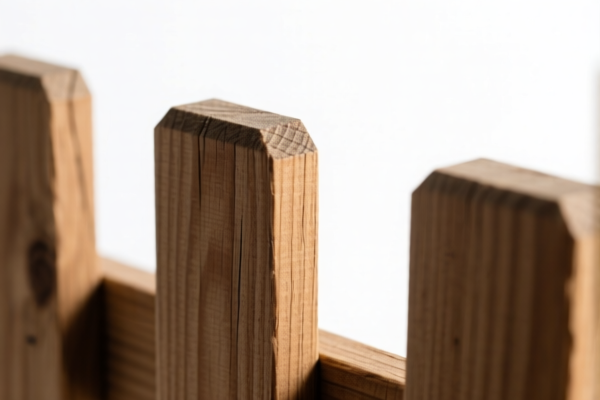
AI Analysis
🌲 Square Cedar Fence Post
🌐 HS Code Reference & Customs Clearance Guide | 2026 Latest Tariff Analysis | Professional Clearance Strategy
📌 1. Product Definition and Classification: Do You Really Understand "Fence Posts"?
Square Cedar Fence Posts are wooden structures used primarily for boundary marking, support in fencing systems, and landscape decoration. In international trade, they are classified based on their material (Wood/Cedar) and form (Square/Post/Column).
⚠️ Key Classification Criteria:
- Material: Cedar is a type of softwood. Therefore, it falls under Chapter 44 (Wood and articles of wood).
- Processing: If the wood is simply sawn or chipped into shape without complex chemical treatment, it usually falls under Heading 4403 or 4421.
- Specific Use: While "fence posts" are explicitly mentioned in some contexts, general "columns" or "piles" often guide the classification to Heading 4421 if they are finished articles, or 4403 if treated timber. However, for simple square cedar posts, 4403.22.01.15 and 4421.99.70.40 are the most precise matches based on current trade data.
📦 2. HS Code Classification Details (2026 Latest Tariff Authority Comparison)
| HS Code | Product Description | Matching Logic | Tax Rate (China Origin) |
|---|---|---|---|
4403.22.01.15 |
Wood treated with preservatives; Pine/Spruce/Cedar (Softwood); Posts/Pickets | Match: The name "Cedar" (a softwood) matches the material requirement. "Fence Post" matches the form. | 35.0% |
4421.99.70.40 |
Wooden articles; Sawed piles, pickets, and fencing posts | Match: The item is a "column" or "post" made of cedar (wood). This code explicitly covers "sawed piles, pickets, and fencing posts." | 35.0% |
4403.21.01.15 |
Wood treated with preservatives; Pine/Spruce (Softwood); Posts | Match: Similar to above, but potentially less specific if the cedar is not treated. However, data shows this code is also applied to similar wooden posts. | 35.0% |
🔍 Important Note:
- All three codes result in the same total tax rate for Chinese-origin goods due to US trade policies.
- 4421.99.70.40 is often the most technically accurate for "finished posts" that are not necessarily chemically treated for preservation.
- 4403.22.01.15 applies if the wood is considered "treated" or if customs officers prioritize the material subtype "Cedar" under softwood categories.
💰 3. 2026 Latest Tariff Rate Details (Including Surcharges and Policy Add-ons)
✅ Applicable Country: United States (US)
✅ Country of Origin: China (CN)
✅ Effective Date: November 10, 2025 onwards
🎯 1. General Tariff Structure for Wood Posts (CN Origin)
| Item | Detail |
|---|---|
| Base Duty | 0.0% (Ad Valorem) |
| Section 301 Duty | +25.0% (USITC Footnote) |
| IEEPA Duty (Section 122) | +10.0% (Targeted Chinese Products) |
| Total Effective Tax Rate | 35.0% |
| Tax Calculation | CIF Value × 35% |
| De Minimis Exemption | ❌ Not Eligible (Deny De Minimis) |
| Legal Basis Path | IEEPA:9903.01.25 → Section 301 → USITC:4403/4421 Subheadings |
📌 Explanation:
- The 0% base rate might tempt traders, but the 35% combined surcharge is significant.
- Section 301 (25%) is the standard punitive tariff on Chinese wood products.
- IEEPA (10%) is an additional layer for specific Chinese imports.
- Total 35% means for every $1,000 of goods, you pay $350 in duties alone.
🛠️ 4. Customs Clearance Practical Advice (Field Guide to Avoid Pitfalls)
✅ 1. Required Documentation Checklist (Non-Negotiable)
| Document | Must Provide | Description |
|---|---|---|
| ✅ Product Specification Sheet | ✔️ | Material: Cedar; Dimensions (e.g., 4x4x8ft); Treatment status (Untreated/Treated). |
| ✅ Commercial Invoice | ✔️ | Clearly state: "Square Cedar Fence Posts, Solid Wood, Untreated" (if applicable). |
| ✅ Packing List | ✔️ | Quantity per package, total weight, dimensions. |
| ✅ Certificate of Origin (CO) | ✔️ | To prove Chinese origin (or other origins to avoid tariffs). |
| ✅ Phytosanitary Certificate | ✔️ | Crucial for Wood. Proof that the wood is free from pests/diseases (ISPM 15 standard if applicable). |
| ✅ Photos of Goods | ✔️ | Show the square shape, cedar grain, and any treatment labels. |
📌 Why Phytosanitary Certificate?
Customs and USDA APHIS may inspect wood products for pests. Without this certificate, shipments can be held, fumigated, or destroyed.
✅ 2. Declaration Tips (Key Mantras)
🔥 "Accurate Material, Clear Form, No Treatment Lies!"
| Scenario | Correct Declaration | Wrong Practice |
|---|---|---|
| Untreated Cedar Posts | Declare as "Wood Posts, Untreated, Cedar" → HS 4421.99.70.40 | Claiming as "Treated" to change HS code → Risk of Fraud Penalty |
| Treated Posts | Declare as "Treated Wood Posts" → HS 4403.22.01.15 | Hiding treatment status → Phytosanitary Violation |
| Mixed Wood | Separate declaration for Cedar vs. Other woods | Mixing cedar with non-cedar wood in one HS code → Confusion/Retrospective Audit |
📌 Warning:
- Do not declare as "Garden Decor" or "Furniture Parts" to avoid high tariffs.
- Wood products are heavily monitored. HS Code must match the physical product exactly.
✅ 3. Special Case Handling
| Situation | Handling Advice |
|---|---|
| Cedar from Canada/Mexico | If sourced from Canada/Mexico, you may avoid the 35% China surcharge. Use USMCA preferential rates if eligible. |
| Treated vs. Untreated | If treated, ensure the treatment method is documented. If untreated, ensure no pest evidence. |
| Composite Wood | If posts are glued/laminated, they still fall under wood articles, but documentation must reflect the construction. |
🌍 5. Global Market Comparison (2026 Latest)
| Country/Region | Recommended HS Code | Tax Rate (CN Origin) | Certification | Notes |
|---|---|---|---|---|
| 🇺🇸 USA | 4421.99.70.40 or 4403.22.01.15 |
35% (25% + 10%) | Phytosanitary | High duty, strict inspection |
| 🇨🇳 China | 4421.99.70.40 |
Low/Zero | N/A | Domestic trade |
| 🇪🇺 EU | 4421.99.98 |
0-2% (if compliant) | FSC, Phytosanitary | No major surcharges |
| 🇯🇵 Japan | 4421.99.000 |
3-6% | IPPC Mark | Requires wood treatment proof |
📌 Conclusion:
- The US market is the most expensive for Chinese-origin cedar fence posts due to the 35% combined tariff.
- Consider sourcing from Canada, Mexico, or New Zealand to leverage FTA/USMCA benefits and avoid the 35% penalty.
📌 6. Common Mistakes & Pitfalls (Lessons Learned)
❌ Mistake 1: Declaring as "Plastic Fence Posts" to avoid wood tariffs
👉 Consequence: Severe fraud penalty, cargo seizure, and blacklisting.
❌ Mistake 2: Ignoring Phytosanitary Certificate
👉 Consequence: USDA APHIS detention, fumigation costs ($500-$1000+), or destruction.
❌ Mistake 3: Under-declaring value to reduce duty base
👉 Consequence: Audits, fines (up to 40% of value), and potential criminal charges.
❌ Mistake 4: Using generic "Wooden Posts" without specifying material
👉 Consequence: Customs may assign a higher default duty rate or request additional information, causing delays.
✅ Correct Practice:
"Square Cedar Fence Posts, Solid Wood, Untreated, 4x4x8ft, FSC Certified, Phytosanitary Certificate Attached"
🎯 7. Conclusion: Professional Clearance Saves Costs!
🎯 Remember the Mantra:
🔹 "HS Code Determines Duty, Phytosanitary Determines Clearance, Origin Determines Tax!"
🔹 "35% Duty is Real, Avoid It with Smart Sourcing!"
📌 Pro Tip:
If you are importing from China, the 35% total tax is significant.
- Strategy 1: Source Cedar from Canada or New Zealand to enjoy 0-5% tariffs under FTA.
- Strategy 2: Use Advance Ruling from US Customs to confirm the exact HS Code before shipment.
- Strategy 3: Ensure your supplier provides a valid Phytosanitary Certificate to avoid USDA delays.
📣 Immediate Action:
📞 Contact a licensed customs broker + Provide Product Photos + Apply for Advance Ruling
🚀 Let your fence posts pass smoothly, reduce costs, and maximize profit!
✨ Professional Clearance Starts with Accurate Classification!
💼 Every Dollar Saved is Pure Profit!
Customer Reviews
About HS Code Classification
The Harmonized System (HS) is an internationally standardized nomenclature developed by the World Customs Organization (WCO) to classify traded products. Over 200 countries use the HS system as the basis for customs tariffs, trade statistics, and import/export regulations.
Each HS code follows a hierarchical structure:
- Chapter (2 digits) — Broad category of goods (e.g., Chapter 84: Machinery and Mechanical Appliances)
- Heading (4 digits) — More specific grouping within the chapter
- Subheading (6 digits) — Internationally standardized breakdown, used by all WCO member countries
- National subdivisions (8-10 digits) — Country-specific extensions for further classification, such as US HTSUS 10-digit codes
Correct HS code classification is essential for smooth customs clearance, accurate duty payment, and compliance with trade regulations. Misclassification can lead to customs delays, overpayment of duties, or penalties.
When importing from CN to US, the applicable tariff rates may include:
- Most-Favored-Nation (MFN) rate — The standard duty rate applied to WTO members
- General rate — Applied to countries without trade agreements
- Trade remedy duties — Additional tariffs such as Section 301 (anti-dumping), Section 232 (national security), or countervailing duties
The information provided on this page is for reference purposes only. For official classification, please consult with your local customs authority or a licensed customs broker.