squeezer
CN → US| HS Code | Tariff Rate | Origin | Destination | Doc |
|---|---|---|---|---|
| 8210000000 | 38.7% | CN | US | Official Doc |
| 8438800000 | 35.0% | CN | US | Official Doc |
| 8479820080 | 35.0% | CN | US | Official Doc |
| 8477200015 | 38.1% | CN | US | Official Doc |
| 8479820040 | 35.0% | CN | US | Official Doc |
Product Images



AI Analysis
🍊 Squeezer (Juice Extractors & Presses)
🌐 HS Code Reference & Customs Clearance Guide | 2026 Latest Tariff Analysis | Professional Clearance Strategy
📌 I. Product Definition & Classification: What Exactly Is a "Squeezer"?
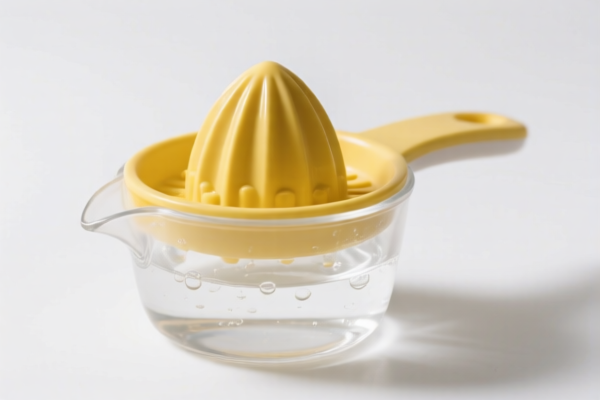
In the context of international trade and customs classification, a "Squeezer" typically refers to manual mechanical devices used for extracting juice from fruits or vegetables (e.g., citrus squeezers, garlic presses) or mechanical press devices for food/beverage preparation.
However, depending on the mechanism, power source, and specific function, it can also be confused with industrial Extruders (挤出机) in certain database interpretations. Below is the precise breakdown based on the provided data source.
⚠️ Key Distinction:
- If it is a manual hand-held tool for food prep (citrus, garlic, nuts) → It falls under Chapter 82 (Hand Tools).
- If it is an industrial machine for extruding materials (plastic, rubber, food dough) → It falls under Chapter 84 (Machinery).
Note: The provided data contains conflicting entries mixing "Squeezer" (8210) with "Extruder" (84xx). We must clarify this critical divergence.
📦 II. HS Code Classification Details (Based on Provided Data)
The provided dataset lists two distinct categories: one for Manual Food Squeezers and several for Industrial Extruders (often mistranslated or grouped under "Extrusion/Squeezing" machinery).
| HS Code | Product Description | Applicable Scenario | Tax Rate (Total) |
|---|---|---|---|
8210.00.00.00 |
Manual Mechanical Appliances for food/drink preparation (e.g., hand-held citrus squeezers, garlic presses) | Manual kitchen tools, small household appliances | 38.7% |
8438.80.00.00 |
Extruder – Machinery for material processing (Industrial) | Industrial food processing lines, plastic/rubber extrusion | 35.0% |
8479.82.00.80 |
Extruder – Machinery with separate function (crushing, grinding, homogenizing) | Specialized industrial mixers/extruders | 35.0% |
8477.20.00.15 |
Extruder – For rubber or thermosetting materials | Rubber processing, plastic molding machines | 38.1% |
8479.82.00.40 |
Extruder – General-purpose machinery (grinding, mixing, molding) | "Other" machinery catch-all for processing | 35.0% |
🔍 Critical Note on Data Discrepancy:
The data source labels8438.80,8479.82, and8477.20as "Extruder" (挤出机), not "Squeezer".
- If you are exporting a manual citrus squeezer: Use8210.00.00.00.
- If you are exporting an industrial extrusion machine (often confused in translation): Use the 84xx codes.
Do not mix these up. Misclassification can lead to severe penalties.
💰 III. 2026 Latest Tariff Rate Breakdown (Detailed)
✅ Applicable Country: USA (US)
✅ Origin: China (CN)
✅ Effective Date: Post-2025 Policies (Includes Section 301 & IEEPA)
🎯 1. 8210.00.00.00 — Manual Food Squeezer (Most Likely for "Squeezer")
This code covers hand-operated appliances for crushing, mashing, or squeezing food.
| Item | Details |
|---|---|
| Basic Duty | 3.7% |
| Section 301 Tariff | +25.0% (Additional tariff for Chinese goods) |
| Section 122 Tariff | +10.0% (Additional tariff under specific trade acts) |
| Total Tax Rate | 38.7% |
| Calculation Base | CIF Value × 38.7% |
| De Minimis Exemption | ❌ Not Eligible (Deny de_minimis) |
| Legal Basis Path | USITC:8210.00.00.00 → FOOTNOTE:301 → IEEPA:122 |
📌 Explanation:
- Although it is a "kitchen tool," its origin in China triggers both the 25% Section 301 tariff and the 10% Section 122 tariff.
- The 3.7% basic duty is relatively low, but the 35% additive tariffs make the total cost significant.
- No de minimis exemption: Even small shipments (under $800) are not exempt if subject to these specific tariff footnotes.
🎯 2. Industrial Extruders (8438.80.00.00, 8479.82.00.80, 8479.82.00.40)
If the product is actually an industrial extrusion machine (often mislabeled as "squeezer" in automated systems):
| Item | Details |
|---|---|
| Basic Duty | 0.0% |
| Section 301 Tariff | +25.0% |
| Section 122 Tariff | +10.0% |
| Total Tax Rate | 35.0% |
| Calculation Base | CIF Value × 35.0% |
| De Minimis Exemption | ❌ Not Eligible |
📌 Explanation:
- Machinery often has 0% basic duty but still attracts the full 35% additive tariff.
- 8477.20.00.15 (Rubber/Thermosetting Extruder) has a 3.1% basic duty, leading to a 38.1% total rate.
🛠️ IV. Customs Clearance Practical Advice (Avoiding Pitfalls)
✅ 1. Preparation Checklist (Mandatory Documents)
| Document | Required? | Purpose |
|---|---|---|
| ✅ Product Specification Sheet | ✔️ | Must clearly state: "Manual Hand-Operated" vs. "Electric Industrial Extruder". |
| ✅ Product Photos | ✔️ | Show the mechanism: Lever/Handle (for 8210) vs. Screw/ Barrel (for 84xx). |
| ✅ Commercial Invoice | ✔️ | Describe accurately: "Citrus Squeezer" or "Plastic Extrusion Machine". |
| ✅ Material Declaration | ✔️ | Specify if parts are stainless steel, plastic, or rubber. |
| ✅ Origin Certificate | ✔️ | If not from China, may avoid Section 301/122 tariffs. |
✅ 2. Declaration Tips (Critical Keywords)
🔥 "Manual = Kitchen, Machine = Industrial. Do Not Mix!"
| Scenario | Correct HS Code | Incorrect Code | Consequence |
|---|---|---|---|
| Manual Citrus Squeezer (Hand press) | 8210.00.00.00 |
8438.80.00.00 |
Under-declaration Penalty (38.7% vs 35.0%, but wrong classification triggers audit) |
| Electric Food Processor | 8438.80.00.00 |
8210.00.00.00 |
Over-declaration Penalty (May be classified as "Household Appliance" with different rules) |
| Industrial Rubber Extruder | 8477.20.00.15 |
8210.00.00.00 |
Severe Misclassification (Industrial machinery requires different safety certs) |
✅ 3. Special Handling for "Squeezer"
- For Manual Squeezers (8210):
- Ensure the description emphasizes "Manual" and "Hand-Held".
- If it has an electric motor, it does not qualify for 8210 and must move to Chapter 84.
- For Extruders (84xx):
- Specify the material processed (e.g., "for plastic," "for food dough," "for rubber"). This determines whether it falls under 8438 (Food), 8477 (Rubber/Plastic), or 8479 (Other).
- Tariff Optimization:
- If possible, source from non-Chinese origins (e.g., Vietnam, Mexico) to avoid the 25% + 10% additional tariffs, reducing the rate to 3.7% (for 8210) or 0% (for 84xx).
🌍 V. Global Market Comparison (2026)
| Market | Recommended HS Code | Total Tariff (China Origin) | Notes |
|---|---|---|---|
| 🇺🇸 USA | 8210.00.00.00 |
38.7% | High additional tariffs apply. |
| 🇨🇳 China (Import) | 8210.00.00.00 |
3.7% | No additional Section 301/122 tariffs. |
| 🇪🇺 EU | 8210.00.00.00 |
Variable | Check EU Common Customs Tariff; no US-style Section 301. |
| 🇬🇧 UK | 8210.00.00.00 |
Variable | Post-Brexit tariffs may differ from EU. |
📌 Conclusion:
- The USA is the most expensive market for Chinese-manufactured squeezers due to the 35% additive tariffs.
- Chapter 82 (8210) is the correct classification for manual squeezer.
- Chapter 84 (84xx) is for industrial extruders.
- Misclassification between "Manual" and "Industrial" is the #1 cause of customs delays.
📌 VI. Common Mistakes & Avoidance Guide (Lessons Learned)
❌ Mistake 1: Calling an Electric Food Extruder a "Squeezer" and declaring under 8210.
👉 Consequence: Customs will reclassify it as 8438.80.00.00 or 8479.82.00.80, leading to delayed shipment and potential fines.
❌ Mistake 2: Ignoring Section 122 Tariffs.
👉 Consequence: Assuming only 25% tax. The actual rate is 38.7% for manual squeezers. This leads to underpayment and penalties.
❌ Mistake 3: Not specifying "Manual" in the invoice.
👉 Consequence: Customs may assume it is an electric appliance, triggering different regulatory requirements (FCC, UL, etc.).
✅ Correct Practice:
"Manual Citrus Squeezer, Stainless Steel, Hand-Operated, No Electric Components"
vs.
"Industrial Plastic Extruder Machine, for PE/PP Material, 220V"
🎯 VII. Conclusion: Professional Declaration Saves Money!
🎯 Key Takeaway:
🔹 "Manual = 8210 (38.7%) / Industrial = 84xx (35%-38.1%)"
🔹 "Section 301 + Section 122 = 35% Additional Tax on Top of Basic Duty"
🔹 "Always specify 'Manual' or 'Electric' in the description"
📌 Pro Tip:
If you are shipping small quantities of manual squeezers, ensure you budget for the 38.7% total duty. There is no de minimis exemption.
For industrial extruders, consider HS Code Pre-Ruling to confirm the exact sub-category (8438 vs 8477 vs 8479) to avoid clearance holds.
📣 Immediate Action:
📞 Consult a Customs Broker with product photos.
📄 Prepare Precise Descriptions: "Manual" vs. "Machine".
💡 Evaluate Cost: Is the 38.7% tariff sustainable for your margin? Consider supply chain relocation if volumes are high.
✨ Accurate Classification = Smooth Clearance & Maximized Profit!
💼 Don't let a 3-character code cost you thousands!
Customer Reviews
About HS Code Classification
The Harmonized System (HS) is an internationally standardized nomenclature developed by the World Customs Organization (WCO) to classify traded products. Over 200 countries use the HS system as the basis for customs tariffs, trade statistics, and import/export regulations.
Each HS code follows a hierarchical structure:
- Chapter (2 digits) — Broad category of goods (e.g., Chapter 84: Machinery and Mechanical Appliances)
- Heading (4 digits) — More specific grouping within the chapter
- Subheading (6 digits) — Internationally standardized breakdown, used by all WCO member countries
- National subdivisions (8-10 digits) — Country-specific extensions for further classification, such as US HTSUS 10-digit codes
Correct HS code classification is essential for smooth customs clearance, accurate duty payment, and compliance with trade regulations. Misclassification can lead to customs delays, overpayment of duties, or penalties.
When importing from CN to US, the applicable tariff rates may include:
- Most-Favored-Nation (MFN) rate — The standard duty rate applied to WTO members
- General rate — Applied to countries without trade agreements
- Trade remedy duties — Additional tariffs such as Section 301 (anti-dumping), Section 232 (national security), or countervailing duties
The information provided on this page is for reference purposes only. For official classification, please consult with your local customs authority or a licensed customs broker.