stain treated wood fence posts
CN → US| HS Code | Tariff Rate | Origin | Destination | Doc |
|---|---|---|---|---|
| 4407110002 | 35.0% | CN | US | Official Doc |
| 4407120002 | 35.0% | CN | US | Official Doc |
Product Images
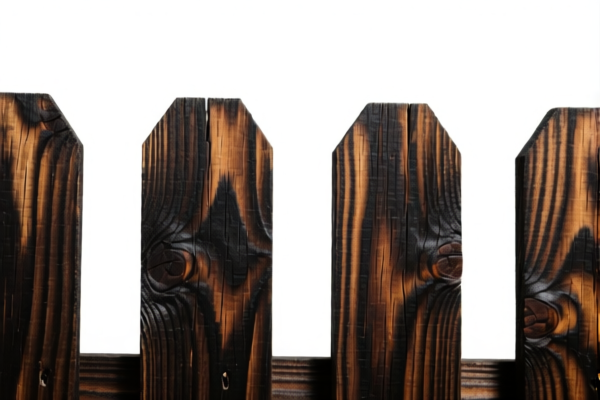
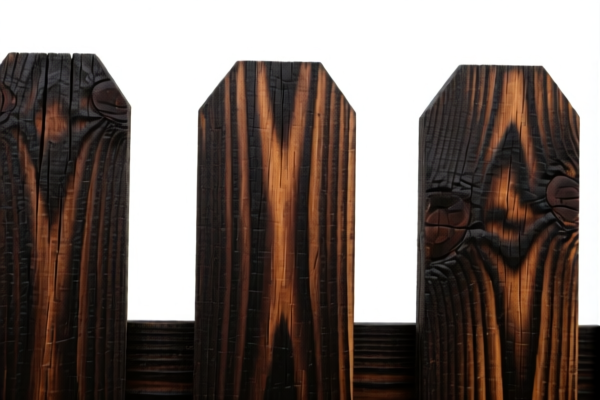
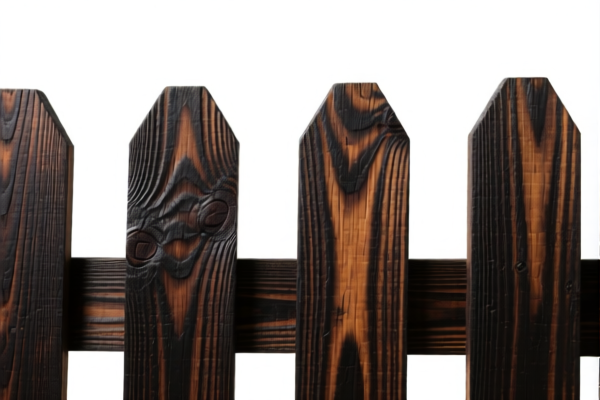
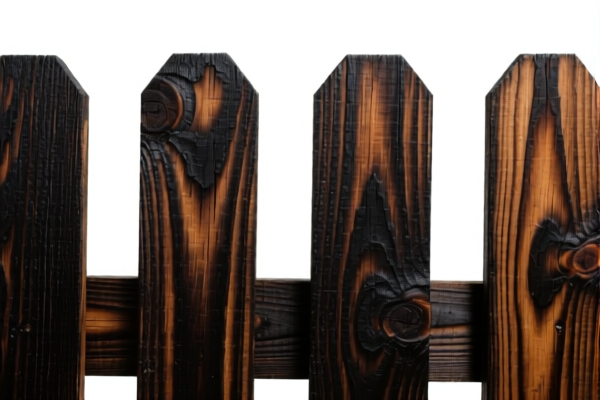
AI Analysis
🪵 Wood Fence Posts (Stain-Treated, Sawn/Pealed Coniferous)
🌐 HS Code Reference & Customs Clearance Guide | 2026 Latest Tariff Analysis | Professional Strategy
📌 I. Product Definition & Classification: Do You Really Understand "Treated Wood"?
Wood fence posts are essential components in construction and landscaping. In international trade, specifically under Chapter 44 (Wood and articles of wood), these products are classified based on their processing method and species.
Key Distinction Criteria: * Processing Method: The wood must be "sawn, chipped lengthwise, sliced or peeled" (HS Heading 44.07). * Thickness: Must exceed 6 mm. * Species: Must be Coniferous (Softwood). * Treatment: Specifically treated with paint, stain, creosote, or other preservatives.
⚠️ Critical Classification Logic:
- If the wood is Pine (Pinus spp.) → Go to 4407.11.
- If the wood is Fir or Spruce (Abies or Picea spp.) → Go to 4407.12.
- Note: The classification does not change based on the final shape (post, plank, beam) as long as it meets the "sawn/sliced" criteria and thickness.
📦 II. HS Code Classification Details (2026 Official Tariff Alignment)
Based on the provided , here are the two precise HS Codes for Stain-Treated Wood Fence Posts. Both carry identical tax structures but differ by tree species.
| HS Code | Product Description | Species Requirement | Treatment Status |
|---|---|---|---|
4407.11.00.02 |
Wood sawn/peeled, >6mm thick | Pine (Pinus spp.) | Treated with Stain/Preservative |
4407.12.00.02 |
Wood sawn/peeled, >6mm thick | Fir (Abies spp.) or Spruce (Picea spp.) | Treated with Stain/Preservative |
🔍 Key Reminder:
- "Stain" counts as treatment. Even if it’s just a cosmetic stain, it falls under "Treated with paint, stain, creosote or other preservative."
- Thickness is Non-Negotiable: If the wood is ≤6mm, it does not belong here (it may fall under Heading 44.09 or 44.08). Fence posts are typically >10mm, so they qualify.
- Species Verification: You must declare the specific species. Misidentifying Pine as Spruce can lead to customs holds, even if the tariff rate is the same.
💰 III. 2026 Tariff Rate Breakdown (Detailed Tax Clauses)
✅ Applicable Country: United States (US)
✅ Origin: China (CN)
✅ Effective Date: 2025/2026 Import Regulations
🎯 1. 4407.11.00.02 —— Treated Pine Wood
| Item | Detail |
|---|---|
| Base Tariff Rate | 0.0% (Standard MFN Rate) |
| Additional Tariff (Section 301) | +25.0% |
| Total Tax Liability | 25.0% |
| Tax Calculation | CIF Value × 25% |
| Legal Basis | HTSUS 4407.11.00.02 + USITC Footnote for Section 301 |
📌 Explanation:
- The Base Tariff is 0%, meaning no standard import duty applies to raw/coniferous wood under general terms.
- However, the +25% Additional Duty is applied due to trade measures (Section 301) on Chinese-origin goods in this category.
- Total Effective Rate: 25%.
🎯 2. 4407.12.00.02 —— Treated Fir/Spruce Wood
| Item | Detail |
|---|---|
| Base Tariff Rate | 0.0% (Standard MFN Rate) |
| Additional Tariff (Section 301) | +25.0% |
| Total Tax Liability | 25.0% |
| Tax Calculation | CIF Value × 25% |
| Legal Basis | HTSUS 4407.12.00.02 + USITC Footnote for Section 301 |
📌 Explanation:
- Identical tax structure to Pine.
- Total Effective Rate: 25%.
- No hidden fees; the 25% is a flat addition to the customs value.
🛠️ IV. Customs Clearance Practical Advice (Pitfall Avoidance Guide)
✅ 1. Documentation Checklist (Must-Haves)
| Document | Required? | Why? |
|---|---|---|
| ✅ Commercial Invoice | ✔️ | Must clearly state: "Stain-treated coniferous wood posts, Species: [Pine/Spruce], Thickness: >6mm." |
| ✅ Packing List | ✔️ | Show dimensions to prove thickness >6mm. |
| ✅ Species Declaration | ✔️ | Crucial. Cannot just write "Softwood." Must specify Pinus vs. Abies/Picea. |
| ✅ Treatment Certificate | ✔️ | Proof that the wood is "stained/preservative-treated." If untreated, HS code changes (and tax may differ). |
| ✅ Phytosanitary Certificate | ✔️ | Most countries require this for raw wood to prevent pest invasion. |
✅ 2. Declaration Tips (Crucial for Success)
🔥 Mantra: "Species Specific, Thickness Clear, Treatment Stated!"
| Scenario | Correct Declaration | Wrong Practice |
|---|---|---|
| Pine Posts | Use 4407.11.00.02 |
Using generic "Wood Posts" → Risk of misclassification audit. |
| Spruce Posts | Use 4407.12.00.02 |
Using Pine code → Customs may demand re-classification + penalties. |
| Untreated Posts | DO NOT use the above codes. | Using "stain-treated" code for raw wood → Fraud suspicion. |
| Thickness ≤6mm | DO NOT use the above codes. | Using >6mm code for thin sheets → HS Code error (Heading 44.08/44.09). |
✅ 3. Special Handling Notes
| Situation | Advice |
|---|---|
| Mixed Species Shipments | If a container has both Pine and Fir, you must split the declaration into two line items with separate HS codes. Do not mix them. |
| "Wood" vs. "Article of Wood" | These HS codes are for sawn/sliced wood. If the posts are turned/lathed into specific shapes (like rounded posts with specific profiles), they might fall under 44.08 or 44.21. However, standard sawn fence posts usually stay in 44.07 if simply sawn to size. Verify the "peeling/slicing" process. |
| Creosote vs. Stain | Both fall under "treated." No difference in HS code here, but ensure your treatment certificate matches the invoice description. |
🌍 V. Global Market Comparison (2026)
| Market | HS Code | Base Duty | Add. Duty | Total | Notes |
|---|---|---|---|---|---|
| 🇺🇸 USA | 4407.11/12.00.02 |
0% | +25% | 25% | Section 301 applies. High impact on cost. |
| 🇨🇳 China | 4407.11/12 |
~5-8% | 0% | ~6.5% | Import duty applies, but no punitive tax. |
| 🇪🇺 EU | 4407.11/12 |
~5-7% | 0% | ~6% | Subject to EU Ecolabel/Timber Regulation (EUTR). |
| 🇬🇧 UK | 4407.11/12 |
~5-7% | 0% | ~6% | Post-Brexit rules; EUTR equivalent applies. |
📌 Conclusion:
The 25% US tariff is the most significant cost factor. Importers must budget accordingly. For non-US markets, the cost is minimal (~5-8%).
📌 VI. Common Mistakes & Pitfalls (Learn from Others)
❌ Mistake 1: Ignoring the Species.
👉 Result: Customs flags the shipment for "Unknown Species." Delays of 5-10 days while botanical experts verify.
❌ Mistake 2: Declaring Untreated wood as Stain-Treated.
👉 Result: If caught, this is fraud. If missed, the HS code might still be valid, but you lose the opportunity to claim exemptions for "untreated" goods if they existed (though in this specific dataset, both treated/untreated often fall in similar buckets, the legal requirement is accuracy).
❌ Mistake 3: Thickness Misstatement.
👉 Result: If posts are actually 5mm (e.g., thin battens), they fall under 44.08 (Veneers/Sheets) or 44.09. Wrong HS = Wrong Tax = Penalty.
❌ Mistake 4: Not declaring Phytosanitary Compliance.
👉 Result: Seizure of goods due to pest risk (bark, insects). Wood must have a phytosanitary certificate or ISPM 15 mark (if not processed to kill pests, but staining usually doesn't count for pest elimination—check specific country rules).
✅ Correct Declaration Example:
"Fence Posts, Sawn Coniferous Wood, Treated with Stain, Species: Pinus Sylvestris, Thickness: 20mm, Quantity: 1000 pcs"
🎯 VII. Conclusion: Precision Saves Money
🎯 Key Takeaway:
🔹 "Species Matters, Thickness Counts, Stain Adds Duty."
🔹 US Importers: Budget for 25% total tax.
🔹 Other Importers: Budget for 5-8% base duty.
📌 Pro Tip:
If you are importing into the US, consider applying for an Exclusion under Section 301 if your specific product type was previously eligible (check USTR archives). Otherwise, ensure your Invoice and Phytosanitary Certificate are 100% aligned to avoid delays.
📣 Immediate Action:
📞 Contact your customs broker with the Species and Thickness data.
📄 Verify the Treatment Certificate matches "Stain/Preservative."
🚀 Clear customs smoothly, avoid the 25% penalty traps!
✨ Professional Classification, Secure Clearance!
💼 Every Tree Has a Code, Every Code Has a Cost!
Customer Reviews
About HS Code Classification
The Harmonized System (HS) is an internationally standardized nomenclature developed by the World Customs Organization (WCO) to classify traded products. Over 200 countries use the HS system as the basis for customs tariffs, trade statistics, and import/export regulations.
Each HS code follows a hierarchical structure:
- Chapter (2 digits) — Broad category of goods (e.g., Chapter 84: Machinery and Mechanical Appliances)
- Heading (4 digits) — More specific grouping within the chapter
- Subheading (6 digits) — Internationally standardized breakdown, used by all WCO member countries
- National subdivisions (8-10 digits) — Country-specific extensions for further classification, such as US HTSUS 10-digit codes
Correct HS code classification is essential for smooth customs clearance, accurate duty payment, and compliance with trade regulations. Misclassification can lead to customs delays, overpayment of duties, or penalties.
When importing from CN to US, the applicable tariff rates may include:
- Most-Favored-Nation (MFN) rate — The standard duty rate applied to WTO members
- General rate — Applied to countries without trade agreements
- Trade remedy duties — Additional tariffs such as Section 301 (anti-dumping), Section 232 (national security), or countervailing duties
The information provided on this page is for reference purposes only. For official classification, please consult with your local customs authority or a licensed customs broker.