standing bar
CN → US| HS Code | Tariff Rate | Origin | Destination | Doc |
|---|---|---|---|---|
| 7308909560 | 85.0% | CN | US | Official Doc |
| 7308909590 | 85.0% | CN | US | Official Doc |
Product Images
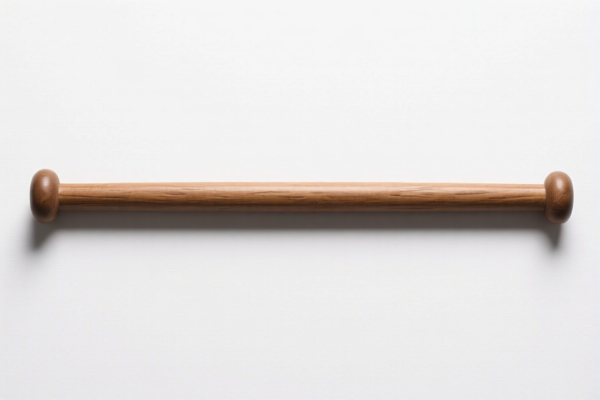
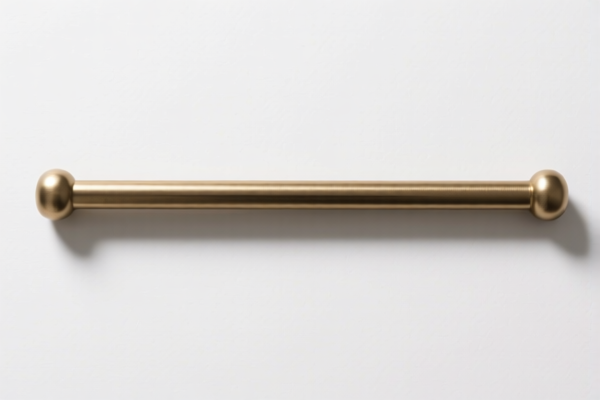
AI Analysis
🏗️ Standing Bars & Steel Structures (Iron or Steel)
🌐 HS Code Reference & Customs Clearance Guide | 2026 Latest Tariff Analysis | Structural Steel Specialist Protocol
📌 I. Product Definition & Classification: What Exactly is a "Standing Bar"?
In the context of international trade and structural engineering, a "Standing Bar" typically refers to structural components of iron or steel used in construction. These are not merely raw materials but prepared structures or parts thereof.
The term can apply to: 1. Architectural & Ornamental Work: Decorative ironwork, balustrades, columns, pillars, or lattice masts used for aesthetic purposes in buildings. 2. Prepared Structural Parts: Bars, angles, shapes, or tubes specifically prepared for use in structures (e.g., bridge sections, roof frameworks, door/window frames).
⚠️ Critical Distinction:
- If the item is a raw steel bar/rod with no specific structural preparation → It may fall under Chapter 72 (Iron & Steel Articles).
- If the item is prepared for use in structures (e.g., cut to size, drilled, welded, or designed as a structural component like a column or balustrade) → It falls under Heading 7308.
- Crucial: Prefabricated buildings (Heading 9406) are excluded from 7308.
📦 II. HS Code Classification Details (2026 Latest Tariff)
Based on the provided data, "Standing Bars" of iron or steel, prepared for use in structures, are classified under HS Code 7308.90. The specific sub-classification depends on whether the item is architectural/ornamental or general structural.
| HS Code | Product Description | Application Scenario | Key Identifier |
|---|---|---|---|
7308.90.95.60 |
Architectural and Ornamental Work | Decorative columns, balustrades, lattice masts, ornamental gates, aesthetic ironwork | ✅ Yes (If designed for visual/aesthetic contribution) |
7308.90.95.90 |
Other | General structural bars, prepared rods, angles, shapes, tubes for bridges, roofs, doors, windows | ✅ No (General utility, not primarily ornamental) |
🔍 Key Clarification:
- Both codes fall under "Other: Other: Other: Other" within Heading 7308.
- The distinction hinges on "Architectural and Ornamental" vs. "Other".
- If the standing bar is a structural support (e.g., a load-bearing column), it likely falls under7308.90.95.90.
- If it is a decorative element (e.g., a cast-iron pillar, decorative railing), it falls under7308.90.95.60.
💰 III. 2026 Tariff Rate Breakdown (Detailed Tax Clauses)
✅ Applicable Country: United States (US)
✅ Origin: China (CN) (Note: Tax details indicate China-origin specific surcharges)
✅ Effective Date: Current as of 2026 Analysis
🎯 1. 7308.90.95.60 – Architectural and Ornamental Work
| Item | Detail |
|---|---|
| Base Tariff | 0.0% |
| Additional Tariff (Section 301) | +25.0% (Steel, Aluminum, Copper Products Surcharge) |
| IEEPA Surcharge | +50.0% (Steel, Aluminum, Copper Products Surcharge) |
| Total Tax Rate | 75.0% |
| Tax Calculation | CIF Value × 75% |
| De Minimis Exemption | ❌ Not Applicable |
| Legal Basis Path | USITC:7308.90.95.60 → Footnote: Steel/Aluminum/Copper Surcharge |
📌 Explanation:
- The 75% total tax is composed of:
- 0% Base MFN Rate
- 25% Section 301 Additional Duty (China-origin steel/iron articles)
- 50% IEEPA (International Emergency Economic Powers Act) Surcharge on Steel/Aluminum/Copper
- Total: 75%. This is an extremely high duty rate.
🎯 2. 7308.90.95.90 – Other (General Structural Parts)
| Item | Detail |
|---|---|
| Base Tariff | 0.0% |
| Additional Tariff (Section 301) | +25.0% (Steel, Aluminum, Copper Products Surcharge) |
| IEEPA Surcharge | +50.0% (Steel, Aluminum, Copper Products Surcharge) |
| Total Tax Rate | 75.0% |
| Tax Calculation | CIF Value × 75% |
| De Minimis Exemption | ❌ Not Applicable |
| Legal Basis Path | USITC:7308.90.95.90 → Footnote: Steel/Aluminum/Copper Surcharge |
📌 Note:
- Both subheadings under 7308.90.95 carry the identical 75% total tax rate.
- The surcharge applies to all iron/steel structures and parts, regardless of whether they are ornamental or general structural.
- There is no tariff differential between7308.90.95.60and7308.90.95.90in terms of duty rate.
🛠️ IV. Customs Clearance Practical Advice
✅ 1. Documentation Checklist (Essential)
| Document | Required | Purpose |
|---|---|---|
| ✅ Commercial Invoice | ✔️ | Must clearly state "Structural Steel Bars/Parts" or "Architectural Ironwork" |
| ✅ Packing List | ✔️ | Detail weights, dimensions, and quantities |
| ✅ Product Specifications | ✔️ | Describe material (e.g., "Carbon Steel"), dimensions, and surface treatment |
| ✅ Structural Drawings/Photos | ✔️ | Prove whether the item is prepared for use in structures (e.g., pre-drilled holes, welded joints) |
| ✅ Origin Certificate | ✔️ | Confirm China origin to apply correct surcharges |
| ✅ Bill of Lading | ✔️ | Standard shipping document |
✅ 2. Declaration Tips (Critical Keywords)
🔥 "Structure, Not Raw Material"
| Scenario | Correct Declaration | Incorrect Declaration | Risk |
|---|---|---|---|
| Decorative Iron Column | 7308.90.95.60 - "Architectural Ornamental Steel Column" |
"Steel Rod" | Risk of misclassification to Chapter 72 (lower duty) → Audit/Fine |
| Structural Steel Bar for Roof | 7308.90.95.90 - "Steel Bar Prepared for Structural Use" |
"Raw Steel Bar" | Risk of duty underpayment if deemed "prepared" |
| Prefabricated Building Module | ❌ Do NOT use 7308 | 9406 (Prefabricated Buildings) |
7308 explicitly excludes prefabricated buildings of 9406 |
⚠️ Warning:
- If the "standing bar" is part of a complete prefabricated building, it must be declared under 9406, not 7308.
- Ensure the description highlights "prepared for use in structures" to justify Heading 7308.
✅ 3. Special Case Handling
| Case | Recommendation |
|---|---|
| OEM Custom Steel Bars | Provide client-specific design drawings to prove "prepared for use" |
| Mixed Shipment | Separate ornamental (7308.90.95.60) from structural (7308.90.95.90) for accurate description |
| Raw Steel vs. Prepared | If raw, no holes/cuts → Consider Chapter 72. If prepared (cut, drilled, welded) → 7308 |
🌍 V. Global Market Comparison (2026)
| Country/Region | Recommended HS Code | Tariff (China Origin) | Notes |
|---|---|---|---|
| 🇺🇸 USA | 7308.90.95.60 / 7308.90.95.90 |
75% | High surcharge due to IEEPA & Section 301 |
| 🇨🇳 China | 7308.90.95.60 / 7308.90.95.90 |
~6-10% | Standard MFN rate + VAT |
| 🇪🇺 EU | 7308.90 |
~6.5% | No major surcharges on steel structures |
| 🇬🇧 UK | 7308.90 |
~6.5% | Post-Brexit tariff regime |
| 🇨🇦 Canada | 7308.90 |
~0-6.5% | CUSMA may apply for eligible goods |
📌 Conclusion:
- The USA imposes a prohibitive 75% tariff on iron/steel structures from China.
- Exporters must factor this into pricing or seek exclusions (if applicable).
- Consider origin diversification (e.g., Vietnam, Mexico) for US-bound shipments to mitigate tariffs.
📌 VI. Common Mistakes & Pitfalls
❌ Mistake 1: Declaring "Steel Bars" as raw material (Chapter 72) when they are prepared for structures.
👉 Consequence: Customs may reclassify to 7308 → 75% duty retroactively applied + penalties.
❌ Mistake 2: Including prefabricated buildings under 7308.
👉 Consequence: Misclassification → Delayed clearance, potential seizure.
❌ Mistake 3: Ignoring the 75% total tax.
👉 Consequence: Underpaid duties → Seizure, fines, and blacklisting.
❌ Mistake 4: Vague descriptions like "Metal Bar".
👉 Consequence: Customs ambiguity → Increased inspection time, potential delays.
✅ Correct Practice:
"Steel Structural Column, Prepared for Use in Building Framework, Cut & Drilled, Model XYZ, China Origin"
🎯 VII. Conclusion: Precision Matters in Structural Steel Trade
🎯 Key Takeaway:
🔹 "7308 is for Prepared Structures, Not Raw Steel."
🔹 "75% Tax in the USA – Plan Accordingly."
🔹 "Distinguish Ornamental vs. Structural for Accurate Description."
📌 Pro Tip:
- If exporting to the US, consider tariff engineering (e.g., separating components if possible) or origin shifting.
- Always request Advance Rulings from CBP if the classification is ambiguous.
📣 Act Now:
📞 Consult a licensed customs broker.
📄 Provide detailed technical drawings.
💼 Optimize supply chain to mitigate 75% US Tariff.
✨ Professional Clearance Starts with Precise Classification!
💼 Every Percent Saved is a Profit Protected!
Customer Reviews
About HS Code Classification
The Harmonized System (HS) is an internationally standardized nomenclature developed by the World Customs Organization (WCO) to classify traded products. Over 200 countries use the HS system as the basis for customs tariffs, trade statistics, and import/export regulations.
Each HS code follows a hierarchical structure:
- Chapter (2 digits) — Broad category of goods (e.g., Chapter 84: Machinery and Mechanical Appliances)
- Heading (4 digits) — More specific grouping within the chapter
- Subheading (6 digits) — Internationally standardized breakdown, used by all WCO member countries
- National subdivisions (8-10 digits) — Country-specific extensions for further classification, such as US HTSUS 10-digit codes
Correct HS code classification is essential for smooth customs clearance, accurate duty payment, and compliance with trade regulations. Misclassification can lead to customs delays, overpayment of duties, or penalties.
When importing from CN to US, the applicable tariff rates may include:
- Most-Favored-Nation (MFN) rate — The standard duty rate applied to WTO members
- General rate — Applied to countries without trade agreements
- Trade remedy duties — Additional tariffs such as Section 301 (anti-dumping), Section 232 (national security), or countervailing duties
The information provided on this page is for reference purposes only. For official classification, please consult with your local customs authority or a licensed customs broker.