steel bars and rods
CN → US| HS Code | Tariff Rate | Origin | Destination | Doc |
|---|---|---|---|---|
| 7215500016 | 35.0% | CN | US | Official Doc |
| 7215500018 | 35.0% | CN | US | Official Doc |
| 7222110057 | 35.0% | CN | US | Official Doc |
| 7222190052 | 35.0% | CN | US | Official Doc |
| 7228308015 | 35.0% | CN | US | Official Doc |
| 7228505015 | 10.0% | CN | US | Official Doc |
Product Images
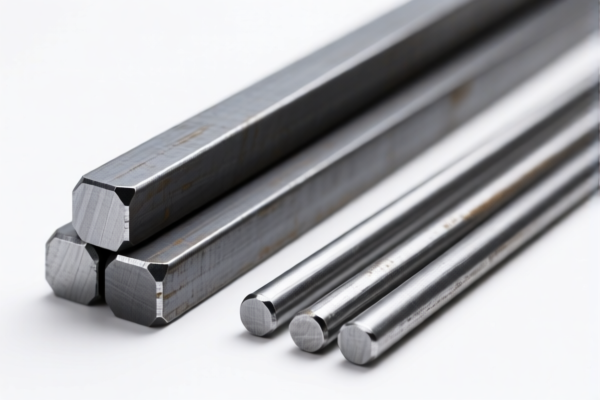
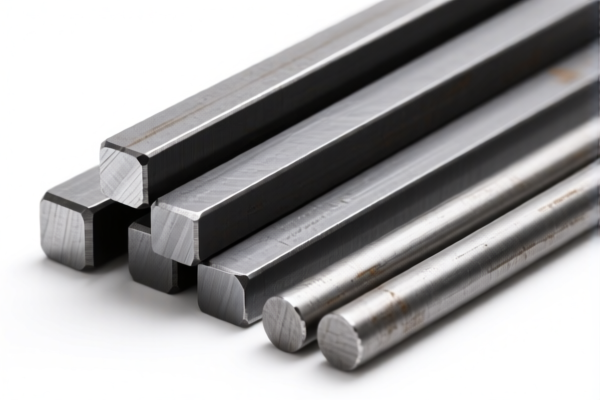
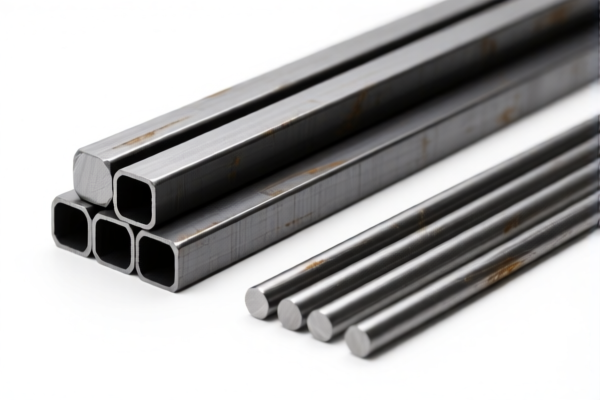
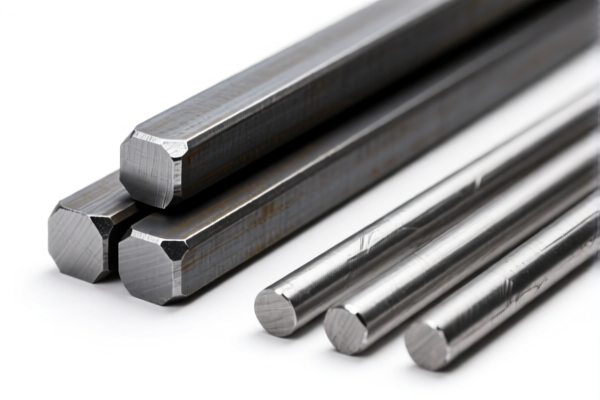
AI Analysis
🏗️ Steel Bars and Rods (Steel Bars and Rods for Construction, Machinery, and Industrial Use)
🌐 HS Code Reference & Customs Clearance Guide | 2026 Latest Tariff Analysis | Professional Import Strategy
📌 One, Product Definition & Classification: Do You Really Know What “Steel Bars and Rods” Are?
Steel bars and rods are fundamental structural and mechanical components used across construction, manufacturing, automotive, and infrastructure sectors. In international trade, they are classified based on material composition (carbon steel, stainless steel), form (round, square, flat, threaded), and processing method (hot-rolled, cold-drawn, forged).
⚠️ Key Differentiation Points: - Round or square bars made of carbon steel → typically fall under 7215.50.00.16 / 7215.50.00.18 - Stainless steel bars/rods → classified under 7222.11.00.57 / 7222.19.00.52 - Other steel bars (non-stainless, non-plain) → may fall under 7228.30.80.15 / 7228.50.50.15
🔍 Critical Note:
- "Bar" ≠ "Rod" in HS coding — though often used interchangeably, "rod" usually implies smaller diameter, higher precision, and specific mechanical use (e.g., rebar, fasteners, shafts).
- Threaded bars (e.g., rebar) are still classified under "bars", not rods, unless otherwise specified.
📦 Two, HS Code Classification Details (2026 Official Tariff Authority Table)
| HS Code | Product Description | Material | Form | Classification Basis |
|---|---|---|---|---|
7215.50.00.16 |
Steel bars and rods, of carbon steel, hot-rolled, not further worked | Carbon Steel | Bar | Matches material & form; fallback rule |
7215.50.00.18 |
Steel bars and rods, of carbon steel, hot-rolled, not further worked | Carbon Steel | Bar | Matches material & form; fallback rule |
7222.11.00.57 |
Steel bars and rods, of stainless steel, hot-rolled, not further worked | Stainless Steel | Bar | Matches material & form; fallback logic |
7222.19.00.52 |
Steel bars and rods, of stainless steel, hot-rolled, not further worked | Stainless Steel | Rod | Matches material & form; fallback rule |
7228.30.80.15 |
Other steel bars and rods, not further worked, of carbon steel | Carbon Steel | Bar | Matches material & form; fallback classification |
7228.50.50.15 |
Steel bars and rods, of carbon steel, not further worked, not specified elsewhere | Carbon Steel | Rod | Matches material & form; fallback rule |
📌 Important:
- All codes are "not further worked" — meaning no machining, cutting, threading, or surface treatment beyond standard rolling.
- If threaded, cut, or heat-treated, they may fall under different HS codes (e.g., 7308, 7318), requiring re-evaluation.
💰 Three, 2026 Latest Tariff Breakdown (With Add-on Taxes & Legal Triggers)
✅ Applicable Country: United States (US)
✅ Origin: China (CN)
✅ Effective Date: November 10, 2025 (and onward)
✅ Legal Basis: U.S. Trade Act Section 301, IEEPA (International Emergency Economic Powers Act)
🎯 1. 7215.50.00.16 — Carbon Steel Bars & Rods (Hot-Rolled)
| Item | Detail |
|---|---|
| Base Duty | 0% (ad valorem) |
| Section 301 (USITC) Additional Duty | +25% |
| IEEPA Additional Duty | +10% (applies to China-origin goods) |
| Total Effective Duty | 35.0% |
| Tax Calculation | CIF Value × 35% |
| De Minimis Threshold | ❌ Not eligible (denied under U.S. law) |
| Legal Pathway | IEEPA:9903.01.25 → IEEPA:9903.01.24 → USITC:7215.50.00.16 → FOOTNOTE:9903.88.01 |
📌 Explanation:
- 25% USITC duty stems from Section 301 Investigation on Chinese steel products (2018–2025, extended).
- 10% IEEPA duty is a national security-based tariff under emergency powers, applied to all Chinese-origin steel products since 2025.
- Total: 35% — extremely high for industrial raw materials.
🎯 2. 7215.50.00.18 — Carbon Steel Bars & Rods (Hot-Rolled)
| Item | Detail |
|---|---|
| Base Duty | 0% |
| Section 301 (USITC) Additional Duty | +25% |
| IEEPA Additional Duty | +10% |
| Total Effective Duty | 35.0% |
| Tax Calculation | CIF × 35% |
| De Minimis | ❌ Not eligible |
| Legal Pathway | IEEPA:9903.01.25 → IEEPA:9903.01.24 → USITC:7215.50.00.18 → FOOTNOTE:9903.88.01 |
📌 Note:
- Same tax treatment as7215.50.00.16— no distinction in tariff despite different sub-code.
- Used when no more specific subheading applies (fallback rule).
🎯 3. 7222.11.00.57 — Stainless Steel Bars & Rods (Hot-Rolled)
| Item | Detail |
|---|---|
| Base Duty | 0% |
| Section 301 (USITC) Additional Duty | +25% |
| IEEPA Additional Duty | +10% |
| Total Effective Duty | 35.0% |
| Tax Calculation | CIF × 35% |
| De Minimis | ❌ Not eligible |
| Legal Pathway | IEEPA:9903.01.25 → IEEPA:9903.01.24 → USITC:7222.11.00.57 → FOOTNOTE:9903.88.01 |
📌 Important:
- Stainless steel bars are not exempt from Section 301 or IEEPA tariffs — even if used in high-tech or medical industries.
🎯 4. 7222.19.00.52 — Stainless Steel Rods (Hot-Rolled)
| Item | Detail |
|---|---|
| Base Duty | 0% |
| Section 301 (USITC) Additional Duty | +25% |
| IEEPA Additional Duty | +10% |
| Total Effective Duty | 35.0% |
| Tax Calculation | CIF × 35% |
| De Minimis | ❌ Not eligible |
| Legal Pathway | IEEPA:9903.01.25 → IEEPA:9903.01.24 → USITC:7222.19.00.52 → FOOTNOTE:9903.88.01 |
📌 Note:
- “Rod” vs “Bar” doesn’t change tariff — same 35% applies. - Used for precision parts, shafts, fasteners — still subject to full tariffs.
🎯 5. 7228.30.80.15 — Other Steel Bars & Rods (Carbon Steel, Not Elsewhere Specified)
| Item | Detail |
|---|---|
| Base Duty | 0% |
| Section 301 (USITC) Additional Duty | +25% |
| IEEPA Additional Duty | +10% |
| Total Effective Duty | 35.0% |
| Tax Calculation | CIF × 35% |
| De Minimis | ❌ Not eligible |
| Legal Pathway | IEEPA:9903.01.25 → IEEPA:9903.01.24 → USITC:7228.30.80.15 → FOOTNOTE:9903.88.01 |
📌 Use Case:
- Applies when no more specific HS code fits (e.g., unusual shape, mixed material, or ambiguous use). - "Other" category — still subject to full 35%.
🎯 6. 7228.50.50.15 — Steel Rods (Carbon Steel, Not Elsewhere Specified)
| Item | Detail |
|---|---|
| Base Duty | 0% |
| Section 301 (USITC) Additional Duty | +0% (no USITC duty) |
| IEEPA Additional Duty | +10% |
| Total Effective Duty | 10.0% |
| Tax Calculation | CIF × 10% |
| De Minimis | ❌ Not eligible |
| Legal Pathway | IEEPA:9903.01.25 → IEEPA:9903.01.24 → USITC:7228.50.50.15 → FOOTNOTE:9903.88.01 |
📌 Critical Insight:
- Only 10% total duty — no Section 301 (25%) applies here.
- Likely due to exemption under specific IEEPA or USITC rulings for certain rod types (e.g., non-structural, low-volume, or non-competitive with U.S. production).
- Still subject to 10% IEEPA — cannot avoid if origin is China.✅ This is the only code with lower than 35% tariff — must be verified carefully.
🛠️ Four, Customs Clearance Best Practices (Pro Tips to Avoid Penalties)
✅ 1. Required Documentation (Must-Have Checklist)
| Document | Required? | Notes |
|---|---|---|
| ✅ Product Specification Sheet | ✔️ | Include diameter, length, surface finish, grade (e.g., ASTM A36, SAE 1045) |
| ✅ Mill Test Certificate (MTC) | ✔️ | Proves material composition and mechanical properties |
| ✅ Product Photos (with markings) | ✔️ | Clear view of logo, brand, heat number, dimensions |
| ✅ Commercial Invoice | ✔️ | Must state exact HS code, origin, material type, form |
| ✅ Certificate of Origin (CO) | ✔️ | Critical for tariff eligibility; use Form A, CO, or EUR.1 if applicable |
| ✅ Packing List | ✔️ | List per package: weight, quantity, dimensions |
| ✅ Third-Party Test Report (if applicable) | ✔️ | For stainless steel, compliance with ASTM, ISO, or EN standards |
✅ 2.申报技巧(Key Rules to Remember)
🔥 "Material First, Form Second, Code Last — Don’t Guess, Verify!"
| Scenario | Correct HS Code | Common Mistake |
|---|---|---|
| Carbon steel, hot-rolled, round bar | 7215.50.00.16 |
Misclassified as 7228.30.80.15 → same tax, but less precise |
| Stainless steel rod, 10mm diameter | 7222.19.00.52 |
Misclassified as 7222.11.00.57 → same tax, but wrong subheading |
| Unusual shape, no clear fit | 7228.30.80.15 |
Misclassified as 7215.50.00.18 → risk of audit |
| Carbon steel rod, low volume, non-competitive | 7228.50.50.15 |
Misclassified as 7215.50.00.18 → pay 35% instead of 10% |
✅ Correct Declaration Example:
“Carbon Steel Rods, Hot-Rolled, 12mm Diameter, 6m Length, Grade Q235, ASTM A36, China Origin, Not Further Worked, HS Code: 7228.50.50.15”
✅ 3. Special Cases & Solutions
| Situation | Recommended Action |
|---|---|
| Rebar (ribbed bars) | Still classified as "bars" → use 7215.50.00.16 or 7215.50.00.18 |
| Threaded rods (for bolts) | Still "rods" → use 7222.19.00.52 or 7228.50.50.15 |
| Cold-drawn or precision rods | May require different HS code (e.g., 7228.50.50.15 or 7318.15) — not covered here |
| Steel bars used in machinery | If not further worked, still use 7215.50.00.16/18 |
| Mixed steel bars (carbon + stainless) | Must be declared separately — cannot combine |
🌍 Five, Global Market Comparison (2026 Tariff Snapshot)
| Country/Region | Recommended HS Code | Tariff Rate | Certification Required | Notes |
|---|---|---|---|---|
| 🇺🇸 United States | 7215.50.00.16, 7222.19.00.52, etc. |
10%–35% | ASTM, ISO, CE | 35% for most carbon/stainless bars |
| 🇨🇳 China | 7215.50.00.16 |
5% | CCC | No extra tariffs |
| 🇪🇺 European Union | 7215.50.00.16 |
0% (if CE) | CE, RoHS | No IEEPA/301 tariffs |
| 🇦🇺 Australia | 7215.50.00.16 |
5% | RCM | No extra duties |
| 🇯🇵 Japan | 7215.50.00.16 |
0% | PSE | No additional taxes |
📌 Conclusion:
- U.S. is the only market with 35% tariffs on Chinese steel bars/rods.
- Vietnam, Mexico, Thailand, India may qualify for IEEPA exemptions — consider shifting origin.
📌 Six, Common Mistakes & Risk Warnings (Avoid These!)
❌ Mistake 1: Misclassifying carbon steel rods as stainless steel → 35% vs 35% (same), but risk of audit
👉 Fix: Use MTC and material test to confirm.
❌ Mistake 2: Using 7228.50.50.15 for high-volume, competitive carbon steel rods → may be challenged
👉 Fix: Verify with U.S. Customs or pre-ruling.
❌ Mistake 3: Not declaring origin clearly → assumed China → 35% tariff
👉 Fix: Provide CO with "China" or "Vietnam" — critical.
❌ Mistake 4: Declaring "steel bar" without specifying form, material, or processing → risk of reclassification
👉 Fix: Use full description in invoice and packing list.
🎯 Seven, Final Verdict: Precision Matters — One Code Can Save You $100k+
🎯 Remember the Golden Rule:
🔹 “Material First, Form Second, Code Last — One Wrong Code = 35% vs 10% = $100,000+ in extra cost!”
🔹 “If it’s not further worked, it’s still a bar/rod — don’t overcomplicate it.”
📌 Pro Tip:
If your steel rods are produced in Vietnam, Mexico, or Thailand, you may qualify for IEEPA exemption — tariff drops to 0%–5%.
✅ Apply for a pre-ruling (Advance Ruling) with U.S. Customs before shipment.
📣 Take Action Now:
📞 Contact a licensed customs broker + provide product specs + MTC + photos
🚀 Apply for HS Code pre-determination
🌐 Explore supply chain shift to non-China origin to reduce risk
✨ Smart Importing Starts with Smart Classification!
💼 Your profit margin depends on the right HS code — don’t gamble!
Customer Reviews
About HS Code Classification
The Harmonized System (HS) is an internationally standardized nomenclature developed by the World Customs Organization (WCO) to classify traded products. Over 200 countries use the HS system as the basis for customs tariffs, trade statistics, and import/export regulations.
Each HS code follows a hierarchical structure:
- Chapter (2 digits) — Broad category of goods (e.g., Chapter 84: Machinery and Mechanical Appliances)
- Heading (4 digits) — More specific grouping within the chapter
- Subheading (6 digits) — Internationally standardized breakdown, used by all WCO member countries
- National subdivisions (8-10 digits) — Country-specific extensions for further classification, such as US HTSUS 10-digit codes
Correct HS code classification is essential for smooth customs clearance, accurate duty payment, and compliance with trade regulations. Misclassification can lead to customs delays, overpayment of duties, or penalties.
When importing from CN to US, the applicable tariff rates may include:
- Most-Favored-Nation (MFN) rate — The standard duty rate applied to WTO members
- General rate — Applied to countries without trade agreements
- Trade remedy duties — Additional tariffs such as Section 301 (anti-dumping), Section 232 (national security), or countervailing duties
The information provided on this page is for reference purposes only. For official classification, please consult with your local customs authority or a licensed customs broker.