steel sheet piling
CN → US| HS Code | Tariff Rate | Origin | Destination | Doc |
|---|---|---|---|---|
| 7301100000 | 35.0% | CN | US | Official Doc |
| 7301201000 | 85.0% | CN | US | Official Doc |
Product Images
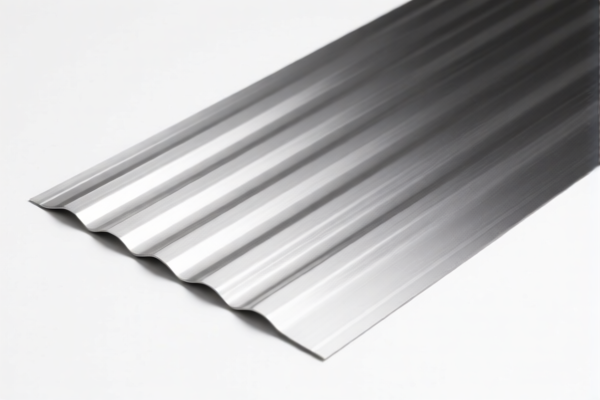
AI Analysis
🏗️ Steel Sheet Piling: HS Code Classification & 2026 Customs Clearance Strategy
🌐 HS Code Reference & Clearance Guide | 2026 Latest Tariff Analysis | Professional Clearance Strategy
📌 I. Product Definition & Classification: Do You Really Understand "Sheet Piling"?
Steel sheet piling is a critical construction material used for retaining walls, cofferdams, and underground structures. In international trade, it is categorized under Chapter 73 (Articles of Iron or Steel), specifically within Heading 7301.
The classification depends heavily on whether the product is a complete "sheet pile" (interlocking profile) or a generic welded shape/section.
⚠️ Key Distinction:
- Sheet Piling (Interlocking/Profiled): Designed specifically for interlocking to form continuous walls. → 7301.10
- Angles, Shapes, Sections (Generic Welded): Standard structural shapes (even if welded) that do not meet the specific definition of sheet piling. → 7301.20
📦 II. HS Code Classification Details (2026 Latest Tariff Authority Comparison)
| HS Code | Product Description | Applicable Scenario | Key Features |
|---|---|---|---|
7301.10.00.00 |
Sheet Piling | Interlocking steel profiles for retaining walls, cofferdams | ✅ Interlocking lips/grooves; specific wall-forming function |
7301.20.10.00 |
Welded Angles, Shapes, and Sections (Of Iron or Nonalloy Steel) | Generic welded steel sections (U, Z, H, L shapes) | ❌ No interlocking lips; standard structural steel shapes |
🔍 Critical Reminder:
- 7301.10 is for products specifically designed as sheet piling (e.g., Larssen piles, U-sections with interlocking edges).
- 7301.20 is for general structural steel shapes that happen to be welded. If your product lacks interlocking features, it likely falls here, even if used for similar purposes.
- Do not misclassify generic welded sections as sheet piling to avoid customs penalties.
💰 III. 2026 Latest Tariff Rate Breakdown (Including Additional Taxes & Policies)
✅ Applicable Country: United States (US)
✅ Country of Origin: China (CN)
✅ Effective Time: Current rates apply (as per 2026 data provided)
🎯 1. 7301.10.00.00 — Sheet Piling
| Item | Content |
|---|---|
| Base Tariff Rate | 0.0% (ad valorem) |
| Additional Tariff (Trade Act 301) | +25.0% |
| Total Tariff Rate | 25.0% |
| Tax Calculation | CIF Value × 25% |
| De Minimis Exemption | ❌ Not Applicable (Steel products are generally excluded from de minimis thresholds) |
| Legal Basis | HTSUS 7301.10.00.00 + Section 301 Footnotes |
📌 Explanation:
- The base tariff for sheet piling is 0%.
- However, due to Section 301 of the Trade Act of 1974, a 25% additional tariff is applied to Chinese-origin steel sheet piling.
- Total Cost Impact: 25% on the CIF value. This is a significant cost factor that must be pre-calculated.
🎯 2. 7301.20.10.00 — Welded Angles, Shapes, and Sections (Iron/Nonalloy Steel)
| Item | Content |
|---|---|
| Base Tariff Rate | 0.0% (ad valorem) |
| Additional Tariff (Trade Act 301) | +25.0% |
| Additional Tariff (Steel/Aluminum/Copper) | +50.0% |
| Total Tariff Rate | 75.0% |
| Tax Calculation | CIF Value × 75% |
| De Minimis Exemption | ❌ Not Applicable |
| Legal Basis | HTSUS 7301.20.10.00 + Section 301 + Section 232 (Steel) |
📌 Warning:
- This classification carries a massive 75% total tariff.
- The 50% additional tariff is imposed under Section 232 (National Security) on specific steel products, which often overlaps with generic welded shapes.
- Cost Impact: 75% is extremely high. Misclassifying sheet piling as a generic shape can lead to either underpayment (if 25% was expected) or overpayment (if 75% is due). Accurate classification is vital.
🛠️ IV. Practical Clearance Advice (Pitfall Avoidance Guide)
✅ 1. Required Documentation Checklist (Mandatory)
| Document | Required | Description |
|---|---|---|
| ✅ Product Specifications | ✔️ | Detailed dimensions, cross-section profile, interlocking mechanism (if any) |
| ✅ Technical Drawing | ✔️ | Must show cross-section clearly to prove if it is "Sheet Piling" (interlocking) or "Welded Section" |
| ✅ Commercial Invoice | ✔️ | Must clearly state "Steel Sheet Piling" or "Welded Structural Steel" |
| ✅ Country of Origin Certificate | ✔️ | Essential for determining Section 301/232 applicability |
| ✅ Packing List | ✔️ | Weight, dimensions, and packaging details |
✅ 2. Declaration Tips (Key Mnemonic)
🔥 "Interlocking is Piling (25%), Welded Shapes are High (75%)!"
| Scenario | Correct Classification | Incorrect Practice |
|---|---|---|
| Larssen/U-section with interlocking lips | 7301.10.00.00 (25%) |
Misclassified as generic section → 75% penalty |
| Standard welded H-beam or U-channel (no interlock) | 7301.20.10.00 (75%) |
Misclassified as sheet piling → 25% underpayment risk |
| Nonalloy Steel Welded Shapes | 7301.20.10.00 |
Classified as alloy steel (if incorrect) → Wrong rate |
📌 Note:
- If your product is welded angles, shapes, or sections made of iron or nonalloy steel, it falls under 7301.20.10.00 with a 75% total tariff.
- If your product is specifically sheet piling (interlocking), it falls under 7301.10.00.00 with a 25% total tariff.
✅ 3. Special Case Handling
| Scenario | Handling Advice |
|---|---|
| Custom-Built Interlocking Piles | Provide cross-section drawings to prove interlocking feature → Qualifies for 25% tariff |
| Welded Structural Shapes for Walls | Even if used for retaining walls, if not interlocking → Must use 7301.20.10.00 (75% tariff) |
| Alloy Steel Components | Not covered in the provided data; check specific alloy steel tariffs (likely 7301.30.00.00+) |
| Non-Chinese Origin | If from Vietnam, Mexico, etc., Section 301/232 may not apply → 0% tariff (verify with local regulations) |
🌍 V. Global Market Clearance Comparison (2026 Latest)
| Country/Region | Recommended HS Code | Tariff (China Origin) | Certification | Notes |
|---|---|---|---|---|
| 🇺🇸 USA | 7301.10.00.00 (Piling) |
25% | No specific cert required for steel itself | High tariff due to trade tensions |
| 🇺🇸 USA | 7301.20.10.00 (Welded) |
75% | None | Extremely high due to Section 232 + 301 |
| 🇪🇺 EU | 7301.10 (Harmonized) | 0% (if origin is EU) | CE (if structural component) | No Section 301/232 equivalents |
| 🇨🇳 China | 7301.10 | 0-10% (varies) | CCC (if applicable) | Lower tariffs for domestic use |
| 🇬🇧 UK | 7301.10 | 0% | UKCA | Post-Brexit rules apply |
📌 Conclusion:
- USA imposes the highest tariffs on Chinese steel products.
- Classification is critical: Sheet Piling (25%) vs. Welded Shapes (75%) is a 50% difference in cost.
- Always provide cross-section drawings to justify the classification.
📌 VI. Common Mistakes & Pitfalls (Blood & Tears Lessons)
❌ Mistake 1: Calling all steel wall materials "Sheet Piling"
👉 Consequence: If non-interlocking, you face 75% tariff instead of 25%. Overpayment!
❌ Mistake 2: Classifying welded H-beams as Sheet Piling
👉 Consequence: Customs audit reveals non-interlocking design → Underpayment + Penalties + Interest.
❌ Mistake 3: Ignoring the "Nonalloy Steel" specification in 7301.20.10.00
👉 Consequence: If alloy steel, different HS code may apply → Wrong duty rate.
✅ Correct Practice:
“Steel Sheet Piling, Larssen Type, Interlocking, Hot-Rolled, Nonalloy Steel, Origin: China”
🎯 VII. Conclusion: Precise Classification Saves Money!
🎯 Remember:
🔹 “Interlocking = 25% (7301.10), Welded Shapes = 75% (7301.20).”
🔹 “Cross-section drawings are your best friend in customs clearance.”
🔹 “Steel tariffs are high; misclassification is expensive.”
📌 Pro Tip:
If your steel products are originating from Vietnam, Mexico, Thailand, or Malaysia, you may avoid Section 301/232 tariffs, resulting in 0%–7% duty.
Recommendation: Seek Advance Rulings (P-95) from US Customs if your product type is ambiguous.
📣 Immediate Action:
📞 Contact a licensed customs broker + Provide cross-section drawings + Apply for HS Code Advance Ruling
🚀 Ensure your steel sheet piling clears customs smoothly, avoids penalties, and maximizes profit!
✨ Professional clearance starts with accurate classification!
💼 Every dollar of cost deserves precise calculation!
Customer Reviews
About HS Code Classification
The Harmonized System (HS) is an internationally standardized nomenclature developed by the World Customs Organization (WCO) to classify traded products. Over 200 countries use the HS system as the basis for customs tariffs, trade statistics, and import/export regulations.
Each HS code follows a hierarchical structure:
- Chapter (2 digits) — Broad category of goods (e.g., Chapter 84: Machinery and Mechanical Appliances)
- Heading (4 digits) — More specific grouping within the chapter
- Subheading (6 digits) — Internationally standardized breakdown, used by all WCO member countries
- National subdivisions (8-10 digits) — Country-specific extensions for further classification, such as US HTSUS 10-digit codes
Correct HS code classification is essential for smooth customs clearance, accurate duty payment, and compliance with trade regulations. Misclassification can lead to customs delays, overpayment of duties, or penalties.
When importing from CN to US, the applicable tariff rates may include:
- Most-Favored-Nation (MFN) rate — The standard duty rate applied to WTO members
- General rate — Applied to countries without trade agreements
- Trade remedy duties — Additional tariffs such as Section 301 (anti-dumping), Section 232 (national security), or countervailing duties
The information provided on this page is for reference purposes only. For official classification, please consult with your local customs authority or a licensed customs broker.