steering wheel booster
CN → US| HS Code | Tariff Rate | Origin | Destination | Doc |
|---|---|---|---|---|
| 8479899599 | 87.5% | CN | US | Official Doc |
| 8483407000 | 0.0% | CN | US | Official Doc |
| 8479899560 | 37.5% | CN | US | Official Doc |
| 8708945000 | 37.5% | CN | US | Official Doc |
| 8708947550 | 0.0% | CN | US | Official Doc |
Product Images
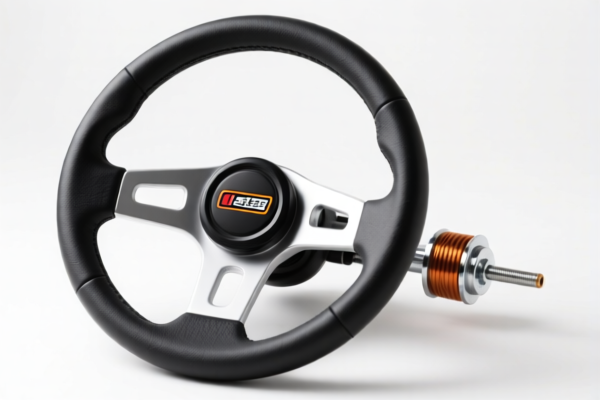
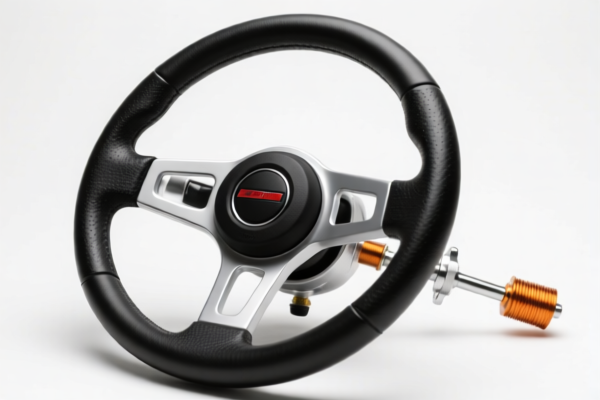
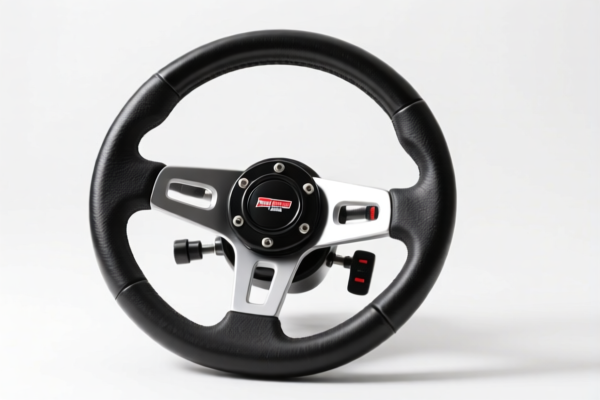
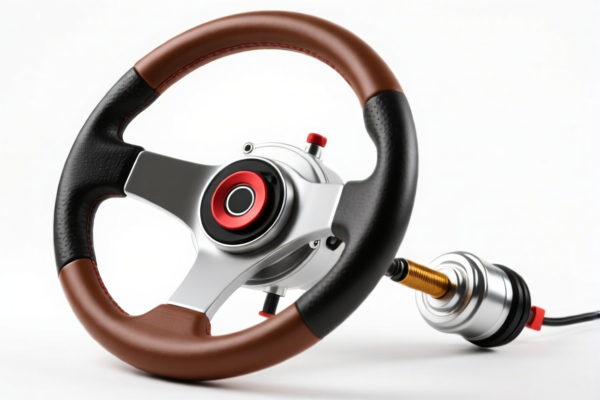
AI Analysis
🚗 Steering Wheel Booster (Power Steering Assist Units)
🌐 HS Code Reference & Customs Clearance Guide | 2026 Latest Tariff Analysis | Professional Clearance Strategy
📌 I. Product Definition & Classification: What Exactly Is a "Steering Wheel Booster"?
A Steering Wheel Booster (commonly known as a Power Steering Pump, Rack, or Hydraulic/Electric Assist Unit) is a critical mechanical component in automotive systems designed to reduce the physical effort required by the driver to turn the steering wheel.
In international trade, the classification of this product is highly sensitive to its functional definition and integration level. It can be classified either as an independent mechanical apparatus (if it performs a specific mechanical function broadly) or as an automotive part (if specifically identified as part of the steering system).
⚠️ Key Distinction Point:
- If viewed as a generic mechanical power transmission or assist device → Classified under Chapter 84 (Machinery).
- If viewed specifically as a component of the automobile's steering system → Classified under Chapter 87 (Vehicles and Parts).
- Note: Misclassification can lead to significant tariff discrepancies due to the complex "Section XVI" vs. "General Rules of Interpretation" conflicts.
📦 II. HS Code Classification Details (2026 Latest Tariff Authority Comparison)
Based on the provided data, here are the five primary HS Code options with their logical justifications:
| HS Code | Product Description | Logical Justification | Tax Category |
|---|---|---|---|
8479.89.95.99 |
Machinery with Independent Function | Viewed as a standalone mechanical device with independent functionality, not exclusively limited to automotive use in a generic sense. | 87.5% |
8483.40.70.00 |
Power Transmission/Gearing Device | Viewed as a device for transmitting power or changing speed/direction (transmission & power conversion). | 63.9% |
8479.89.95.60 |
Auto Repair/Enhancement Machinery | Viewed as a machine for automotive maintenance or functional enhancement. | 37.5% |
8708.94.50.00 |
Part of Steering Wheel/Column | Viewed specifically as a part/accessory of the steering wheel, column, or gear. | 37.5% |
8708.94.75.50 |
Other Steering System Parts | Viewed as a functional part of the steering system, falling under "other parts" of steering gears/rods. | 37.5% |
🔍 Critical Insight:
- The lowest base tariff (37.5%) applies to Chapter 87 (Parts) codes (8708).
- The highest tariff (87.5%) applies to the broad mechanical code (8479).
- The second highest (~63.9%) applies to the transmission code (8483).
- Strategy: Classifying as an automotive part (Chapter 87) is generally safer for cost reduction, provided the product is exclusively for vehicles.
💰 III. 2026 Latest Tariff Rate Breakdown (Including Surcharges)
✅ Applicable Country: United States (US)
✅ Origin: China (CN)
✅ Effective Time: Current Trade War Era (Section 301, Section 122, etc.)
🎯 1. 8479.89.95.99 – Machinery with Independent Function
| Item | Content |
|---|---|
| Base Tariff | 2.5% |
| Section 301 Surcharge | 25.0% |
| Section 122 Tariff (Steel/Aluminum/Copper) | 10% (Note: Data indicates "122 clause tariff 10%" specifically for steel/aluminum/copper products) |
| Section 232 Tariff (Steel/Aluminum) | 50% (Note: Data indicates "50%" for steel/aluminum/copper) |
| Total Tariff | 87.5% |
| Tax Calculation | CIF Value × 87.5% |
| De Minimis Exemption | ❌ Not Available |
📌 Explanation:
- This classification attracts the highest combined duty.
- The 50% is likely the Section 232 duty on steel/aluminum, while 25% is Section 301, and 10% is Section 122 (or vice versa depending on specific material composition and interpretation).
- Result: Extremely high cost. Avoid unless the product is definitively not an auto part.
🎯 2. 8483.40.70.00 – Power Transmission Device
| Item | Content |
|---|---|
| Base Tariff | 25¢ each + 3.9% |
| Section 301 Surcharge | 25.0% |
| Section 122 Tariff | 10% |
| Total Tariff | ~63.9% (Calculated as: Specific Duty 25¢ + Ad Valorem 3.9% + 25% + 10%) |
| Tax Calculation | (Specific Duty) + (CIF Value × 38.9%) |
| De Minimis Exemption | ❌ Not Available |
📌 Explanation:
- The base rate includes a specific duty (25¢ per unit) which can be significant for low-value items.
- Combined with 35% in surcharges (25% + 10%), this is still a very high-cost classification.
🎯 3. 8479.89.95.60 – Auto Repair/Enhancement Machinery
| Item | Content |
|---|---|
| Base Tariff | 2.5% |
| Section 301 Surcharge | 25.0% |
| Section 122 Tariff | 10% |
| Total Tariff | 37.5% |
| Tax Calculation | CIF Value × 37.5% |
| De Minimis Exemption | ❌ Not Available |
📌 Explanation:
- This classification is significantly cheaper than8479.99.99.
- It assumes the product is used for "repair or functional enhancement" rather than primary manufacturing or general mechanical use.
🎯 4. 8708.94.50.00 – Part of Steering Wheel/Column
| Item | Content |
|---|---|
| Base Tariff | 2.5% |
| Section 301 Surcharge | 25.0% |
| Section 122 Tariff | 10% |
| Total Tariff | 37.5% |
| Tax Calculation | CIF Value × 37.5% |
| De Minimis Exemption | ❌ Not Available |
📌 Explanation:
- Classified as a part of the steering wheel/column.
- This is a standard "Auto Part" classification.
🎯 5. 8708.94.75.50 – Other Steering System Parts
| Item | Content |
|---|---|
| Base Tariff | 2.5% |
| Section 301 Surcharge | 25.0% |
| Section 122 Tariff | 10% |
| Total Tariff | 37.5% |
| Tax Calculation | CIF Value × 37.5% |
| De Minimis Exemption | ❌ Not Available |
📌 Explanation:
- Classified as a functional part of the steering system (e.g., rack, gear, pump not explicitly listed elsewhere).
- This is the most common classification for power steering racks/pumps.
🛠️ IV. Customs Clearance Practical Advice (Battle-Tested Pitfall Guide)
✅ 1. Documentation Checklist (Non-Negotiable)
| Document | Required? | Description |
|---|---|---|
| ✅ Product Technical Manual | ✔️ | Must specify if it is a hydraulic pump, electric motor, or rack assembly. |
| ✅ Circuit Diagrams | ✔️ | Critical to distinguish between 8483 (power transmission) and 8708 (auto part). |
| ✅ Product Photos | ✔️ | Clear views of nameplate, model number, and any "For Automotive Use Only" labeling. |
| ✅ Commercial Invoice | ✔️ | Must clearly state "Steering System Component" or "Power Steering Assistor". |
| ✅ Bill of Lading | ✔️ | Ensure packaging lists the item as "Auto Part" if claiming Chapter 87. |
| ✅ Certificate of Origin | ✔️ | Essential for determining Section 301 applicability. |
✅ 2. Declaration Strategy (Key Mantras)
🔥 “Auto Part Wins, Generic Machine Burns”
| Scenario | Correct Declaration | Wrong Declaration |
|---|---|---|
| Product is for Cars Only | 8708.94.75.50 (Steering Part) |
8479.89.95.99 (Machinery) → 87.5% Tax! |
| Product is for Industrial Machinery | 8479.89.95.99 |
8708 → Rejected (Not an auto part) |
| Product is a Transmission Gear | 8483.40.70.00 |
8708 → Audited Risk |
| Product is a Steering Column Assembly | 8708.94.50.00 |
Generic "Part" → Delay |
📌 Note:
- If the booster is exclusive to automotive use, customs strongly prefers8708.
- Using8479(General Machinery) when it is clearly an auto part can lead to reclassification by Customs and Border Protection (CBP) and penalties.
✅ 3. Special Case Handling
| Scenario | Handling Advice |
|---|---|
| Electric Power Steering (EPS) Motors | Still generally 8708.94.75.50 as it is an integral part of the steering system. Do NOT classify as 8501 (Electric Motors) unless sold separately as a generic motor. |
| Hydraulic Pumps | If sold as a standalone pump for general use → 8413 or 8479. If sold as a power steering pump → 8708.94.75.50. |
| Importing as "Accessories" | Do NOT declare as "accessories" if it is a main functional component. CBP may view this as undervaluation or misclassification. |
| Kit Assemblies | If imported with fluid, lines, and pump, declare as one unit under the primary component (the booster/pump) 8708.94.75.50. Do not split. |
🌍 V. Global Market Comparison (2026 Latest)
| Country/Region | Recommended HS Code | Tariff (China Origin) | Certification Requirements | Remarks |
|---|---|---|---|---|
| 🇺🇸 USA | 8708.94.75.50 |
37.5% (2.5% + 25% + 10%) | FMVSS Compliance | High risk of Section 301 duty. |
| 🇨🇳 China | 8708.94.75.50 |
5% - 10% | CCC (if applicable) | Lower baseline tax. |
| 🇪🇺 EU | 8708.94 |
0% (if MFA applies) | ECE R79 | No Section 301 equivalent. |
| 🇲🇽 Mexico | 8708.94 |
0% (under USMCA) | NOM | Preferential treatment. |
📌 Conclusion:
- The USA is the most expensive market for this product due to the layered surcharges.
- Chapter 87 (8708) is the only viable path to minimize duties (37.5% vs 87.5%).
- Ensure your product description explicitly states "Steering System Component for Automobiles" to support Chapter 87 classification.
📌 VI. Common Errors & Pitfalls (Lessons Learned)
❌ Error 1: Classifying a Power Steering Pump as 8413 (Pumps) or 8501 (Motors).
👉 Consequence: CBP will reclassify to 8708 and assess back duties + penalties (approx. 37.5% of value).
❌ Error 2: Classifying an Auto Part as 8479.89.95.99 (General Machinery).
👉 Consequence: You pay 87.5% tariff instead of 37.5%. Unnecessary cost increase of 50% on CIF value.
❌ Error 3: Not providing technical specs showing automotive application.
👉 Consequence: Customs may doubt the "Auto Part" claim and audit the shipment, causing delays.
✅ Correct Practice:
"Electric Power Steering Rack and Pinion Assembly, for Passenger Vehicles, Model XYZ, OEM Supplier for Ford/GM, HS Code 8708.94.75.50"
🎯 VII. Conclusion: Precise Classification Saves Money!
🎯 Remember the Mantra:
🔹 "Auto Part = Chapter 87 = 37.5%"
🔹 "General Machine = Chapter 84 = 87.5%"
🔹 "Don't Guess, Specify: 'For Automobile Steering System'"
📌 Pro Tip:
If your Steering Wheel Booster contains significant steel/aluminum content, be aware of the Section 232 (Steel/Aluminum) tariffs. However, auto parts are often exempt or treated differently. Verify with a customs broker if the 50% steel tariff applies to the specific metallic components.
📣 Immediate Action:
📞 Contact a Licensed Customs Broker
📄 Provide Technical Drawings
📋 Request an Advance Ruling (Ruling Letter) from CBP to lock in the8708.94.75.50classification.
🚀 Clear Goods Faster, Pay Less Tax, Profit Higher!
✨ Professional Clearance Starts with Accurate Classification!
💼 Your Bottom Line Depends on This HS Code!
Customer Reviews
About HS Code Classification
The Harmonized System (HS) is an internationally standardized nomenclature developed by the World Customs Organization (WCO) to classify traded products. Over 200 countries use the HS system as the basis for customs tariffs, trade statistics, and import/export regulations.
Each HS code follows a hierarchical structure:
- Chapter (2 digits) — Broad category of goods (e.g., Chapter 84: Machinery and Mechanical Appliances)
- Heading (4 digits) — More specific grouping within the chapter
- Subheading (6 digits) — Internationally standardized breakdown, used by all WCO member countries
- National subdivisions (8-10 digits) — Country-specific extensions for further classification, such as US HTSUS 10-digit codes
Correct HS code classification is essential for smooth customs clearance, accurate duty payment, and compliance with trade regulations. Misclassification can lead to customs delays, overpayment of duties, or penalties.
When importing from CN to US, the applicable tariff rates may include:
- Most-Favored-Nation (MFN) rate — The standard duty rate applied to WTO members
- General rate — Applied to countries without trade agreements
- Trade remedy duties — Additional tariffs such as Section 301 (anti-dumping), Section 232 (national security), or countervailing duties
The information provided on this page is for reference purposes only. For official classification, please consult with your local customs authority or a licensed customs broker.