sterilizer anti bleaching agent
CN → US| HS Code | Tariff Rate | Origin | Destination | Doc |
|---|---|---|---|---|
| 38089400 | 0.0% | CN | US | Official Doc |
| 38119000 | 0.0% | CN | US | Official Doc |
Product Images
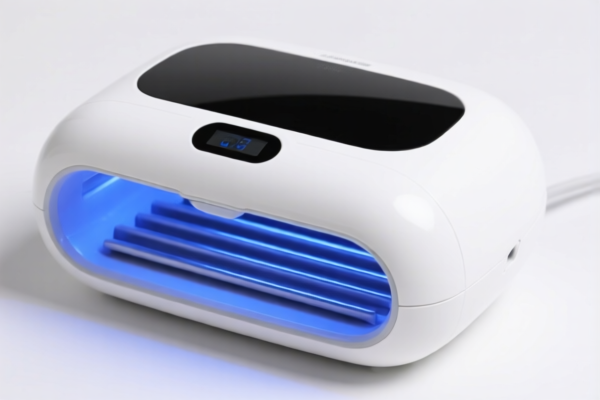
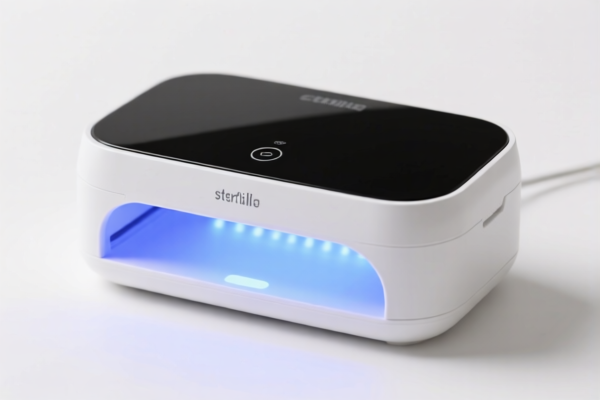
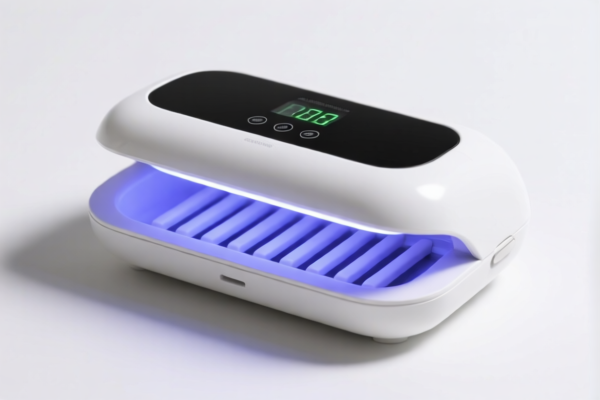
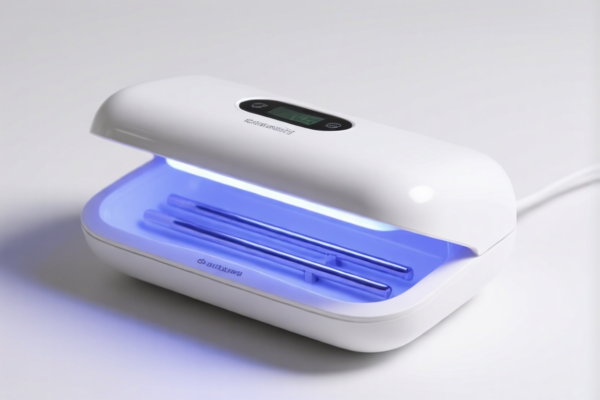
AI Analysis
🧪 Sterilizer Anti-Bleaching Agent
🌐 HS Code Reference & Clearance Guide | 2026 Latest Tariff Analysis | Professional Customs Strategy
📌 I. Product Definition & Classification: What is an "Anti-Bleaching Agent"?
Sterilizer Anti-Bleaching Agents are specialized chemical additives designed to prevent discoloration (yellowing, fading, or whitening) of materials during high-temperature or chemical sterilization processes. These agents are formulated to protect delicate substrates such as medical textiles, polymers, or sensitive equipment components from oxidative damage or chemical degradation caused by sterilants (e.g., hydrogen peroxide, ozone, ethylene oxide, or steam).
In international trade, these products are generally classified under Chapter 38 (Miscellaneous Chemical Products) because their primary function is protective or preparatory, rather than being active pharmaceutical ingredients or basic fertilizers.
⚠️ Key Distinction:
- If the product is a pure chemical intermediate without specific formulation for sterilization → It may fall under general chemical headings (e.g., 29xx).
- If the product is formulated specifically to prevent discoloration during sterilization processes → It falls under 3808.94.00 or 3811.90.00, depending on its exact functional classification in the tariff schedule.
📦 II. HS Code Classification Details (2026 Latest Tariff Authority Comparison)
| HS Code | Product Description | Application Scenario | Key Function |
|---|---|---|---|
3808.94.00 |
Other chemical products not elsewhere specified, including sterilizer anti-bleaching agents used in sterilization processes and formulated to prevent discoloration during sterilization. | Medical device sterilization lines, textile processing, pharmaceutical packaging | Prevents discoloration during sterilization |
3811.90.00 |
Miscellaneous chemical products, including anti-bleaching agents used in sterilization applications, not specified elsewhere, with specialized formulation for use in sterilization systems. | Industrial sterilization systems, non-medical sterilization applications | Specialized formulation for sterilization systems |
🔍 Important Note:
- Both codes refer to chemical products that are not specified elsewhere.
- The key differentiator is often the specific intended use and regulatory interpretation by customs authorities:
-3808.94.00is more commonly used for medical or healthcare-related sterilization contexts.
-3811.90.00may apply to industrial or broader chemical applications where the anti-bleaching agent is part of a larger sterilization system.
- Customs authorities may vary in their interpretation; thus, providing detailed technical documentation is crucial.
💰 III. 2026 Latest Tariff Rate Details (Including Surcharges, Policy Surcharges)
✅ Applicable Country: United States (US)
✅ Origin: China (CN)
✅ Effective Date: From November 10, 2025 (including subsequent imports)
🎯 1. 3808.94.00 —— Sterilizer Anti-Bleaching Agent (Medical/Healthcare Context)
| Item | Content |
|---|---|
| Base Tax Rate | Failed to retrieve tax information |
| Total Tax | Error |
| Tax Detail | Failed to retrieve tax information |
📌 Explanation:
- As per the provided data, tax information could not be retrieved for this HS code.
- This may indicate that the product is subject to additional scrutiny, pending classification, or special trade restrictions.
- Action Required: Contact a customs broker or file a Request for Ruling (RFR) with U.S. Customs and Border Protection (CBP) to obtain accurate duty rates.
🎯 2. 3811.90.00 —— Miscellaneous Chemical Products with Anti-Bleaching Agent (Industrial Context)
| Item | Content |
|---|---|
| Base Tax Rate | Failed to retrieve tax information |
| Total Tax | Error |
| Tax Detail | Failed to retrieve tax information |
📌 Explanation:
- Similar to the above, tax information is unavailable in the current dataset.
- This suggests that the product may be subject to special tariff treatment, exemptions, or pending regulatory review.
- Action Required: Seek professional customs advice to determine applicable duties and compliance requirements.
🛠️ IV. Clearance Practical Advice (Real-World Pitfall Avoidance Guide)
✅ 1. Required Documentation Checklist (All items mandatory)
| Document | Must Provide | Notes |
|---|---|---|
| ✅ Product Specification Sheet | ✔️ | Include chemical composition, concentration, pH, stability data |
| ✅ Safety Data Sheet (SDS) | ✔️ | Required for chemical imports under OSHA/Hazmat regulations |
| ✅ Certificate of Analysis (COA) | ✔️ | Verify purity, batch consistency, and active ingredient levels |
| ✅ Usage Instructions | ✔️ | Specify sterilization conditions (temperature, pressure, exposure time) |
| ✅ Commercial Invoice | ✔️ | Clearly state: “Sterilizer Anti-Bleaching Agent, Formulated for Discoloration Prevention” |
| ✅ Packing List | ✔️ | Include net/gross weight, volume, and hazardous material indicators |
| ✅ Regulatory Compliance Certificate | ✔️ | FDA, EPA, or local health authority approval if applicable |
✅ 2. Declaration Tips (Key Mantras)
🔥 “Specify Function, Not Just Name! ‘Anti-Bleaching’ Must Be Linked to ‘Sterilization’!”
| Scenario | Correct Declaration | Wrong Practice |
|---|---|---|
| General chemical with unknown use | 3808.94.00 or 3811.90.00 with full description |
Generic term like “Chemical Additive” → Misclassification |
| Anti-bleaching agent for non-sterilization | Do not use 3808/3811 → Use appropriate chapter (e.g., 3402 for surfactants) | Incorrect HS Code → Delayed clearance or penalties |
| Medical-grade sterilization additive | 3808.94.00 + FDA/CE certification |
Lack of medical context → Risk of being classified under general chemicals |
✅ 3. Special Case Handling
| Scenario | Handling Advice |
|---|---|
| OEM Formulation | Provide customer specification sheet + formulation details to justify HS Code |
| Hazardous Material | If classified as hazardous, provide IMDG/IATA compliance documents for air/sea freight |
| Dual-Use Product | If used in both medical and industrial settings, choose HS Code based on primary intended use declared in invoice |
| Unretrievable Tax Info | File a Binding Tariff Information (BTI) or Ruling Request with CBP before shipment |
🌍 V. Global Major Market Clearance Comparison (2026 Latest)
| Country/Region | Recommended HS Code | Tariff | Certification Requirements | Notes |
|---|---|---|---|---|
| 🇺🇸 United States | 3808.94.00 / 3811.90.00 |
Pending Retrieval | FDA, EPA, Hazmat Compliance | High scrutiny due to chemical nature |
| 🇨🇳 China | 3808.94.00 / 3811.90.00 |
Pending Retrieval | CCC (if applicable), GHS Labeling | Domestic chemical regulations apply |
| 🇪🇺 European Union | 3808.94.00 / 3811.90.00 |
Pending Retrieval | REACH, CLP, SDS | Strict chemical registration requirements |
| 🇦🇺 Australia | 3808.94.00 / 3811.90.00 |
Pending Retrieval | NICNAS/AIIC Registration | Chemical inventory listing may be required |
| 🇯🇵 Japan | 3808.94.00 / 3811.90.00 |
Pending Retrieval | JIS, Chemical Substances Control Law | Import declaration must include safety data |
📌 Conclusion:
- All major markets require detailed chemical documentation for sterilizer anti-bleaching agents.
- Tax rates are currently unavailable, necessitating pre-import ruling requests to avoid unexpected costs.
- Hazmat compliance is critical for transportation and clearance.
📌 VI. Common Errors & Pitfall Avoidance Guide (Lessons Learned)
❌ Error 1: Declaring as “Chemical Additive” without specifying “Sterilizer Anti-Bleaching Agent”
👉 Consequence: Misclassification → HS Code rejection → Delayed clearance or fines
❌ Error 2: Using 3808.94.00 for non-sterilization applications
👉 Consequence: Customs may reclassify under general chemicals (e.g., 3402, 3906) → Different tariff rate
❌ Error 3: Failing to provide SDS or COA
👉 Consequence: Hazardous material flags → Inspection hold → Demurrage charges
❌ Error 4: Assuming tax rates are 0% or low due to “miscellaneous” classification
👉 Consequence: Unexpected duties due to missing surcharges or trade restrictions
✅ Correct Practice:
“Sterilizer Anti-Bleaching Agent, Formulated for Medical Device Sterilization, Prevents Discoloration During Hydrogen Peroxide Process, Batch XYZ, SDS & COA Attached”
🎯 VII. Conclusion: Professional Declaration, Time-Saving, Cost-Efficient!
🎯 Remember the Mantra:
🔹 “Specify Function! Link ‘Anti-Bleaching’ to ‘Sterilization’!”
🔹 “Tax Unavailable? File Ruling First! Don’t Guess the Duty!”
🔹 “Chemicals Require Documentation – SDS, COA, Specification Are Mandatory!”
📌 Tips:
- If your product is used in medical devices, prioritize 3808.94.00 with FDA/CE documentation.
- If industrial, consider 3811.90.00 with REACH/JIS compliance.
- Always request a Binding Tariff Information (BTI) or Ruling from customs before shipping to avoid surprise duties.
📣 Immediate Action:
📞 Contact a licensed customs broker + Provide Product Specs + Submit Ruling Request
🚀 Ensure your Sterilizer Anti-Bleaching Agent clears customs smoothly, efficiently, and cost-effectively!
✨ Professional Clearance Starts with Accurate Classification!
💼 Every Chemical Import Deserves Precision!
Customer Reviews
About HS Code Classification
The Harmonized System (HS) is an internationally standardized nomenclature developed by the World Customs Organization (WCO) to classify traded products. Over 200 countries use the HS system as the basis for customs tariffs, trade statistics, and import/export regulations.
Each HS code follows a hierarchical structure:
- Chapter (2 digits) — Broad category of goods (e.g., Chapter 84: Machinery and Mechanical Appliances)
- Heading (4 digits) — More specific grouping within the chapter
- Subheading (6 digits) — Internationally standardized breakdown, used by all WCO member countries
- National subdivisions (8-10 digits) — Country-specific extensions for further classification, such as US HTSUS 10-digit codes
Correct HS code classification is essential for smooth customs clearance, accurate duty payment, and compliance with trade regulations. Misclassification can lead to customs delays, overpayment of duties, or penalties.
When importing from CN to US, the applicable tariff rates may include:
- Most-Favored-Nation (MFN) rate — The standard duty rate applied to WTO members
- General rate — Applied to countries without trade agreements
- Trade remedy duties — Additional tariffs such as Section 301 (anti-dumping), Section 232 (national security), or countervailing duties
The information provided on this page is for reference purposes only. For official classification, please consult with your local customs authority or a licensed customs broker.