sterilizer concentrate
CN → US| HS Code | Tariff Rate | Origin | Destination | Doc |
|---|---|---|---|---|
| 3808594000 | 40.0% | CN | US | Official Doc |
| 3808941000 | 41.5% | CN | US | Official Doc |
| 3802100050 | 39.8% | CN | US | Official Doc |
| 3808912501 | 41.5% | CN | US | Official Doc |
| 3802905000 | 39.8% | CN | US | Official Doc |
Product Images
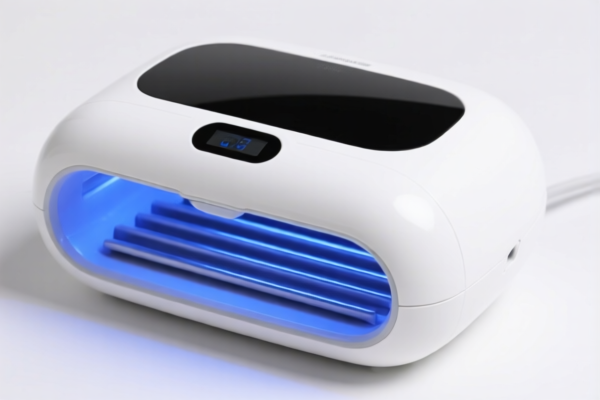
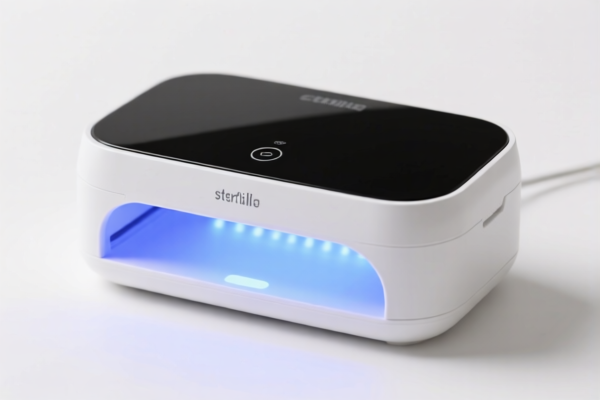
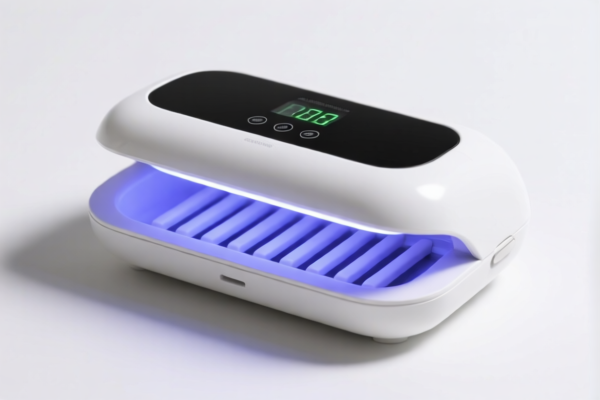
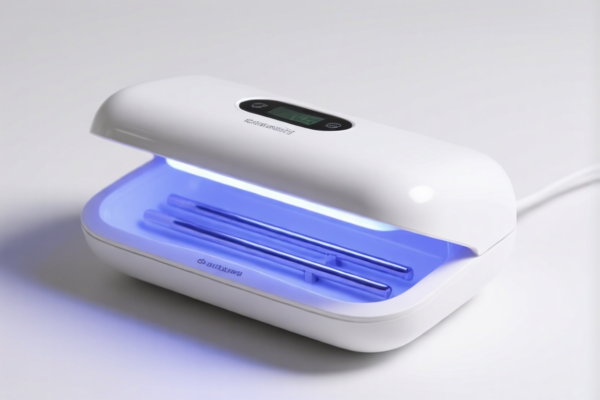
AI Analysis
🧴 Sterilizer Concentrate (消毒浓缩液)
🌐 HS Code Reference & Clearance Guide | 2024-2025 Latest Tariff Analysis | Professional Entry Strategy
📌 I. Product Definition & Classification: What is "Sterilizer Concentrate"?
Sterilizer Concentrate refers to liquid or semi-liquid chemical preparations designed to destroy or inhibit the growth of harmful microorganisms (bacteria, viruses, fungi) on inanimate objects or surfaces. In international trade, these products are strictly regulated due to their chemical nature and potential efficacy claims.
The key distinction lies in the active ingredient and specific application: * Disinfectants (Antiseptics for surfaces): General purpose killing of pathogens. * Pesticides/Fumigants: If the concentrate contains ingredients specifically targeting pests (insects, rodents) and is labeled as such, it falls under pesticide regulations. * Chemical Mixtures: Complex formulations that do not fit neatly into single-purpose categories.
⚠️ Critical Distinction Point:
- If the product is primarily for surface disinfection (medical, household, industrial) → Likely 3808 or 3802.
- If the product is primarily a pesticide/fumigant (kills insects/rodents) → Likely 3808.91 or 3802.
- Note: Many "concentrates" are classified as "mixtures" if they don't meet specific pesticide definitions.
📦 II. HS Code Classification Details (Based on Provided Data)
Based on the provided dataset, here are the specific HS Codes relevant to Sterilizer Concentrate, along with their tax implications.
| HS Code | Product Description | Application Context | Primary Attribute |
|--------|--------------------------|-----------------------------|
| 3808.59.40.00 | Disinfectants (Miscellaneous) | Surface disinfection, hygiene cleaning | Disinfectant |
| 3808.94.10.00 | Disinfectants (Liquid Formulations) | Liquid-ready disinfectant concentrates | Liquid Disinfectant |
| 3802.10.00.50 | Insecticide Concentrates | Chemical pest control, fumigation | Pesticide/Insecticide |
| 3808.91.25.01 | Insecticides/Fumigants (Preparations) | Pest eradication agents | Pesticide Formulation |
| 3802.90.50.00 | Other Chemical Preparations | Complex chemical mixtures, non-specific | Chemical Mixture |
🔍 Key Insight:
- The term "Sterilizer" is often used loosely in marketing. Customs will look at the Label, Safety Data Sheet (SDS), and Active Ingredients.
- If the product kills bacteria/viruses, it leans toward 3808.
- If the product kills insects/pests, it leans toward 3802.10 or 3808.91.
- 3802.90 is a "catch-all" for chemical preparations not elsewhere specified, often used for complex industrial sterilizers.
💰 III. Detailed Tariff Rate Analysis (Including Additional Duties)
✅ Applicable Country: United States (US)
✅ Origin: China (CN)
✅ Effective Date: 2025-11-10 (Subject to current trade policies)
🎯 1. 3808.59.40.00 & 3808.94.10.00 —— Disinfectants (Non-Pesticidal)
These codes cover general-purpose disinfectants. Since they are often classified as "other" or specific liquid formulations, they attract significant additional tariffs.
| Item | Content |
|---|---|
| Base Tariff | 5.0% (for 3808.59.40.00) 6.5% (for 3808.94.10.00) |
| Section 301 Tariff (Added Duty) | +25.0% |
| 122 Clause Tariff (USMCA/Specific) | +10.0% |
| Total Effective Rate | 40.0% (for 3808.59.40.00) 41.5% (for 3808.94.10.00) |
| Calculation Basis | CIF Value × Total Rate |
| De Minimis Exemption | ❌ Not Eligible (Value > $800 threshold is heavily scrutinized; even if < $800, these chemical products are often flagged for inspection) |
| Legal Path | Base Tariff → Section 301: 25% → 122 Clause: 10% |
📌 Explanation:
- Section 301 Tariff (25%): Imposed on a wide range of Chinese imports, including chemical preparations.
- 122 Clause Tariff (10%): Often applies to specific chemical categories under trade enforcement measures.
- Result: A 40-41.5% total duty is extremely high for liquid concentrates. Cost optimization is critical.
🎯 2. 3802.10.00.50 & 3808.91.25.01 —— Pesticides / Insecticides (Concentrates)
If your "sterilizer" is actually a fumigant or insecticide (e.g., for agricultural or structural pest control), these codes apply.
| Item | Content |
|---|---|
| Base Tariff | 4.8% (for 3802.10.00.50) 6.5% (for 3808.91.25.01) |
| Section 301 Tariff (Added Duty) | +25.0% |
| 122 Clause Tariff (USMCA/Specific) | +10.0% |
| Total Effective Rate | 39.8% (for 3802.10.00.50) 41.5% (for 3808.91.25.01) |
| Calculation Basis | CIF Value × Total Rate |
| De Minimis Exemption | ❌ Not Eligible |
| Legal Path | Base Tariff → Section 301: 25% → 122 Clause: 10% |
📌 Note:
- Even though it's a "pesticide," it is still subject to Section 301 tariffs.
- EPA Registration: Importing pesticides requires valid EPA (Environmental Protection Agency) registration. Without it, goods will be seized.
🎯 3. 3802.90.50.00 —— Other Chemical Preparations
This is for complex chemical mixtures that do not fit the primary definitions of disinfectants or standard pesticides.
| Item | Content |
|---|---|
| Base Tariff | 4.8% |
| Section 301 Tariff (Added Duty) | +25.0% |
| 122 Clause Tariff (USMCA/Specific) | +10.0% |
| Total Effective Rate | 39.8% |
| Calculation Basis | CIF Value × 39.8% |
| De Minimis Exemption | ❌ Not Eligible |
📌 Caution:
- Misclassifying a disinfectant as "Other Chemicals" to avoid higher scrutiny is risky. Customs may reclassify and penalize.
- Ensure the SDS clearly states the chemical composition to support this classification.
🛠️ IV. Clearance Operational Advice (Practical Pitfall Guide)
✅ 1. Required Documentation Checklist
| Document | Mandatory | Details |
|---|---|---|
| ✅ Safety Data Sheet (SDS) | ✔️ Critical | Must be in English, compliant with GHS, listing all active ingredients. |
| ✅ EPA Registration Number | ✔️ Critical | Required if the product is classified as a pesticide or antimicrobial. |
| ✅ Product Label | ✔️ | Must match the SDS and EPA registration exactly. |
| ✅ Commercial Invoice | ✔️ | Clearly state "Sterilizer Concentrate" and HS Code. |
| ✅ Packing List | ✔️ | Detail net/gross weight, volume (liquid), and packaging type. |
| ✅ Certificate of Origin | ✔️ | To verify Chinese origin (subject to tariffs). |
✅ 2. Classification Strategy (Key Tips)
🔥 "Label Determines Code, Code Determines Cost!"
| Scenario | Recommended HS Code | Risk Level |
|---|---|---|
| General Surface Disinfectant (e.g., bleach, quaternary ammonium) | 3808.59.40.00 or 3808.94.10.00 |
Medium (High Duty) |
| Pesticidal Fumigant (e.g., for warehouses, crops) | 3802.10.00.50 or 3808.91.25.01 |
High (Requires EPA) |
| Complex Industrial Cleaner/Sterilizer | 3802.90.50.00 |
Medium (Requires Technical Justification) |
⚠️ Warning:
- Do NOT claim "Sterilizer" if it is only a "Cleaner." Overclaiming efficacy can trigger FDA/EPA scrutiny.
- If the product is for Medical Devices, it may also require FDA clearance, adding another layer of compliance.
✅ 3. Special Handling for Liquid Concentrates
| Issue | Solution |
|---|---|
| Leakage Risk | Use UN-certified packaging for liquids. Customs may inspect packaging integrity. |
| Hazardous Material | If classified as hazardous, extra fees and declarations are required. |
| Volatility | Some sterilizers are volatile. Ensure proper ventilation and labeling in transport. |
🌍 V. Global Market Clearance Comparison (2024-2025)
| Country/Region | Recommended HS Code | Approx. Total Duty | Key Requirement |
|---|---|---|---|
| 🇺🇸 USA | 3808.59.40.00 etc. |
40.0% - 41.5% | EPA Reg, SDS, Section 301 Tariff |
| 🇨🇳 China | 3808.59.40.00 |
~5% - 6% | Import License (if pesticide) |
| 🇪🇺 EU | 3808.94 |
~4.7% + VAT | Biocidal Products Regulation (BPR) |
| 🇯🇵 Japan | 3808.94 |
~5% - 6% | Poisonous and Deleterious Substances Control Act |
📌 Conclusion:
- The USA is the most expensive market for Chinese-made sterilizers due to Section 301 + 122 Clause tariffs.
- EPA Compliance is non-negotiable for any product claiming antimicrobial properties.
📌 VI. Common Mistakes & Pitfalls (Lessons Learned)
❌ Mistake 1: Using "Household Cleaner" as the declaration name for a product with strong antimicrobial claims.
👉 Consequence: Customs may reclassify as Pesticide, triggering EPA review and potential seizure.
❌ Mistake 2: Ignoring the 122 Clause Tariff.
👉 Consequence: Underpayment of duties by 10%, leading to penalties and back taxes.
❌ Mistake 3: Misclassifying a Disinfectant as a Chemical Mixture (3802.90) to avoid higher base tariffs.
👉 Consequence: Customs may argue that the product is a disinfectant, leading to fines for misdeclaration.
✅ Correct Practice:
"Sterilizer Concentrate, Liquid, Contains Quaternary Ammonium Compounds, EPA Reg No. XXXXX, Model XYZ, CIF Value $XXXX"
🎯 VII. Conclusion: Professional Declaration Saves Money!
🎯 Remember:
🔹 "EPA Reg is King for Pesticides/Disinfectants."
🔹 "SDS must match Label and Declaration."
🔹 "Total Duty is ~40% for US Imports from China."
📌 Pro Tip:
If your product is not a pesticide but a general disinfectant, ensure you clearly state "Disinfectant, Not for Pesticidal Use" on the label and SDS to avoid EPA complexity.
For US imports, consider Advance Rulings from CBP to confirm HS Code and duty rate before shipping.
📣 Immediate Action:
📞 Consult a Customs Broker
📄 Prepare EPA Registration & SDS
📉 Calculate Total Landed Cost (Including 40%+ Duties)
✨ Precise Classification, Smooth Clearance, Maximized Profit!
💼 Your Compliance Strategy is Your Competitive Advantage!
Customer Reviews
About HS Code Classification
The Harmonized System (HS) is an internationally standardized nomenclature developed by the World Customs Organization (WCO) to classify traded products. Over 200 countries use the HS system as the basis for customs tariffs, trade statistics, and import/export regulations.
Each HS code follows a hierarchical structure:
- Chapter (2 digits) — Broad category of goods (e.g., Chapter 84: Machinery and Mechanical Appliances)
- Heading (4 digits) — More specific grouping within the chapter
- Subheading (6 digits) — Internationally standardized breakdown, used by all WCO member countries
- National subdivisions (8-10 digits) — Country-specific extensions for further classification, such as US HTSUS 10-digit codes
Correct HS code classification is essential for smooth customs clearance, accurate duty payment, and compliance with trade regulations. Misclassification can lead to customs delays, overpayment of duties, or penalties.
When importing from CN to US, the applicable tariff rates may include:
- Most-Favored-Nation (MFN) rate — The standard duty rate applied to WTO members
- General rate — Applied to countries without trade agreements
- Trade remedy duties — Additional tariffs such as Section 301 (anti-dumping), Section 232 (national security), or countervailing duties
The information provided on this page is for reference purposes only. For official classification, please consult with your local customs authority or a licensed customs broker.