stone table
CN → US| HS Code | Tariff Rate | Origin | Destination | Doc |
|---|---|---|---|---|
| 6802930090 | 38.7% | CN | US | Official Doc |
| 6914908000 | 40.6% | CN | US | Official Doc |
| 6802911500 | 39.9% | CN | US | Official Doc |
Product Images
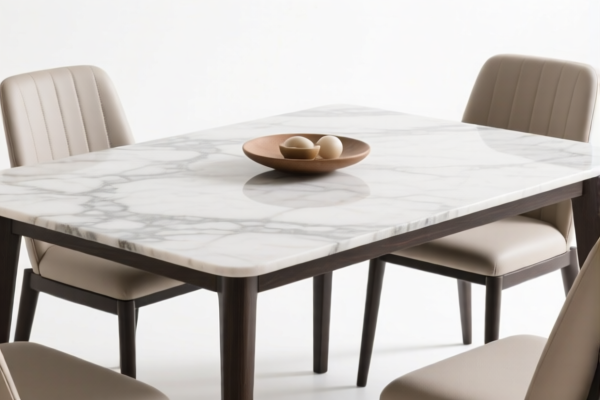
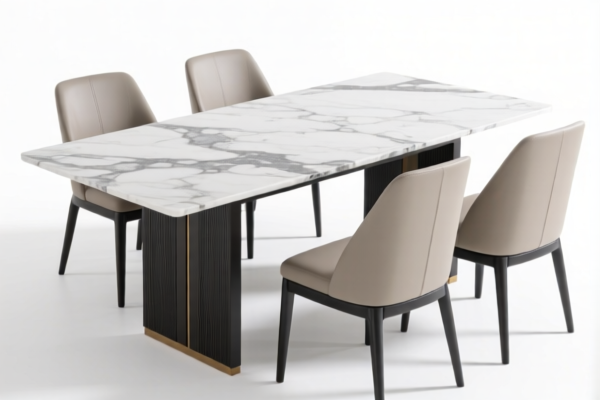
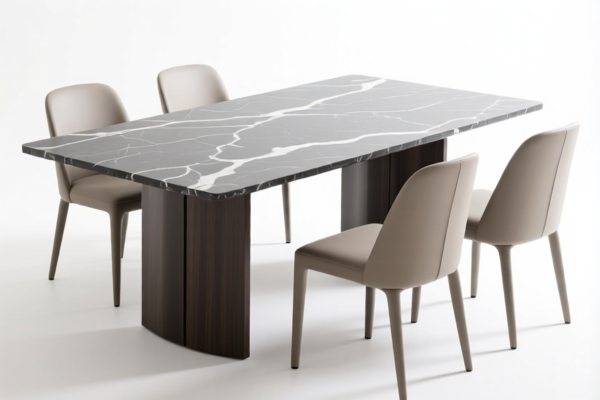
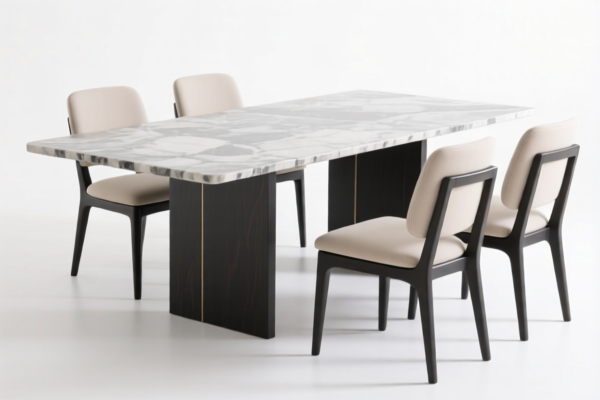
AI Analysis
🪨 Stone Table (Stone Furniture)
🌐 HS Code Reference & Customs Clearance Guide | 2026 Latest Tariff Analysis | Professional Entry Strategies
📌 I. Product Definition & Classification: Understanding "Stone Tables"
A Stone Table refers to furniture or architectural fixtures primarily constructed from natural stone materials (such as marble, limestone, travertine, or alabaster) or processed stone composites. In international trade, the classification hinges on whether the item is viewed as a ceramic article or a natural stone work of art/artificial stone article.
⚠️ Key Distinction:
- If the stone is used as a base for a structure but the overall classification logic treats it under broad "Other Ceramic Articles" due to material compatibility interpretations in specific databases → Chapter 69.
- If the table is explicitly recognized as worked natural stone (Marble, Travertine, Alabaster) → Chapter 68.
- The provided data highlights three potential classifications based on different interpretive logics for "Stone Table."
📦 II. HS Code Classification Details (Based on Provided Data)
The following HS Codes are derived directly from the provided dataset, each with a specific matching logic and tax structure.
| HS Code | Product Description | Matching Logic (Summary) | Material Type |
|---|---|---|---|
6914.90.80.00 |
Other Ceramic Articles | Inferred as "Stone" but mapped to "Other Ceramic Articles" due to material compatibility logic; no material conflict. | Ceramic/Stone Composite |
6802.91.15.00 |
Worked Marble/Travertine/Alabaster | Explicitly inferred as Natural Stone (Marble/Limestone); fits "Other" sub-category for processed building/ornamental stone. | Natural Stone (Marble) |
6802.93.00.90 |
Other Worked Stone Articles | General "Stone Product" classification; fits "Other"兜底 (catch-all) for processed building/memorial stone articles. | Other Worked Stone |
🔍 Critical Note:
- The choice between6914(Ceramics) and6802(Natural Stone) is often a point of customs controversy.
-6914.90.80.00applies a broader "compatibility" logic.
-6802.xxxxcodes apply stricter "Natural Stone" material definitions.
- All listed codes attract significant additional tariffs due to US trade policies.
💰 III. 2026 Latest Tariff Rate Breakdown (Including Surtaxes & Policy Add-ons)
✅ Applicable Country: United States (US)
✅ Origin: China (CN)
✅ Effective Date: Current trade restrictions apply (Section 301 & IEEPA)
All three HS Codes share a similar tax structure composed of Base Duty, Section 301 Surtax (25%), and IEEPA Additional Duty (10%).
🎯 1. 6914.90.80.00 — Other Ceramic Articles
| Item | Content |
|---|---|
| Base Duty | 5.6% |
| Section 301 Surtax | +25.0% |
| IEEPA Additional Duty | +10.0% (122 Clause) |
| Total Tax Rate | 40.6% |
| Calculation Basis | CIF Value × 40.6% |
| De Minimis Exemption | ❌ Not Applicable (High value/duty items) |
📌 Explanation:
- The 5.6% is the standard Most Favored Nation (MFN) rate for other ceramic articles.
- The 25% is the standard Section 301 tariff on Chinese goods in this category.
- The 10% is an additional levy under IEEPA (Executive Order 14117 or related clauses).
- Total Cost Impact: For a $10,000 table, expect ~$4,060 in duties alone.
🎯 2. 6802.91.15.00 — Worked Marble/Travertine/Alabaster
| Item | Content |
|---|---|
| Base Duty | 4.9% |
| Section 301 Surtax | +25.0% |
| IEEPA Additional Duty | +10.0% (122 Clause) |
| Total Tax Rate | 39.9% |
| Calculation Basis | CIF Value × 39.9% |
| De Minimis Exemption | ❌ Not Applicable |
📌 Explanation:
- Slightly lower base duty (4.9%) compared to ceramics (5.6%).
- Still subject to the full 35% add-on tariffs (25% + 10%).
- Total Cost Impact: For a $10,000 table, expect ~$3,990 in duties.
🎯 3. 6802.93.00.90 — Other Worked Stone Articles
| Item | Content |
|---|---|
| Base Duty | 3.7% |
| Section 301 Surtax | +25.0% |
| IEEPA Additional Duty | +10.0% (122 Clause) |
| Total Tax Rate | 38.7% |
| Calculation Basis | CIF Value × 38.7% |
| De Minimis Exemption | ❌ Not Applicable |
📌 Explanation:
- The lowest base duty among the options (3.7%).
- Total Cost Impact: For a $10,000 table, expect ~$3,870 in duties.
- This is often the most cost-effective classification IF customs accepts it as "Other Worked Stone" rather than Marble or Ceramic.
🛠️ IV. Customs Clearance Practical Advice (Pitfall Avoidance Guide)
✅ 1. Required Documentation Checklist
| Document | Mandatory? | Details |
|---|---|---|
| ✅ Product Specifications | ✔️ | Detailed description: Material (Marble/Granite/Limestone), Dimensions, Finish (Polished/Honed). |
| ✅ Material Composition Proof | ✔️ | Lab reports or supplier declarations confirming % of natural stone vs. ceramic composite. |
| ✅ Commercial Invoice | ✔️ | Must clearly state "Stone Table" and origin. |
| ✅ Packing List | ✔️ | Weight and dimensions are critical for freight class and duty calculation. |
| ✅ Photos of Product | ✔️ | Show the entire table, including legs/base, to prove it is furniture, not just a slab. |
✅ 2. Declaration Strategy (Key Mantra)
🔥 "Material Matters, Finish Defines, Don't Split, Declare Whole!"
| Scenario | Correct Declaration | Error to Avoid |
|---|---|---|
| Solid Stone Table | Declare as 6802.93.00.90 (Other Worked Stone) if not pure marble. |
Mislabeling as "Ceramic" (6914) to avoid scrutiny → Risk of penalty. |
| Marble Table | Declare as 6802.91.15.00 (Worked Marble). |
Calling it "Stone Table" vaguely → Customs may upgrade to higher duty or demand proof. |
| Ceramic Stone-look Table | Declare as 6914.90.80.00. |
Claiming it's natural stone → Customs lab test will fail → Rejection/Fine. |
| Table with Metal Legs | Declare as Whole Unit under the primary material (Stone). | Splitting into "Stone Top" + "Metal Legs" → Higher combined duties (Metal legs have different rates). |
✅ 3. Special Considerations
| Issue | Handling Advice |
|---|---|
| Customs Lab Testing | CBP may conduct a lab test to distinguish between Ceramic and Natural Stone. Ensure material docs are ready. |
| Origin Marking | All items must be clearly marked "Made in China" to trigger the 35% surtax correctly. |
| Value Declaration | Ensure CIF value includes freight and insurance. Under-declaring value leads to severe penalties. |
🌍 V. Global Market Clearance Comparison (2026 Update)
| Country/Region | Recommended HS Code | Est. Duty Rate | Certification | Notes |
|---|---|---|---|---|
| 🇺🇸 USA | 6802.93.00.90 |
38.7% | None Specific | Highest cost due to Section 301 + IEEPA. |
| 🇺🇸 USA | 6914.90.80.00 |
40.6% | None Specific | Slightly higher base duty. |
| 🇨🇳 China | 6802.93.00.90 |
Varies | None | Import duties may differ; export from China is the focus. |
| 🇪🇺 EU | 6802.93.00 |
0% - 3% | CE (if applicable) | No Section 301 surtax. Much lower entry cost. |
| 🇬🇧 UK | 6802.93.00 |
0% - 3% | None | Post-Brexit tariff structure applies. |
📌 Conclusion:
- USA Market is High-Cost: With nearly 40% total tariffs, stone furniture from China is significantly less competitive in the US market.
- Alternative Markets: Consider exporting to EU or UK where duties are minimal, OR restructure supply chain (e.g., final assembly in a non-tariffed country, if feasible).
📌 VI. Common Mistakes & Pitfalls (Lessons Learned)
❌ Mistake 1: Misclassifying Natural Stone as "Ceramic" to simplify description.
👉 Consequence: Customs lab test proves it's stone → Back taxes + penalties under 6802 codes.
❌ Mistake 2: Ignoring the 10% IEEPA surtax in cost calculations.
👉 Consequence: Profit margin eroded because only base duty was accounted for.
❌ Mistake 3: Splitting shipment into "Stone Slab" and "Furniture" to exploit de minimis.
👉 Consequence: Customs views it as a single article → Entire value taxed at high rates.
❌ Mistake 4: Incorrect Origin Marking.
👉 Consequence: Goods may be refused entry or detained for labeling violations.
✅ Correct Practice:
"Stone Table, made of worked limestone, polished finish, includes base, HS 6802.93.00.90, Origin: China."
🎯 VII. Conclusion: Professional Classification, Cost Optimization!
🎯 Remember the Mantra:
🔹 "Stone vs. Ceramic, Test it First!"
🔹 "35% Surtax is Real, Plan Your Price!"
🔹 "Whole Unit Declare, Don't Split the Meal!"
📌 Pro Tip:
If your stone tables are not made in China (e.g., Italy, Brazil, India), you may avoid the Section 301 and IEEPA surtaxes entirely, reducing the total tax to just the base duty (e.g., 3.7% - 5.6%).
Recommendation:
📞 Consult a licensed customs broker for an Advance Ruling on material classification.
🚀 Optimize your supply chain to mitigate the ~40% US Tariff Burden.
✨ Professional Customs Clearance Starts with Accurate Classification!
💼 Every Percentage Point Saved is Pure Profit!
Customer Reviews
About HS Code Classification
The Harmonized System (HS) is an internationally standardized nomenclature developed by the World Customs Organization (WCO) to classify traded products. Over 200 countries use the HS system as the basis for customs tariffs, trade statistics, and import/export regulations.
Each HS code follows a hierarchical structure:
- Chapter (2 digits) — Broad category of goods (e.g., Chapter 84: Machinery and Mechanical Appliances)
- Heading (4 digits) — More specific grouping within the chapter
- Subheading (6 digits) — Internationally standardized breakdown, used by all WCO member countries
- National subdivisions (8-10 digits) — Country-specific extensions for further classification, such as US HTSUS 10-digit codes
Correct HS code classification is essential for smooth customs clearance, accurate duty payment, and compliance with trade regulations. Misclassification can lead to customs delays, overpayment of duties, or penalties.
When importing from CN to US, the applicable tariff rates may include:
- Most-Favored-Nation (MFN) rate — The standard duty rate applied to WTO members
- General rate — Applied to countries without trade agreements
- Trade remedy duties — Additional tariffs such as Section 301 (anti-dumping), Section 232 (national security), or countervailing duties
The information provided on this page is for reference purposes only. For official classification, please consult with your local customs authority or a licensed customs broker.