stop watch
CN → US| HS Code | Tariff Rate | Origin | Destination | Doc |
|---|---|---|---|---|
| 9106908500 | 0.0% | CN | US | Official Doc |
| 9106906500 | 0.0% | CN | US | Official Doc |
| 9102128000 | 17.5% | CN | US | Official Doc |
| 9017208080 | 39.6% | CN | US | Official Doc |
| 9017800000 | 40.3% | CN | US | Official Doc |
Product Images
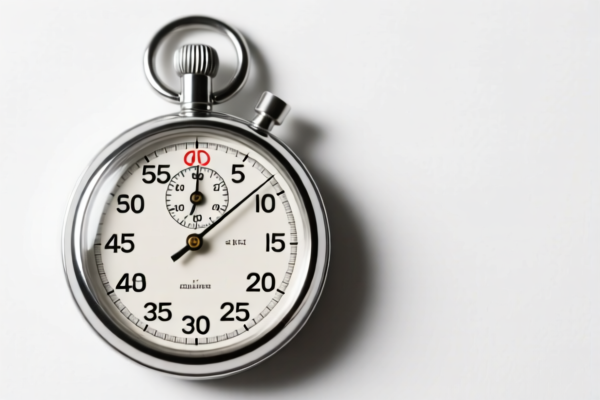
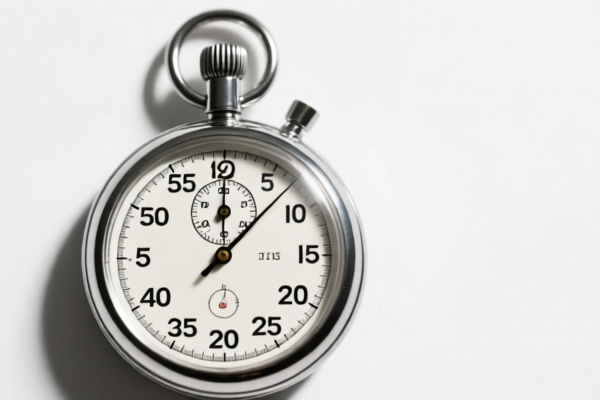
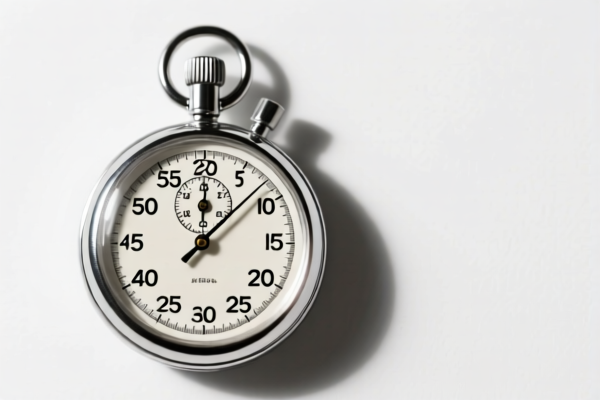
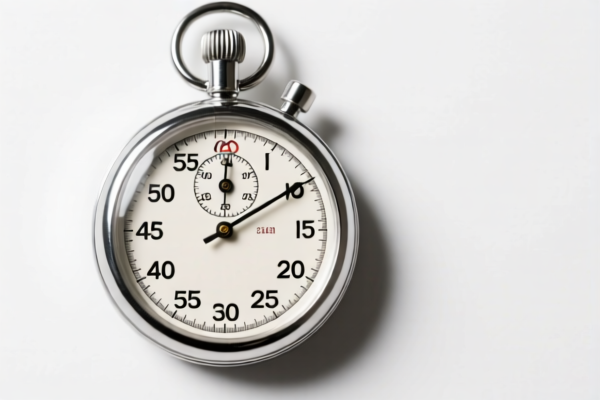
AI Analysis
⏱️ Electronic Stopwatch (Chronographs & Timing Devices)
🌐 HS Code Reference & Customs Clearance Guide | 2026 Latest Tariff Analysis | Professional Clearance Strategy
📌 I. Product Definition & Classification: Do You Really Know the "Stopwatch"?
Electronic stopwatches are precision instruments used for measuring and recording time intervals. In international trade, their classification depends heavily on their specific function, display method, and internal logic. A common mistake is grouping all timing devices under one code, leading to significant tariff discrepancies.
⚠️ Key Distinction Points:
- If the device is a general-purpose timing instrument with specific battery/electronic logic features → May fall under 9106.90.85.00 or 9106.90.65.00.
- If it is an electrical timing device with photoelectric display (common in sports timing) → May fall under 9102.12.80.00.
- If classified as a general measuring instrument (non-watch type) → May fall under 9017.20.80.80 or 9017.80.00.00.
📦 II. HS Code Classification Details (2026 Latest Tariff Authority Comparison)
| HS Code | Product Description | Applicable Scenario | Classification Logic |
|---|---|---|---|
9106.90.85.00 |
Instruments for measuring, recording, or indicating time intervals | General electronic timing, lab use, industrial logging | Fits the definition of "time interval measurement/indication instruments." |
9106.90.65.00 |
Instruments for measuring, recording, or indicating time intervals | Battery-powered electronic logic devices | Fits "clockwork (or electronic timing logic) and battery-powered" functional characteristics. |
9102.12.80.00 |
Electrical stopwatches, pocket-type | Sports timing, photoelectric display systems | Fits "electrical" and "includes stopwatch function," assuming photoelectric display common sense. |
9017.20.80.80 |
Other drawing, marking, or mathematical calculation instruments | General measuring instruments, non-digitized fallback category | Fits "drawing, marking, or mathematical calculation instruments" broad category for measuring tools. |
9017.80.00.00 |
Other instruments (excluding length measuring) | General timing/measuring instruments, handheld logic | Fits "other instruments" and logic of "hand-held length measuring instruments" under measurement categories. |
🔍 Key Reminder:
- 9106 vs. 9017: 9106 is specifically for time instruments. 9017 is a broader "other measuring instrument" category. Misclassification here can lead to huge tax differences. - Display Type: If the stopwatch uses a photoelectric display (common in professional sports), 9102.12.80.00 is often more accurate than the general 9106 codes. - Battery Logic: Explicit mention of "electronic" and "battery-powered" strongly supports 9106 codes over mechanical watch codes.
💰 III. 2026 Latest Tariff Rate Details (Including Surcharges & Policy Add-ons)
✅ Applicable Country: United States (US)
✅ Origin: China (CN)
✅ Effective Time: From November 10, 2025 (Including subsequent imports)
🎯 1. 9106.90.85.00 & 9106.90.65.00 —— General Electronic Timing Instruments
| Item | Content |
|---|---|
| Base Duty Rate | 15¢ each + 2.3% + 0.8¢/jewel |
| Section 301 Surcharge | +25.0% |
| IEEPA Surcharge (Section 122) | +10% |
| Total Effective Rate | Complex Calculation (Value + Unit + Percentage) |
| Tax Calculation | (CIF Value × 2.3%) + (Unit Count × 15¢) + (Jewel Count × 0.8¢) + [Sum of above × (25% + 10%)] |
| De Minimis Eligibility | ❌ Not Applicable (High duty complexity usually excludes simple de minimis) |
| Legal Basis Path | USITC:9106.90.85.00 → FOOTNOTE:301_Surcharge_25% → IEEPA:122_Surcharge_10% |
📌 Explanation:
- This is a mixed duty structure: It combines ad valorem (percentage), specific (per piece), and compound rates. - "15¢ each": A specific duty per unit. - "2.3%": Ad valorem duty on value. - "0.8¢/jewel": Specific duty based on the number of jewels in the movement (if applicable). - Total Surcharge: 25% (Section 301) + 10% (IEEPA/Section 122) = 35% added on top of the base calculated duty.
🎯 2. 9102.12.80.00 —— Electrical Stopwatches (Photoelectric Display)
| Item | Content |
|---|---|
| Base Duty Rate | 0.0% |
| USITC Surcharge | +7.5% |
| IEEPA Surcharge (Section 122) | +10% |
| Total Rate | 17.5% |
| Tax Calculation | CIF Value × 17.5% |
| De Minimis Eligibility | ❌ Not Applicable |
| Legal Basis Path | IEEPA:9903.01.25 → USITC:9102.12.80.00 → FOOTNOTE:122_Surcharge_10% |
📌 Note:
- This code offers a significantly lower base rate (0%) compared to 9106. - Total effective rate is 17.5%, which is much lower than the complex 9106 codes. - Crucial: This classification assumes the device is an "electrical stopwatch" with photoelectric display. If it lacks this feature, customs may reclassify it to 9106, increasing costs.
🎯 3. 9017.20.80.80 & 9017.80.00.00 —— General Measuring Instruments
| Item | Content |
|---|---|
| Base Duty Rate | 4.6% (for 9017.20) / 5.3% (for 9017.80) |
| USITC Surcharge | +25.0% |
| IEEPA Surcharge (Section 122) | +10% |
| Total Rate | 39.6% (for 9017.20) / 40.3% (for 9017.80) |
| Tax Calculation | CIF Value × Total Rate |
| De Minimis Eligibility | ❌ Not Applicable |
| Legal Basis Path | USITC:9017.20.80.80 → FOOTNOTE:301_Surcharge_25% → IEEPA:122_Surcharge_10% |
📌 Warning:
- These codes have high total rates (~40%). - They are used as fallback categories for measuring instruments not specifically covered by 9106/9102. - Avoid these codes if your product clearly fits 9106 or 9102, as they result in much higher taxes.
🛠️ IV. Customs Clearance Practical Advice (Battlefield Pit-avoidance Guide)
✅ 1. Preparation Checklist (All Must Be Provided)
| Material | Mandatory | Description |
|---|---|---|
| ✅ Product Specification Sheet | ✔️ | Must specify: "Electronic Stopwatch," "Battery-Powered," "Stopwatch Function." |
| ✅ Photos (With Labels) | ✔️ | Clear shots of the device, buttons, display, and battery compartment. |
| ✅ Circuit Diagram (If Available) | ✔️ | Helps prove "electronic logic" vs. "mechanical." |
| ✅ Third-Party Test Report | ✔️ | FCC (for USA), CE, RoHS (if applicable). |
| ✅ Commercial Invoice | ✔️ | Must explicitly state "Electronic Stopwatch" or "Timing Instrument." Avoid vague terms like "Gadget." |
| ✅ Packing List | ✔️ | Confirm no separate mechanical watches are included. |
✅ 2. Declaration Tips (Key Mantras)
🔥 "Be Precise: 'Electronic' and 'Stopwatch' are Key!"
| Scenario | Correct Declaration | Incorrect Action |
|---|---|---|
| General Electronic Stopwatch | 9106.90.85.00 or 9106.90.65.00 |
Calling it a "Watch" → Misclassification |
| Sports Stopwatch (Photoelectric) | 9102.12.80.00 |
Calling it "General Instrument" → 17.5% vs. Complex 9106 |
| Fallback/General Measuring Tool | 9017.xxxx |
Using 9106 codes when function is unclear → Potential Audit |
| Mechanical Stopwatch (Rare) | Different HS Code | Declaring as "Electronic" → Fraud Risk |
✅ 3. Special Case Handling
| Situation | Handling Advice |
|---|---|
| OEM Custom Stopwatches | Provide client order + design specs. Clarify if "photoelectric display" is present to qualify for 9102.12.80.00 (17.5%). |
| Stopwatch with USB Data Output | Still fits 9106 or 9017. Data output doesn't change it to a computer accessory if core function is timing. |
| Stopwatch for Medical Use | If specialized, may need FDA clearance, but HS code remains 9106/9102. |
| Bulk Import (Low Value) | Check if de minimis applies (usually <$800), but high tariff codes may trigger audits even if exempt. |
🌍 V. Global Market Clearance Comparison (2026 Latest)
| Country/Region | Recommended HS Code | Tariff | Certification | Notes |
|---|---|---|---|---|
| 🇺🇸 USA | 9102.12.80.00 |
17.5% | FCC + RoHS | Best Rate if photoelectric. 9106 is complex/high. |
| 🇺🇸 USA | 9106.90.85.00 |
Complex (Base + 35%) | FCC + RoHS | Higher cost, complex calculation. |
| 🇨🇳 China | 9106.90.85.00 |
~5-10% | CCC | Lower base duty than US. |
| 🇪🇺 EU | 9106.90.85.00 |
~0-2% | CE | Low duty, focus on CE mark. |
| 🇦🇺 Australia | 9106.90.85.00 |
~5% | RCMA | Moderate duty. |
| 🇯🇵 Japan | 9106.90.85.00 |
~0% | PSE | Low duty. |
📌 Conclusion:
- The USA is the most challenging market for electronic stopwatches due to Section 301 (25%) and IEEPA (10%) surcharges. - Strategy: If your stopwatch has a photoelectric display, strictly classify as 9102.12.80.00 to benefit from the 0% base rate (Total 17.5% vs. >35% for others). - Documentation: Clearly state "Electronic" and "Stopwatch Function" in the commercial invoice to avoid reclassification to general measuring instruments (9017).
📌 VI. Common Errors & Pitfall Avoidance (Lessons Learned)
❌ Error 1: Calling it a "Watch" or "Timepiece"
👉 Consequence: May be classified under Chapter 91 (Watches) with different duties, or rejected if it doesn't look like a wristwatch.
👉 Fix: Use "Electronic Stopwatch" or "Timing Instrument."
❌ Error 2: Omitting "Electronic" or "Battery"
👉 Consequence: Customs may suspect mechanical movement, leading to wrong HS code.
👉 Fix: Explicitly state "Battery-Powered Electronic Stopwatch."
❌ Error 3: Using 9017 for a clear Stopwatch
👉 Consequence: Higher duty rates (39.6%-40.3%) instead of 17.5% or complex 9106.
👉 Fix: Only use 9017 if the device is not primarily for timekeeping or lacks clear timing features.
❌ Error 4: Not specifying Display Type
👉 Consequence: Missed opportunity for lower tax rate under 9102.12.80.00.
👉 Fix: If it has an LCD/LED/Photoelectric display, mention it.
✅ Correct Declaration Example:
"Electronic Stopwatch, Battery-Powered, LCD Display, for Timing Sports Events, Model XYZ, FCC Certified"
🎯 VII. Conclusion: Professional Declaration, Cost Optimization!
🎯 Remember the Mantra:
🔹 "Electronic Stopwatch: 9102 is Best (17.5%), 9106 is Complex, 9017 is Expensive!"
🔹 "Photoelectric Display? Claim 9102! Electronic Logic? Claim 9106!"
📌 Pro Tip:
If your stopwatch is not originally from China, check for IEEPA exemptions or different country-of-origin rules.
For high-volume imports, apply for a Customs Ruling to confirm whether your specific model qualifies for 9102.12.80.00 (Lower Tax) vs 9106 (Higher/Complex Tax).
📣 Immediate Action:
📞 Contact a professional customs broker + Provide Product Photos + Confirm "Electronic" nature
🚀 Ensure Smooth Clearance, Optimize Costs, and Maximize Profits!
✨ Professional Customs Clearance Starts with Accurate Classification!
💼 Every Cents Saved is a Cent Earned!
Customer Reviews
About HS Code Classification
The Harmonized System (HS) is an internationally standardized nomenclature developed by the World Customs Organization (WCO) to classify traded products. Over 200 countries use the HS system as the basis for customs tariffs, trade statistics, and import/export regulations.
Each HS code follows a hierarchical structure:
- Chapter (2 digits) — Broad category of goods (e.g., Chapter 84: Machinery and Mechanical Appliances)
- Heading (4 digits) — More specific grouping within the chapter
- Subheading (6 digits) — Internationally standardized breakdown, used by all WCO member countries
- National subdivisions (8-10 digits) — Country-specific extensions for further classification, such as US HTSUS 10-digit codes
Correct HS code classification is essential for smooth customs clearance, accurate duty payment, and compliance with trade regulations. Misclassification can lead to customs delays, overpayment of duties, or penalties.
When importing from CN to US, the applicable tariff rates may include:
- Most-Favored-Nation (MFN) rate — The standard duty rate applied to WTO members
- General rate — Applied to countries without trade agreements
- Trade remedy duties — Additional tariffs such as Section 301 (anti-dumping), Section 232 (national security), or countervailing duties
The information provided on this page is for reference purposes only. For official classification, please consult with your local customs authority or a licensed customs broker.