stopwatch
CN → US| HS Code | Tariff Rate | Origin | Destination | Doc |
|---|---|---|---|---|
| 9106908500 | 0.0% | CN | US | Official Doc |
| 9106906500 | 0.0% | CN | US | Official Doc |
| 9102128000 | 17.5% | CN | US | Official Doc |
| 9017208080 | 39.6% | CN | US | Official Doc |
| 9017800000 | 40.3% | CN | US | Official Doc |
Product Images
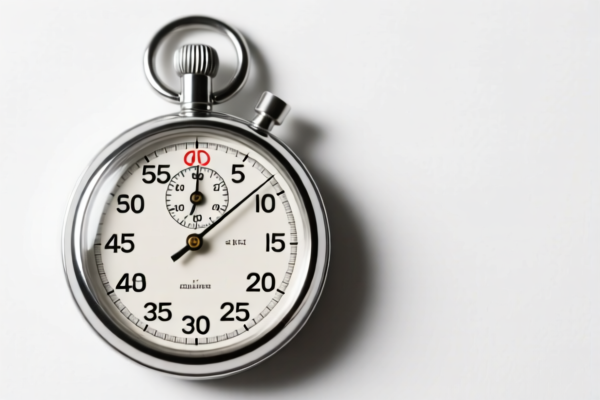
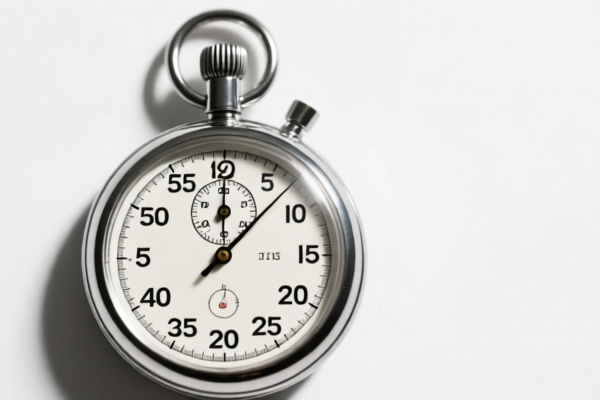
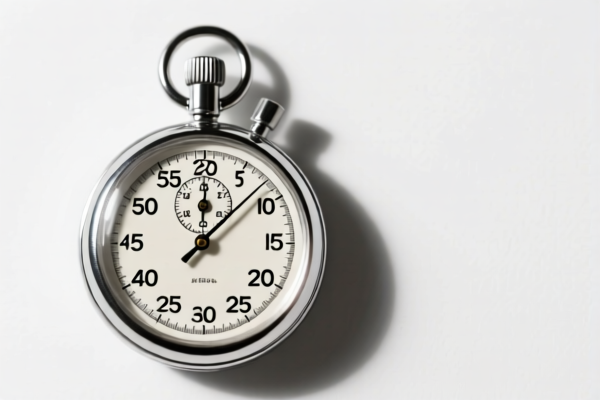
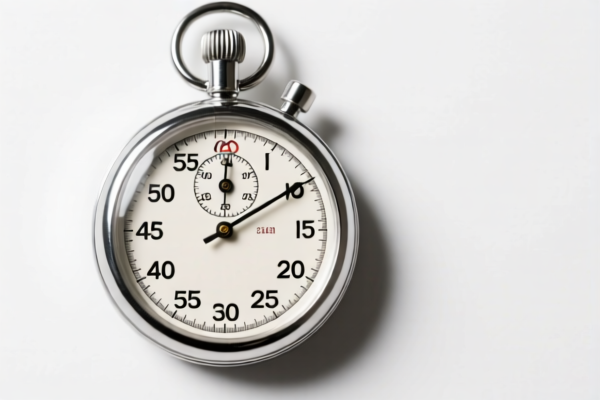
AI Analysis
⏱️ Electronic Stopwatches: HS Code Classification & U.S. Customs Clearance Guide (2026)
🌐 HS Code Reference & Customs Clearance Strategy | 2026 Latest Tariff Analysis
📌 Target Product: Electronic Stopwatch
🇺🇸 Import Destination: United States
🇨🇳 Origin: China
1️⃣ Product Definition & Classification Logic
An Electronic Stopwatch is a device designed to measure, record, or indicate time intervals. In international trade, its classification depends on the internal mechanism (electronic vs. mechanical) and its primary function (timing vs. general measurement).
⚠️ Key Distinction:
- 9106 Series (Time-Keeping Instruments): Specifically for instruments designed to record or indicate time intervals (stopwatches, timers). This is the most common and accurate classification for dedicated timing devices.
- 9017 Series (Measuring Instruments): For general measuring or checking instruments. If a device is primarily a stopwatch but marketed as a general "time-measuring instrument," it might fall here, but 9106 is more specific for stopwatches.
- Critical Factor: The presence of a battery, electronic circuitry, and the specific function (timing vs. general measurement) determines the HS Code.
📦 2️⃣ HS Code Classification Matrix (2026 Latest Tariff Data)
Based on the provided data, here are the 5 potential HS Codes for Electronic Stopwatches, along with their logical justifications and tax implications.
| HS Code | Classification Logic (Why this code?) | Total Tax Rate (US) | Tax Breakdown |
|---|---|---|---|
| 9106.90.85.00 | Time-Interval Recording: Fits the definition of "instruments for recording or indicating time intervals." | 35.0% | Base: 15¢ each + 2.3% + 0.8¢/jewelAdd-on: 25% (301 Tariff) + 10% (Section 301/IEEPA) |
| 9106.90.65.00 | Electronic Timing Logic: Specifically for devices with "watch movements (or electronic timing logic)" and battery-powered. | 35.0% | Base: 15¢ each + 2.3% + 0.8¢/jewelAdd-on: 25% (301 Tariff) + 10% (Section 301/IEEPA) |
| 9102.12.80.00 | Electric Stopwatches: Explicitly covers "Electric" stopwatches with timing functions. | 17.5% | Base: 0.0%Add-on: 7.5% (301 Tariff) + 10% (Section 301/IEEPA) |
| 9017.20.80.80 | General Measuring Instrument: Classified under "Drawing, marking-out, or mathematical calculating instruments" as a measuring tool. | 39.6% | Base: 4.6%Add-on: 25% (301 Tariff) + 10% (Section 301/IEEPA) |
| 9017.80.00.00 | Other Measuring Instruments: A broader "catch-all" for measuring instruments not specified elsewhere. | 40.3% | Base: 5.3%Add-on: 25% (301 Tariff) + 10% (Section 301/IEEPA) |
🔍 Key Insight:
- 9106 codes are more specific to timekeeping and thus preferred for dedicated stopwatches.
- 9102.12.80.00 offers the lowest total tax rate (17.5%) but requires strict adherence to the definition of "Electric Stopwatch."
- 9017 codes carry higher base tariffs and are generally less favorable unless the product is part of a larger measuring system.
💰 3️⃣ Detailed Tax Clause Explanation (U.S. Market)
✅ 1. The "Lowest Tax" Option: 9102.12.80.00 (17.5%)
- Base Rate: 0.0% (Ad Valorem)
- Additional Tariffs:
- +7.5% (Section 301 Tariff for China-origin goods)
- +10% (IEEPA/Section 301 Additional Tariff)
- Total: 17.5%
- Why it’s low: The base tariff for electric stopwatches is historically low, and the additional tariffs are capped at 7.5% + 10%.
- Requirement: Must be explicitly an "Electric Stopwatch" with timing functionality.
✅ 2. The "Standard" Options: 9106.90.65.00 & 9106.90.85.00 (35.0%)
- Base Rate:
15¢ each + 2.3% + 0.8¢/jewel(Specific Duty + Ad Valorem) - Additional Tariffs:
- +25% (Section 301 Tariff)
- +10% (IEEPA/Section 301 Additional Tariff)
- Total: 35.0% (plus specific duties per unit/jewel)
- Why it’s higher: The base tariff includes a per-unit charge (
15¢ each), which can be significant for high-volume, low-cost items. The additional tariffs are higher (25% vs. 7.5%).
✅ 3. The "General Measuring" Options: 9017.20.80.80 & 9017.80.00.00 (39.6% - 40.3%)
- Base Rate:
4.6%to5.3% - Additional Tariffs:
- +25% (Section 301 Tariff)
- +10% (IEEPA/Section 301 Additional Tariff)
- Total: ~40%
- Why it’s highest: These codes are for general measuring instruments, which carry higher base tariffs. They are not recommended for dedicated stopwatches unless no other classification applies.
📌 Important Note on "Jewel" Charges:
For codes9106.90.65.00and9106.90.85.00, the0.8¢/jewelcharge applies to the number of jewels in the movement (if applicable). For electronic stopwatches, this may not apply or may be negligible, but the15¢ eachcharge is a fixed cost per unit.
🛠️ 4️⃣ Customs Clearance Practical Advice
✅ 1. Documentation Checklist
| Document | Purpose |
|---|---|
| Product Specification Sheet | Must clearly state: "Electronic Stopwatch," "Battery-Powered," "Timing Function." |
| Technical Diagram | Show electronic circuitry (not mechanical gears) to support 9102.12.80.00 or 9106.90.xx. |
| Commercial Invoice | Must list HS Code and describe the item as "Electronic Stopwatch" to avoid misclassification. |
| Certificate of Origin | Required for applying Section 301 tariffs (China-origin goods). |
| FCC Certification (if applicable) | For electronic devices sold in the U.S., FCC compliance is mandatory. |
✅ 2. Classification Strategy
- Best Option: Try to classify under
9102.12.80.00(17.5% tax) if the product is explicitly an electric stopwatch. - Fallback Option: If the product is a more complex timing device (e.g., with data logging), use
9106.90.65.00or9106.90.85.00(35.0% tax). - Avoid:
9017codes unless the product is a general-purpose measuring instrument (e.g., a multi-function timer that also measures temperature/pressure).
✅ 3. Common Pitfalls to Avoid
- ❌ Misclassifying as "Watch" (9101/9102): Stopwatches are not "watches" (timepieces for wearing). They are "instruments for recording time intervals."
- ❌ Ignoring Per-Unit Duties: For
9106codes, the15¢ eachcharge can add up. Calculate total landed cost accurately. - ❌ Incomplete Description: Just writing "Stopwatch" is not enough. Use "Electronic Stopwatch, Battery-Powered, Model XYZ."
✅ 4. Value-Added Tips
- Pre-Ruling Request: If you are importing large volumes, consider requesting a Binding Ruling from U.S. Customs and Border Protection (CBP) to confirm the HS Code. This provides legal certainty.
- Supply Chain Optimization: If the tax burden is too high, consider sourcing from non-China countries (e.g., Vietnam, Malaysia) to avoid the 25% Section 301 tariff.
- Packaging Strategy: If shipping multiple stopwatches per box, ensure the invoice clearly states the unit price to avoid disputes on the
15¢ eachcharge.
🌍 5️⃣ Global Comparison (Quick Reference)
| Country/Region | Recommended HS Code | Est. Tax Rate | Notes |
|---|---|---|---|
| 🇺🇸 USA | 9102.12.80.00 |
17.5% | Best rate for electric stopwatches. |
| 🇨🇳 China (Import) | 9106.90.85.00 |
~9-13% | Lower base rates, no Section 301. |
| 🇪🇺 EU | 9106.90.90 |
0-4% | No anti-dumping tariffs. |
| 🇬🇧 UK | 9106.90.00 |
0-4% | Post-Brexit, similar to EU. |
| 🇯🇵 Japan | 9106.90.00 |
3-5% | Low tariffs, stable trade. |
📌 Conclusion:
For U.S. imports,9102.12.80.00is the most cost-effective classification for Electronic Stopwatches, offering a 17.5% total tax rate. However, strict adherence to the "Electric Stopwatch" definition is crucial. If in doubt,9106.90.65.00is the safer, albeit more expensive, alternative.
📌 6️⃣ Final Checklist for Importers
- Confirm Product Type: Is it strictly an electric stopwatch?
- Calculate Landed Cost: Include
15¢ each+2.3%+0.8¢/jewel+35%or17.5%tax. - Prepare Documentation: Specs, Invoice, FCC Cert, CO.
- Consult Customs Broker: Verify HS Code with a licensed broker before shipping.
- Consider Alternatives: If tax is too high, explore sourcing from non-China origins.
✨ Pro Tip:
"Classify Smart, Not Just Fast!"
A 1.5% difference in tax rate can mean thousands of dollars in savings over large shipments. Always aim for9102.12.80.00if possible!
✅ Ready to Import?
Contact your customs broker today with the product specs and request a Pre-Import HS Code Confirmation.
🚀 Smooth Clearance = Higher Profits!
Customer Reviews
About HS Code Classification
The Harmonized System (HS) is an internationally standardized nomenclature developed by the World Customs Organization (WCO) to classify traded products. Over 200 countries use the HS system as the basis for customs tariffs, trade statistics, and import/export regulations.
Each HS code follows a hierarchical structure:
- Chapter (2 digits) — Broad category of goods (e.g., Chapter 84: Machinery and Mechanical Appliances)
- Heading (4 digits) — More specific grouping within the chapter
- Subheading (6 digits) — Internationally standardized breakdown, used by all WCO member countries
- National subdivisions (8-10 digits) — Country-specific extensions for further classification, such as US HTSUS 10-digit codes
Correct HS code classification is essential for smooth customs clearance, accurate duty payment, and compliance with trade regulations. Misclassification can lead to customs delays, overpayment of duties, or penalties.
When importing from CN to US, the applicable tariff rates may include:
- Most-Favored-Nation (MFN) rate — The standard duty rate applied to WTO members
- General rate — Applied to countries without trade agreements
- Trade remedy duties — Additional tariffs such as Section 301 (anti-dumping), Section 232 (national security), or countervailing duties
The information provided on this page is for reference purposes only. For official classification, please consult with your local customs authority or a licensed customs broker.