storage hanging bag
CN → USProduct Images
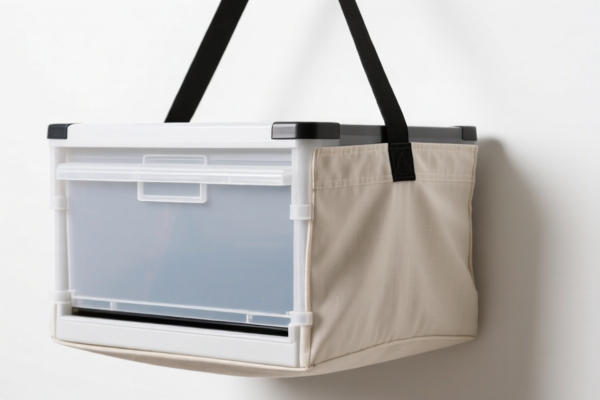
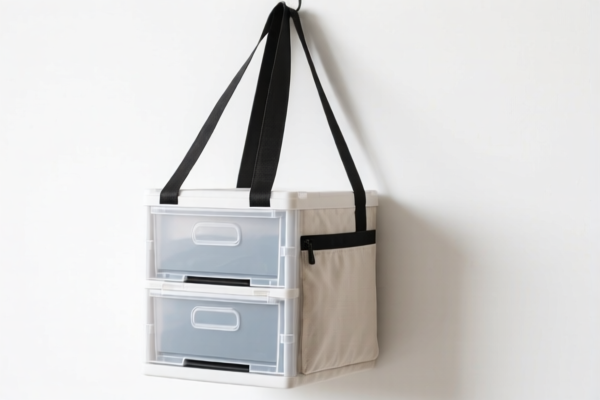
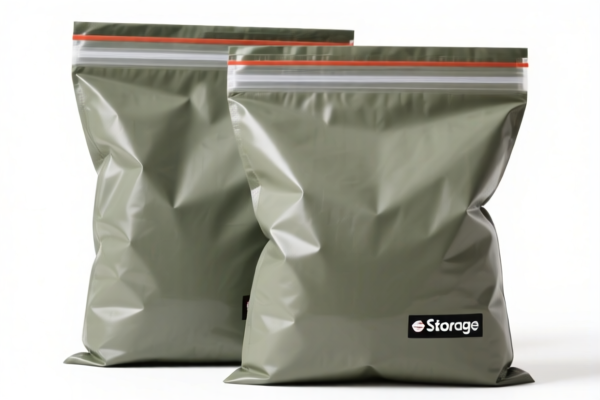
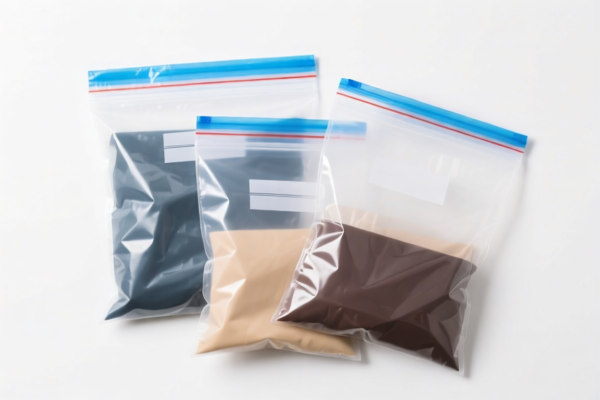
AI Analysis
👜 Storage Hanging Bag (Organizer Bags for Storage)
🌐 HS Code Reference & Customs Clearance Guide | 2026 Latest Tariff Analysis | Professional Clearance Strategy
📌 I. Product Definition & Classification: Do You Really Understand "Storage Hanging Bags"?
Storage hanging bags are versatile fabric or non-woven organizers designed to maximize vertical space in closets, cars, dorms, or offices. They are typically suspended from hooks, rods, or door handles and feature multiple compartments, pockets, and zippers.
In international trade, they are categorized based on material and primary function:
- Textile Organizers (Most Common): Made of polyester, cotton, non-woven fabric, or canvas. They rely on fabric structure and seams for storage. → Group 6307
- Rigid/Plastic Organizers: Made of molded plastic, PVC, or hard resin (less common for "hanging bags," more for "totes"). → Group 3926
- Specialized Containers: Made of metal wire or mesh with fabric lining. → Group 8306 or 6307
⚠️ Key Classification Point:
- If made of fabric/textile (polyester, cotton, non-woven) → 6307.90
- If made of plastic (rigid or flexible film) → 3924 or 3926
- Note: "Hanging" does not automatically change the HS Code; the material is the primary determinant.
📦 II. HS Code Breakdown (2026 Official Tariff Schedule)
| HS Code | Product Description | Application Scenario | Material Type |
|---|---|---|---|
6307.90.9889 |
Other made up textile articles, including dressing sacks, sleeping bags, etc. (Generic Textile Storage Bags) | Most common hanging shoe organizers, closet storage bags, non-woven fabric bags | ✅ Fabric / Non-woven |
6307.90.1000 |
Other made up textile articles, including dressing sacks (Dressing Sacks & Travel Bags) | Travel-specific storage sacks, garment bags | ✅ Fabric |
3926.90.9999 |
Other articles of plastics and articles of other materials of headings 3901 to 3914 (Plastic Storage Bags) | Clear PVC hanging shoe bags, vinyl storage pouches | ✅ Plastic / PVC / Vinyl |
8306.29.0000 |
Other statues and other ornamental articles of base metal; not applicable here unless specialized metal mesh. | Rarely used for standard bags | ❌ Metal |
9619.00.0000 |
Diapers for babies, and other sanitary articles | ❌ Not applicable | ❌ |
🔍 Critical Reminder:
- Textile Bags: 90% of "storage hanging bags" fall under 6307.90.9889 (Miscellaneous textile articles).
- PVC/Plastic Bags: If the bag is transparent, waterproof, and made of vinyl/PVC, it likely falls under 3926.90.9999 (Other plastic articles).
- Do NOT classify under "bags" (4202) unless it is a handbag-style pouch with a strap for carrying, not hanging.
💰 III. 2026 Latest Tariff Rate Breakdown (US Import from China)
✅ Applicable Country: United States (US)
✅ Country of Origin: China (CN)
✅ Effective Date: November 10, 2025 (Including subsequent imports)
🎯 1. 6307.90.9889 —— Textile Storage Hanging Bag
| Item | Details |
|---|---|
| Base Rate (MFN) | 7.9% (ad valorem) |
| USITC Section 301 Surcharge | +25% (Footnote 9903.88.01) |
| IEEPA Section 170 Surcharge | +10% (China-specific, from Nov 10, 2025) |
| Total Tariff | 42.9% |
| Tax Calculation | CIF Value × 42.9% |
| De Minimis Exemption | ❌ No (Denied) |
| Legal Path | IEEPA:9903.01.24 → USITC:6307.90.9889 → FOOTNOTE:9903.88.01 |
📌 Explanation:
- Textile articles are heavily targeted by US trade protection measures.
- Total 42.9% makes importing textile storage bags from China extremely expensive.
- Even though the base rate is low (7.9%), the Section 301 and IEEPA surcharges double the cost.
🎯 2. 3926.90.9999 —— Plastic (PVC/Vinyl) Storage Hanging Bag
| Item | Details |
|---|---|
| Base Rate (MFN) | 4.2% (ad valorem) |
| USITC Section 301 Surcharge | +25% |
| IEEPA Section 170 Surcharge | +10% |
| Total Tariff | 39.2% |
| Tax Calculation | CIF Value × 39.2% |
| De Minimis Exemption | ❌ No (Denied) |
| Legal Path | IEEPA:9903.01.24 → USITC:3926.90.9999 → FOOTNOTE:9903.88.01 |
📌 Note:
- Plastic bags are also subject to the same high surcharges.
- Key Difference: The base rate is slightly lower (4.2% vs 7.9%), but the total burden is still nearly 40%.
🛠️ IV. Customs Clearance Practical Advice (Pitfall Avoidance Guide)
✅ 1. Required Documentation Checklist (Non-negotiable)
| Document | Mandatory? | Description |
|---|---|---|
| ✅ Product Specification Sheet | ✔️ | Must specify material (e.g., "100% Polyester," "PVC 0.3mm"), dimensions, and load capacity. |
| ✅ Material Composition Certificate | ✔️ | Critical for distinguishing between Textile (6307) and Plastic (3926). |
| ✅ Product Photos (with Label) | ✔️ | Clear images showing hanging hooks, zippers, and interior pockets. |
| ✅ Bill of Materials (BOM) | ✔️ | List all components (zippers, hooks, fabric) to confirm classification. |
| ✅ Commercial Invoice | ✔️ | Must explicitly state "Textile Storage Bag" or "Plastic Hanging Organizer" (no generic "bag"). |
| ✅ Country of Origin Cert (CO) | ✔️ | Essential for determining if surcharges apply. |
| ✅ Packaging List | ✔️ | Show how items are packed to avoid "split declaration" penalties. |
✅ 2. Declaration Techniques (Golden Rules)
🔥 "Material First, Function Second, Name Precise, Tax Down!"
| Scenario | Correct Declaration | Wrong Practice |
|---|---|---|
| Non-woven Fabric Bag | 6307.90.9889 (Textile) |
Declaring as "Plastic" → Wrong tax, audit risk |
| PVC Clear Bag | 3926.90.9999 (Plastic) |
Declaring as "Textile" → Wrong tax, audit risk |
| Bag + Hooks (Metal) | Declare as Bag (6307/3926) | Split declaration (Bag + Metal Parts) → Higher tax! |
| Travel Garment Bag | 6307.90.1000 (Dressing Sack) |
Declaring as "Storage Bag" → Potential mismatch |
✅ 3. Special Situations Handling
| Situation | Recommendation |
|---|---|
| OEM Custom Bags | Provide design图纸 (blueprints) + customer order to prove custom nature. |
| Bags with Metal Hooks | The hook is usually considered a "fixture" of the bag. Declare the whole unit as the bag. Do not separate! |
| Reusable/Recyclable Materials | If made of recycled materials, check for potential Section 301 exclusions (very rare, requires specific application). |
| Sample vs. Commercial | Samples < $800 may qualify for De Minimis (Section 321) if shipped directly to consumers, but commercial shipments do not. |
🌍 V. Global Market Comparison (2026 Tariff Landscape)
| Country/Region | Recommended HS Code | Tariff Rate | Certification | Notes |
|---|---|---|---|---|
| 🇺🇸 USA | 6307.90.9889 / 3926.90.9999 |
~43% (China Origin) | N/A | Highest burden due to Section 301 + IEEPA |
| 🇪🇺 EU | 6307.90 / 3926.90 |
0% - 5% | CE + REACH | No Section 301; check for anti-dumping |
| 🇨🇦 Canada | 6307.90 / 3926.90 |
5% - 10% | N/A | Moderate duty, no surcharges |
| 🇦🇺 Australia | 6307.90 / 3926.90 |
5% | N/A | Low duty, strict labeling |
| 🇯🇵 Japan | 6307.90 / 3926.90 |
0% - 4% | JIS | Very low barrier |
📌 Conclusion:
- USA is the most expensive market for these products due to Section 301 and IEEPA surcharges.
- Alternative Strategy: Consider sourcing from Vietnam, Thailand, or Mexico to potentially avoid IEEPA surcharges (if rules of origin are met).
📌 VI. Common Mistakes & Pitfalls (Blood Lesson Guide)
❌ Mistake 1: Declaring a Textile Bag as "Plastic" to avoid textile quotas.
👉 Consequence: Customs audit, fines, and retroactive tax adjustment.
❌ Mistake 2: Splitting the declaration (Bag = $500, Hooks = $50).
👉 Consequence: Hooks may be classified separately (e.g., base metal), leading to higher total tax and delays.
❌ Mistake 3: Using generic terms like "Storage Container" without material details.
👉 Consequence: Customs cannot classify → Hold / Seizure.
✅ Correct Declaration Phrase:
"Textile Storage Hanging Bag, 100% Polyester, Non-woven, with Zippers and Metal Hooks, Model XYZ, No. 5 Pockets"
🎯 VII. Conclusion: Precise Classification = Cost Savings
🎯 Remember the Mantra:
🔹 "Material First: Textile = 6307, Plastic = 3926"
🔹 "USA Tax Trap: 40%+ for China Origin!"
🔹 "Never Split Bag + Hooks!"
📌 Pro Tip:
If your Storage Hanging Bags are manufactured in Vietnam, Indonesia, or Mexico, you may qualify for lower IEEPA surcharges or even 0% additional duty.
Action Step:
📞 Contact a licensed customs broker immediately.
📄 Request Advanced Ruling (CBP Ruling) before shipping.
🚀 Optimize your supply chain to avoid the US 43% tax trap!
✨ Professional Customs Clearance Starts with Accurate Classification!
💼 Every cent you save on duty is pure profit!
Customer Reviews
About HS Code Classification
The Harmonized System (HS) is an internationally standardized nomenclature developed by the World Customs Organization (WCO) to classify traded products. Over 200 countries use the HS system as the basis for customs tariffs, trade statistics, and import/export regulations.
Each HS code follows a hierarchical structure:
- Chapter (2 digits) — Broad category of goods (e.g., Chapter 84: Machinery and Mechanical Appliances)
- Heading (4 digits) — More specific grouping within the chapter
- Subheading (6 digits) — Internationally standardized breakdown, used by all WCO member countries
- National subdivisions (8-10 digits) — Country-specific extensions for further classification, such as US HTSUS 10-digit codes
Correct HS code classification is essential for smooth customs clearance, accurate duty payment, and compliance with trade regulations. Misclassification can lead to customs delays, overpayment of duties, or penalties.
When importing from CN to US, the applicable tariff rates may include:
- Most-Favored-Nation (MFN) rate — The standard duty rate applied to WTO members
- General rate — Applied to countries without trade agreements
- Trade remedy duties — Additional tariffs such as Section 301 (anti-dumping), Section 232 (national security), or countervailing duties
The information provided on this page is for reference purposes only. For official classification, please consult with your local customs authority or a licensed customs broker.