storage shelf
CN → US| HS Code | Tariff Rate | Origin | Destination | Doc |
|---|---|---|---|---|
| 4421999880 | 38.3% | CN | US | Official Doc |
| 7326908688 | 87.9% | CN | US | Official Doc |
| 9403200082 | 85.0% | CN | US | Official Doc |
| 4421919880 | 38.3% | CN | US | Official Doc |
| 7326908630 | 87.9% | CN | US | Official Doc |
Product Images
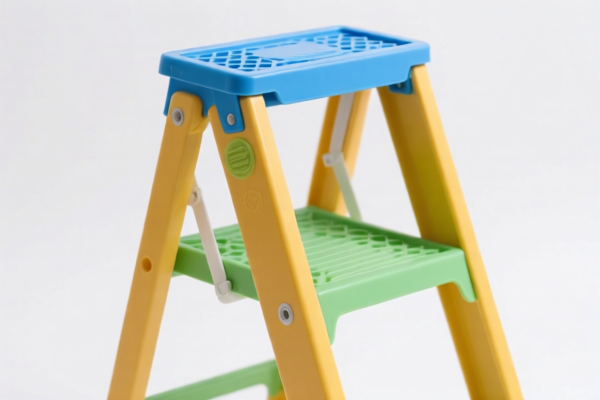


AI Analysis
🗄️ Storage Shelf (Racking & Shelving Units)
🌐 HS Code Reference & Customs Clearance Guide | 2024/2025 Tariff Analysis | Professional Logistics Strategy
📌 I. Product Definition & Classification: What Exactly is a "Storage Shelf"?
A "Storage Shelf" is a broad term in international trade, referring to structures used for storing goods in warehouses, retail stores, homes, or offices. In customs classification, material composition is the single most critical factor determining the HS Code and, consequently, the tariff rate.
Common Materials: 1. Wood/Bamboo: Wooden racks, bamboo shelves, particle board units. 2. Metal (Steel/Iron/Aluminum): Industrial pallet racking, heavy-duty steel shelving, wire mesh shelves. 3. Mixed Materials: Shelves with wooden tops and metal legs (often classified based on essential character).
⚠️ Key Classification Pitfall:
- Wooden Shelves are classified under Chapter 44/46 (Wood Products).
- Metal Shelves are classified under Chapter 73 (Articles of Iron/Steel) OR Chapter 94 (Furniture).
- Misclassification leads to massive tariff differences (e.g., 38.3% vs. 87.9%).
📦 II. HS Code Classification Details (Based on Provided Data)
The following HS Codes are derived directly from the provided data context. Note that the total tax rates vary significantly based on the material and specific subheading.
| HS Code | Material/Type | Summary & Description | Total Tax Rate |
|---|---|---|---|
| 4421.99.98.80 | Wooden | Other wooden articles (Storage shelf inferred as wood). Belongs to "Other wooden articles" category. | 38.3% |
| 7326.90.86.88 | Iron/Steel | Other articles of iron or steel (Storage shelf inferred as metal). Belongs to "Other articles of iron and steel" category. | 87.9% |
| 9403.20.00.82 | Metal Furniture | Metal furniture (Storage cabinet/shelf category). Belongs to "Other metal furniture" category. | 85.0% |
| 4421.91.98.80 | Wood/Bamboo | Other wooden articles (Storage shelf inferred as wood or bamboo). Belongs to "Other wooden articles" category. | 38.3% |
| 7326.90.86.30 | Metal Support | Other articles of iron or steel (Metal support structures). Belongs to "Pipes and similar supports" category. | 87.9% |
🔍 Critical Observation:
- Wooden Shelves (4421.99/4421.91) attract a 38.3% total tax.
- Metal Shelves (7326.90) attract a 87.9% total tax.
- Metal Furniture (9403.20) attracts an 85.0% total tax.
- The difference between wood and metal can be nearly 50 percentage points.
💰 III. Detailed Tariff Breakdown (2024/2025 Context)
✅ Applicable Market: USA (US)
✅ Origin: China (CN)
✅ Key Components: Base Duty + Section 301 Duty + Section 301 (122 Clause) + Steel/Aluminum/Copper Surtax (if applicable)
🎯 1. Wooden Shelves: 4421.99.98.80 & 4421.91.98.80
Total Tax: 38.3%**
| Item | Details |
|---|---|
| Base Duty (MFN) | 3.3% |
| Section 301 Duty (List 4B) | 25.0% |
| Section 122 Clause Duty | 10.0% |
| Total Tax Rate | 38.3% |
| Calculation | CIF Value × 38.3% |
📌 Explanation:
- Wooden products do not trigger the additional "Steel/Aluminum/Copper" surtax.
- The 38.3% rate is a combination of the base tariff (3.3%) plus two layers of punitive tariffs (25% + 10%).
🎯 2. Iron/Steel Articles: 7326.90.86.88 & 7326.90.86.30
Total Tax: 87.9% (High Risk)
| Item | Details |
|---|---|
| Base Duty (MFN) | 2.9% |
| Section 301 Duty (List 4B) | 25.0% |
| Section 122 Clause Duty | 10.0% |
| Steel/Aluminum/Copper Surtax | 50.0% |
| Total Tax Rate | 87.9% |
| Calculation | CIF Value × 87.9% |
📌 Explanation:
- The 50% Surtax is the game-changer here. It applies to specific steel/aluminum/copper products under Section 232 or related trade actions.
- Combined with 2.9% base + 25% Section 301 + 10% Clause 122, the effective rate exceeds 87%.
- This makes metal storage shelves extremely expensive to import into the US from China.
🎯 3. Metal Furniture: 9403.20.00.82
Total Tax: 85.0% (High Risk)
| Item | Details |
|---|---|
| Base Duty (MFN) | 0.0% |
| Section 301 Duty (List 4B) | 25.0% |
| Section 122 Clause Duty | 10.0% |
| Steel/Aluminum/Copper Surtax | 50.0% |
| Total Tax Rate | 85.0% |
| Calculation | CIF Value × 85.0% |
📌 Explanation:
- Although the base duty is 0%, the 50% Steel Surtax still applies because the primary material is metal.
- Total rate is slightly lower than general steel articles (87.9%) but still prohibitively high.
🛠️ IV. Customs Clearance & Strategy Recommendations
✅ 1. Material Verification is Crucial
Before declaring, verify the exact material composition:
- If Wood/Bamboo: Use HS 4421.99.98.80 or 4421.91.98.80. Total Tax: 38.3%.
- If Steel/Iron:
- If it looks like furniture (e.g., home shelving, retail displays), use 9403.20.00.82. Total Tax: 85.0%.
- If it looks like industrial hardware/supports, use 7326.90.86.88 or 7326.90.86.30. Total Tax: 87.9%.
💡 Cost-Saving Tip:
If your product can be made of wood instead of metal, you save ~50% in taxes (38.3% vs 87.9%). This is a major design decision for export to the US.
✅ 2. Documentation Requirements
| Document | Requirement |
|---|---|
| Commercial Invoice | Clearly state material (e.g., "Pine Wood Storage Shelf" or "Steel Wire Shelving Unit"). |
| Product Description | Include dimensions, load capacity, and assembly status (knocked-down vs. assembled). |
| Bill of Lading (B/L) | Ensure weight and dimensions match the invoice. |
| Certificate of Origin | Required to confirm China origin (triggers tariffs). |
✅ 3. Common Errors & Pitfalls
❌ Error 1: Declaring a steel shelf as "Wood" to save taxes.
👉 Consequence: Severe penalties, cargo seizure, and blacklisting. US Customs (CBP) performs strict material inspections.
❌ Error 2: Classifying metal shelves under "Furniture" (9403) when they are clearly industrial supports (7326).
👉 Consequence: While both attract the 50% surtax, the base duties differ. Incorrect classification can lead to audits.
❌ Error 3: Ignoring the 50% Steel Surtax.
👉 Consequence: Under-declaration leads to back-taxes + interest + penalties. Many importers forget this layer.
✅ 4. Strategic Advice for Importers
- Material Switch: Consider switching from steel to wood or plastic for non-industrial applications to reduce tariffs from ~87% to ~38%.
- Supply Chain Diversification: If you must import metal, consider sourcing from countries not subject to the 50% steel surtax (e.g., Vietnam, Mexico, India) if feasible.
- Pre-Ruling: Apply for a Binding Ruling from US CBP to confirm the correct HS Code for your specific product design. This provides legal certainty.
- Kit Assembly: If importing wooden shelves as KD (Knocked Down) parts, ensure they are declared as such. If importing fully assembled, the classification remains the same, but logistics costs may vary.
📊 V. Tax Comparison Summary (US Imports from China)
| Material | HS Code Example | Total Tax Rate | Key Tax Components |
|---|---|---|---|
| Wood | 4421.99.98.80 | 38.3% | 3.3% Base + 25% Sec 301 + 10% Clause 122 |
| Steel (Furniture) | 9403.20.00.82 | 85.0% | 0% Base + 25% Sec 301 + 10% Clause 122 + 50% Steel Surtax |
| Steel (Articles) | 7326.90.86.88 | 87.9% | 2.9% Base + 25% Sec 301 + 10% Clause 122 + 50% Steel Surtax |
🎯 VI. Conclusion & Final Tips
🎯 Key Takeaway:
Material is Destiny.
- Wood = 38.3% Tax
- Metal = 85.0% - 87.9% Tax
The 50% Steel Surtax is the primary driver for high costs on metal storage shelves.
✅ Action Plan:
1. Audit your product material: Is it truly steel? Can it be wood?
2. Calculate landed cost: Include freight, insurance, and the ~85% tax burden for metal.
3. Consult a broker: For complex mixed-material shelves, get a professional classification opinion.
4. Consider alternative markets: Europe (EU) and Asia may have lower tariffs for metal furniture/shelves.
✨ Smart Sourcing, Lower Tariffs, Higher Profits!
💼 Your supply chain strategy starts with accurate HS Code classification.
Customer Reviews
About HS Code Classification
The Harmonized System (HS) is an internationally standardized nomenclature developed by the World Customs Organization (WCO) to classify traded products. Over 200 countries use the HS system as the basis for customs tariffs, trade statistics, and import/export regulations.
Each HS code follows a hierarchical structure:
- Chapter (2 digits) — Broad category of goods (e.g., Chapter 84: Machinery and Mechanical Appliances)
- Heading (4 digits) — More specific grouping within the chapter
- Subheading (6 digits) — Internationally standardized breakdown, used by all WCO member countries
- National subdivisions (8-10 digits) — Country-specific extensions for further classification, such as US HTSUS 10-digit codes
Correct HS code classification is essential for smooth customs clearance, accurate duty payment, and compliance with trade regulations. Misclassification can lead to customs delays, overpayment of duties, or penalties.
When importing from CN to US, the applicable tariff rates may include:
- Most-Favored-Nation (MFN) rate — The standard duty rate applied to WTO members
- General rate — Applied to countries without trade agreements
- Trade remedy duties — Additional tariffs such as Section 301 (anti-dumping), Section 232 (national security), or countervailing duties
The information provided on this page is for reference purposes only. For official classification, please consult with your local customs authority or a licensed customs broker.