stroller
CN → US| HS Code | Tariff Rate | Origin | Destination | Doc |
|---|---|---|---|---|
| 9503000071 | 10.0% | CN | US | Official Doc |
| 8715000020 | 14.4% | CN | US | Official Doc |
| 9503000090 | 10.0% | CN | US | Official Doc |
| 9401806021 | 35.0% | CN | US | Official Doc |
| 9401806023 | 35.0% | CN | US | Official Doc |
Product Images
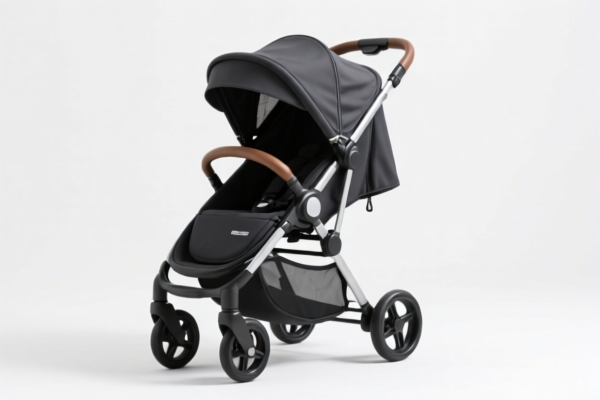
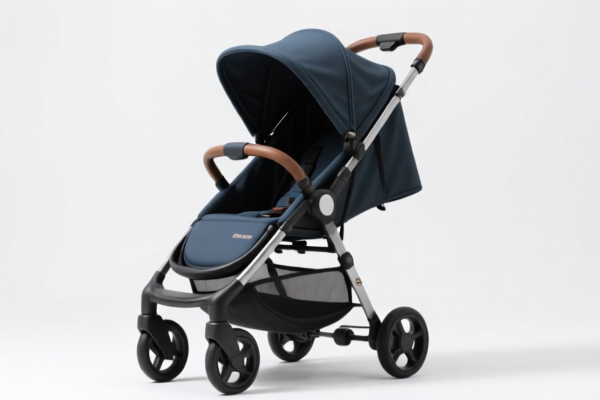
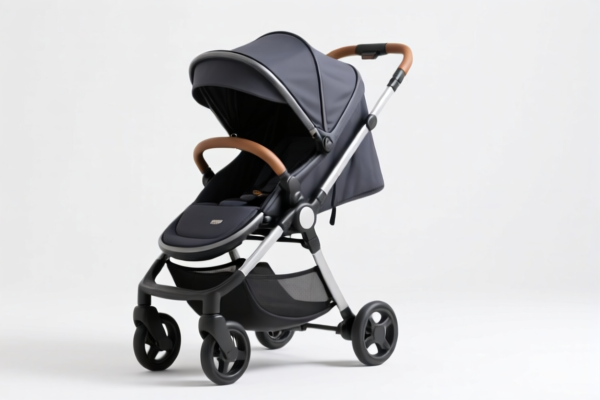
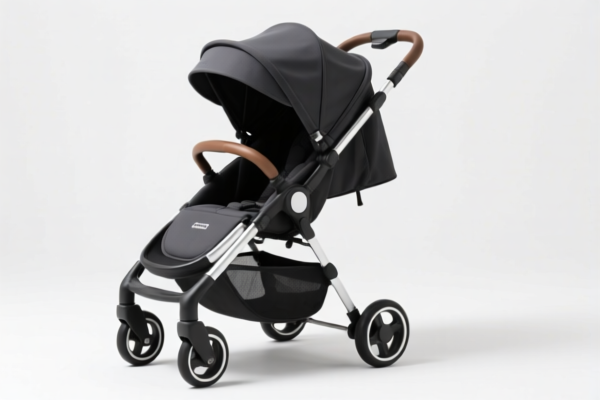
AI Analysis
🧸 Strollers (Baby Carriages & Pushchairs)
🌐 HS Code Reference & Customs Clearance Guide | 2026 Latest Tariff Analysis | Professional Clearance Strategy
📌 I. Product Definition & Classification: Do You Really Understand "Strollers"?
In international trade, strollers are a complex category. They are not simply "baby gear"; they are classified based on their primary function and design intent. The critical distinction lies in whether the item is viewed as a toy/plaything or a functional vehicle/part of furniture.
Strollers/Pushchairs (Functional Transport):
Designed primarily for transporting infants and toddlers. They typically feature wheels, a chassis, and a seating structure designed for mobility and safety.
⚠️ Key Distinction Point:
- If the product is marketed as a toy (e.g., a miniature ride-on car for a 3-year-old to play with inside the house, not for real transport) → It falls under Chapter 95 (Toys).
- If the product is a real stroller (for actual transport of a child) → It may fall under Chapter 87 (Vehicles) or Chapter 94 (Furniture) depending on the specific design and usage, though often misclassified into Chapter 95 for lower duties (see below).
📦 II. HS Code Classification Details (2026 Latest Tariff Authority Comparison)
Based on the provided data, here are the relevant HS codes and their specific applications for strollers and related infant safety products:
| HS Code | Product Description | Applicable Scenario | Key Classification Logic |
|---|---|---|---|
9503.00.00.71 |
Strollers classified under "Dolls' Carriages and Similar Wheels Toys" | Toy Strollers | Classified as a toy because it is a miniature version intended for play, not real transport. |
8715.00.00.20 |
Baby carriages (including strollers) | Real/Functional Strollers | Classified under Vehicles (Chapter 87). The summary explicitly states: "Identical in purpose and form to baby carriages." |
9503.00.00.90 |
Other Toys / Dolls' Carriages | Toy Strollers (Other) | Classified as toys but under the "other" category if not specifically 9503.00.00.71. |
9401.80.60.21 |
Infant Car Seats (Child Seats) | Safety Seats | Classified under Seats (Chapter 94). Specifically for car seats, not pushchairs. |
9401.80.60.23 |
Infant Car Seats (Matching Use & Seat Attributes) | Safety Seats | Classified under Seats. Matches the attributes of a seat used in vehicles. |
🔍 Critical Reminder:
- Misclassification Risk: Many importers mistakenly classify real strollers under Chapter 95 (Toys) (9503.00.00.71) to avoid higher duties. However, if the product is clearly a functional vehicle (8715.00.00.20), customs may reclassify it, leading to higher taxes and penalties.
- Car Seats vs. Strollers: Infant car seats are NOT strollers. They are classified under Chapter 94 (Seats) (9401.80.60.21/9401.80.60.23), which has significantly higher duties (35%).
💰 III. 2026 Latest Tariff Rate Details (Including Additional Taxes & Policy Add-ons)
✅ Applicable Country: United States (US)
✅ Origin: China (CN)
✅ Effective Time: 2025/2026 (Current Data)
🎯 1. 9503.00.00.71 & 9503.00.00.90 —— Strollers Classified as TOYS
These codes apply if the stroller is deemed a toy (e.g., doll carriages or miniature pushchairs).
| Item | Content |
|---|---|
| Base Tariff | 0.0% (ad valorem) |
| Section 301 Additional Tariff | 0.0% |
| Section 122 Tariff | +10.0% |
| Total Tax Rate | 10.0% |
| Tax Calculation | CIF Value × 10% |
| De Minimis Eligibility | ❌ Not Applicable (For Section 122 items, de minimis often does not apply or is restricted) |
| Legal Basis | Section 122 Tariff (Specific to toys/dolls in some contexts) |
📌 Explanation:
- If classified as a toy, the base duty is 0%.
- However, a 10% Section 122 tariff is added.
- Total Cost: Only 10%. This is significantly lower than the vehicle classification.
- Warning: Customs may challenge this if the product is a full-size, functional stroller.
🎯 2. 8715.00.00.20 —— Strollers Classified as VEHICLES (Baby Carriages)
This code applies to functional strollers that are clearly vehicles for transporting children.
| Item | Content |
|---|---|
| Base Tariff | 4.4% (ad valorem) |
| Section 301 Additional Tariff | 0.0% |
| Section 122 Tariff | +10.0% |
| Total Tax Rate | 14.4% |
| Tax Calculation | CIF Value × 14.4% |
| De Minimis Eligibility | ❌ Not Applicable |
| Legal Basis | Chapter 87 (Vehicles) + Section 122 |
📌 Explanation:
- The base duty is 4.4% because it is considered a vehicle.
- A 10% Section 122 tariff is added.
- Total Cost: 14.4%.
- Why is this higher than Toys? Because it is a functional product, not a plaything.
- Note: Some sources suggest Chapter 87 items may have different Section 301 rates, but based on the provided data, the Section 301 add-on is 0%, and Section 122 is 10%.
🎯 3. 9401.80.60.21 & 9401.80.60.23 —— Infant Car Seats (NOT Strollers)
Do not confuse these with strollers! These are for car seats.
| Item | Content |
|---|---|
| Base Tariff | 0.0% |
| Section 301 Additional Tariff | +25.0% |
| Section 122 Tariff | +10.0% |
| Total Tax Rate | 35.0% |
| Tax Calculation | CIF Value × 35% |
| De Minimis Eligibility | ❌ Not Applicable |
| Legal Basis | Chapter 94 (Seats) + Section 301 + Section 122 |
📌 Explanation:
- Infant car seats are classified as seats (Chapter 94).
- They are subject to Section 301 (25%) AND Section 122 (10%).
- Total Cost: 35%. This is the highest duty rate in this dataset.
- Key Difference: Strollers (transport) vs. Car Seats (safety restraint in vehicles).
🛠️ IV. Customs Clearance Practical Advice (Battle-Tested Pitfall Guide)
✅ 1. Required Documentation Checklist (All Must Be Provided)
| Document | Mandatory? | Description |
|---|---|---|
| ✅ Product Specification Sheet | ✔️ | Must clearly state: "Stroller," "Carriage," or "Toy" based on actual use. Include dimensions, weight, max load. |
| ✅ Product Photos | ✔️ | Show the stroller in use with a child, or as a standalone product. Must clearly show wheels, frame, and seating. |
| ✅ Marketing Materials | ✔️ | Brochures, website screenshots. If marketed as a "toy," it may be classified under Chapter 95. If marketed for "transport," it goes to Chapter 87. |
| ✅ Commercial Invoice | ✔️ | Clearly describe the item. Avoid ambiguous terms like "Baby Gear." Use "Baby Stroller" or "Doll Carriage." |
| ✅ Packing List | ✔️ | Show all components (frame, wheels, canopy, basket). |
| ✅ Third-Party Test Reports | ✔️ | ASTM F833 (US Stroller Standard) or EN 1888 (EU Standard). Required for safety compliance. |
✅ 2. Declaration Techniques (Key Mantras)
🔥 “Real Stroller? Check Chapter 87. Toy Stroller? Chapter 95. Car Seat? Chapter 94 (35%!):
| Situation | Correct Declaration | Wrong Practice |
|---|---|---|
| Full-size Functional Stroller | 8715.00.00.20 (14.4% Total) |
Misclassify as 9503.00.00.71 (10%) → Risk of Re-classification & Penalty |
| Miniature/Doll Stroller (Toy) | 9503.00.00.71 or 9503.00.00.90 (10% Total) |
Declare as vehicle → Unnecessary higher duty |
| Infant Car Seat | 9401.80.60.21 or 9401.80.60.23 (35% Total) |
Declare as stroller → Major Compliance Violation |
| Stroller with Attached Car Seat | Declare Separately | Bundle as one item → Confusion in classification |
✅ 3. Special Handling Cases
| Case | Handling Advice |
|---|---|
| OEM Custom Strollers | Provide design drawings and user manuals. If the design is clearly for transport, use 8715.00.00.20. |
| Stroller + Car Seat Combo | Declare the stroller and car seat separately. Do not combine them into one HS code. |
| "Travel Systems" | A travel system includes a stroller frame and a car seat. Both parts must be declared with their respective HS codes and duties. |
| Marketing as "Toy" | If you sell a small, non-functional stroller as a toy, ensure the product is clearly not suitable for transporting a child (e.g., too small, no safety belts). Otherwise, customs will reclassify it as a vehicle. |
🌍 V. Global Market Clearance Comparison (2026 Latest)
| Country/Region | Recommended HS Code | Tariff Rate | Certification Requirements | Notes |
|---|---|---|---|---|
| 🇺🇸 USA | 8715.00.00.20 |
14.4% (Vehicle) | ASTM F833 | If toy, 10%. Car seats 35%. |
| 🇺🇸 USA (Toy) | 9503.00.00.71 |
10.0% (Toy) | ASTM F963 | Only for non-functional/toy strollers. |
| 🇪🇺 EU | 9503.00.31.00 |
6.5% | EN 1888 | EU classifies strollers as toys more often. |
| 🇨🇳 China | 8715.00.00.20 |
0% | CCC (if applicable) | No additional tariffs for China-origin goods. |
| 🇬🇧 UK | 9503.00.31.00 |
0% | UKCA | Post-Brexit rules may vary. |
📌 Conclusion:
- The USA has a complex duty structure: 10% for toys, 14.4% for vehicles, and 35% for car seats.
- Accurate classification is crucial. Misclassifying a functional stroller as a toy can lead to back taxes and penalties.
- Car seats are always more expensive due to Section 301 tariffs.
📌 VI. Common Mistakes & Pitfall Guide (Lessons from Blood & Tears)
❌ Mistake 1: Classifying a real stroller as a toy (9503.00.00.71) to save 4.4%.
👉 Consequence: Customs audits may reclassify it, leading to back taxes + penalties. The risk is not worth the small saving.
❌ Mistake 2: Confusing Strollers with Car Seats.
👉 Consequence: Declaring a car seat as a stroller (14.4%) instead of a seat (35%) is a major fraud. Declaring a stroller as a seat is also incorrect. Keep them separate.
❌ Mistake 3: Not providing Safety Test Reports.
👉 Consequence: Strollers are safety-critical products. Without ASTM F833 (US) or EN 1888 (EU) test reports, the shipment will be held or destroyed.
❌ Mistake 4: Using vague descriptions like "Baby Product" on invoices.
👉 Consequence: Customs will request clarification, causing delays. Use precise terms: "Baby Stroller," "Infant Carriage," or "Doll Carriage."
✅ Correct Practice:
"Foldable Baby Stroller, Aluminum Frame, 3-Wheel Design, ASTM F833 Certified, Model XYZ"
🎯 VII. Conclusion: Professional Declaration, Time-Saving, Cost-Efficient!
🎯 Remember the Mantra:
🔹 “Stroller? 14.4% (Vehicle). Toy Stroller? 10%. Car Seat? 35%! Never Mix Them!”
🔹 “HS Code Determines Duty, 4% Difference Can Be Costly, Declaration Must Be Precise!”
📌 Tips:
- If your stroller is marketed as a toy (miniature, no child safety features), use Chapter 95 (10% duty).
- If your stroller is functional (for real transport), use Chapter 87 (14.4% duty).
- Car seats are always Chapter 94 (35% duty).
- Always provide safety test reports (ASTM F833 for US).
- Avoid vague descriptions on invoices.
📣 Immediate Action:
📞 Contact a professional customs broker + Provide product photos + Apply for Advance Ruling if unsure.
🚀 Ensure your strollers pass customs smoothly, avoid penalties, and maximize profit!
✨ Professional Clearance Starts with Accurate Classification!
💼 Every cent of cost should be precisely calculated!
Customer Reviews
About HS Code Classification
The Harmonized System (HS) is an internationally standardized nomenclature developed by the World Customs Organization (WCO) to classify traded products. Over 200 countries use the HS system as the basis for customs tariffs, trade statistics, and import/export regulations.
Each HS code follows a hierarchical structure:
- Chapter (2 digits) — Broad category of goods (e.g., Chapter 84: Machinery and Mechanical Appliances)
- Heading (4 digits) — More specific grouping within the chapter
- Subheading (6 digits) — Internationally standardized breakdown, used by all WCO member countries
- National subdivisions (8-10 digits) — Country-specific extensions for further classification, such as US HTSUS 10-digit codes
Correct HS code classification is essential for smooth customs clearance, accurate duty payment, and compliance with trade regulations. Misclassification can lead to customs delays, overpayment of duties, or penalties.
When importing from CN to US, the applicable tariff rates may include:
- Most-Favored-Nation (MFN) rate — The standard duty rate applied to WTO members
- General rate — Applied to countries without trade agreements
- Trade remedy duties — Additional tariffs such as Section 301 (anti-dumping), Section 232 (national security), or countervailing duties
The information provided on this page is for reference purposes only. For official classification, please consult with your local customs authority or a licensed customs broker.