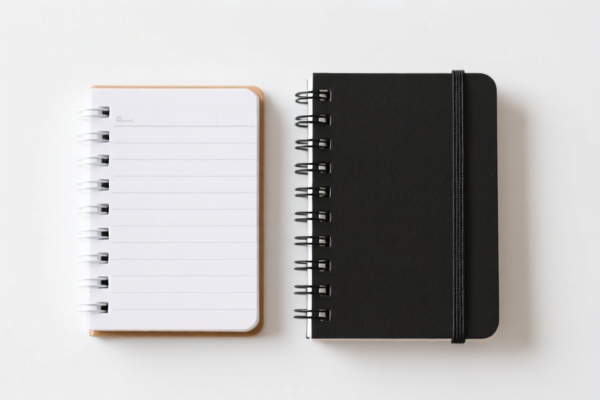
student practice notebook grid
CN → US| HS Code | Tariff Rate | Origin | Destination | Doc |
|---|---|---|---|---|
| 4820200000 | 35.0% | CN | US | Official Doc |
| 4820102040 | 35.0% | CN | US | Official Doc |
Product Images



AI Analysis
📓 Student Practice Notebook - Grid (Paper Stationery)
🌐 HS Code Reference & Customs Clearance Guide | 2026 Latest Tariff Analysis | Professional Clearance Strategy
📌 I. Product Definition & Classification: What exactly is a "Grid Student Practice Notebook"?
A Student Practice Notebook with Grid (Grid Paper) is a specific type of exercise book designed for academic, drafting, or mathematical use. In international trade, the classification of "notebooks" depends heavily on their binding method, page count, and intended use.
Crucially, for HS Code purposes, "Exercise Books" (typically thin, stapled, or perfect-bound notebooks with <100-150 pages) are classified differently from "Notebooks" (bound, thicker, often leather or hardcover, used for diaries or account books).
⚠️ Key Distinction Point:
- If it is a thin, stapled, or spiral-bound exercise book for schoolwork → HS 4820.20
- If it is a bound, durable notebook (often with covers and distinct binding) used for recording → HS 4820.10
- Note: The provided DATA specifically lists two HS Codes under the broader stationery category, distinguishing between general "Exercise Books" and specific "Bound Notebooks/Diaries".
📦 II. HS Code Classification Details (2026 Latest Tariff Authority Comparison)
Based on the provided , there are two specific HS Codes for stationery items. We must determine which one fits the "Student Practice Notebook Grid."
| HS Code | Product Description | Applicable Scenario | Binding Type | Grid Paper Inclusion? |
|---|---|---|---|---|
4820.20.00.00 |
Exercise Books | Standard student notebooks, drill books, grid paper for math/drafting, thin stapled books | Stapled, Perfect Bound, Simple Spiral | ✅ Yes (Typical) |
4820.10.20.40 |
Notebooks, Account Books, Diaries (Bound) | Bound diaries, address books, memorandum pads/letter pads (Note: This code specifies dimensions < 152.4-381 mm small side x 222.5-381 mm large side) | Bound, Hardcover, Durable Binding | ⚠️ Yes, but with Size Constraints |
🔍 Critical Analysis for "Student Practice Notebook Grid":
- Most Common Scenario: A standard student grid notebook is usually an "Exercise Book" (thin, stapled/spiral). Therefore,4820.20.00.00is the most likely classification.
- Exception: If the "notebook" is a high-quality, bound, leather-cover diary-style notebook with grid paper and meets the specific size constraints (Small side: 6"-15"; Large side: 8.75"-15"), it may fall under4820.10.20.40.
- Default Recommendation: Unless specified as a large, bound diary,4820.20.00.00is the standard for student exercise books.
💰 III. 2026 Latest Tariff Rate Details (Including Additional Taxes & Policy Add-ons)
✅ Applicable Country: United States (US)
✅ Origin: China (CN)
✅ Effective Date: 2025/2026 (Based on provided data structure)
🎯 1. 4820.20.00.00 —— Exercise Books (Most Likely for Student Grid Notebooks)
| Item | Detail |
|---|---|
| Description | Exercise books, including grid paper notebooks for students |
| Base Tariff | 0.0% |
| Additional Tariff (Section 301) | 25.0% |
| Total Tariff Rate | 25.0% |
| Tax Calculation | CIF Value × 25% |
| De Minimis Exemption | ❌ Not Eligible (For Chinese origin goods > $800, if applicable under current trade rules) |
| Legal Basis Path | HTSUS:4820.20.00.00 → USITC Footnote: Section 301 Additional Duties |
📌 Explanation:
- The Base Tariff is 0%, meaning no standard customs duty.
- However, due to US-China trade tensions, a 25% Additional Tariff applies to most paper stationery products from China, including exercise books.
- Total Cost Impact: A $10,000 shipment will incur $2,500 in additional duties.
🎯 2. 4820.10.20.40 —— Bound Notebooks/Diaries (Specific Size Constraints)
| Item | Detail |
|---|---|
| Description | Bound diaries, notebooks, address books (Small side: 6"-15", Large side: 8.75"-15") |
| Base Tariff | 0.0% |
| Additional Tariff (Section 301) | 0.0% |
| Total Tariff Rate | 0.0% |
| Tax Calculation | No duty |
| De Minimis Exemption | ✅ Eligible (If value < $800 per shipment) |
| Legal Basis Path | HTSUS:4820.10.20.40 → USITC Footnote: No Additional Duties |
📌 Explanation:
- This HS Code has 0% Total Tax for Chinese origins.
- Crucial Condition: The product MUST meet the specific size limits:
- Small side: 152.4 mm to 381 mm (6" to 15")
- Large side: 222.5 mm to 381 mm (8.75" to 15")
- If your student notebook is a standard A5 (210x148mm) or B5 (250x176mm), it does not meet the "large side" minimum of 222.5mm. Therefore, it cannot use this 0% tax code unless it is a very large format.
- Standard Student Notebooks (A5/B5): Typically fall under4820.20.00.00(25% tax), NOT this code.
🛠️ IV. Customs Clearance Practical Advice (实战避坑指南)
✅ 1. Documentation Checklist (Essential)
| Document | Required? | Notes |
|---|---|---|
| ✅ Product Specification Sheet | ✔️ | Must specify: "Grid Paper Exercise Book", material (Paper/Paperboard), binding type |
| ✅ Commercial Invoice | ✔️ | Clearly state: "Student Practice Notebooks, Grid Pattern, Paper" |
| ✅ Packing List | ✔️ | Include dimensions, weight, quantity |
| ✅ HS Code Pre-Ruling | ✔️ | Highly Recommended |
| ✅ Origin Certificate | ✔️ | To prove Chinese origin for tariff calculation |
✅ 2. Declaration Tips (Key Rules)
🔥 "Size Matters: Binding Defines the Code!"
| Scenario | Correct HS Code | Tax Rate | Why? |
|---|---|---|---|
| Standard A5/B5 Student Grid Notebook (Stapled/Perfect Bound) | 4820.20.00.00 |
25% | Classified as "Exercise Book" |
| Large Bound Diary/Grid Notebook (Small side ≥6", Large side ≥8.75") | 4820.10.20.40 |
0% | Meets size/binding criteria for "Bound Notebook" |
| Small Memo Pad (<6" small side) | Not in DATA | Check Other Codes | Does not fit provided DATA scopes |
| Loose-leaf Refills | 4820.20.00.00 |
25% | Considered part of exercise books |
⚠️ Common Mistake:
Claiming a standard A5 notebook as4820.10.20.40to save 25% tax.
Consequence: A5 size (210x148mm) has a large side of 210mm, which is < 222.5mm. This will be rejected by customs, leading to back taxes, fines, and delays.
✅ 3. Special Cases
| Situation | Handling Advice |
|---|---|
| Custom Size Notebooks | Measure carefully. If Large Side > 222.5mm and Small Side < 381mm, you might qualify for 0% tax under 4820.10.20.40. Get a pre-ruling. |
| Spiral Bound Notebooks | Often still considered "Exercise Books" (4820.20.00.00) unless bound like a diary. |
| Bulk Import for Schools | Ensure invoice states "Educational Supplies" to aid customs understanding, but HS Code still dictates tax. |
🌍 V. Global Market Clearance Comparison (2026 Latest)
| Country/Region | Recommended HS Code | Tariff (China Origin) | Notes |
|---|---|---|---|
| 🇺🇸 USA | 4820.20.00.00 |
25% | Standard exercise books; 0% only for large bound notebooks |
| 🇨🇳 China | 4820.20.00.00 |
0% | Import duty 0% (VAT applies) |
| 🇪🇺 EU | 4820.20.00 |
0% | Generally 0% for exercise books |
| 🇬🇧 UK | 4820.20.00 |
0% | Generally 0% for exercise books |
| 🇨🇦 Canada | 4820.20.00 |
0% | Generally 0% |
| 🇦🇺 Australia | 4820.20.00 |
5% | GST applies |
📌 Conclusion:
- The USA is the only major market with a significant 25% surcharge on standard student grid notebooks (4820.20.00.00).
- Strategy: If exporting to the US, consider large-format bound notebooks (>8.75" large side) to qualify for 0% tax under4820.10.20.40, if product design allows. Otherwise, budget for the 25% duty.
📌 VI. Common Errors & Pitfalls (Lessons Learned)
❌ Error 1: Misclassifying A5 notebooks as 4820.10.20.40
👉 Consequence: Customs rejects declaration; A5 is too small. You pay 25% + penalties.
❌ Error 2: Ignoring "Bound" vs. "Exercise Book" distinction
👉 Consequence: Spiral-bound vs. Stapled changes nothing for 4820.20.00.00. Both are 25%. Only hard/bound diaries of specific sizes get 0%.
❌ Error 3: Inaccurate Dimension Declaration
👉 Consequence: If you declare "Notebook" but dimensions don't match 4820.10.20.40, customs reclassifies to 4820.20.00.00 and charges 25%.
✅ Correct Declaration Example:
"Paper Exercise Books, Student Use, Grid Pattern, A5 Size, Stapled Binding, HS 4820.20.00.00"
🎯 VII. Conclusion: Professional Clearance, Cost Efficiency
🎯 Key Takeaway:
🔹 Standard Student Grid Notebooks (A5/B5) → HS 4820.20.00.00 → 25% Tax
🔹 Large Bound Grid Notebooks (>8.75" Large Side) → HS 4820.10.20.40 → 0% Tax🔹 "Size Determines Tax Rate in the US!"
🔹 "If it's small and thin, expect 25%. If it's large and bound, aim for 0%."
📌 Pro Tip:
If you are importing standard A5 grid notebooks into the US, factor in the 25% duty in your cost model. To save taxes, consider designing larger, bound journal-style grid notebooks that meet the size criteria for 4820.10.20.40.
📣 Immediate Action:
📞 Consult a customs broker to confirm if your specific notebook dimensions qualify for the 0% tax code.
📐 Measure your product: Large side must be ≥ 222.5mm (8.75") to qualify for the lower tax rate under4820.10.20.40.
✨ Professional Clearance, Starting from Accurate Classification!
💼 Every Percent Matters in Customs Duties!
Customer Reviews
About HS Code Classification
The Harmonized System (HS) is an internationally standardized nomenclature developed by the World Customs Organization (WCO) to classify traded products. Over 200 countries use the HS system as the basis for customs tariffs, trade statistics, and import/export regulations.
Each HS code follows a hierarchical structure:
- Chapter (2 digits) — Broad category of goods (e.g., Chapter 84: Machinery and Mechanical Appliances)
- Heading (4 digits) — More specific grouping within the chapter
- Subheading (6 digits) — Internationally standardized breakdown, used by all WCO member countries
- National subdivisions (8-10 digits) — Country-specific extensions for further classification, such as US HTSUS 10-digit codes
Correct HS code classification is essential for smooth customs clearance, accurate duty payment, and compliance with trade regulations. Misclassification can lead to customs delays, overpayment of duties, or penalties.
When importing from CN to US, the applicable tariff rates may include:
- Most-Favored-Nation (MFN) rate — The standard duty rate applied to WTO members
- General rate — Applied to countries without trade agreements
- Trade remedy duties — Additional tariffs such as Section 301 (anti-dumping), Section 232 (national security), or countervailing duties
The information provided on this page is for reference purposes only. For official classification, please consult with your local customs authority or a licensed customs broker.