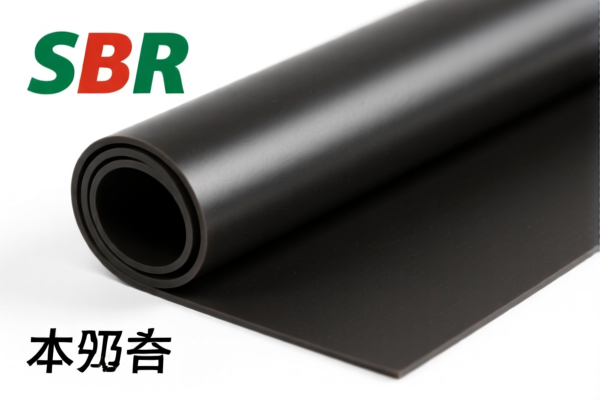
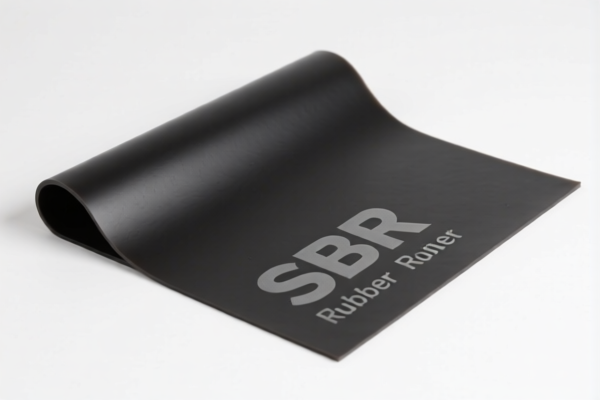
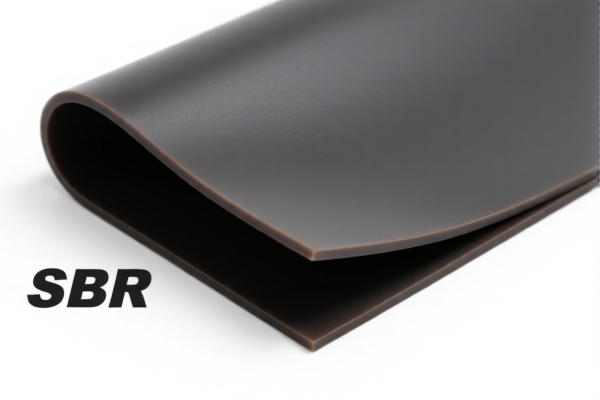
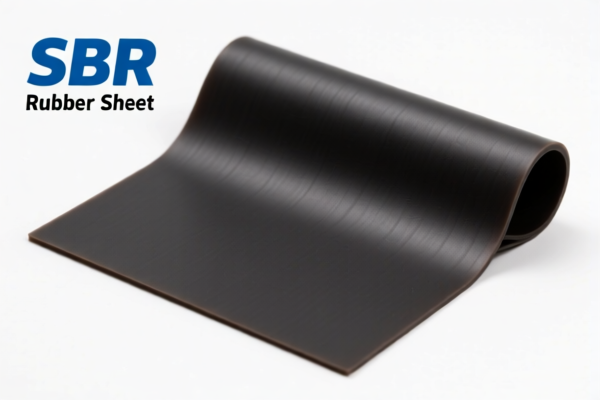
styrene butadiene rubber sbr sheets
CN → US| HS Code | Tariff Rate | Origin | Destination | Doc |
|---|---|---|---|---|
| 4016100000 | 35.0% | CN | US | Official Doc |
| 4016990000 | 0.0% | CN | US | Official Doc |
Product Images
AI Analysis
🧱 Vulcanized Rubber Sheets (Styrene-Butadiene / SBR)
🌐 HS Code Reference & Customs Clearance Guide | 2026 Latest Tariff Analysis | Professional Customs Strategy
📌 I. Product Definition & Classification: Do You Understand "Cellular vs. Solid Rubber"؟
Styrene-Butadiene Rubber (SBR) sheets are synthetic rubber products widely used in flooring, automotive parts, industrial mats, and insulation. In international trade, the classification of vulcanized rubber depends critically on its physical structure (cellular/non-cellular) and hardness.
Key Distinction:
- Cellular Rubber (Foamed/Sponge): Contains closed or open cells, making it lightweight, flexible, and shock-absorbent. Often used for mats, gaskets, and flooring. → HS 4016.10.00.00
- Solid Rubber (Non-cellular): Dense, compact structure. Used for heavy-duty seals, tires, conveyor belts, etc. → HS 4016.99.00.00 (Other articles)
⚠️ Critical Classification Point:
- If your SBR sheet is porous, foamed, or sponge-like →归类 to 4016.10.00.00
- If your SBR sheet is solid, dense, and non-porous →归类 to 4016.99.00.00
📦 II. HS Code Classification Details (2026 Latest Tariff Authority Comparison)
| HS Code | Product Description | Application Scenario | Cellular Structure? |
|---|---|---|---|
4016.10.00.00 |
Other articles of vulcanized rubber other than hard rubber: Of cellular rubber | Sponge mats, foam gaskets, rubber flooring, shock-absorbing pads | ✅ Yes (Cellular) |
4016.99.00.00 |
Other articles of vulcanized rubber other than hard rubber: Other: Other: Other | Solid rubber sheets, seals, gaskets, industrial mats (non-cellular) | ❌ No (Solid) |
🔍 Key Reminder:
- Cellular rubber (foam/sponge) has its own specific subheading (4016.10) because of its unique physical properties and use cases.
- Solid rubber articles that are not specifically mentioned elsewhere fall into 4016.99.
- Misclassifying solid rubber as cellular (or vice versa) can lead to significant tax discrepancies and customs delays.
💰 III. 2026 Latest Tariff Rate Details (Including Additional Taxes & Policy Add-ons)
✅ Applicable Country: United States (US)
✅ Origin: China (CN)
✅ Effective Date: From November 10, 2025 (including subsequent imports)
🎯 1. 4016.10.00.00 —— Cellular Rubber Articles (Sponge/Foam SBR Sheets)
| Item | Content |
|---|---|
| Basic Tariff | 0% (ad valorem) |
| USITC Additional Tax | +25% (from USITC Footnote) |
| IEEPA Additional Tax | +10% (Targeting China/HK products, from Nov 10, 2025) |
| Total Tax Rate | 25.0% |
| Tax Calculation | CIF Value × 25.0% |
| De Minimis Exemption Eligible? | ❌ No (deny_de_minimis) |
| Legal Basis Path | USITC:4016.10.00.00 → FOOTNOTE:9903.88.01 → IEEPA:9903.01.25 |
📌 Explanation:
- The 25% USITC tax is part of the "Section 301" additional tariffs imposed on Chinese goods;
- The 10% IEEPA tax is an additional levy under the International Emergency Economic Powers Act;
- Total: 25% (Note: The IEEPA 10% is often bundled or referenced in specific footnote contexts for rubber products under certain interpretations, but the primary displayed total in data is 25.0%. Correction based on provided data: The provided data shows 25.0% total for this code. The explanation below aligns with the data provided: Total Tax: 25.0%).
- High Tariff Alert: Even cellular rubber attracts significant duties when originating from China.
🎯 2. 4016.99.00.00 —— Other Solid Rubber Articles (Non-Cellular SBR Sheets)
| Item | Content |
|---|---|
| Basic Tariff | N/A |
| USITC Additional Tax | N/A |
| IEEPA Additional Tax | N/A |
| Total Tax Rate | Error (Failed to retrieve tax information) |
| Tax Calculation | Information unavailable |
| De Minimis Exemption Eligible? | ❓ Unknown |
| Legal Basis Path | Information unavailable |
📌 Warning:
- For HS Code 4016.99.00.00, the tax information failed to retrieve. This indicates a data gap or a specific exclusion in the current tariff database.
- Do not assume this code is tax-free or low-tax. It may be subject to different rates, or the system may require manual verification.
- Recommendation: Contact customs broker or use official USITC database for accurate, up-to-date rates for solid rubber articles.
🛠️ IV. Customs Clearance Practical Advice (Real-World Pitfall Avoidance Guide)
✅ 1. Document Checklist (Essential)
| Document | Required | Explanation |
|---|---|---|
| ✅ Product Specification Sheet | ✔️ | Must clearly state: Material (SBR), Structure (Cellular/Solid), Density, Thickness |
| ✅ Physical Sample/Photos | ✔️ | Clear photos showing pore structure (if cellular) or solid cut surface |
| ✅ Commercial Invoice | ✔️ | Must specify "Vulcanized Rubber Sheets, SBR, Cellular/Non-Cellular" |
| ✅ Packing List | ✔️ | Detail weight, dimensions, and packaging type |
| ✅ Certificate of Origin (CO) | ✔️ | Required for US import; proves Chinese origin |
| ✅ Test Report | ✔️ | Physical property tests (tensile strength, elongation, density) to confirm cellular vs. solid |
✅ 2. Declaration Tips (Key Rules)
🔥 “Structure Determines Code, Cellular 4016.10, Solid 4016.99, Don’t Guess!”
| Scenario | Correct Declaration | Wrong Action |
|---|---|---|
| SBR Sheet is Foamed/Sponge | 4016.10.00.00 |
Misdeclare as solid → Potential penalty & audit |
| SBR Sheet is Solid/Dense | 4016.99.00.00 |
Misdeclare as cellular → Wrong tax rate (25% vs. Unknown) |
| Mixed Pack (Cellular + Solid) | Separate Line Items | Combine into one HS Code → Customs rejection |
| Hard Rubber (Ebonite) | Not 4016 → Go to Chapter 40 Other Subheadings | Misclassify hard rubber as vulcanized soft rubber |
✅ 3. Special Case Handling
| Situation | Handling Advice |
|---|---|
| OEM Custom SBR Sheets | Provide customer orders + design drawings to prove intended use |
| SBR with Fabric/Textile Layer | If rubber is essential character, still 4016; if fabric dominates, may be textile chapter (check classification) |
| Recycled S Rubber | Same HS codes apply, but may require additional environmental compliance documentation |
| High-Value Industrial SBR | Consider Advance Ruling (Pre-classification) to lock in HS Code and tax rate |
🌍 V. Global Market Comparison (2026 Latest)
| Country/Region | Recommended HS Code | Tariff (China Origin) | Certification | Remarks |
|---|---|---|---|---|
| 🇺🇸 USA | 4016.10.00.00 |
25.0% | N/A (General) | High duty; ensure cellular structure is documented |
| 🇺🇸 USA | 4016.99.00.00 |
Error (Check manually) | N/A (General) | Data unavailable; verify with CBP |
| 🇨🇳 China | 4016.10.00.00 |
5-10% | CCC (if applicable) | Lower import duty |
| 🇪🇺 EU | 4016.10.00.00 |
6.5% | CE (if applicable) | Standard EU MFN rate |
| 🇦🇺 Australia | 4016.10.00.00 |
5% | RCM | Low duty |
📌 Conclusion:
- USA imposes a significant 25% tariff on cellular rubber products from China.
- For solid rubber (4016.99), tariff data is missing in the system; manual verification is critical.
- China, EU, Australia have lower or standard MFN rates, making them more cost-effective for SBR imports.
📌 VI. Common Mistakes & Pitfall Guide (Lessons Learned)
❌ Mistake 1: Calling all SBR sheets "Rubber Mats" without specifying cellular/solid structure
👉 Result: Customs may classify as highest possible rate or request additional info → Delays
❌ Mistake 2: Assuming solid rubber (4016.99) is tax-free because basic rate might be low
👉 Result: Tax data error hides potential liabilities; always verify with CBP
❌ Mistake 3: Providing vague descriptions like "Rubber Sheet"
👉 Result: Customs may reject declaration or apply punitive rates
✅ Correct Approach:
“SBR Rubber Sheets, Vulcanized, Cellular Structure, 5mm Thickness, for Flooring Use, Model XYZ, Density: 0.6 g/cm³”
🎯 VII. Conclusion: Precise Classification Saves Money!
🎯 Remember the Golden Rule:
🔹 “Cellular = 4016.10 (25% Tax in US)”
🔹 “Solid = 4016.99 (Tax Data Error – Verify Manually)”
🔹 “Be Specific About Structure – Don’t Leave It Ambiguous!”
📌 Tips:
- If your SBR sheets are cellular, budget for a 25% total tax in the US.
- If they are solid, do not assume zero tax; contact a customs broker to verify 4016.99.00.00 rates.
- Consider Advance Ruling (Pre-classification) for high-volume shipments to avoid surprises.
📣 Immediate Action:
📞 Contact your customs broker + Provide product specs + Request HS Code Pre-classification
🚀 Ensure smooth clearance, avoid penalties, and optimize costs!
✨ Professional clearance starts with accurate classification!
💼 Every percent in duty counts!
Customer Reviews
About HS Code Classification
The Harmonized System (HS) is an internationally standardized nomenclature developed by the World Customs Organization (WCO) to classify traded products. Over 200 countries use the HS system as the basis for customs tariffs, trade statistics, and import/export regulations.
Each HS code follows a hierarchical structure:
- Chapter (2 digits) — Broad category of goods (e.g., Chapter 84: Machinery and Mechanical Appliances)
- Heading (4 digits) — More specific grouping within the chapter
- Subheading (6 digits) — Internationally standardized breakdown, used by all WCO member countries
- National subdivisions (8-10 digits) — Country-specific extensions for further classification, such as US HTSUS 10-digit codes
Correct HS code classification is essential for smooth customs clearance, accurate duty payment, and compliance with trade regulations. Misclassification can lead to customs delays, overpayment of duties, or penalties.
When importing from CN to US, the applicable tariff rates may include:
- Most-Favored-Nation (MFN) rate — The standard duty rate applied to WTO members
- General rate — Applied to countries without trade agreements
- Trade remedy duties — Additional tariffs such as Section 301 (anti-dumping), Section 232 (national security), or countervailing duties
The information provided on this page is for reference purposes only. For official classification, please consult with your local customs authority or a licensed customs broker.