suitcases and similar containers
CN → US| HS Code | Tariff Rate | Origin | Destination | Doc |
|---|---|---|---|---|
| 4202122120 | 55.0% | CN | US | Official Doc |
| 4202128980 | 52.6% | CN | US | Official Doc |
Product Images
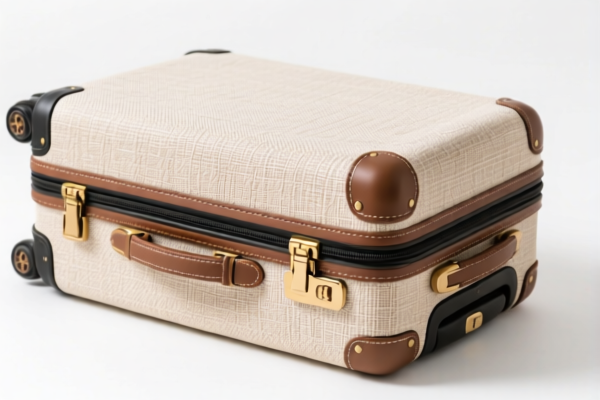
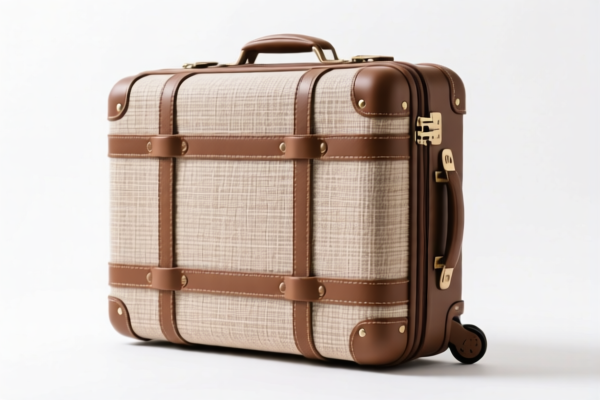
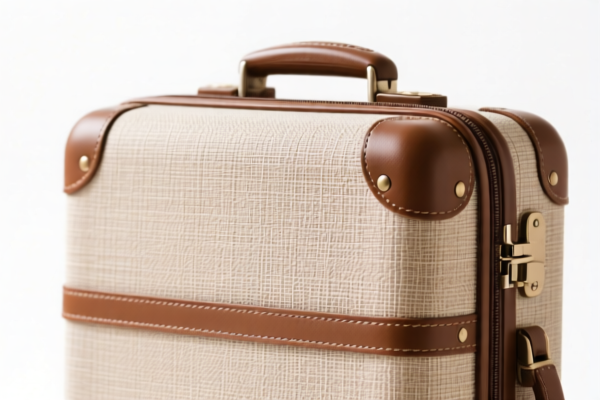
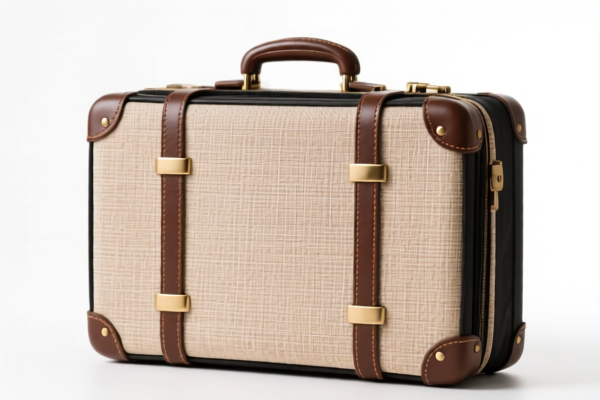
AI Analysis
💼 Suitcases & Similar Containers (Plastics & Textile Materials)
🌐 HS Code Reference & Clearance Guide | 2026 Latest Tariff Analysis | Professional Customs Strategy
📌 1. Product Definition: What Are "Suitcases and Similar Containers"?
In international trade, "Suitcases and similar containers" are rigid or semi-rigid items designed to protect personal effects during travel or transport. Based on the provided data, we focus on two specific material classifications:
- With Outer Surface of Plastics: These are typically structured, rigid containers made entirely or primarily of plastic materials (e.g., hard-shell polycarbonate or ABS cases).
- With Outer Surface of Textile Materials: These are soft-sided or fabric-covered containers (e.g., nylon, canvas, polyester suitcases).
⚠️ Key Distinction:
- Plastic Outer Surface → Structured, rigid on all sides → HS Code: 4202.12.21.20
- Textile Outer Surface → Other variants (soft-sided or non-rigid) → HS Code: 4202.12.89.80
📦 2. HS Code Classification Details (2026 Latest Tariff Reference)
| HS Code | Product Description | Material Type | Structure |
|---|---|---|---|
4202.12.21.20 |
Trunks, suitcases, vanity cases, and similar containers: With outer surface of plastics: Structured, rigid on all sides | Plastics | Rigid (Structured) |
4202.12.89.80 |
Trunks, suitcases, vanity cases, etc.: With outer surface of textile materials: Other | Textiles | Other (Soft-sided/Non-rigid) |
🔍 Critical Note:
- Plastic Suitcases: Must be "structured and rigid on all sides" to qualify for4202.12.21.20. If the plastic is not rigid/structured, it may fall under different subheadings.
- Textile Suitcases: Includes all other textile-based containers not specified elsewhere in the "structured/rigid" category. This is the default for most soft-sided luggage.
💰 3. 2026 Latest Tariff Rate Details (Zero Tariff Advantage)
✅ Applicable Country: United States (US)
✅ Origin: China (CN)
✅ Effective Date: 2025–2026 (Based on provided data)
🎯 1. 4202.12.21.20 – Plastic Suitcases (Structured, Rigid)
| Item | Detail |
|---|---|
| Base Tariff Rate | 0.0% |
| Additional Tariff (Section 301) | 0.0% |
| Total Tariff Rate | 0.0% |
| Tax Calculation | CIF Value × 0.0% = $0 |
| De Minimis Eligibility | ✅ Yes (Low value shipments may be duty-free under Section 321) |
| Legal Basis | Chapter 42, Heading 4202, Subheading 4202.12.21.20 |
📌 Explanation:
- Plastic suitcases (structured/rigid) enjoy a 0% tariff in the US market.
- This is a significant advantage compared to electronics or steel products, which may face high additional tariffs.
- No Section 301 penalties apply to this specific HS code.
🎯 2. 4202.12.89.80 – Textile Suitcases (Other)
| Item | Detail |
|---|---|
| Base Tariff Rate | 0.0% |
| Additional Tariff (Section 301) | 0.0% |
| Total Tariff Rate | 0.0% |
| Tax Calculation | CIF Value × 0.0% = $0 |
| De Minimis Eligibility | ✅ Yes |
| Legal Basis | Chapter 42, Heading 4202, Subheading 4202.12.89.80 |
📌 Explanation:
- Textile-based suitcases also enjoy a 0% tariff.
- No additional duties are applied.
- This makes luggage a low-risk, high-margin category for importers compared to taxed goods.
🛠️ 4. Customs Clearance Practical Advice (Avoiding Pitfalls)
✅ 1. Required Documentation Checklist
| Document | Required? | Notes |
|---|---|---|
| ✅ Commercial Invoice | ✔️ | Must clearly state: "Suitcase, outer surface of [Plastic/Textile], structured/rigid (if plastic)" |
| ✅ Packing List | ✔️ | Detail weight, dimensions, and quantity per carton |
| ✅ Product Photos | ✔️ | Show exterior material texture (plastic vs. fabric) and structure |
| ✅ Material Declaration | ✔️ | Specify if outer surface is 100% plastic, 100% textile, or composite |
| ✅ Bill of Lading/Air Waybill | ✔️ | Standard shipping documents |
✅ 2. Declaration Best Practices (Key Tips)
🔥 "Be Precise: Plastic vs. Textile, Rigid vs. Soft!"
| Scenario | Correct HS Code | Incorrect HS Code | Consequence |
|---|---|---|---|
| Hard-shell PC/ABS suitcase | 4202.12.21.20 |
4202.92.00.00 |
Potential misclassification risk |
| Soft nylon travel bag | 4202.12.89.80 |
4202.12.21.20 |
Rejection (not rigid plastic) |
| Hybrid suitcase (Plastic frame + Textile panels) | Depends on Main Material | ❌ Ambiguous | Customs may audit or reclassify |
📌 Important:
- If the suitcase has a plastic frame but textile covering, determine which material constitutes the "outer surface."
- For vanity cases or attaché cases, ensure they fall under "similar containers" in Chapter 42.
- Always declare material composition accurately to avoid delays.
✅ 3. Special Cases & Handling
| Situation | Handling Advice |
|---|---|
| Luggage with Wheels/Handles | Still classified under 4202, not as "parts of vehicles" |
| Backpacks vs. Suitcases | Backpacks may fall under 4202.32 (with outer surface of textile materials), but suitcases are 4202.12 |
| Luxury Brand Luggage | Same HS code applies; value affects duties only if tariff >0% (here, 0%) |
| OEM Custom Luggage | Provide design specs to confirm material type |
🌍 5. Global Market Comparison (2026)
| Country/Region | Recommended HS Code | Tariff Rate | Notes |
|---|---|---|---|
| 🇺🇸 USA | 4202.12.21.20 / 4202.12.89.80 |
0% | No Section 301 tariffs for luggage |
| 🇨🇳 China | 4202.12.10 (approx.) |
0–5% | Check local tariff book |
| 🇪🇺 EU | 4202.12 |
0–1.7% | Depends on exact material |
| 🇬🇧 UK | 4202.12 |
0–1.7% | Post-Brexit tariff schedule applies |
| 🇦🇺 Australia | 4202.12 |
0–5% | Generally low duty |
📌 Conclusion:
- The USA is highly favorable for luggage imports with 0% duty.
- This category is not subject to the high additional tariffs that affect electronics, steel, or aluminum.
- Ideal for cross-border e-commerce (e.g., Amazon FBA, Shopify) due to low tax risk.
📌 6. Common Mistakes & Pitfalls (Lessons Learned)
❌ Mistake 1: Declaring all luggage as "Plastic"
👉 Result: If it’s textile-covered, customs may reclassify to 4202.12.89.80 and delay shipment.
✅ Fix: Specify material accurately.
❌ Mistake 2: Ignoring "Structure" for Plastic Suitcases
👉 Result: If the plastic case is not rigid/structured, it may not fit 4202.12.21.20.
✅ Fix: Ensure product meets "structured, rigid on all sides" criteria.
❌ Mistake 3: Using Generic Terms Like "Bags"
👉 Result: Customs may assign a higher-tariff or incorrect HS code.
✅ Fix: Use precise terms: "Hard-shell Suitcase, Polycarbonate, Structured" or "Soft-sided Suitcase, Nylon, Textile".
🎯 7. Final Recommendations: Maximize Profit, Minimize Risk
🎯 Key Takeaways:
🔹 Luggage is Tariff-Free: Both plastic and textile suitcases enter the US with 0% duty.
🔹 No Section 301 Penalties: Unlike tech or steel, luggage is not targeted by trade wars.
🔹 Accuracy is Key: Misclassification (e.g., calling a textile bag "plastic") can cause delays, even if the final duty is 0%.
🔹 De Minimis Friendly: Low-value shipments may also qualify for Section 321 de minimis treatment.
📣 Action Items for Importers:
✅ Verify Material: Confirm if outer surface is Plastic (Rigid) or Textile (Other).
✅ Use Correct HS Code:4202.12.21.20for Plastic;4202.12.89.80for Textile.
✅ Prepare Documentation: Include photos, material specs, and clear descriptions.
✅ Leverage 0% Duty: Price competitively against taxed goods.
✨ Professional clearance starts with accurate classification!
💼 Your luggage, your profit – protect it with precise HS codes!
📞 Need Help? Contact a licensed customs broker to pre-clear your luggage shipment and ensure seamless entry into the US market.
Customer Reviews
About HS Code Classification
The Harmonized System (HS) is an internationally standardized nomenclature developed by the World Customs Organization (WCO) to classify traded products. Over 200 countries use the HS system as the basis for customs tariffs, trade statistics, and import/export regulations.
Each HS code follows a hierarchical structure:
- Chapter (2 digits) — Broad category of goods (e.g., Chapter 84: Machinery and Mechanical Appliances)
- Heading (4 digits) — More specific grouping within the chapter
- Subheading (6 digits) — Internationally standardized breakdown, used by all WCO member countries
- National subdivisions (8-10 digits) — Country-specific extensions for further classification, such as US HTSUS 10-digit codes
Correct HS code classification is essential for smooth customs clearance, accurate duty payment, and compliance with trade regulations. Misclassification can lead to customs delays, overpayment of duties, or penalties.
When importing from CN to US, the applicable tariff rates may include:
- Most-Favored-Nation (MFN) rate — The standard duty rate applied to WTO members
- General rate — Applied to countries without trade agreements
- Trade remedy duties — Additional tariffs such as Section 301 (anti-dumping), Section 232 (national security), or countervailing duties
The information provided on this page is for reference purposes only. For official classification, please consult with your local customs authority or a licensed customs broker.