sulfurated cork rubber sheet
CN → US| HS Code | Tariff Rate | Origin | Destination | Doc |
|---|---|---|---|---|
| 4016935010 | 37.5% | CN | US | Official Doc |
| 4016931010 | 37.5% | CN | US | Official Doc |
| 4504105000 | 35.0% | CN | US | Official Doc |
| 4504101000 | 35.0% | CN | US | Official Doc |
| 4008210000 | 35.0% | CN | US | Official Doc |
Product Images
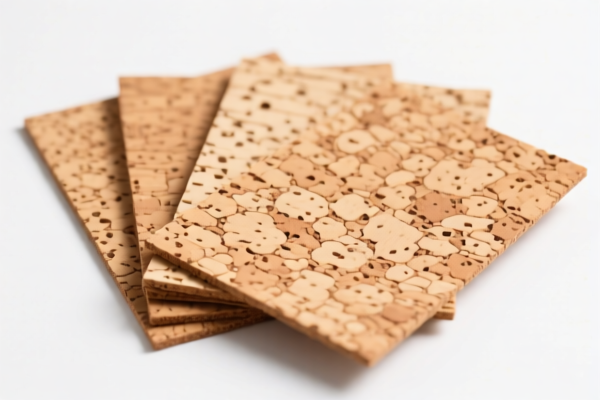
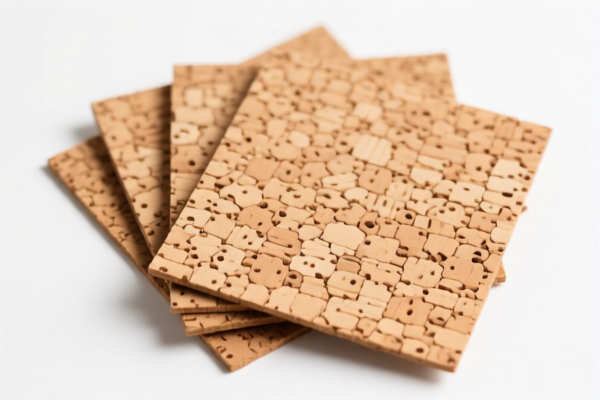
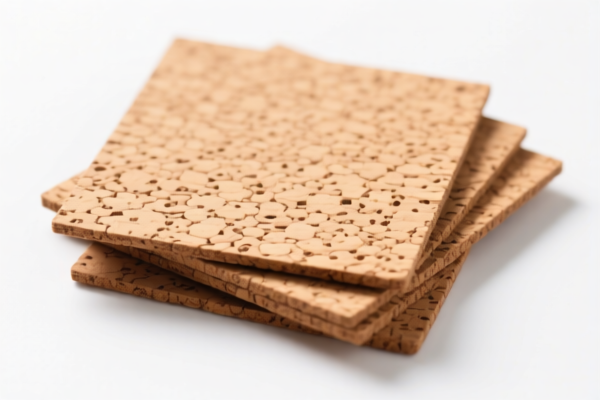
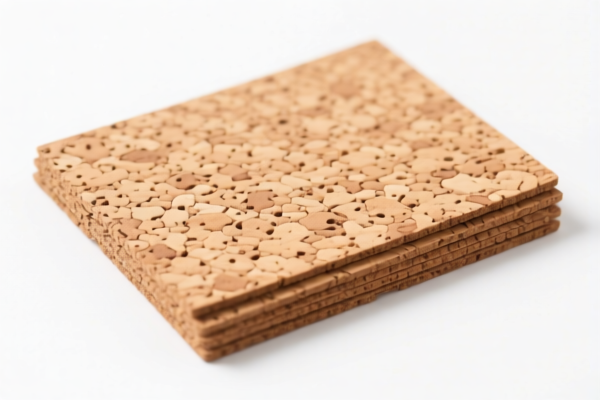
AI Analysis
🛢️ Sulfurated Cork Rubber Sheet (Sulfurated Cork Rubber Sealing Sheet)
🌐 HS Code Reference & Customs Clearance Guide | 2026 Latest Tariff Analysis | Professional Clearance Strategy 📌 I. Product Definition & Classification: Do You Really Understand "Sulfurated Cork Rubber"?
Sulfurated Cork Rubber Sheet is a composite material widely used in industrial sealing, gasket manufacturing, and vibration damping. It is not a simple rubber sheet, nor is it pure cork. It is a engineered composite where cork particles or granules are bonded together using a rubber binder (typically natural or synthetic rubber) and then sulfurated (vulcanized) to create a durable, flexible, and resilient sealing product.
In international trade, the classification depends heavily on the proportion of materials and the specific manufacturing process, leading to two distinct classification paths: 1. Rubber-Dominant Path: If the rubber content is significant and the primary characteristic is that of a vulcanized rubber article, it falls under Chapter 40. 2. Cork-Dominant Path: If the cork content is dominant or the product is specifically classified as "cork work," it falls under Chapter 45.
⚠️ Key Distinction Point: - If the material is primarily vulcanized rubber with cork as a filler/additive → Classified under HS Code 4016.93 (Vulcanized rubber goods). - If the material is primarily cork bound with rubber, or classified as "cork work" → Classified under HS Code 4504.10 (Agglomerated cork).
📦 II. HS Code Classification Details (2026 Latest Tariff Authority Comparison)
Based on the provided data, here are the specific HS Codes applicable to "Sulfurated Cork Rubber Sealing Sheets":
| HS Code | Product Description | Application Scenario | Material Composition |
|---|---|---|---|
4016.93.50.10 |
Sulfurated Cork Rubber Sealing Sheet, Material: Sulfurated Rubber, Form: Sealing Sheet | General industrial sealing gaskets | 🥇 Sulfurated Rubber (Primary) |
4016.93.10.10 |
Sulfurated Cork Rubber Sealing Sheet, Material: Sulfurated Rubber, Form: Sealing Sheet (Other Sealing Parts) | Specific sealing components, gaskets for machinery | 🥇 Sulfurated Rubber (Primary) |
4504.10.50.00 |
Sulfurated Cork Rubber Sealing Sheet, Material: Combined Cork, Form: Sheet, Purpose: Sealing Part | Cork-based composites with rubber binding | 🥈 Combined Cork (Primary Binder) |
4504.10.10.00 |
Sulfurated Cork Rubber Sealing Sheet, Material: Ground/ Crushed Cork with Rubber, Form: Sulfurated Sheet & Plate | Agglomerated cork sheets with rubber matrix | 🥈 Ground Cork + Rubber |
4008.21.00.00 |
Vulcanized Rubber Sheet, Material: Vulcanized Rubber, Form: Sheet | Pure vulcanized rubber sheet (No cork or minimal) | 🚫 Pure Vulcanized Rubber (Note: Listed in data, but description says "No Cork") |
🔍 Critical Reminder: - 4016.93 codes are for products where the rubber nature prevails. The summary explicitly states "Material: Sulfurated Rubber." - 4504.10 codes are for cork-based products. The summary explicitly states "Material: Combined Cork" or "Ground Cork with Rubber." - Do not misclassify: A "Sulfurated Cork Rubber" sheet is NOT a pure rubber sheet (
4008.21) if it contains significant cork. However, if the data lists4008.21for a similar item, it implies a pure rubber sheet without cork, which is a different product. For "Sulfurated Cork Rubber," stick to4016or4504.
💰 III. 2026 Latest Tariff Rate Detail (Including Surcharges & Policy Add-ons)
✅ Applicable Country: United States (US) ✅ Country of Origin: China (CN) ✅ Effective Date: 2025 November 10 (Includes subsequent imports)
🎯 1. Rubber-Dominant Path: 4016.93.50.10 & 4016.93.10.10
These codes are classified under Vulcanized Rubber Articles. They attract the highest tariff burden due to the combination of MFN, Section 301, and IEEPA tariffs.
| Item | Content |
|---|---|
| Base Tariff Rate (MFN) | 2.5% (ad valorem) |
| Section 301 Surcharge | +25.0% (USITC Footnote 9903.88.01) |
| IEEPA Surcharge (122 Provision) | +10.0% (针对中国产品, effective from Nov 2025) |
| Total Tariff Rate | 37.5% |
| Tax Calculation | CIF Value × 37.5% |
| De Minimis Exemption | ❌ Not Eligible (deny_de_minimis) |
| Legal Basis Path | IEEPA:9903.01.25 → IEEPA:9903.01.24 → USITC:4016.93 → FOOTNOTE:9903.88.01 |
📌 Explanation: - The 2.5% base rate is the standard Most Favored Nation (MFN) rate for rubber articles. - The 25% is the standard Section 301 tariff applied to most Chinese goods. - The 10% is the additional IEEPA tariff imposed on Chinese products starting November 10, 2025. - Total: 37.5%. This is a significant cost driver.
🎯 2. Cork-Dominant Path: 4504.10.50.00 & 4504.10.10.00
These codes are classified under Cork Work. They have a lower base tariff but still incur the full surcharges.
| Item | Content |
|---|---|
| Base Tariff Rate (MFN) | 0.0% (ad valorem) |
| Section 301 Surcharge | +25.0% |
| IEEPA Surcharge (122 Provision) | +10.0% |
| Total Tariff Rate | 35.0% |
| Tax Calculation | CIF Value × 35.0% |
| De Minimis Exemption | ❌ Not Eligible |
| Legal Basis Path | IEEPA:9903.01.25 → IEEPA:9903.01.24 → USITC:4504.10 → FOOTNOTE:9903.88.01 |
📌 Note: - The 0% base rate for cork articles provides a 2.5% cost advantage compared to the rubber-dominated codes. - However, the 35% total is still very high. - Eligibility for 4504: You must prove that the product is primarily "cork" or "agglomerated cork." If the rubber content is too high, Customs may reclassify it to
4016, increasing the total to 37.5%.
🎯 3. Pure Rubber Sheet (If Applicable): 4008.21.00.00
| Item | Content |
|---|---|
| Base Tariff Rate | 0.0% |
| Section 301 Surcharge | +25.0% |
| IEEPA Surcharge | +10.0% |
| Total Tariff Rate | 35.0% |
| Note | Only for pure vulcanized rubber sheets. Not for cork-rubber composites. |
🛠️ IV. Customs Clearance Practical Advice (Battle-Tested Pitfall Guide)
✅ 1. Preparation Checklist (Mandatory)
| Document | Must Provide | Description |
|---|---|---|
| ✅ Product Specification Sheet | ✔️ | Must detail material composition (e.g., "70% Cork, 30% Rubber Binder") |
| ✅ Material Safety Data Sheet (MSDS) | ✔️ | For chemical compliance |
| ✅ Product Photos | ✔️ | Clear images showing texture, cross-section (to show cork granules), and label |
| ✅ Commercial Invoice | ✔️ | Must clearly state "Sulfurated Cork Rubber Sheet" and HS Code |
| ✅ Packing List | ✔️ | Weight and dimensions |
| ✅ Certificate of Origin (CO) | ✔️ | Essential for proving CN origin and applying surcharges correctly |
✅ 2. Declaration Strategy (Key Mnemonics)
🔥 "Cork vs. Rubber: Composition is King! Name it Right, Tariff Might Light!"
| Scenario | Correct Declaration | Wrong Declaration | Consequence |
|---|---|---|---|
| High Cork Content | 4504.10.50.00 or 4504.10.10.00 |
4016.93 |
If correctly classified, save 2.5% (35% vs 37.5%). If misclassified, risk penalty. |
| High Rubber Content | 4016.93.50.10 or 4016.93.10.10 |
4504.10 |
Risk of reclassification by Customs → 37.5% + Penalties. |
| Pure Rubber Sheet | 4008.21.00.00 |
4016 or 4504 |
Only if no cork. |
| Mix of Items | Split Declaration | Combined Declaration | Mixing HS Codes in one line item causes delays. |
✅ 3. Special Handling
| Situation | Recommendation |
|---|---|
| OEM Custom Sheets | Provide customer drawings and material specs. Customs may inspect for exact composition. |
| Cork-Rubber Composite | Crucial: Provide a Material Composition Breakdown. If cork is >50%, argue for 4504. If rubber is >50%, argue for 4016. |
| Small Shipments (De Minimis) | ❌ Do not rely on De Minimis. The data explicitly states deny_de_minimis for these codes. Full duty payment is required. |
🌍 V. Global Market Comparison (2026 Latest)
| Country/Region | Recommended HS Code | Tariff Rate (China Origin) | Certification Requirements | Notes |
|---|---|---|---|---|
| 🇺🇸 USA | 4504.10 or 4016.93 |
35% or 37.5% | No specific major cert | High Tariff Risk. IEEPA 10% adds up. |
| 🇨🇳 China | 4504.10 or 4016.93 |
~5-10% (Import) | N/A | Low import duty, but check VAT. |
| 🇪🇺 EU | 4016.93 or 4504.10 |
0-2% (if EBA applies) | REACH, RoHS | No major anti-dumping on this item typically. |
| 🇨🇦 Canada | 4016.93 or 4504.10 |
0% (if CUSMA eligible) | N/A | Check for CUSMA preference if produced in Canada/US/Mexico. |
📌 Conclusion: - USA is the most challenging market due to the IEEPA 10% + Section 301 25% combination. - Cork-based (
4504) offers a slight 2.5% advantage over Rubber-based (4016). - Ensure the material composition is accurately documented to avoid misclassification penalties.
📌 VI. Common Mistakes & Pitfall Guide (Blood & Tears Lessons)
❌ Mistake 1: Declaring "Sulfurated Cork Rubber" as 4008.21 (Pure Rubber Sheet)
👉 Consequence: If the product contains cork, it is misclassified. Customs will reclassify to 4016 or 4504, leading to retroactive duties + penalties.
❌ Mistake 2: Ignoring the IEEPA 10% Surcharge 👉 Consequence: The base tariff might look low (0% or 2.5%), but the 35-37.5% total is the real cost. Failing to account for this leads to unexpected cash flow issues.
❌ Mistake 3: Assuming De Minimis applies for small samples 👉 Consequence: The data explicitly states deny_de_minimis. Even small shipments are subject to full duties and formal entry procedures.
❌ Mistake 4: Vague Description "Rubber Sheet" 👉 Consequence: Customs may request additional info, causing clearance delays. Use precise terms: "Sulfurated Cork Rubber Sealing Sheet."
✅ Correct Practice:
"Sulfurated Cork Rubber Sheet, 70% Natural Cork, 30% SBR Rubber Binder, Vulcanized, Cut to Size, For Industrial Sealing, Model XYZ, HS Code: 4504.10.50.00"
🎯 VII. Conclusion: Professional Declaration, Save Time, Reduce Costs!
🎯 Remember the Mnemonic:
🔹 "Cork vs. Rubber, Composition is Key!" 🔹 "Base 0-2.5%, Plus 35%, Total High!" 🔹 "No De Minimis, Full Entry Required!"
📌 Tip: If your Sulfurated Cork Rubber Sheet is produced in Vietnam, Mexico, or Thailand, you may apply for IEEPA Exemptions or lower tariffs under free trade agreements. Recommend applying for a Pre-Ruling (Advance Ruling) from CBP to confirm the HS Code and avoid post-clearance audits.
📣 Immediate Action:
📞 Contact a professional customs broker + Provide Material Composition Report + Apply for HS Code Pre-Ruling 🚀 Let your Sulfurated Cork Rubber Sheet clear smoothly, efficiently, and profitably!
✨ Professional Clearance Starts with Precise Classification! 💼 Every cent of your cost deserves precise calculation!
Customer Reviews
About HS Code Classification
The Harmonized System (HS) is an internationally standardized nomenclature developed by the World Customs Organization (WCO) to classify traded products. Over 200 countries use the HS system as the basis for customs tariffs, trade statistics, and import/export regulations.
Each HS code follows a hierarchical structure:
- Chapter (2 digits) — Broad category of goods (e.g., Chapter 84: Machinery and Mechanical Appliances)
- Heading (4 digits) — More specific grouping within the chapter
- Subheading (6 digits) — Internationally standardized breakdown, used by all WCO member countries
- National subdivisions (8-10 digits) — Country-specific extensions for further classification, such as US HTSUS 10-digit codes
Correct HS code classification is essential for smooth customs clearance, accurate duty payment, and compliance with trade regulations. Misclassification can lead to customs delays, overpayment of duties, or penalties.
When importing from CN to US, the applicable tariff rates may include:
- Most-Favored-Nation (MFN) rate — The standard duty rate applied to WTO members
- General rate — Applied to countries without trade agreements
- Trade remedy duties — Additional tariffs such as Section 301 (anti-dumping), Section 232 (national security), or countervailing duties
The information provided on this page is for reference purposes only. For official classification, please consult with your local customs authority or a licensed customs broker.