sunglass prototype
CN → US| HS Code | Tariff Rate | Origin | Destination | Doc |
|---|---|---|---|---|
| 7015100000 | 17.5% | CN | US | Official Doc |
| 9003190000 | 17.5% | CN | US | Official Doc |
| 9004900090 | 20.0% | CN | US | Official Doc |
| 9004100000 | 19.5% | CN | US | Official Doc |
| 7015905000 | 17.5% | CN | US | Official Doc |
Product Images
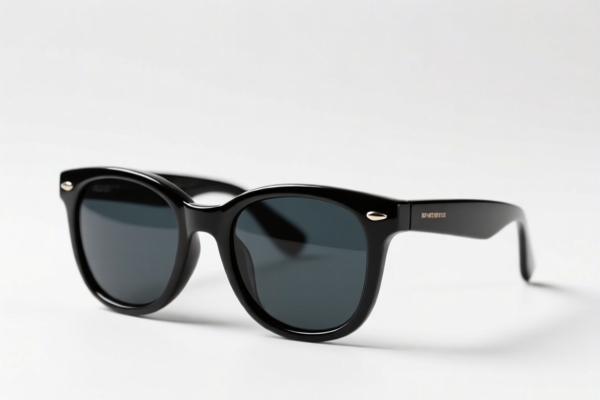
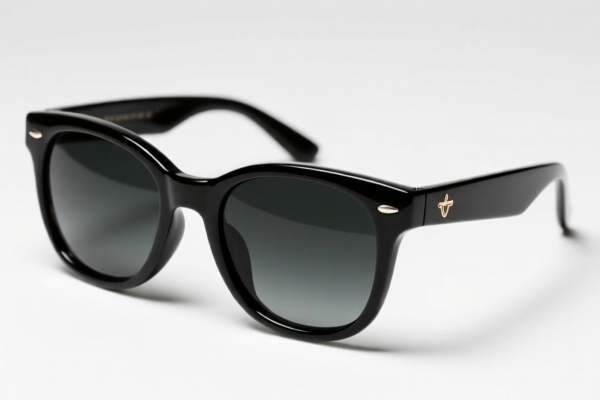
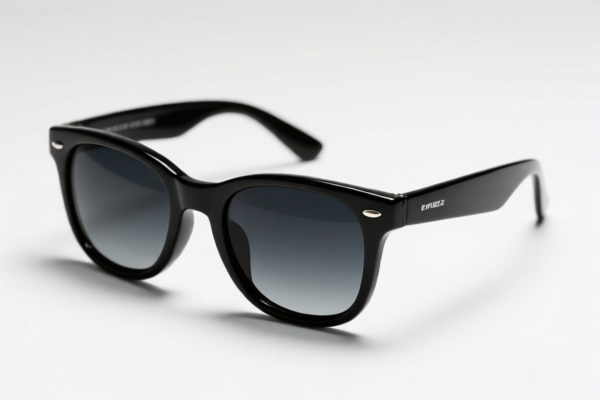
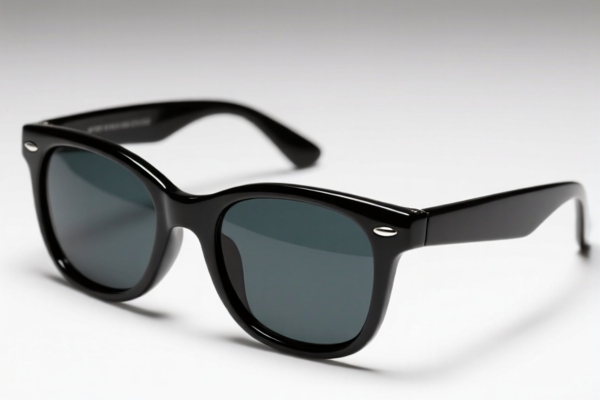
AI Analysis
🕶️ Sunglass Prototype (Sun Glasses Prototype)
🌐 HS Code Reference & Customs Clearance Guide | 2024/2025 Tariff Analysis | Professional-Level Classification Strategy
📌 I. Product Definition & Classification: Do You Really Understand "Sunglass Prototype"?
A "Sunglass Prototype" typically refers to the preliminary, unfinished, or raw forms of sunglasses before final assembly or optical processing. In international trade, this ambiguous term can fall into several different HS Codes depending on its physical state (raw material vs. component vs. complete article) and intended use (optical lens vs. frame structure).
Misclassification is high-risk for sunglasses due to the heavy impact of Section 301 (USITC) and Section 122 (IEEPA) tariffs on Chinese origin goods.
⚠️ Key Distinction Point:
- If it is raw glass/plastic without optical processing → Likely7015.90.50.00or7015.10.00.00
- If it is an unfinished frame → Likely9003.19.00.00
- If it is considered a completed sunglass (even if labeled "prototype") → Likely9004.10.00.00or9004.90.00.90
📦 II. HS Code Classification Details (Authority Reference)
Based on the provided data, here are the five potential classifications for "Sunglass Prototype":
| HS Code | Summary from Data | Key Interpretation |
|---|---|---|
7015.10.00.00 |
"Sunglass prototype belongs to the precursor form of eyeglass lenses, consistent with the use of glass for non-corrective or corrective eyeglasses." | Raw Lens Material: Unfinished glass lenses, not yet ground or coated. |
9003.19.00.00 |
"Prototype can be understood as the雏形 (raw form) of frames and devices, fitting the use of frames and devices." | Unfinished Frames: Raw plastic/metal frame blanks, not yet assembled with hinges or temples. |
9004.90.00.90 |
"The product is an eyewear category, fitting the use attribute of eyeglasses; it belongs to non-safety category eyewear products." | Non-Safety Eyewear: General sunglasses, possibly with lenses but not classified as "sun" specifically, or incomplete assembly treated as general eyewear. |
9004.10.00.00 |
"The term 'Sunglass' in the product name is completely consistent with the use in the classification; prototype is viewed as a primary form or unfinished state." | Finished Sunglasses: Despite the name "prototype," if it functions as a sunglass (UV protection, tinted), it may be classified as a complete article. |
7015.90.50.00 |
"Prototype inferred as glass/material制品 (products) that have not undergone optical processing, fitting the description of glass for non-corrective eyeglasses not optically processed." | Unprocessed Glass Blanks: Specifically for lenses that are neither corrected nor optically shaped. |
💰 III. 2024/2025 Tariff Rate Detailed Explanation (Including Surtaxes)
✅ Applicable Country: United States (US)
✅ Origin: China (CN) (Implied by "122 Clause" and typical surtax structure)
✅ Note: The "122 Clause" refers to IEEPA Section 122 tariffs, often applied to specific Chinese goods.
🎯 1. 7015.10.00.00 – Glass Lenses (Unprocessed/Corrective/Non-Corrective)
| Item | Content |
|---|---|
| Base Tariff | 0.0% |
| Additional Tariff (USITC Sec 301) | +7.5% |
| 122 Clause Tariff (IEEPA) | +10% |
| Total Tariff Rate | 17.5% |
| Calculation | CIF Value × 17.5% |
| De Minimis Exemption | ❌ Not Available (High value/section 301 items usually excluded) |
| Legal Path | Base: 7015.10.00.00 → USITC: 301 Surtax → IEEPA: 122 Clause |
📌 Explanation:
- Classified as raw lens material.
- Lower base tariff (0%), but still subject to significant surtaxes totaling 17.5%.
🎯 2. 9003.19.00.00 – Frames and Devices
| Item | Content |
|---|---|
| Base Tariff | 0.0% |
| Additional Tariff (USITC Sec 301) | +7.5% |
| 122 Clause Tariff (IEEPA) | +10% |
| Total Tariff Rate | 17.5% |
| Calculation | CIF Value × 17.5% |
| De Minimis Exemption | ❌ Not Available |
| Legal Path | Base: 9003.19.00.00 → USITC: 301 Surtax → IEEPA: 122 Clause |
📌 Explanation:
- Classified as unfinished frame parts.
- Same tax burden as raw lenses: 17.5%.
🎯 3. 9004.90.00.90 – Other Eyeglasses (Non-Safety)
| Item | Content |
|---|---|
| Base Tariff | 2.5% |
| Additional Tariff (USITC Sec 301) | +7.5% |
| 122 Clause Tariff (IEEPA) | +10% |
| Total Tariff Rate | 20.0% |
| Calculation | CIF Value × 20.0% |
| De Minimis Exemption | ❌ Not Available |
| Legal Path | Base: 9004.90.00.90 → USITC: 301 Surtax → IEEPA: 122 Clause |
📌 Explanation:
- Classified as general eyewear.
- Higher base rate (2.5%) leads to a higher total rate: 20.0%.
🎯 4. 9004.10.00.00 – Sunglasses (Optical or Non-Optical)
| Item | Content |
|---|---|
| Base Tariff | 2.0% |
| Additional Tariff (USITC Sec 301) | +7.5% |
| 122 Clause Tariff (IEEPA) | +10% |
| Total Tariff Rate | 19.5% |
| Calculation | CIF Value × 19.5% |
| De Minimis Exemption | ❌ Not Available |
| Legal Path | Base: 9004.10.00.00 → USITC: 301 Surtax → IEEPA: 122 Clause |
📌 Explanation:
- Classified as Sunglasses.
- This is likely the most accurate if the item functions as a sunglass, even if a "prototype."
- Total rate: 19.5%.
🎯 5. 7015.90.50.00 – Glass for Eyeglasses (Not Optically Processed)
| Item | Content |
|---|---|
| Base Tariff | 0.0% |
| Additional Tariff (USITC Sec 301) | +7.5% |
| 122 Clause Tariff (IEEPA) | +10% |
| Total Tariff Rate | 17.5% |
| Calculation | CIF Value × 17.5% |
| De Minimis Exemption | ❌ Not Available |
| Legal Path | Base: 7015.90.50.00 → USITC: 301 Surtax → IEEPA: 122 Clause |
📌 Explanation:
- Specific to unprocessed glass.
- Total rate: 17.5%.
🛠️ IV. Customs Clearance Practical Advice (Battle-Tested Pitfall Avoidance)
✅ 1. Documentation Checklist (Non-Negotiable)
| Document | Required? | Purpose |
|---|---|---|
| ✅ Product Photos | ✔️ | Must show: Is it a lens? A frame? A complete pair? Is it tinted/UV protected? |
| ✅ Product Spec Sheet | ✔️ | Define "Prototype": Is it functional? Is it optical? |
| ✅ Commercial Invoice | ✔️ | Do NOT just write "Prototype". Use specific descriptions like "Unfinished Sunglass Frame, Plastic, Unassembled" or "Sunglass Lens Blanks, Glass, Non-Optical." |
| ✅ Packing List | ✔️ | List components separately if shipped loose. |
| ✅ Origin Certificate | ✔️ | Confirm China origin to apply correct surtaxes. |
✅ 2. Declaration Strategy (Key Mnemonics)
🔥 “Function over Name, Material over Label!”
| Scenario | Correct Declaration | Wrong Declaration | Consequence |
|---|---|---|---|
| Raw Glass Blanks | "Glass Lens Blanks, Unprocessed" → 7015.90.50.00 |
"Sunglass Prototype" | Ambiguity leads to seizure or reclassification to 9004.10 (19.5%). |
| Unfinished Frames | "Unassembled Sunglass Frame Components" → 9003.19.00.00 |
"Sunglasses" | Misclassification: 17.5% vs 19.5% difference + penalty risk. |
| Functional Sunglasses | "Sunglasses, UV Protected, Tinted Lenses" → 9004.10.00.00 |
"Prototype" | Customs may reject "prototype" excuse if item is usable. |
| Mixed Kit (Lens+Frame) | Declare as Complete Sunglasses (9004.10.00.00) |
Split declaration | Splitting can trigger higher component duties or "kit" rules. |
✅ 3. Special Handling Tips
| Situation | Advice |
|---|---|
| "Prototype" is a Marketing Term | If the item functions as a sunglass (blocks UV, has tint), customs will treat it as a finished good (9004.10.00.00). Do not rely on the word "prototype" to lower duties. |
| Unprocessed Glass Only | If you only ship blank glass that requires significant machining to become a lens, 7015.90.50.00 (17.5%) is optimal. |
| Frame Blanks | If it is just a plastic/metal sheet shaped like a frame but has no hinges/temples, 9003.19.00.00 (17.5%) is appropriate. |
| 122 Clause Impact | The 10% IEEPA tax is non-negotiable for Chinese-origin goods in these categories. Factor this into your pricing model. |
🌍 V. Global Market Comparison (2024/2025)
| Market | Recommended HS Code | Base Duty | Surtax (China) | Total Est. | Note |
|---|---|---|---|---|---|
| 🇺🇸 USA | 9004.10.00.00 |
2.0% | +17.5% (301+122) | 19.5% | Highest barrier. |
| 🇺🇸 USA (Lenses) | 7015.90.50.00 |
0.0% | +17.5% (301+122) | 17.5% | If only selling glass blanks. |
| 🇪🇺 EU | 9004.10.00.00 |
4.0% | 0% | 4.0% | No Section 301/122 equivalent. |
| 🇨🇳 China | 9004.10.00.00 |
8.0% | 0% | 8.0% | Import duties for Chinese market. |
| 🇯🇵 Japan | 9004.10.00.00 |
8.0% | 0% | 8.0% | Standard MFN rate. |
📌 Conclusion:
- The US market is the most expensive due to the 17.5% surtax bundle (7.5% Sec 301 + 10% IEEPA 122).
- Clear classification is critical to avoid disputes.
- If possible, consider supply chain diversification (e.g., Vietnam, Thailand) to avoid Chinese origin surtaxes.
📌 VI. Common Mistakes & Pitfalls (Lessons Learned)
❌ Mistake 1: Labeling functional sunglasses as "Prototypes" to avoid the 19.5% rate.
👉 Consequence: Customs will inspect, determine it's a finished good, and apply 9004.10.00.00 + penalties.
❌ Mistake 2: Declaring unfinished frames as "Sunglasses."
👉 Consequence: Overpayment? Or worse, underpayment if the correct code has a higher base rate. In this case, 9003.19 (17.5%) is lower than 9004.10 (19.5%), but accuracy is key for legal compliance.
❌ Mistake 3: Ignoring the "122 Clause" (IEEPA).
👉 Consequence: The 10% tax is often missed in initial quotes, leading to unexpected costs at border.
✅ Correct Action:
Describe the PHYSICAL STATE, not the marketing intent.
- "Unprocessed Glass Lenses"
- "Unassembled Frame Parts"
- "Functional Sunglasses with UV400 Coating"
🎯 VII. Conclusion: Precision Classification Saves Money!
🎯 Remember the Mantra:
🔹 "Prototype is not a HS Code!"
🔹 "Raw Glass: 17.5%, Frames: 17.5%, Sunglasses: 19.5%."
🔹 "Check Function, Check Material, Check Origin."
📌 Pro Tip:
If you are exporting "Prototypes" for R&D purposes, consult with a customs broker about temporary admission or R&D exemption programs (if available), but generally, commercial samples are taxed as goods.
📣 Immediate Action:
📞 Verify Product Photo: Does it have lenses? Are they tinted?
📄 Update Invoice: Remove vague terms like "Prototype." Use "Unfinished Frame" or "Lens Blank."
🚀 Optimize Tariff: Choose the correct HS Code to avoid audits and ensure smooth clearance.
✨ Professional Customs Clearance Starts with Accurate Classification!
💼 Every Percent Matters in International Trade!
Customer Reviews
About HS Code Classification
The Harmonized System (HS) is an internationally standardized nomenclature developed by the World Customs Organization (WCO) to classify traded products. Over 200 countries use the HS system as the basis for customs tariffs, trade statistics, and import/export regulations.
Each HS code follows a hierarchical structure:
- Chapter (2 digits) — Broad category of goods (e.g., Chapter 84: Machinery and Mechanical Appliances)
- Heading (4 digits) — More specific grouping within the chapter
- Subheading (6 digits) — Internationally standardized breakdown, used by all WCO member countries
- National subdivisions (8-10 digits) — Country-specific extensions for further classification, such as US HTSUS 10-digit codes
Correct HS code classification is essential for smooth customs clearance, accurate duty payment, and compliance with trade regulations. Misclassification can lead to customs delays, overpayment of duties, or penalties.
When importing from CN to US, the applicable tariff rates may include:
- Most-Favored-Nation (MFN) rate — The standard duty rate applied to WTO members
- General rate — Applied to countries without trade agreements
- Trade remedy duties — Additional tariffs such as Section 301 (anti-dumping), Section 232 (national security), or countervailing duties
The information provided on this page is for reference purposes only. For official classification, please consult with your local customs authority or a licensed customs broker.