sunscreen cream
CN → US| HS Code | Tariff Rate | Origin | Destination | Doc |
|---|---|---|---|---|
| 3304910050 | 35.0% | CN | US | Official Doc |
| 3004909244 | 10.0% | CN | US | Official Doc |
| 3304995000 | 35.0% | CN | US | Official Doc |
Product Images


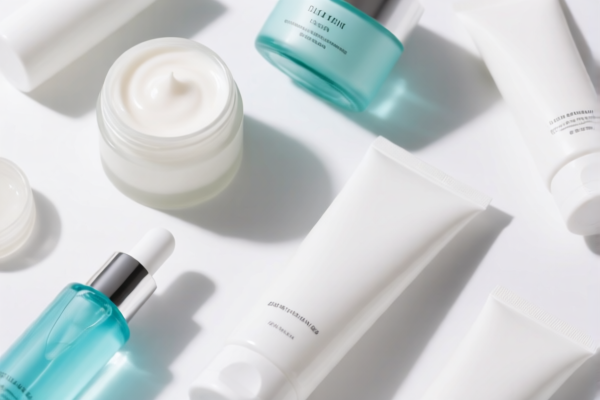
AI Analysis
☀️ Sunscreen Cream (Sunscreen Products)
🌐 HS Code Reference & Customs Clearance Guide | 2026 Latest Tariff Analysis | Professional Clearance Strategy
📌 One, Product Definition & Classification: Do You Really Understand "Sunscreen Cream"?
Sunscreen cream is a daily essential for skin protection against UV radiation. In international trade, it is generally classified based on its intended use: * Cosmetic/Skincare Products: Mainly for beautifying or nourishing the skin (e.g., SPF creams, lotions, powders). * Pharmaceutical/Skincare Drugs: Designed for treating or preventing skin conditions (e.g., sunburn relief, specific dermatological treatments).
⚠️ Key Distinction:
- If the product is marketed primarily as a cosmetic or skincare beauty product (moisturizing + sun protection) → It generally falls under Heading 3304.
- If the product is marketed strictly as a dermatological drug or pharmaceutical preparation for specific skin treatment → It may fall under Heading 3004.
- Crucial Note: The final classification depends heavily on the labeling, advertising claims, and regulatory status (e.g., FDA Drug vs. FDA Cosmetic in the US).
📦 Two. HS Code Classification Details (2026 Latest Tariff Reference)
Based on your provided data, here are the three possible HS Codes and their tax implications for Sunscreen Cream:
| HS Code | Product Description | Applicability Logic | Total Tax Rate |
|---|---|---|---|
| 3304.91.00.50 | Sunscreen Cream (Cosmetic/Skincare) | Classified as "Beauty/Skincare preparations". Includes powder or cream forms for sun protection. | 35.0% |
| 3004.90.92.44 | Sunscreen Cream (Dermatological/Pharma) | Classified as "Pharmaceutical/Skincare preparations" for dermatological use. Fits the description of a drug. | 10.0% |
| 3304.99.50.00 | Sunscreen Cream (Other Skincare) | Classified under "Beauty/Skincare preparations". Specifically includes sun protection products not covered by other subheadings. | 35.0% |
🔍 Key Warning:
- 3304 Codes (Beauty): Carry a 35% total tax rate due to heavy additional duties (USITC + 122 Clause).
- 3004 Code (Pharma): Carries a significantly lower 10% total tax rate (only 122 Clause), as it is exempt from the 25% USITC surcharge.
- Strategy: If your product is legally registered as a Drug (with therapeutic claims), the 3004.90.92.44 route is financially superior.
💰 Three. 2026 Latest Tariff Rate Breakdown (Including Surcharges & Policy Add-ons)
✅ Applicable Market: United States (US)
✅ Origin: China (CN)
✅ Effective Time: Current 2026 Tariff Regime (Based on provided data)
🎯 1. 3304.91.00.50 & 3304.99.50.00 —— Sunscreen as Cosmetic/Skincare
| Item | Content |
|---|---|
| Base Tariff | 0.0% (ad valorem) |
| USITC Additional Duty | +25.0% (301 Tariff) |
| Section 301 / 122 Clause Tariff | +10.0% (Specific 122 Clause) |
| Total Tax Rate | 35.0% |
| Tax Calculation | CIF Value × 35% |
| De Minimis Exemption | ❌ Not Applicable (Subject to high tariffs) |
| Legal Basis Path | 3304 → USITC: 25% Surcharge → Section 122: 10% |
📌 Explanation:
- 25% USITC Surcharge: This is the standard Section 301 tariff applied to many Chinese consumer goods, including cosmetics.
- 10% 122 Clause: A specific additional duty layer applied to these products.
- Combined Impact: Even though the base tariff is 0%, the total landed cost increases by 35%. This is a very high duty for a consumer product.
🎯 2. 3004.90.92.44 —— Sunscreen as Dermatological/Pharmaceutical
| Item | Content |
|---|---|
| Base Tariff | 0.0% (ad valorem) |
| USITC Additional Duty | 0.0% (Exempt from Section 301 surcharge) |
| Section 301 / 122 Clause Tariff | +10.0% (Specific 122 Clause) |
| Total Tax Rate | 10.0% |
| Tax Calculation | CIF Value × 10% |
| De Minimis Exemption | ❌ Not Applicable (Still subject to 122 Clause) |
| Legal Basis Path | 3004 → Section 122: 10% (No 25% surcharge) |
📌 Explanation:
- Strategic Advantage: By classifying under 3004, you avoid the 25% USITC surcharge entirely.
- Result: The tariff drops from 35% to 10%, saving 25 percentage points on every shipment.
- Requirement: The product must be legally recognized as a Drug (e.g., FDA Drug Monograph compliance) rather than just a cosmetic.
🛠️ Four. Customs Clearance Practical Advice (Real-World Avoidance Guide)
✅ 1. Preparation Checklist (Non-negotiable)
| Document | Required? | Explanation |
|---|---|---|
| ✅ Product Specs | ✔️ | Must clearly state: SPF level, active ingredients (e.g., Zinc Oxide, Avobenzone), form (Cream/Lotion). |
| ✅ Regulatory Status | ✔️ | CRITICAL: Provide FDA Drug Registration (for 3004) OR Cosmetic Notification (for 3304). |
| ✅ Labeling & Packaging | ✔️ | Labels must match the HS Code. "Drug" labels list "Active Ingredients" & "Purpose"; "Cosmetic" lists "Directions for Use". |
| ✅ Ingredient List | ✔️ | Detailed INCI list for customs verification. |
| ✅ Commercial Invoice | ✔️ | Must explicitly state the product category (e.g., "Dermatological Sunscreen" vs. "Cosmetic Sunscreen"). |
| ✅ Certificate of Origin | ✔️ | Proves origin is China (to verify applicable 122 Clause). |
✅ 2. Declaration Strategy (Key Mantras)
🔥 Mantra: "Drug Claim = 10%, Cosmetic Claim = 35%!"
| Scenario | Correct Declaration (HS Code) | Tax Rate | Risk of Error |
|---|---|---|---|
| Cosmetic Sunscreen (Beautify + Protect) | 3304.91.00.50 or 3304.99.50.00 |
35% | Low risk if claimed as cosmetic. |
| Drug Sunscreen (Prevent/Treat Sunburn) | 3004.90.92.44 |
10% | High Reward: Save 25% tax. |
| Ambiguous Product | 3304 (Default) |
35% | Safe but costly: Don't risk misclassification. |
| Misdeclaration | Claiming Drug but is Cosmetic | N/A | Penalty + Back Tax + Seizure! |
⚠️ Warning: Do NOT claim
3004.90.92.44if your product is legally sold as a cosmetic. Customs will reject it, demand re-classification, and fine you for the lost 25% tax revenue.
✅ 3. Special Situations Handling
| Situation | Handling Advice |
|---|---|
| OEM Custom Sunscreen | Provide OEM agreement + Labeling proof. If the brand claims "Drug" status, you must follow the 3004 route. |
| "Drug-like" Cosmetics | If the label says "Cures Sunburn" (Drug claim) but is registered as a cosmetic, Customs may force the 3304 classification or block entry. Align claims with registration. |
| Mixed Shipments | If shipping both Drug and Cosmetic sunscreens, declare separately by HS Code. Do not mix in one line item. |
| New SPF Ingredients | Ensure all active ingredients are approved in the destination country (e.g., FDA) for the chosen classification. |
🌍 Five. Global Market Comparison (2026 Context)
| Country/Region | Recommended HS Code | Tax Rate (China Origin) | Certification | Note |
|---|---|---|---|---|
| 🇺🇸 USA | 3304 (Cosmetic) |
35% (Total) | FDA Cosmetic (No drug claim) | 3004 (Drug) is 10% (if legal) |
| 🇺🇸 USA | 3004 (Drug) |
10% (Total) | FDA Drug Approval | Saves 25% if applicable |
| 🇪🇺 EU | 3304 |
Varies (0-4%) | CPNP Notification | Usually lower duties than US |
| 🇨🇳 China | 3304 |
~2-4% | NMPA Filing | Domestic market is cheaper |
📌 Conclusion:
- The US market is unique with its massive 35% tariff for cosmetics.
- Strategic Move: If your sunscreen contains approved active ingredients and you can legally classify it as a Dermatological Drug, the 3004.90.92.44 route saves you 25% of the CIF value.
- Risk: If you claim "Drug" status without proper FDA registration, you face total shipment rejection.
📌 Six. Common Mistakes & Pitfalls (Lessons Learned)
❌ Mistake 1: Using "Sunscreen Cream" (Cosmetic) for a product that claims to "Treat Sunburn".
👉 Consequence: Customs may classify as 3304 (35%) or reject if drug claim exists without registration.
❌ Mistake 2: Claiming 3004 (10%) for a product that is only a cosmetic.
👉 Consequence: Severe Penalties, back taxes (25% difference), and blacklisting.
❌ Mistake 3: Ignoring the "Active Ingredients" on the label.
👉 Consequence: If "Zinc Oxide" or "Avobenzone" is listed as the primary active for protection, it leans towards 3004 (Drug) or 3304 (Cosmetic), depending on intent.
✅ Correct Approach:
"Cosmetic Sunscreen, SPF 50, Moisturizing, No Drug Claims, FDA Cosmetic Notification #XXXX" → 3304 (35%)
"Dermatological Sunscreen, SPF 50, Protects Against Sunburn, FDA Drug Approval #XXXX" → 3004 (10%)
🎯 Seven. Conclusion: Precision Classification Saves Money!
🎯 Remember the Rules:
🔹 "Cosmetic = 35%, Drug = 10% (if legal)"
🔹 "Check FDA Status before Declaring!"
🔹 "Don't gamble on tax savings; compliance is key!"
📌 Pro Tip:
If your product is registered as a Drug in the US, ALWAYS use 3004.90.92.44 to save 25% in tariffs.
If it is only a Cosmetic, accept the 35% rate, but ensure your labeling matches to avoid audits.
📣 Take Action Now:
📞 Contact your Customs Broker + Provide FDA Registration Number + Confirm Product Claims
🚀 Optimize your Sunscreen Cream Logistics: Clear Customs Faster, Save More Tax!
✨ Professional Classification is the First Step to Profitable Export!
💼 Every 1% of Tax Saved is Pure Profit!
Customer Reviews
About HS Code Classification
The Harmonized System (HS) is an internationally standardized nomenclature developed by the World Customs Organization (WCO) to classify traded products. Over 200 countries use the HS system as the basis for customs tariffs, trade statistics, and import/export regulations.
Each HS code follows a hierarchical structure:
- Chapter (2 digits) — Broad category of goods (e.g., Chapter 84: Machinery and Mechanical Appliances)
- Heading (4 digits) — More specific grouping within the chapter
- Subheading (6 digits) — Internationally standardized breakdown, used by all WCO member countries
- National subdivisions (8-10 digits) — Country-specific extensions for further classification, such as US HTSUS 10-digit codes
Correct HS code classification is essential for smooth customs clearance, accurate duty payment, and compliance with trade regulations. Misclassification can lead to customs delays, overpayment of duties, or penalties.
When importing from CN to US, the applicable tariff rates may include:
- Most-Favored-Nation (MFN) rate — The standard duty rate applied to WTO members
- General rate — Applied to countries without trade agreements
- Trade remedy duties — Additional tariffs such as Section 301 (anti-dumping), Section 232 (national security), or countervailing duties
The information provided on this page is for reference purposes only. For official classification, please consult with your local customs authority or a licensed customs broker.