supported carbon catalyst
CN → US| HS Code | Tariff Rate | Origin | Destination | Doc |
|---|---|---|---|---|
| 3809921000 | 41.5% | CN | US | Official Doc |
| 3809925000 | 41.0% | CN | US | Official Doc |
| 2818300000 | 35.0% | CN | US | Official Doc |
| 3815190000 | 35.0% | CN | US | Official Doc |
Product Images
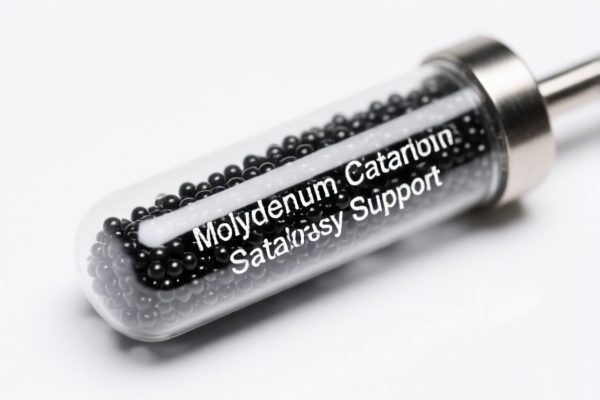
AI Analysis
🧪 Supported Carbon Catalysts (Supported Alumina/Carbon Catalysts)
🌐 HS Code Reference & Customs Clearance Guide | 2026 Latest Tariff Analysis | Professional Clearance Strategy
📌 I. Product Definition & Classification: Do You Really Understand "Supported Catalysts"?
Supported Catalysts are critical industrial materials used in chemical processing, petrochemical refining, and environmental protection. In international trade, they are categorized based on their chemical composition, physical support structure, and specific industrial application.
For "Supported Carbon Catalysts" (often referring to catalysts supported on alumina or carbonaceous materials, as per the provided data context of Supported Alumina Catalysts which fall under similar chemical classifications), they are generally classified under Chapter 38 (Miscellaneous Chemical Products) rather than Chapter 28 (Inorganic Chemicals), because their primary function is catalytic rather than pure material export.
⚠️ Key Distinction:
- If the product is a pure chemical compound without catalytic function → May fall under Chapter 28 (e.g., Pure Alumina).
- If the product is a catalyst (enhances reaction rate) → Must fall under Chapter 38 (e.g., 3815, 3809).
- Support Material Matters: Whether the support is Alumina ($Al_2O_3$) or Carbon affects the specific subheading under 3809 or 3815.
📦 II. HS Code Classification Details (2026 Latest Tariff Authority Comparison)
Based on the provided data for Supported Catalysts (specifically Supported Alumina/Carbon variants), here are the four possible HS Codes and their rationales:
| HS Code | Product Description | Classification Rationale | Tax Rate (US/CN) |
|---|---|---|---|
3809.92.10.00 |
Supported Catalyst (Alumina-based) | Classified based on chemical composition and specific use (e.g., textile finishing, leather processing, or general chemical catalysis where alumina is the support). | 41.5% |
3809.92.50.00 |
Supported Catalyst (General Chemical/Finishing Agent) | Classified based on attributes as a chemical product and finishing agent. Used for non-specific catalytic applications or finishing treatments. | 41.0% |
2818.30.00.00 |
Supported Alumina (Alumina Derivative) | Classified based on the material itself (Alumina) and its derivatives, potentially if the catalytic function is secondary to the material property or if misclassified as a pure chemical. | 35.0% |
3815.19.00.00 |
Supported Catalyst (Physical Support Characteristic) | Classified based on the physical characteristics of the catalyst support (e.g., granular, pelletized forms) where the support structure is the primary identifier. | 35.0% |
🔍 Critical Note:
- Category 3809 is typically for catalysts used in finishing, tanning, or specific chemical processes.
- Category 3815 is the general header for catalysts (including those for petroleum refining).
- Category 2818 is for Alumina (Aluminum Oxide) in its raw or derivative form, often attracting lower base tariffs but still subject to high additional duties.
- The "Support" (Carbon or Alumina) determines whether it is viewed as a "Chemical Finish" (3809) or a "Catalyst Substance" (3815/2818).
💰 III. 2026 Latest Tariff Rate Breakdown (Including Additional Taxes)
✅ Applicable Country: United States (US)
✅ Country of Origin: China (CN)
✅ Effective Date: November 10, 2025 (and onwards)
🎯 1. 3809.92.10.00 & 3809.92.50.00 —— Supported Catalysts (Finishing/Chemical Use)
| Item | Content |
|---|---|
| Base Tariff | 6.0% - 6.5% (Ad Valorem) |
| USITC Additional Duty (Section 301) | +25.0% |
| Section 122 Tariff | +10.0% |
| Total Tariff Rate | 41.0% - 41.5% |
| Tax Calculation | CIF Value × Total Rate |
| De Minimis Exemption | ❌ Not Eligible (deny_de_minimis) |
| Legal Basis Path | USITC:3809.92.xxxx → Section 301 Footnote → Section 122 Rule |
📌 Explanation:
- Base Tariff: Low (6-6.5%) because these are considered "specialized chemical products."
- Section 301 (25%): High-tech and chemical intermediates are heavily targeted.
- Section 122 (10%): Additional duty applied to specific chemical shipments from China.
- Total: ~41.5%. This is a high-cost category requiring precise classification.
🎯 2. 2818.30.00.00 —— Alumina-Based Support Material
| Item | Content |
|---|---|
| Base Tariff | 0.0% |
| USITC Additional Duty (Section 301) | +25.0% |
| Section 122 Tariff | +10.0% |
| Total Tariff Rate | 35.0% |
| Tax Calculation | CIF Value × 35% |
| De Minimis Exemption | ❌ Not Eligible |
| Legal Basis Path | USITC:2818.30.00.00 → Section 301 → Section 122 |
📌 Explanation:
- Base Tariff: 0% because pure Alumina (Aluminum Oxide) often has preferential base rates.
- However: The 25% + 10% additional duties still apply, bringing the total to 35%.
- Risk: Misclassifying a catalyst as "Pure Alumina" to save on base rates can lead to customs audits and penalties if the catalytic nature is proven.
🎯 3. 3815.19.00.00 —— Supported Catalysts (General Chemical Catalysts)
| Item | Content |
|---|---|
| Base Tariff | 0.0% |
| USITC Additional Duty (Section 301) | +25.0% |
| Section 122 Tariff | +10.0% |
| Total Tariff Rate | 35.0% |
| Tax Calculation | CIF Value × 35% |
| De Minimis Exemption | ❌ Not Eligible |
| Legal Basis Path | USITC:3815.19.00.00 → Section 301 → Section 122 |
📌 Explanation:
- Base Tariff: 0% for general catalysts under 3815.
- Total: 35%. This is often the most common classification for general-purpose supported catalysts.
- Difference from 3809: 3809 is for "finishing/auxiliary" agents; 3815 is for "catalysts" used in reactions (e.g., hydrogenation, oxidation).
🛠️ IV. Customs Clearance Practical Advice (Real-World Pitfall Guide)
✅ 1. Documentation Checklist (Non-Negotiable)
| Document | Required | Explanation |
|---|---|---|
| ✅ Technical Data Sheet (TDS) | ✔️ | Must specify Active Component, Support Material (Alumina/Carbon), and Catalytic Function. |
| ✅ Structural Diagram | ✔️ | Shows how the active component is supported on the substrate (proves it's a "supported catalyst," not a mixture). |
| ✅ Product Photos | ✔️ | Clear images of pellets, granules, or powder; label with HS Code suggestion. |
| ✅ Certificate of Analysis (COA) | ✔️ | Confirms chemical composition (e.g., % $Al_2O_3$, % Active Metal). |
| ✅ Commercial Invoice | ✔️ | Must clearly state: "Supported Catalyst for [Specific Process], Model XYZ." Avoid vague terms like "Chemical Powder." |
| ✅ Origin Certificate (CO) | ✔️ | Essential for verifying Chinese origin and applying Section 122/301. |
| ✅ Safety Data Sheet (SDS) | ✔️ | Required for hazmat classification (if applicable). |
✅ 2. Declaration Tips (Key Mantra)
🔥 "Function Dictates Code, Support Defines Subheading!"
| Scenario | Correct Declaration | Wrong Practice |
|---|---|---|
| Alumina-Supported Catalyst for Chemical Reaction | 3815.19.00.00 |
Misdeclare as 2818.30.00.00 (Pure Alumina) → Penalty Risk |
| Catalyst for Textile/Leather Finishing | 3809.92.10.00 or 3809.92.50.00 |
Misdeclare as 3815.19.00.00 → Potential Audit |
| Carbon-Supported Catalyst (Non-Refining) | 3815.19.00.00 or 3809.92.xxxx |
Misdeclare as 3824.99.99 (Other Chemicals) → Higher Base Rate |
| Bulk Alumina Powder (No Catalytic Function) | 2818.30.00.00 |
Misdeclare as 3815.19.00.00 → Unnecessary Complexity |
✅ 3. Special Cases Handling
| Situation | Handling Advice |
|---|---|
| OEM Custom Catalyst | Provide client’s technical specification sheet to prove specific application (Refining vs. Finishing). |
| Carbon vs. Alumina Support | If the support is Carbon, it may still fall under 3815 if catalytic. If it’s a carbon fiber composite, review 3815 vs. 3824. |
| Used/Spent Catalyst | Must declare as "Spent Catalyst" or "Waste"; may have different environmental clearance requirements. |
| Hazmat Classification | If the catalyst contains heavy metals (e.g., Platinum, Palladium on Alumina), declare as Class 9 Hazmat or follow specific UN numbers. |
🌍 V. Global Market Clearance Comparison (2026 Latest)
| Country/Region | Recommended HS Code | Tariff (China Origin) | Certification | Notes |
|---|---|---|---|---|
| 🇺🇸 USA | 3815.19.00.00 or 3809.92.50.00 |
35% - 41.5% | None (General) | High additional duties apply. |
| 🇨🇳 China | 3815.19.00.00 |
0% - 5% | CCC (if applicable) | No additional Section 301 duties. |
| 🇪🇺 EU | 3815.11.00 |
4.5% (Standard) | REACH Registration | REACH registration is mandatory for chemical substances. |
| 🇯🇵 Japan | 3815.10.00 |
5.3% | JIS Standards | No major additional duties. |
| 🇰🇷 South Korea | 3815.10.00 |
5.0% | K-Cert | FTAs may apply if originating from ASEAN. |
📌 Conclusion:
- USA is the most expensive market for these goods due to Section 301 + Section 122 duties.
- EU requires REACH compliance, which is a significant barrier for new entrants.
- China-origin goods face 35-41.5% total tax in the US, making cost optimization critical.
📌 VI. Common Mistakes & Pitfall Guide (Lessons Learned)
❌ Mistake 1: Declaring "Supported Catalyst" as "Chemical Reagent" under 3824.99.99
👉 Consequence: Higher base tariff + Misclassification Penalty. The catalytic function must be declared.
❌ Mistake 2: Ignoring the "Support" Material
👉 Consequence: If declared as pure Alumina (2818.30.00.00) but contains active metals, customs will reclassify and charge back taxes + interest.
❌ Mistake 3: Vague Description "Catalyst Powder"
👉 Consequence: Customs Detention for further examination. Must specify: "Supported Alumina Catalyst, 5% Pt, for Hydrogenation."
❌ Mistake 4: Assuming De Minimis ($800) Applies
👉 Consequence: Denial. Chemical products from China are explicitly excluded from De Minimis exemptions under current trade policies.
✅ Correct Practice:
"Supported Catalyst, Alumina-Based, containing 5% Platinum, for Use in Petrochemical Hydrogenation Process, Model XYZ, Non-Hazardous"
🎯 VII. Conclusion: Precision Classification, Cost Control, and Efficiency!
🎯 Remember the Mantra:
🔹 "Function First, Support Second, Tax Rate is Key!"
🔹 "3815 for Reactions, 3809 for Finishing, 2818 for Pure Alumina!"
🔹 "41.5% in the US, 35% for Catalysts, Plan Your Supply Chain!"
📌 Pro Tip:
If your catalysts are originating from Vietnam, Malaysia, or Thailand, you may avoid Section 301 duties.
Consider supply chain diversification or substantial transformation to qualify for preferential tariffs.
Always apply for an Advance Ruling from US Customs and Border Protection (CBP) to secure your HS Code classification.
📣 Immediate Action:
📞 Contact a professional customs broker + Provide Technical Data Sheets (TDS) + Apply for CBP Advance Ruling.
🚀 Ensure your Supported Catalysts clear customs smoothly, minimize tax liability, and maximize profit!
✨ Professional Customs Clearance Starts with Accurate Classification!
💼 Every cent of your cost deserves precise calculation!
Customer Reviews
About HS Code Classification
The Harmonized System (HS) is an internationally standardized nomenclature developed by the World Customs Organization (WCO) to classify traded products. Over 200 countries use the HS system as the basis for customs tariffs, trade statistics, and import/export regulations.
Each HS code follows a hierarchical structure:
- Chapter (2 digits) — Broad category of goods (e.g., Chapter 84: Machinery and Mechanical Appliances)
- Heading (4 digits) — More specific grouping within the chapter
- Subheading (6 digits) — Internationally standardized breakdown, used by all WCO member countries
- National subdivisions (8-10 digits) — Country-specific extensions for further classification, such as US HTSUS 10-digit codes
Correct HS code classification is essential for smooth customs clearance, accurate duty payment, and compliance with trade regulations. Misclassification can lead to customs delays, overpayment of duties, or penalties.
When importing from CN to US, the applicable tariff rates may include:
- Most-Favored-Nation (MFN) rate — The standard duty rate applied to WTO members
- General rate — Applied to countries without trade agreements
- Trade remedy duties — Additional tariffs such as Section 301 (anti-dumping), Section 232 (national security), or countervailing duties
The information provided on this page is for reference purposes only. For official classification, please consult with your local customs authority or a licensed customs broker.