surface grinding machine
CN → US| HS Code | Tariff Rate | Origin | Destination | Doc |
|---|---|---|---|---|
| 8460120080 | 39.4% | CN | US | Official Doc |
| 8460190110 | 39.4% | CN | US | Official Doc |
| 8479899599 | 87.5% | CN | US | Official Doc |
| 8460290110 | 39.4% | CN | US | Official Doc |
| 8460290130 | 39.4% | CN | US | Official Doc |
Product Images
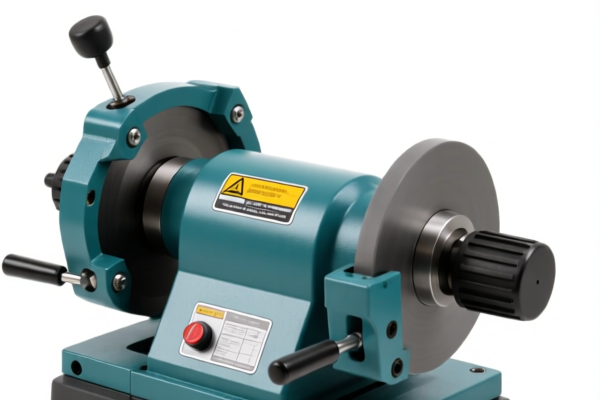
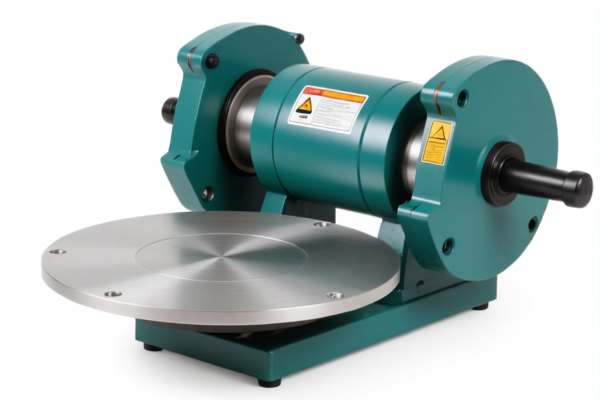
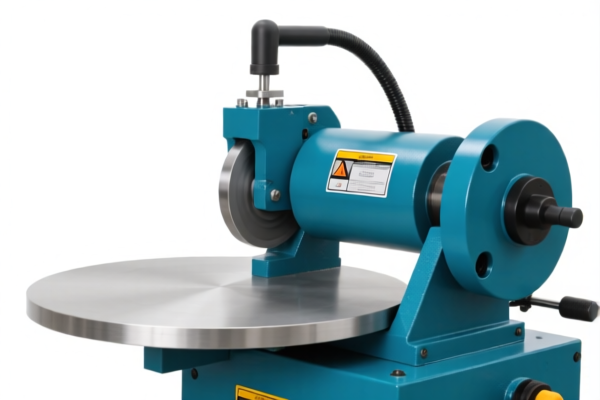
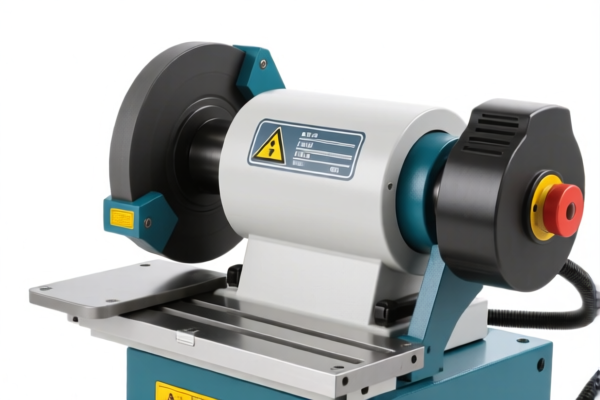
AI Analysis
🏭 Surface Grinding Machine (Surface Grinders)
🌐 HS Code Reference & Customs Clearance Guide | 2026 Latest Tariff Analysis | Professional Clearance Strategy
📌 I. Product Definition and Classification: What Exactly is a "Surface Grinding Machine"?
A Surface Grinding Machine is a precision machine tool used to produce flat, smooth surfaces on metal parts. It utilizes an abrasive wheel (usually aluminum oxide or cubic boron nitride) to remove small amounts of material.
In international trade, the classification depends heavily on: 1. The specific type of grinding mechanism (e.g., peripheral vs. plain/surface). 2. The level of automation/completeness (e.g., fully assembled vs. components). 3. The material being processed (primarily metals).
⚠️ Key Distinction:
- If it is a dedicated metal grinding machine with specific mechanical functions → Likely 8460.
- If it is a generic, multi-purpose machine not specifically described elsewhere → May fall under 8479.
- Note: Misclassification can lead to significant tariff differences (from ~39% to ~87.5%) due to US trade remedies.
📦 II. HS Code Classification Details (2026 Latest Tariff Authority Comparison)
Based on the provided data, here are the valid HS Codes for Surface Grinding Machines, specifically tailored for imports into the United States (given the tax details like "Section 301" and "122 Clause").
| HS Code | Summary / Description | Application Scenario | Key Classification Logic |
|---|---|---|---|
8460.12.00.80 |
Plain Grinding Machine (Surface Grinder) | Specifically classified as "Other" plain grinding machines | Primary Choice: If it fits the mechanical definition of a plain grinder but doesn't have higher-specific subheadings. |
8460.19.01.10 |
Plain Grinding Machine (Other) | Same function and form as surface grinding machines | Alternative: Used when the specific sub-heading .12 is exhausted or doesn't perfectly fit the model. |
8460.29.01.10 |
Metal Grinding Machine (Other) | Meets material (metal) and grinding machine requirements | Functional Focus: Emphasizes that it processes metal and is a grinding machine. |
8460.29.01.30 |
Metal Grinding Machine (Other - Catch-all) | Complies with the catch-all category for other grinding machines | Catch-All: Used if it doesn't fit more specific sub-categories within 8460.29. |
8479.89.95.99 |
Other Machinery and Mechanical Appliances | Generic classification if not strictly a "grinder" in the legal sense | Risk: A "fallback" category. Often subject to higher tariffs (steel/aluminum surcharges). |
🔍 Critical Note:
- Codes starting with 8460 are specific to Grinding, Honing, Lapping, etc. machines.
- Code 8479.89 is a "basket" category for machinery not elsewhere specified. Using this may trigger additional steel/aluminum tariffs.
💰 III. 2026 Latest Tariff Rate Breakdown (Including Surcharges & Policy Add-ons)
✅ Applicable Country: United States (US)
✅ Origin: China (CN)
✅ Effective Time: Current trade policies (Section 301, IEEPA, etc.)
🎯 1. Standard Grinding Machines (HS Codes: 8460.xxxxxxxx)
Applicable Codes:
- 8460.12.00.80
- 8460.19.01.10
- 8460.29.01.10
- 8460.29.01.30
| Item | Detail |
|---|---|
| Base Tariff | 4.4% (Ad Valorem) |
| Section 301 Surcharge | +25.0% (Under US Trade Act Section 301) |
| Section 122 Tariff | +10.0% (Historical or specific policy surcharge) |
| Total Effective Rate | 39.4% |
| Calculation Base | CIF Value (Cost, Insurance, and Freight) × 39.4% |
| De Minimis Exemption | ❌ Not Eligible (Deny De Minimis) |
| Legal Path | USITC:8460 → Footnote:301 → IEEPA:122 |
📌 Explanation:
- These codes are classified as industrial machinery for metalworking.
- They are subject to the standard 25% Section 301 tariff for Chinese-made machinery.
- The 10% Section 122 tariff is added on top of the base rate.
- Total Burden: 39.4% of the CIF value.
🎯 2. Generic/Other Machinery (HS Code: 8479.89.95.99)
Applicable Code:
- 8479.89.95.99
| Item | Detail |
|---|---|
| Base Tariff | 2.5% (Ad Valorem) |
| Section 301 Surcharge | +25.0% |
| Section 122 Tariff | +10.0% |
| Steel/Aluminum Surcharge | +50.0% (Under Section 232 or related regulations) |
| Total Effective Rate | 87.5% |
| Calculation Base | CIF Value × 87.5% |
| De Minimis Exemption | ❌ Not Eligible |
| Legal Path | USITC:8479 → Footnote:232/301 → IEEPA:122 |
📌 Warning:
- This classification is highly risky.
- It triggers an additional 50% tariff on steel, aluminum, or copper products.
- Since grinding machines are largely made of steel, this surcharge is almost always applicable.
- Total Burden: 87.5%, making this classification economically unviable for most imports.
🛠️ IV. Customs Clearance Practical Advice (Battle-Proven Pitfall Avoidance)
✅ 1. Documentation Checklist (Essential)
| Document | Must Provide | Purpose |
|---|---|---|
| ✅ Technical Specification Sheet | ✔️ | Must clearly state: "Surface Grinding Machine," working pressure, dimensions, and weight. |
| ✅ Product Photographs | ✔️ | Must show the entire machine, including the grinding wheel, worktable, and control panel. |
| ✅ Commercial Invoice | ✔️ | Must explicitly describe the item as "Surface Grinding Machine" (not just "Machinery"). |
| ✅ Packing List | ✔️ | Detailed breakdown of machine parts vs. accessories. |
| ✅ Country of Origin Certificate | ✔️ | To determine eligibility for any potential exemptions (rare for CN). |
| ✅ Material Breakdown | ✔️ | To verify if steel/aluminum components trigger Section 232 tariffs if misclassified. |
✅ 2. Declaration Strategy (Key Mnemonics)
🔥 “Grind Metal, Use 8460. Avoid 8479, Save Money!”
| Scenario | Correct Declaration | Error Prevention |
|---|---|---|
| Standard Surface Grinder | 8460.12.00.80 or 8460.19.01.10 |
Do not use 8479.89 → Saves 48.1% in taxes. |
| Machine with Steel Components | 8460.xxxx (Standard) |
If forced into 8479, expect 50% extra steel tariff. |
| Partial Assembly / Kitted Parts | Ensure all parts arrive together | Split shipments may lead to different HS code assessments. |
| Used vs. New | Mark as "New" or "Used" clearly | Used machinery may have different valuation rules. |
✅ 3. Special Cases Handling
| Situation | Recommendation |
|---|---|
| Machine includes CNC Control | Still classify under 8460 if the primary function is grinding. CNC does not automatically change the HS code to electronics. |
| Multi-purpose Machine | If it can also do milling, boring, etc., and grinding is not the primary function, CBP may shift it to 8459 (Milling) or 8479. |
| Small Benchtop Grinder | If it is a small, hand-held, or benchtop tool, verify if it falls under 8207 (Tools) or 8460. Usually, floor-standing machines are 8460. |
🌍 V. Global Market Comparison (2026 Outlook)
| Country/Region | Recommended HS Code | Tariff Rate | Remarks |
|---|---|---|---|
| 🇺🇸 USA | 8460.12.00.80 |
39.4% | High due to Section 301. Avoid 8479 (87.5%). |
| 🇨🇳 China | 8460.12.00.80 |
~0-10% | Low import tariff. No Section 301. |
| 🇪🇺 EU | 8460.29.90 |
0-1.7% | Generally low duty. No aggressive surcharges. |
| 🇯🇵 Japan | 8460.29.000 |
0% | Free trade agreements may apply. |
📌 Conclusion:
- USA is the most challenging market due to high surcharges.
- Accuracy is critical: Classifying as8460(39.4%) vs.8479(87.5%) is a massive cost difference.
📌 VI. Common Errors & Pitfalls (Lessons Learned)
❌ Error 1: Declaring a Surface Grinder as "Other Machinery" (8479.89.95.99)
👉 Consequence: Triggers an additional 50% steel/aluminum tariff. Total tax jumps to 87.5%.
👉 Fix: Always prioritize 8460 series codes for dedicated grinding machines.
❌ Error 2: Incorrectly splitting the machine into parts (e.g., table, wheel, motor)
👉 Consequence: Each part may be classified differently, leading to higher aggregate tariffs and customs delays.
👉 Fix: Declare as a single unit ("Surface Grinding Machine") with a clear summary.
❌ Error 3: Vague Description ("Grinding Tool")
👉 Consequence: CBP may reclassify it based on their own interpretation, leading to penalties.
👉 Fix: Use precise terminology: "CNC Surface Grinding Machine, Model XYZ, For Metal Processing."
🎯 VII. Conclusion: Professional Declaration, Cost Savings
🎯 Remember the Golden Rule:
🔹 "Surface Grinder = 8460. Tax = 39.4%. Avoid 8479. Tax = 87.5%."
🔹 "Precision in classification saves thousands in duties."
📌 Pro Tip:
- If your machine contains significant steel/aluminum content, ensure it is classified under 8460 to avoid the Section 232 steel/aluminum surcharge.
- Pre-clearance Ruling: Consider applying for an Import Administration Ruling from CBP if the machine has unique features to confirm the 8460 classification.
📣 Immediate Action:
📞 Contact a licensed customs broker.
📤 Provide technical drawings and photos.
🚀 Ensure HS Code 8460 is used to minimize your 39.4% tariff burden.
✨ Professional Clearance, Starting with Accurate Classification!
💼 Your Bottom Line Depends on the First Line of the Declaration!
Customer Reviews
About HS Code Classification
The Harmonized System (HS) is an internationally standardized nomenclature developed by the World Customs Organization (WCO) to classify traded products. Over 200 countries use the HS system as the basis for customs tariffs, trade statistics, and import/export regulations.
Each HS code follows a hierarchical structure:
- Chapter (2 digits) — Broad category of goods (e.g., Chapter 84: Machinery and Mechanical Appliances)
- Heading (4 digits) — More specific grouping within the chapter
- Subheading (6 digits) — Internationally standardized breakdown, used by all WCO member countries
- National subdivisions (8-10 digits) — Country-specific extensions for further classification, such as US HTSUS 10-digit codes
Correct HS code classification is essential for smooth customs clearance, accurate duty payment, and compliance with trade regulations. Misclassification can lead to customs delays, overpayment of duties, or penalties.
When importing from CN to US, the applicable tariff rates may include:
- Most-Favored-Nation (MFN) rate — The standard duty rate applied to WTO members
- General rate — Applied to countries without trade agreements
- Trade remedy duties — Additional tariffs such as Section 301 (anti-dumping), Section 232 (national security), or countervailing duties
The information provided on this page is for reference purposes only. For official classification, please consult with your local customs authority or a licensed customs broker.