sustained release agent
CN → US| HS Code | Tariff Rate | Origin | Destination | Doc |
|---|---|---|---|---|
| 3105900050 | 35.0% | CN | US | Official Doc |
| 3105100000 | 35.0% | CN | US | Official Doc |
| 3824993990 | 35.0% | CN | US | Official Doc |
| 3824991100 | 35.0% | CN | US | Official Doc |
| 3707100090 | 38.0% | CN | US | Official Doc |
| 3707906000 | 35.0% | CN | US | Official Doc |
Product Images

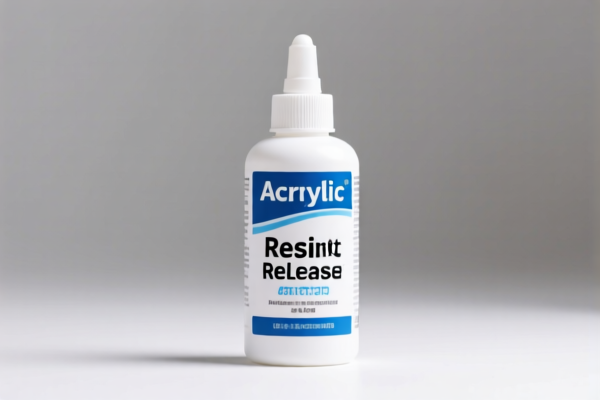
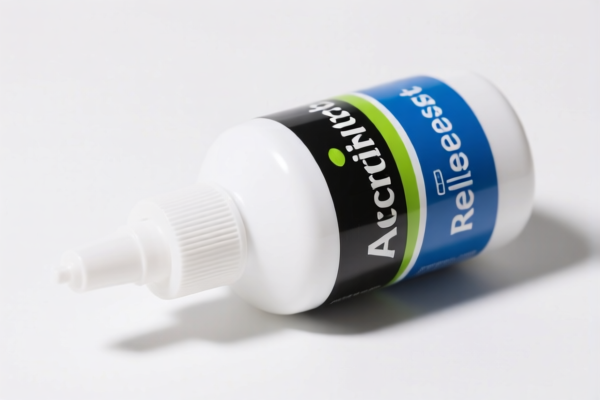
AI Analysis
🧪 Sustained Release Agent (缓释剂) – HS Code Classification & Customs Clearance Guide (2026)
🌐 HS Code Reference & Customs Strategy | 2026 Latest Tariff Analysis | Professional Clearance Protocol
Product Name: Sustained Release Agent / Buffer Agent / Chemical Preparation
Origin: China (CN)
Destination: USA (US)
Key Risk: High probability of being classified under Fertilizers (Chapter 31) or Chemical Preparations (Chapter 38), triggering Section 301 and IEEPA tariffs.
📌 I. Product Definition & Classification Logic: What is a "Sustained Release Agent"?
In international trade, "Sustained Release Agent" is a functional term, not a strict chemical name. Its HS Code depends entirely on its primary function and chemical composition.
There are three main scenarios:
- Fertilizer Additives (Chapter 31): If the agent is designed to slowly release nutrients (Nitrogen, Phosphorus, Potassium) in agricultural settings, it is classified as a Fertilizer.
- Chemical Preparations (Chapter 38): If it is a buffer, stabilizer, or industrial chemical preparation not specified elsewhere, it falls under Chemical Products.
- Photographic Chemicals (Chapter 37): If specifically used in film/photo processing, it is a Photographic Chemical.
⚠️ Critical Distinction:
- Agricultural Use + Nutrient Release → HS 3105 (Fertilizer)
- Industrial/Lab Use + Buffer/Chemical Mix → HS 3824 (Chemical Prep)
- Photo Lab Use → HS 3707 (Photo Chemical)
📦 II. HS Code Classification Details (2026 Official Tariff)
Based on the provided data, here are the exact HS Codes, summaries, and tax implications.
| HS Code | Product Description / Summary | Applicable Scenario | Total Tax Rate |
|---|---|---|---|
3105.90.00.50 |
Sustained Release Agent classified as Fertilizer. Fits the definition of "Other Fertilizers." | Agricultural slow-release fertilizers (N-P-K based). | 35.0% |
3105.10.00.00 |
Sustained Release Agent in Fertilizer Form. Contains Nitrogen, Phosphorus, Potassium. | Solid fertilizers containing nutrients with slow-release properties. | 35.0% |
3824.99.39.90 |
Buffer Agent classified as Chemical Preparation. Fits "Other Chemical Products and Preparations." | Industrial buffers, pH regulators, non-fertilizer chemical mixes. | 35.0% |
3824.99.11.00 |
Buffer Agent as Other Unnamed Chemical Industrial Preparation. | Generic chemical preparations not specified in other 38xx codes. | 35.0% |
3707.10.00.90 |
Photographic Sustained Release Agent. Fits "Photographic Chemical Preparations." | Used in photo film processing, developing tanks, or photographic labs. | 38.0% |
🔍 Key Insight:
- Most Common:3105(Fertilizer) and3824(Chemical Prep) both carry 35% total tax. - Special Case: Photo-related agents carry 38% total tax due to a higher base duty (3% vs 0%). - No Differential: Whether it’s fertilizer or chemical prep, the additional tariffs are identical in this dataset.
💰 III. 2026 Latest Tariff Rate Breakdown (Including Surcharges)
✅ Applicable Country: United States (US)
✅ Origin: China (CN)
✅ Effective Date: Post-2025 (Current Policy)
🎯 1. Fertilizer Classification (3105.90.00.50 & 3105.10.00.00)
| Item | Detail |
|---|---|
| Base Duty | 0.0% (Ad Valorem) |
| Section 301 (Add-on) | +25.0% (From USITC Footnote 9903.88.01) |
| IEEPA (Add-on) | +10.0% (Targeting China/HK products, effective Nov 10, 2025) |
| Total Tax Rate | 35.0% |
| Calculation | CIF Value × 35% |
| De Minimis Exemption | ❌ NOT Eligible (deny_de_minimis) |
| Legal Basis Path | IEEPA:9903.01.25 → IEEPA:9903.01.24 → USITC:3105.90.00.50 → FOOTNOTE:9903.88.01 |
📌 Explanation:
- 0% Base: Fertilizers often have zero base duty to support agriculture.
- 25% Section 301: Standard tariff on Chinese goods under trade war measures.
- 10% IEEPA: Additional emergency economic power act tariff.
- Total 35%: High cost. No small package exemption.
🎯 2. Chemical Preparation Classification (3824.99.39.90 & 3824.99.11.00)
| Item | Detail |
|---|---|
| Base Duty | 0.0% (Ad Valorem) |
| Section 301 (Add-on) | +25.0% |
| IEEPA (Add-on) | +10.0% |
| Total Tax Rate | 35.0% |
| Calculation | CIF Value × 35% |
| De Minimis Exemption | ❌ NOT Eligible |
| Legal Basis Path | IEEPA:9903.01.25 → IEEPA:9903.01.24 → USITC:3824.99.39.90 → FOOTNOTE:9903.88.01 |
📌 Explanation:
- Same tax structure as fertilizers.
- Classification as "Chemical Preparation" does not lower the tariff burden compared to "Fertilizer" in this dataset.
🎯 3. Photographic Chemical Classification (3707.10.00.90)
| Item | Detail |
|---|---|
| Base Duty | 3.0% (Ad Valorem) |
| Section 301 (Add-on) | +25.0% |
| IEEPA (Add-on) | +10.0% |
| Total Tax Rate | 38.0% |
| Calculation | CIF Value × 38% |
| De Minimis Exemption | ❌ NOT Eligible |
📌 Explanation:
- Higher base duty (3%) makes this category more expensive than fertilizer/chemical prep.
- Only relevant if the product is explicitly used in photography.
🛠️ IV. Customs Clearance Practical Advice (Pitfall Avoidance Guide)
✅ 1. Document Checklist (Essential for Clearance)
| Document | Required | Notes |
|---|---|---|
| Product Specification Sheet | ✔️ | Must detail chemical composition, N-P-K content (if fertilizer), and intended use. |
| Function Declaration | ✔️ | Clearly state: "Agricultural Sustained Release Fertilizer" OR "Industrial Buffer Agent." |
| Photos (Label & Product) | ✔️ | Show packaging, safety labels, and any certification marks. |
| Safety Data Sheet (SDS) | ✔️ | Critical for chemicals (Chapter 38) to prove non-hazardous nature if claimed. |
| Commercial Invoice | ✔️ | Must match HS Code description exactly. |
| Origin Certificate | ✔️ | Confirm China origin to calculate correct Section 301/IEEPA tariffs. |
✅ 2. Declaration Tips (Key Phrases)
🔥 “Define Function, Not Just Name”
| Scenario | Correct Declaration | Wrong Declaration |
|---|---|---|
| Agricultural Use | "Slow-release Fertilizer containing Nitrogen, Phosphorus, Potassium" | "Sustained Release Chemical" (Vague → Risk of misclassification) |
| Industrial Buffer | "Chemical Buffer Preparation for pH Control, Not Fertilizer" | "Fertilizer Additive" (Wrong Chapter → Audit risk) |
| Photo Use | "Photographic Chemical Preparation for Film Development" | "Chemical Solution" (Too generic) |
⚠️ Warning:
- Do not use generic terms like "Chemical Agent" without specifying function.
- If it contains N-P-K, must declare as Fertilizer (3105). Misdeclaring as Chemical (3824) may lead to penalties.
✅ 3. Special Cases
| Situation | Recommendation |
|---|---|
| Mixed Products | If sold as a kit (e.g., Fertilizer + Buffer), declare the primary function item separately. |
| Samples | No de minimis exemption. Pay full 35% tax on samples under $800. |
| Private Label | Provide brand authorization and technical specs to prove function. |
| Third-Party Testing | Provide lab reports confirming nutrient content or chemical composition to support HS Code. |
🌍 V. Global Market Comparison (2026)
| Region | Recommended HS Code | Est. Total Duty | Notes |
|---|---|---|---|
| 🇺🇸 USA | 3105 or 3824 |
35.0% | High tariffs due to Section 301 + IEEPA. |
| 🇨🇳 China | 3105 or 3824 |
0%~5% | Lower duties, no trade war surcharges. |
| 🇪🇺 EU | 3105 or 3824 |
Varies | Check CE marking for chemicals; fertilizers regulated under Fertilizing Products Regulation. |
| 🇯🇵 Japan | 3105 or 3824 |
Low | Generally lower tariffs; check JIS standards for chemicals. |
📌 Conclusion:
- USA is the highest-cost market due to layered tariffs (Base + 301 + IEEPA).
- No significant tariff advantage between Fertilizer (3105) and Chemical (3824) for Chinese origin.
- Photo chemicals (3707) are slightly more expensive (38% vs 35%).
📌 VI. Common Errors & Pitfalls (Lessons Learned)
❌ Error 1: Declaring "Sustained Release Agent" without specifying function.
👉 Result: Customs may classify under highest-duty generic chemical or reject declaration.
❌ Error 2: Misclassifying Fertilizer as "Chemical Preparation" to avoid agricultural regulations.
👉 Result: Penalty for misclassification + potential violation of EPA/USDA rules.
❌ Error 3: Assuming de minimis ($800) exemption applies.
👉 Result: False! Chinese goods under IEEPA/Section 301 are excluded from de minimis. Tax applies even on small packages.
❌ Error 4: Ignoring IEEPA 10% add-on.
👉 Result: Underpayment of 10% on top of 35% tax → Audit & back taxes.
✅ Correct Approach:
"Slow-release Nitrogen Phosphorus Potassium Fertilizer, Granular, for Agricultural Use, Made in China, HS Code 3105.90.00.50"
🎯 VII. Conclusion: Precision in Classification Saves Money
🎯 Remember:
🔹 "Fertilizer = 35%, Chemical = 35%, Photo = 38%. No De Minimis for China!"
🔹 "Function Dictates Code. N-P-K means Chapter 31. Buffer means Chapter 38."
📌 Pro Tip:
If your Sustained Release Agent is produced in Vietnam, Malaysia, or Thailand, you may be eligible for IEEPA exemption or lower Section 301 rates.
Action:
1. Verify Country of Origin strictly.
2. Obtain Certificate of Origin from non-China sources if possible.
3. Apply for Advance Ruling from US Customs (CBP) if product function is ambiguous.
📣 Immediate Action:
📞 Contact a Licensed Customs Broker
📄 Provide Technical Data Sheet (TDS)
🚀 Classify Early to Avoid Demurrage & Penalties
✨ Professional Clearance Starts with Accurate Classification!
💼 Every 1% tax difference is pure profit!
Customer Reviews
About HS Code Classification
The Harmonized System (HS) is an internationally standardized nomenclature developed by the World Customs Organization (WCO) to classify traded products. Over 200 countries use the HS system as the basis for customs tariffs, trade statistics, and import/export regulations.
Each HS code follows a hierarchical structure:
- Chapter (2 digits) — Broad category of goods (e.g., Chapter 84: Machinery and Mechanical Appliances)
- Heading (4 digits) — More specific grouping within the chapter
- Subheading (6 digits) — Internationally standardized breakdown, used by all WCO member countries
- National subdivisions (8-10 digits) — Country-specific extensions for further classification, such as US HTSUS 10-digit codes
Correct HS code classification is essential for smooth customs clearance, accurate duty payment, and compliance with trade regulations. Misclassification can lead to customs delays, overpayment of duties, or penalties.
When importing from CN to US, the applicable tariff rates may include:
- Most-Favored-Nation (MFN) rate — The standard duty rate applied to WTO members
- General rate — Applied to countries without trade agreements
- Trade remedy duties — Additional tariffs such as Section 301 (anti-dumping), Section 232 (national security), or countervailing duties
The information provided on this page is for reference purposes only. For official classification, please consult with your local customs authority or a licensed customs broker.