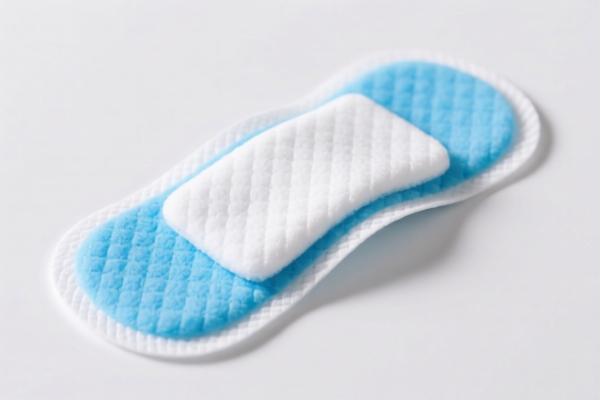
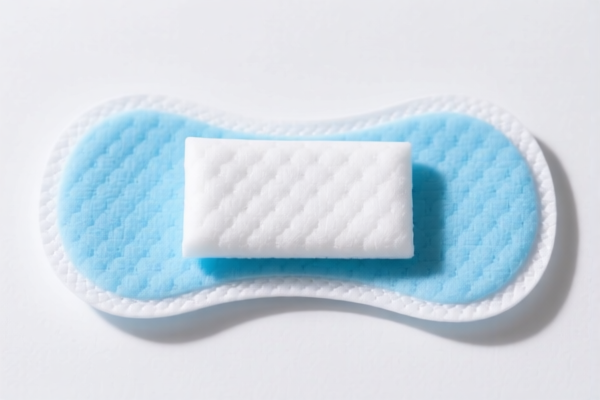
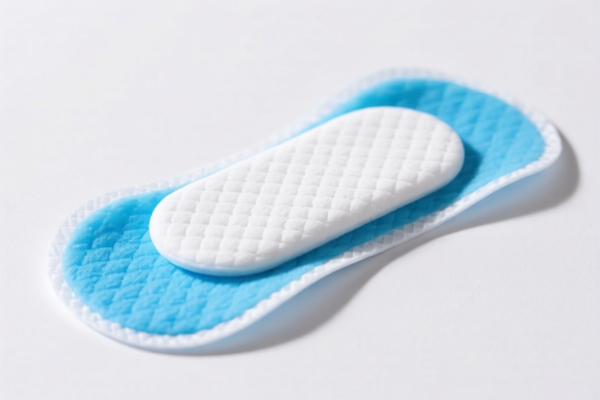
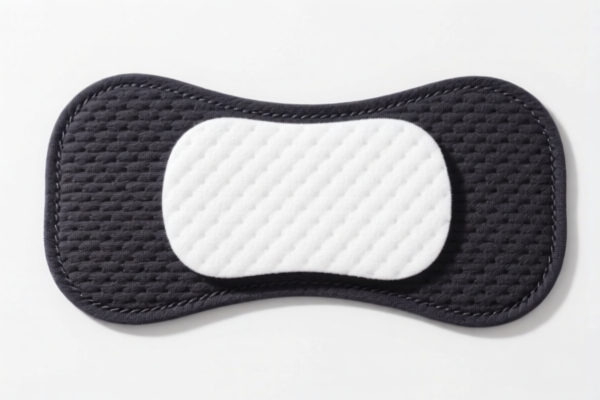
sweat absorbent sticker
CN → US| HS Code | Tariff Rate | Origin | Destination | Doc |
|---|---|---|---|---|
| 5601220091 | 41.3% | CN | US | Official Doc |
| 3926909989 | 22.8% | CN | US | Official Doc |
| 9619009000 | 24.5% | CN | US | Official Doc |
| 9619001560 | 17.5% | CN | US | Official Doc |
| 5601210090 | 38.6% | CN | US | Official Doc |
Product Images
AI Analysis
💧 Sweat Absorbent Stickers (Adhesive Underarm Patches)
🌐 HS Code Reference & Customs Clearance Guide | 2026 Latest Tariff Analysis | Professional Clearance Strategy
📌 I. Product Definition & Classification: What Exactly Is a "Sweat Absorbent Sticker"?
Sweat absorbent stickers, often referred to as "underarm pads," "sweat guards," or "antiperspirant patches," are personal care products designed to be adhered to clothing (typically under the armpit area) to absorb perspiration, prevent stains, and reduce body odor.
In international trade, these products are classified based on their primary material composition and intended use. The key distinction lies in whether they are viewed as textile materials (due to cotton/non-woven fabric construction) or finished sanitary/hygiene products.
⚠️ Critical Classification Point:
- If viewed primarily as textile articles (e.g., cotton pads, non-woven fabrics used for absorption) → Classified under Chapter 56 (Textile articles).
- If viewed primarily as sanitary articles (e.g., products used for personal hygiene/care) → Classified under Chapter 96 (Miscellaneous manufactured articles).
📦 II. HS Code Classification Details (2026 Latest Tariff Authority Comparison)
Based on the provided data, there are 5 potential HS Code classifications for "Sweat Absorbent Stickers." The correct choice depends on the specific material and manufacturing process.
| HS Code | Product Description & Matching Basis | Total Tax Rate | Tax Breakdown (US Imports from China) |
|---|---|---|---|
| 5601.22.00.91 | Textile-Based: Matches based on material inference (cotton, non-woven fabric). Fits the category of "wadding and articles thereof of textile materials." Key Trait: Material is the primary feature. |
41.3% | Base: 6.3% + Section 301: 25.0% + IEEPA 122: 10.0% |
| 3926.90.99.89 | Plastic/Adhesive-Based: Inferred to have a sticky layer or plastic film base. Fits "Plastics and articles thereof; other articles of plastics and articles of other materials." Key Trait: Contains plastic film or adhesive backing as a major component. |
22.8% | Base: 5.3% + Section 301: 7.5% + IEEPA 122: 10.0% |
| 9619.00.90.00 | Sanitary Product: Classified as "Sanitary towels and tampons, napkins and napkin liners for babies and similar articles, of any material." Key Trait: Intended for body care/hygiene. |
24.5% | Base: 7.0% + Section 301: 7.5% + IEEPA 122: 10.0% |
| 9619.00.15.60 | Specific Sanitary Article: Matches based on use and hygiene attribute. Material inferred as cellulose cotton or fiber. Key Trait: Specific sub-category for sanitary items with zero base duty. |
17.5% | Base: 0.0% + Section 301: 7.5% + IEEPA 122: 10.0% |
| 5601.21.00.90 | Cotton Wadding: Based on material inference, absorbed patches made of cotton or non-woven cloth. Fits "Cotton wadding and articles thereof." Key Trait: High cotton content, used as padding. |
38.6% | Base: 3.6% + Section 301: 25.0% + IEEPA 122: 10.0% |
🔍 Key Takeaway:
- Lowest Tax Rate:9619.00.15.60(17.5%) – If classified as a specific sanitary article with 0% base duty.
- Highest Tax Rate:5601.22.00.91(41.3%) – If classified as generic textile wadding with high base duty.
- Material Sensitivity: The presence of a plastic adhesive backing or plastic film can shift classification from Chapter 56 (Textile) to Chapter 39 (Plastic), significantly reducing the base duty but keeping Section 301 and IEEPA taxes applicable.
💰 III. Detailed Tariff Rate Explanation (US Imports from China)
✅ Applicable Country: United States (US)
✅ Origin: China (CN)
✅ Effective Date: Tariffs apply to imports entered on or after the specified dates for Section 301 and IEEPA measures.
🎯 1. 5601.22.00.91 – Textile Wadding (Cotton/Non-Woven)
| Item | Detail |
|---|---|
| Base Tariff | 6.3% |
| Section 301 Tariff | +25.0% (From USITC Footnote 9903.88.01) |
| IEEPA Tariff (122) | +10.0% (On certain Chinese goods) |
| Total Effective Rate | 41.3% |
| Calculation | CIF Value × 41.3% |
| De Minimis Exemption | ❌ Not Eligible (Deny de minimis for Section 301 goods) |
| Legal Path | IEEPA:9903.01.25 → Section 301: 9903.88.01 → USITC:5601.22.00.91 |
📌 Explanation:
- This classification assumes the product is primarily a textile article.
- The 25% Section 301 tariff is the largest component, reflecting US trade policy against Chinese textiles.
- Risk: High total cost. Must ensure the product is truly textile-based (no significant plastic film).
🎯 2. 3926.90.99.89 – Other Plastic Articles
| Item | Detail |
|---|---|
| Base Tariff | 5.3% |
| Section 301 Tariff | +7.5% |
| IEEPA Tariff (122) | +10.0% |
| Total Effective Rate | 22.8% |
| Calculation | CIF Value × 22.8% |
| De Minimis Exemption | ❌ Not Eligible |
| Legal Path | IEEPA:9903.01.24 → Section 301: 9903.03.01 → USITC:3926.90.99.89 |
📌 Explanation:
- This classification applies if the product has a plastic backing or is considered a "plastic article" with adhesive.
- Advantage: Lower base duty (5.3%) and lower Section 301 rate (7.5%) compared to textiles.
- Condition: Must have a significant plastic component (e.g., adhesive layer, non-woven fabric with plastic coating).
🎯 3. 9619.00.90.00 – Other Sanitary Articles
| Item | Detail |
|---|---|
| Base Tariff | 7.0% |
| Section 301 Tariff | +7.5% |
| IEEPA Tariff (122) | +10.0% |
| Total Effective Rate | 24.5% |
| Calculation | CIF Value × 24.5% |
| De Minimis Exemption | ❌ Not Eligible |
| Legal Path | IEEPA:9903.01.24 → Section 301: 9903.03.01 → USITC:9619.00.90.00 |
📌 Explanation:
- Classified as a general sanitary article.
- Moderate Risk: Higher base duty than the specific sanitary code (9619.00.15.60).
🎯 4. 9619.00.15.60 – Specific Sanitary Article (Cellulose/Fiber)
| Item | Detail |
|---|---|
| Base Tariff | 0.0% |
| Section 301 Tariff | +7.5% |
| IEEPA Tariff (122) | +10.0% |
| Total Effective Rate | 17.5% |
| Calculation | CIF Value × 17.5% |
| De Minimis Exemption | ❌ Not Eligible |
| Legal Path | IEEPA:9903.01.24 → Section 301: 9903.03.01 → USITC:9619.00.15.60 |
📌 Explanation:
- Best Option: Zero base duty significantly reduces the total tax burden.
- Requirement: Must clearly be a sanitary article made of cellulose cotton or fiber, intended for body hygiene.
- Documentation: Need strong proof of material (cellulose/fiber) and use (hygiene).
🎯 5. 5601.21.00.90 – Cotton Wadding
| Item | Detail |
|---|---|
| Base Tariff | 3.6% |
| Section 301 Tariff | +25.0% |
| IEEPA Tariff (122) | +10.0% |
| Total Effective Rate | 38.6% |
| Calculation | CIF Value × 38.6% |
| De Minimis Exemption | ❌ Not Eligible |
| Legal Path | IEEPA:9903.01.25 → Section 301: 9903.88.01 → USITC:5601.21.00.90 |
📌 Explanation:
- Similar to5601.22.00.91but specific to cotton wadding.
- High Tax: The 25% Section 301 tariff makes this expensive.
- Use Case: Only if the product is purely cotton wadding with no adhesive backing or plastic film.
🛠️ IV. Customs Clearance Practical Advice (Risk Avoidance Guide)
✅ 1. Documentation Checklist (Essential for Clearance)
| Document | Required? | Description |
|---|---|---|
| ✅ Product Specification Sheet | ✔️ | Must detail material composition (e.g., "100% Cellulose Cotton," "Non-woven fabric with adhesive backing"). |
| ✅ Material Safety Data Sheet (MSDS) | ✔️ | If containing any chemical adhesives or active ingredients (antiperspirants). |
| ✅ Product Photos (Clear Label) | ✔️ | Show the product, packaging, and any "Sanitary" or "Hygiene" labels. |
| ✅ Commercial Invoice | ✔️ | Must accurately describe the product (e.g., "Sweat Absorbent Patches, Cellulose-based, Sanitary Use"). Avoid vague terms like "Sticker." |
| ✅ Certificate of Origin | ✔️ | Confirm origin as China to apply correct Section 301/IEEPA tariffs. |
| ✅ Bill of Lading/Air Waybill | ✔️ | Standard shipping document. |
✅ 2. Declaration Tips (Key Mantra)
🔥 "Material Determines HS, Use Defines Chapter!"
| Scenario | Correct Declaration | Incorrect Declaration |
|---|---|---|
| Pure Cotton/Non-Woven (No Plastic) | 5601.22.00.91 or 5601.21.00.90 |
Declaring as "Plastic Product" → Misclassification |
| With Plastic/Adhesive Backing | 3926.90.99.89 |
Declaring as "Textile" → High Tariff Risk |
| Sanitary/Hygiene Use (Fiber-Based) | 9619.00.15.60 (Best Rate) |
Declaring as "Textile" → Missed Savings |
| General Sanitary Article | 9619.00.90.00 |
Declaring as "Plastic" → Higher Base Duty |
✅ 3. Special Considerations
| Situation | Advice |
|---|---|
| OEM/Private Label | Ensure the manufacturer provides material specs. If you claim "Sanitary," you must prove it's for hygiene, not just "sticky pad." |
| Mixed Materials (e.g., Cotton + Plastic Backing) | Customs may classify based on essential character. If plastic backing is significant, 3926 may apply. If cotton is dominant, 5601 may apply. |
| Active Ingredients (e.g., with Antiperspirant) | If the product contains active pharmaceutical ingredients (APIs), it may be classified under Chapter 30 (Pharmaceuticals), requiring FDA approval. |
| De Minimis Threshold | ❌ Do Not Use for Section 301 goods. Even small packages (under $800) are subject to full tariffs if misdeclared. |
🌍 V. Global Market Comparison (2026 Latest)
| Country/Region | Recommended HS Code | Estimated Tariff (China Origin) | Notes |
|---|---|---|---|
| 🇺🇸 USA | 9619.00.15.60 |
17.5% (Lowest) | Must prove sanitary use and fiber content. |
| 🇨🇳 China | 9619.00.00.00 |
~5-10% | Import tariffs apply; check latest Chinese HS code. |
| 🇪🇺 EU | 9619.00.00 |
~6.5% | No Section 301 or IEEPA taxes. |
| 🇬🇧 UK | 9619.00.00 |
~6.5% | Post-Brexit tariff applies. |
| 🇯🇵 Japan | 9619.00.00 |
~5% | No additional retaliatory tariffs. |
📌 Conclusion:
- The US market is the most challenging due to Section 301 and IEEPA tariffs.
- Canada, Mexico, EU, Japan, and Australia do not have these additional punitive tariffs, making them more attractive for export if diversification is possible.
📌 VI. Common Errors & Pitfalls (Lessons Learned)
❌ Error 1: Declaring "Sweat Pads" as "Stickers" (Chapter 35 or 49)
👉 Consequence: Misclassification → Customs delays, fines, and potential retroactive tax assessment.
❌ Error 2: Ignoring the Plastic Backing
👉 Consequence: Declaring as pure textile (5601) when it has a plastic layer → Risk of reclassification to 3926 with different duty rates and legal scrutiny.
❌ Error 3: Failing to Provide Material Composition
👉 Consequence: Customs cannot determine if it’s 5601 (Textile) or 9619 (Sanitary) → Goods held for inspection → Delays.
❌ Error 4: Assuming De Minimis Applies
👉 Consequence: Shipping small packages via e-commerce (under $800) without paying Section 301/IEEPA taxes → Goods seized or returned, and blacklisted sender.
✅ Correct Approach:
"Sweat Absorbent Patches, Sanitary Use, Cellulose Cotton Material, with Adhesive Backing, Model XYZ, Certified for Personal Hygiene"
🎯 VII. Conclusion: Professional Declaration, Cost Optimization
🎯 Remember the Mantra:
🔹 "Sanitary Fiber Wins" (
9619.00.15.60) – Lowest tax at 17.5%.
🔹 "Plastic Backing Saves" (3926) – Lower base duty than textiles.
🔹 "Textile is Expensive" (5601) – Avoid unless unavoidable; 41.3% is high.🔹 "HS Code Decides Fate, Tax Difference is Key, One Mistake, Cost Doubles!"
📌 Pro Tip:
- If your product is 100% cellulose cotton and marketed for hygiene, aggressively pursue
9619.00.15.60.- If it has a plastic adhesive layer, consider
3926.90.99.89for a balance of cost and compliance.- Always get an Advance Ruling from US Customs (CBP) before large shipments to confirm the HS Code.
📣 Immediate Action:
📞 Contact a licensed customs broker + Provide detailed material specs + Request an Advance Ruling from CBP.
🚀 Let your sweat patches pass smoothly, save costs, and boost your margins!
✨ Professional Clearance Starts with Precise Classification!
💼 Every cent counts in international trade!
Customer Reviews
About HS Code Classification
The Harmonized System (HS) is an internationally standardized nomenclature developed by the World Customs Organization (WCO) to classify traded products. Over 200 countries use the HS system as the basis for customs tariffs, trade statistics, and import/export regulations.
Each HS code follows a hierarchical structure:
- Chapter (2 digits) — Broad category of goods (e.g., Chapter 84: Machinery and Mechanical Appliances)
- Heading (4 digits) — More specific grouping within the chapter
- Subheading (6 digits) — Internationally standardized breakdown, used by all WCO member countries
- National subdivisions (8-10 digits) — Country-specific extensions for further classification, such as US HTSUS 10-digit codes
Correct HS code classification is essential for smooth customs clearance, accurate duty payment, and compliance with trade regulations. Misclassification can lead to customs delays, overpayment of duties, or penalties.
When importing from CN to US, the applicable tariff rates may include:
- Most-Favored-Nation (MFN) rate — The standard duty rate applied to WTO members
- General rate — Applied to countries without trade agreements
- Trade remedy duties — Additional tariffs such as Section 301 (anti-dumping), Section 232 (national security), or countervailing duties
The information provided on this page is for reference purposes only. For official classification, please consult with your local customs authority or a licensed customs broker.