sweet grass woven floor mat
CN → US| HS Code | Tariff Rate | Origin | Destination | Doc |
|---|---|---|---|---|
| 4602191800 | 39.5% | CN | US | Official Doc |
| 4602198000 | 37.3% | CN | US | Official Doc |
| 5705002090 | 38.3% | CN | US | Official Doc |
| 5705001000 | 35.0% | CN | US | Official Doc |
Product Images
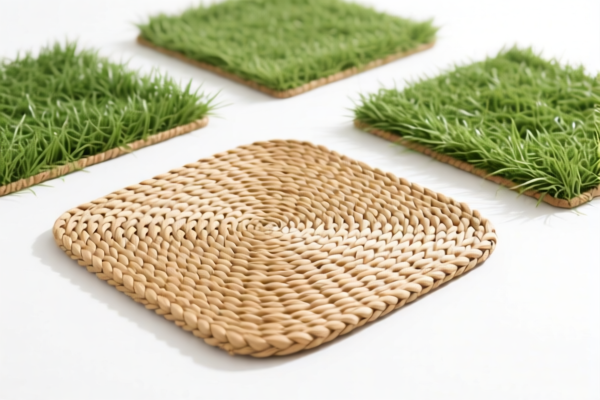
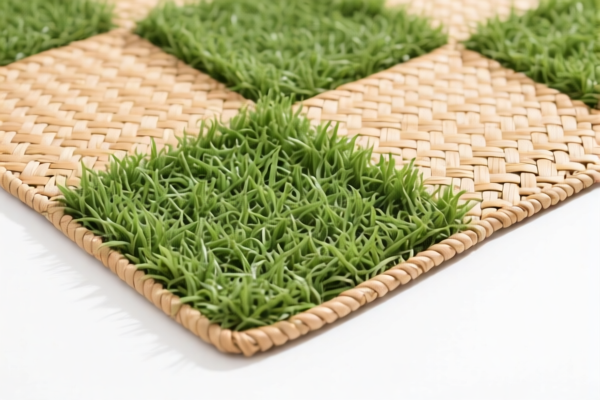
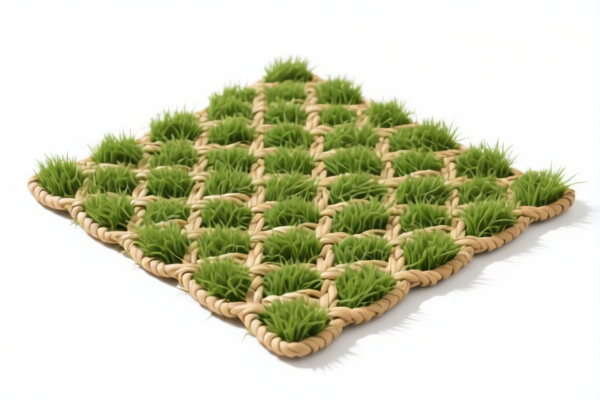
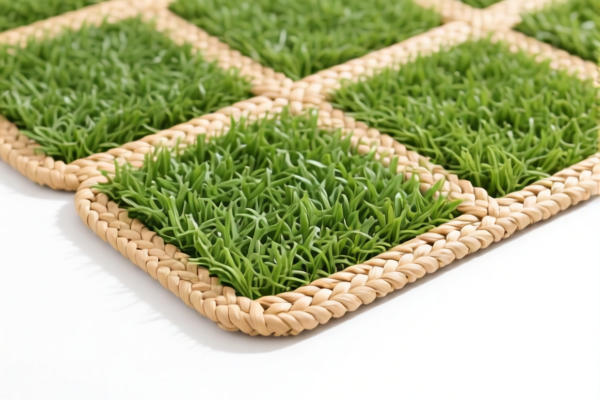
AI Analysis
🌿 Sweet Grass Woven Floor Mat (草编地垫)
🌐 HS Code Reference & Customs Clearance Guide | 2026 Latest Tariff Analysis | Professional Clearance Strategy
📌 I. Product Definition and Classification: What exactly is a "Sweet Grass Mat"?
Sweet grass woven floor mats are decorative or functional floor coverings made from natural plant fibers (specifically sweet grass or similar botanical materials). In international trade, the classification depends heavily on the material composition and structural nature of the product:
- Vegetable Plaiting Materials (Chapter 46): If the mat is made primarily of woven sweet grass, reeds, or similar vegetable plaiting materials, it falls under Chapter 46. This is the most common classification for traditional "grass" mats.
- Textile Floor Coverings (Chapter 57): If the "grass" is processed into fibers/tufts resembling textile pile (like shag carpets) or if the manufacturing process blends it significantly with textile techniques, it may fall under Chapter 57 (Textile Floor Coverings).
⚠️ Key Distinction Point:
- If the structure is clearly woven strips/braids of plant stems → Chapter 46 (HS 4602.19)
- If the structure resembles a textile carpet/rug with pile or woven textile fibers → Chapter 57 (HS 5705.00)
📦 II. HS Code Classification Details (2026 Latest Tariff Authority Comparison)
Based on the provided data, here are the four possible HS Codes and their corresponding tax implications for imports into the United States (from China):
| HS Code | Product Description | Applicable Scenario | Material/Nature |
|---|---|---|---|
4602.19.18.00 |
Floor mats of vegetable plaiting materials | Traditional woven sweet grass mats, basket-weave style | ✅ Vegetable Material (Grass/Reed) |
4602.19.80.00 |
Other woven goods of plaiting materials | Similar to above, but different sub-category within vegetable plaiting | ✅ Vegetable Material (Grass/Reed) |
5705.00.20.90 |
Other textile floor coverings | If classified as textile due to fiber processing or tufted appearance | ✅ Textile/Fiber Material |
5705.00.10.00 |
Textile floor coverings (other) | If classified as textile but lighter weight or different construction | ✅ Textile/Fiber Material |
🔍 Critical Reminder:
- Misclassification Risk: Declaring a grass mat as a textile mat (5705) when it is clearly vegetable plaiting (4602) (or vice versa) can lead to customs audits.
- Material Proof: Be prepared to provide material composition certificates. If the mat is >90% natural grass,4602is safer. If it is blended with synthetic fibers or heavily processed into "textile pile,"5705may apply.
- U.S. Tariffs Apply to Both: Regardless of the chapter, U.S. additional tariffs are applied to both categories due to the product's origin (China).
💰 III. 2026 Latest Tariff Rate Breakdown (Including Additional Taxes)
✅ Applicable Country: United States (US)
✅ Country of Origin: China (CN)
✅ Effective Date: Tariffs include Base Rate + Section 301 (25%) + Section 122/IEEPA (10%)
🎯 1. 4602.19.18.00 —— Vegetable Plaiting Floor Mats
| Item | Content |
|---|---|
| Base Duty Rate | 4.5% |
| Section 301 Additional Tariff | +25.0% |
| Section 122 / IEEPA Additional Tariff | +10.0% |
| Total Effective Rate | 39.5% |
| Tax Calculation | CIF Value × 39.5% |
| De Minimis Exemption | ❌ Not Eligible (Denied for China-origin goods under these sections) |
| Legal Basis Path | HTSUS:4602.19.18.00 → Section 301: Footnote 9903.88.01 → Section 122: 10% Add'l Duty |
📌 Explanation:
- The 39.5% total tax is high. The 25% is the standard Section 301 tariff for Chapter 46 goods from China.
- The 10% is a specific additional tariff often associated with recent executive orders (Section 122 or similar IEEPA provisions) targeting specific Chinese imports.
- Cost Impact: For a $1,000 shipment, you pay $395 in duties alone.
🎯 2. 4602.19.80.00 —— Other Woven Vegetable Goods
| Item | Content |
|---|---|
| Base Duty Rate | 2.3% |
| Section 301 Additional Tariff | +25.0% |
| Section 122 / IEEPA Additional Tariff | +10.0% |
| Total Effective Rate | 37.3% |
| Tax Calculation | CIF Value × 37.3% |
| De Minimis Exemption | ❌ Not Eligible |
| Legal Basis Path | HTSUS:4602.19.80.00 → Section 301: Footnote 9903.88.01 → Section 122: 10% Add'l Duty |
📌 Note:
- This is the cheapest option among the Chapter 46 codes at 37.3%.
- Use this code if4602.19.18.00is not precise enough for your specific mat design (e.g., if it has unusual weaving patterns not covered in .18).
🎯 3. 5705.00.20.90 —— Textile Floor Coverings (Other)
| Item | Content |
|---|---|
| Base Duty Rate | 3.3% |
| Section 301 Additional Tariff | +25.0% |
| Section 122 / IEEPA Additional Tariff | +10.0% |
| Total Effective Rate | 38.3% |
| Tax Calculation | CIF Value × 38.3% |
| De Minimis Exemption | ❌ Not Eligible |
| Legal Basis Path | HTSUS:5705.00.20.90 → Section 301 → Section 122: 10% Add'l Duty |
📌 Note:
- If your sweet grass is processed into textile fibers (e.g., shredded, spun, or tufted like a rug), this code may apply.
- Total rate is 38.3%, slightly higher than4602.19.80.00but lower than4602.19.18.00.
🎯 4. 5705.00.10.00 —— Textile Floor Coverings (Lighter/Other)
| Item | Content |
|---|---|
| Base Duty Rate | 0.0% |
| Section 301 Additional Tariff | +25.0% |
| Section 122 / IEEPA Additional Tariff | +10.0% |
| Total Effective Rate | 35.0% |
| Tax Calculation | CIF Value × 35.0% |
| De Minimis Exemption | ❌ Not Eligible |
| Legal Basis Path | HTSUS:5705.00.10.00 → Section 301 → Section 122: 10% Add'l Duty |
📌 Note:
- This is the lowest total tariff (35.0%) in the entire dataset.
- CRITICAL: You can ONLY use this code if the product legitimately qualifies as a Textile Floor Covering under Chapter 57.
- If Customs determines it is actually a vegetable plaiting mat (Chapter 46), you will face retroactive taxes, penalties, and interest for underpayment.
- Use this only if the material processing crosses the threshold into textile classification.
🛠️ IV. Customs Clearance Practical Advice (Real-World Pitfall Avoidance)
✅ 1. Documentation Checklist (Non-negotiable)
| Document | Required? | Explanation |
|---|---|---|
| ✅ Product Description | ✔️ | Must specify: "Sweet Grass Woven Floor Mat," Material: 100% Natural Sweet Grass (or blend %), Weaving Method. |
| ✅ Material Composition Certificate | ✔️ | Issued by supplier or third-party lab to prove plant-based vs. textile fiber content. |
| ✅ Commercial Invoice | ✔️ | Must list HS Code clearly. Do not use vague terms like "Home Decor." |
| ✅ Packing List | ✔️ | Net weight and gross weight are critical for duty assessment. |
| ✅ Photos | ✔️ | High-res photos showing the weave structure (to distinguish between plaiting and textile pile). |
✅ 2. Declaration Strategy (Key Mantra)
🔥 "Know Your Fiber, Declare Accurate, Tax Savings Are Real!"
| Scenario | Correct Declaration | Risk if Wrong |
|---|---|---|
| Traditional Woven Grass | 4602.19.80.00 (37.3%) |
Misdeclaring as textile (5705) → Risk of fraud/penalty. |
| Shredded/Tufted Grass Rug | 5705.00.10.00 (35.0%) |
Misdeclaring as plaiting (4602) → Higher tax (39.5%) or audit. |
| Mixed Material (e.g., Grass + Cotton) | Consult Specialist | If >50% cotton, may change chapter. Complex classification. |
✅ 3. Special Considerations
| Situation | Advice |
|---|---|
| De Minimis (Section 321) | ❌ No Exemption. Even for small shipments (<$800), China-origin goods under these HS codes are subject to full tariffs due to Section 301/122. |
| Country of Origin | Must be clearly marked "Made in China". If assembled elsewhere, rules of origin must be verified. |
| Pre-Ruling Request | If unsure between 4602 and 5705, apply for an Advance Ruling from U.S. CBP. It costs time but protects against future audits. |
🌍 V. Global Market Comparison (2026 Overview)
| Market | Recommended HS Code | Est. Total Duty (China Origin) | Notes |
|---|---|---|---|
| 🇺🇸 USA | 4602.19.80.00 or 5705.00.10.00 |
35.0% – 39.5% | High tariffs due to Section 301 + 122. |
| 🇨🇳 China | 4602.19 |
~0-5% | Low duty, but export-focused. |
| 🇪🇺 EU | 4602.19 |
~6.5% | No Section 301/122 equivalents, but VAT applies. |
| 🇬🇧 UK | 4602.19 |
~6.5% | Post-Brexit tariffs similar to EU. |
📌 Conclusion:
- The US market is the most expensive for sweet grass mats due to layered tariffs.
- Strategy: If targeting the US, consider sourcing from non-China countries (e.g., Vietnam, India, Thailand) if possible, as they may be exempt from Section 301/122 tariffs.
- Alternative: Use5705.00.10.00(35%) only if legally justifiable, as it is the lowest cost option within the provided data.
📌 VI. Common Errors & Pitfalls (Blood Lessons)
❌ Error 1: Declaring as "Carpet" (5705) when it is clearly "Woven Grass" (4602)
👉 Consequence: Customs audit, potential fraud charges, and back-taxes.
❌ Error 2: Assuming "De Minimis" ($800) exemption applies
👉 Consequence: Shipment held, duties assessed, and storage fees incurred. It does not apply to China under Section 301/122.
❌ Error 3: Vague Description: "Home Decor" or "Floor Mat"
👉 Consequence: Customs may assign a higher default tariff or delay clearance for further review.
✅ Correct Practice:
"Sweet Grass Woven Floor Mat, 100% Natural Vegetable Fiber, Hand-Woven, For Indoor Use, HS 4602.19.80.00"
🎯 VII. Conclusion: Precise Classification Saves Money!
🎯 Remember the Mantra:
🔹 "Grass = Chapter 46, Textile = Chapter 57. Check Base Rate: 0% (5705.10) vs 2.3% (4602.80). Both get +35% Additional. Pick the Legal Lowest!"
🔹 "35% is the goal, but only if the product qualifies. Don't gamble on misclassification."
📌 Pro Tip:
If your sweet grass mats are sourced from India, Vietnam, or Thailand, you may avoid the 25% Section 301 and 10% Section 122 tariffs entirely, reducing the total duty to just the Base Rate (2.3% - 3.3%).
Action: Evaluate supply chain options. Shifting origin from China to a non-China country could save ~35% in duties.
📣 Immediate Action:
📞 Consult a Customs Broker to verify material composition.
📄 Request Advance Ruling if classification is ambiguous.
🚀 Optimize Supply Chain: Consider non-China sourcing to bypass punitive tariffs.
✨ Professional clearance starts with precise classification!
💼 Your profit margin depends on accurate HS coding!
Customer Reviews
About HS Code Classification
The Harmonized System (HS) is an internationally standardized nomenclature developed by the World Customs Organization (WCO) to classify traded products. Over 200 countries use the HS system as the basis for customs tariffs, trade statistics, and import/export regulations.
Each HS code follows a hierarchical structure:
- Chapter (2 digits) — Broad category of goods (e.g., Chapter 84: Machinery and Mechanical Appliances)
- Heading (4 digits) — More specific grouping within the chapter
- Subheading (6 digits) — Internationally standardized breakdown, used by all WCO member countries
- National subdivisions (8-10 digits) — Country-specific extensions for further classification, such as US HTSUS 10-digit codes
Correct HS code classification is essential for smooth customs clearance, accurate duty payment, and compliance with trade regulations. Misclassification can lead to customs delays, overpayment of duties, or penalties.
When importing from CN to US, the applicable tariff rates may include:
- Most-Favored-Nation (MFN) rate — The standard duty rate applied to WTO members
- General rate — Applied to countries without trade agreements
- Trade remedy duties — Additional tariffs such as Section 301 (anti-dumping), Section 232 (national security), or countervailing duties
The information provided on this page is for reference purposes only. For official classification, please consult with your local customs authority or a licensed customs broker.