swimming ring
CN → US| HS Code | Tariff Rate | Origin | Destination | Doc |
|---|---|---|---|---|
| 4016950000 | 21.7% | CN | US | Official Doc |
| 9506290080 | 17.5% | CN | US | Official Doc |
| 3926909989 | 22.8% | CN | US | Official Doc |
| 9506995500 | 22.8% | CN | US | Official Doc |
| 3926907500 | 14.2% | CN | US | Official Doc |
Product Images
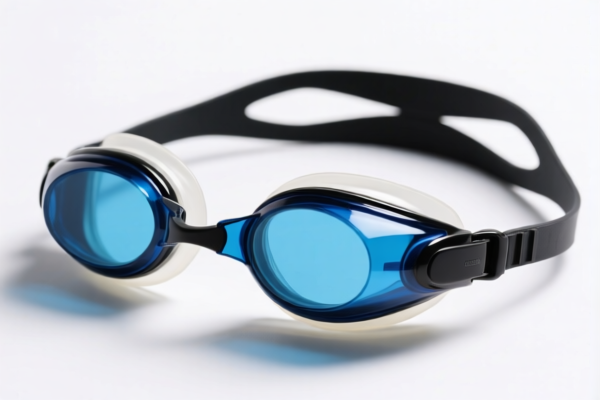
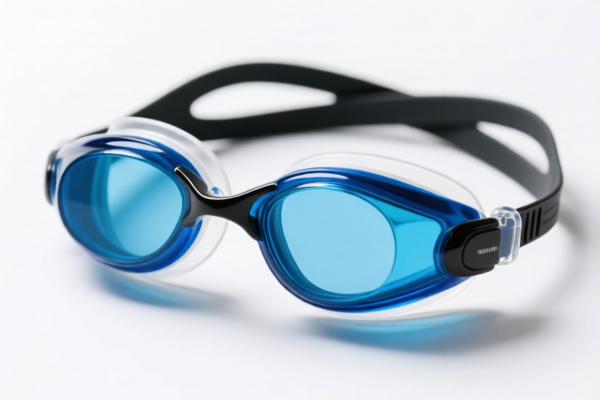

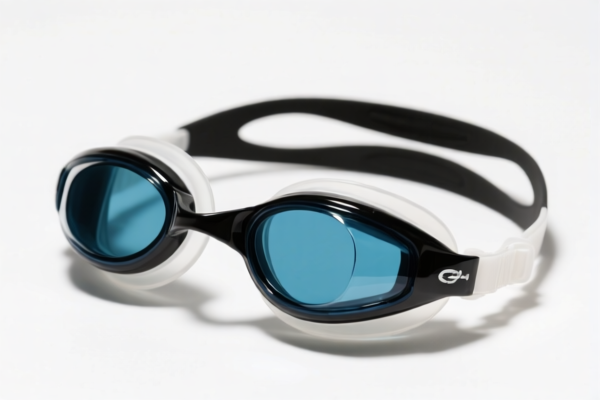
AI Analysis
🏊 Swimming Ring (Inflatable Floats / Rafts)
🌐 HS Code Reference & Customs Clearance Guide | 2026 Latest Tariff Analysis | Professional通关 Strategy
📌 Part I: Product Definition & Classification: What Exactly is a "Swimming Ring"?
A swimming ring, commonly known as an inflatable ring or float, is a safety device or recreational toy used in water activities. In international trade, its classification depends heavily on material composition and specific use case. It is generally categorized under Chapter 39 (Plastics), Chapter 40 (Rubber), or Chapter 95 (Toys/Sports Equipment).
Key Distinctions: * Plastic/PVC Inflatable: Most common consumer toys. Usually classified under Chapter 39. * Rubber Inflatable: Often considered "other articles of vulcanized rubber." Classified under Chapter 40. * Sports Equipment: If designed specifically for sports/training (not just general play), it may fall under Chapter 95.
⚠️ Critical Classification Point:
- If made of PVC/Plastic and considered a general toy/float → Likely 9506 or 3926.
- If made of Rubber → Likely 4016.
- Tariff Impact: The difference between these codes can result in tax rates ranging from 14.2% to 22.8%, plus potential Section 301/122 tariffs.
📦 Part II: HS Code Classification Details (2026 Latest Tariff Authority Comparison)
Based on the provided data, here are the five most likely HS Codes for Swimming Rings, along with their logical justifications:
| HS Code | Product Description | Material/Feature Justification | Total Tax Rate |
|---|---|---|---|
4016.95.00.00 |
Other articles of vulcanized rubber | Material: Sulphurated rubber or similar rubber. Form: Inflatable article. | 21.7% |
9506.29.00.80 |
Other水上运动设备 (Water Sports Equipment) | Use: Water sports equipment. Material: Inferred Plastic or Rubber. | 17.5% |
3926.90.99.89 |
Other articles of plastics | Material: Plastic or PVC. Form: Finished consumer inflatable product. | 22.8% |
9506.99.55.00 |
Other articles for general physical exercise (Pool/Play) | Use: Swimming pool accessories/play equipment. Category: Pool-related attachments. | 22.8% |
3926.90.75.00 |
Other articles of plastics (Inflatable) | Material: Plastic/PVC. Form: Specific inflatable articles. | 14.2% |
🔍 Important Note:
- The choice between Chapter 39 (Plastics) and Chapter 95 (Toys/Sports) is the most contentious.
- Chapter 40 (Rubber) applies only if the primary material is clearly identified as vulcanized rubber, not just rubber-like plastic.
- Section 122 Tariffs (10%) appear to apply to all these categories in the provided data, significantly impacting the total cost.
💰 Part III: 2026 Latest Tariff Rate Breakdown (Including Surcharges)
✅ Applicable Country: Likely United States (Given the mention of "122 Section" and specific surcharge structures)
✅ Origin: China (CN) (Inferred from tariff details)
✅ Effective Date: Current 2026 Rates
🎯 1. 4016.95.00.00 – Articles of Vulcanized Rubber
| Item | Content |
|---|---|
| Base Duty | 4.2% |
| Additional Surcharge | +7.5% |
| Section 122 Tariff | +10% |
| Total Effective Rate | 21.7% |
| Tax Calculation | CIF Value × 21.7% |
| De Minimis Exemption | ❌ Not Eligible (Due to high total rate and specific surcharges) |
| Legal Path | Base Tariff → Surcharge 7.5% → Section 122 (10%) |
📌 Explanation:
- This code carries a moderate-high burden.
- The 7.5% surcharge is likely part of broader trade measures.
- Section 122 (10%) adds a significant layer, typical for specific product exclusions or penalties.
🎯 2. 9506.29.00.80 – Water Sports Equipment (Best Rate Option?)
| Item | Content |
|---|---|
| Base Duty | 0.0% |
| Additional Surcharge | +7.5% |
| Section 122 Tariff | +10% |
| Total Effective Rate | 17.5% |
| Tax Calculation | CIF Value × 17.5% |
| De Minimis Exemption | ❌ Not Eligible |
| Legal Path | Base Tariff (0%) → Surcharge 7.5% → Section 122 (10%) |
📌 Strategic Insight:
- This is the LOWEST tax rate (17.5%) among all options.
- Key Advantage: 0% Base Duty.
- Risk: Must prove it is strictly "Water Sports Equipment" and not a "Toy." Misclassification could lead to audits.
🎯 3. 3926.90.99.89 – Other Plastic Articles
| Item | Content |
|---|---|
| Base Duty | 5.3% |
| Additional Surcharge | +7.5% |
| Section 122 Tariff | +10% |
| Total Effective Rate | 22.8% |
| Tax Calculation | CIF Value × 22.8% |
| De Minimis Exemption | ❌ Not Eligible |
| Legal Path | Base Tariff → Surcharge 7.5% → Section 122 (10%) |
📌 Note:
- Higher base duty (5.3%) makes this more expensive.
- Applies to general plastic inflatables not specifically classified elsewhere.
🎯 4. 9506.99.55.00 – Pool/Play Equipment Accessories
| Item | Content |
|---|---|
| Base Duty | 5.3% |
| Additional Surcharge | +7.5% |
| Section 122 Tariff | +10% |
| Total Effective Rate | 22.8% |
| Tax Calculation | CIF Value × 22.8% |
| De Minimis Exemption | ❌ Not Eligible |
| Legal Path | Base Tariff → Surcharge 7.5% → Section 122 (10%) |
📌 Note:
- Same rate as general plastic articles.
- Includes a note: "Steel, Aluminum, Copper products add 50% tariff" – However, swimming rings are typically PVC/Rubber, so this 50% surcharge does NOT apply unless the ring has significant metal frames (unlikely).
🎯 5. 3926.90.75.00 – Other Plastic Inflatable Articles (Special Exemption?)
| Item | Content |
|---|---|
| Base Duty | 4.2% |
| Additional Surcharge | 0.0% |
| Section 122 Tariff | +10% |
| Total Effective Rate | 14.2% |
| Tax Calculation | CIF Value × 14.2% |
| De Minimis Exemption | ❌ Not Eligible |
| Legal Path | Base Tariff → Surcharge 0% → Section 122 (10%) |
📌 Strategic Insight:
- This is the ABSOLUTE LOWEST tax rate (14.2%).
- Key Advantage: 0% Surcharge and only 10% Section 122.
- Risk: This code seems to represent a specific sub-category of plastic inflatables that enjoys a surcharge exemption. You MUST verify if your product fits the specific "75.00" sub-heading definition (likely specific PVC inflatable types).
🛠️ Part IV: Customs Clearance Practical Advice (Battle-Tested Pitfall Guide)
✅ 1. Documentation Checklist (Non-negotiable)
| Document | Required? | Description |
|---|---|---|
| ✅ Product Specification Sheet | ✔️ | Must clearly state: Material (PVC/Rubber), Dimensions, Weight, Capacity. |
| ✅ Material Composition Proof | ✔️ | Certificate from manufacturer confirming % of Rubber vs. Plastic. Critical for distinguishing Ch. 39 vs. Ch. 40. |
| ✅ Product Photos | ✔️ | Include logo, tags, and inflation valve. Show it’s a finished good, not raw material. |
| ✅ Commercial Invoice | ✔️ | Declare as "Swimming Ring, Inflatable, PVC/Rubber, for Recreational Use." Avoid vague terms like "Float." |
| ✅ Origin Certificate (CO) | ✔️ | To determine eligibility for any potential exemptions (though unlikely given the 122 tariff). |
| ✅ Packing List | ✔️ | Show units per carton, gross/net weight. |
✅ 2. Declaration Tips (Key Mantras)
🔥 “Material First, Use Second, Name Precise, Tax Minimize!”
| Scenario | Correct Declaration | Wrong Practice | Consequence |
|---|---|---|---|
| PVC Ring | 3926.90.75.00 (if eligible) or 3926.90.99.89 |
Declare as "Sports Equipment" (9506) |
Penalty for Misclassification; Rate jump from 14.2% to 17.5%+ |
| Rubber Ring | 4016.95.00.00 |
Declare as "Plastic" (3926) |
Audit Risk; Customs may reclassify based on material test |
| Toy vs. Sport | Use "Recreational Inflatable Toy" for Ch. 39/40; Use "Water Sports Equipment" for Ch. 95 | Mix terms | Confusion; Delays |
| With Metal Frame | Include metal frame value separately? No, usually one unit. | Ignore metal content | If significant metal, might trigger 50% surcharge on metal parts (rare for standard rings) |
✅ 3. Special Circumstances Handling
| Situation | Recommendation |
|---|---|
| OEM/Custom Branding | Ensure the invoice matches the brand. Customs may check for IP violations. |
| Child Safety Standards | While not a tariff issue, failure to meet CPSC (USA) standards can lead to goods rejection, even if tariffs are paid. |
| Mixed Shipments | If shipping Rings + Inflatable Boats + Other Toys, declare separately. Do not bundle under one HS Code. |
| Value Declaration | Declaring low value to avoid tariffs is fraud. The 14.2%-22.8% rates are on top of CIF. Declare accurately. |
🌍 Part V: Global Market Comparison (2026 Latest)
| Country/Region | Recommended HS Code | Est. Tariff | Certification | Notes |
|---|---|---|---|---|
| 🇺🇸 USA | 3926.90.75.00 (Best) |
14.2% | CPSC, ASTM F963 | Includes 10% Section 122. Avoid 9506 if 3926.75 applies. |
| 🇨🇳 China | 9503.00 (Toy) |
0% - 5% | CCC | Low entry barrier. Focus on domestic market. |
| 🇪🇺 EU | 9503.00 or 3926.90 |
0% - 6.5% | CE, EN71 | No Section 122. Much lower cost than USA. |
| 🇬🇧 UK | 9503.00 |
0% - 5% | UKCA | Post-Brexit standards apply. |
| 🇦🇺 Australia | 9503.00 |
5% | ACCC | No major surcharges. |
📌 Conclusion:
- The USA is the most expensive market due to Section 122 and additional surcharges.
- Strategy for USA: Aggressively pursue3926.90.75.00(14.2%) or9506.29.00.80(17.5%). Avoid3926.90.99.89(22.8%) unless necessary.
- Risk: Misclassifying a plastic ring as "Rubber" (4016) to avoid plastic tariffs is dangerous if material analysis proves otherwise.
📌 Part VI: Common Errors & Pitfalls (Lessons Learned)
❌ Error 1: Using "Swimming Toy" generic description
👉 Consequence: Customs may assign a default code with higher tariffs or require additional documentation.
👉 Fix: Specify "Inflatable Swimming Ring, PVC, Size XX"
❌ Error 2: Ignoring Section 122 Tariff (10%)
👉 Consequence: Under-declaring tax liability.
👉 Fix: Always add 10% to base + surcharge calculations for USA imports.
❌ Error 3: Confusing "Sports Equipment" (9506) with "Toys" (9503/3926)
👉 Consequence: If classified as 9506, you pay 17.5%. If 3926.90.75.00 is valid, you pay 14.2%. Saving 3.3% is significant at scale.
👉 Fix: Verify if the product is primarily for "sport" or "general recreation/play." Play = Ch 39/40 often cheaper.
❌ Error 4: Not providing Material Certificate
👉 Consequence: Customs lab tests the product. If they find 100% PVC, but you declared Rubber, you face penalties.
👉 Fix: Submit material test reports upfront.
✅ Correct Practice:
"Inflatable PVC Swimming Ring, 36-inch, Non-Toxic, Recreational Use, Model SR-36, CPSC Compliant"
🎯 Part VII: Conclusion: Professional Declaration, Save Costs!
🎯 Remember the Mantra:
🔹 “PVC Ring? Check 3926.90.75.00 for 14.2%.”
🔹 “Rubber Ring? 4016.95.00.00 at 21.7%.”
🔹 “Sport Use? 9506.29.00.80 at 17.5%.”
🔹 “Always include 10% Section 122 for USA!”
📌 Pro Tip:
If you have high-volume shipments, consider Pre-Submission of Documentation to your US customs broker. Specifically, highlight the 0% surcharge status of code 3926.90.75.00 to justify the lower classification.
📣 Immediate Action:
📞 Consult your Customs Broker: Confirm if
3926.90.75.00applies to your specific PVC formulation.
📄 Prepare Material Certs: Obtain from factory.
🚀 Optimize Your Supply Chain: If 14.2% vs 22.8% is the difference, product design (material slight tweak) might save thousands.
✨ Professional Customs Clearance Starts with Accurate Classification!
💼 Every Percent Saved is Pure Profit!
Customer Reviews
About HS Code Classification
The Harmonized System (HS) is an internationally standardized nomenclature developed by the World Customs Organization (WCO) to classify traded products. Over 200 countries use the HS system as the basis for customs tariffs, trade statistics, and import/export regulations.
Each HS code follows a hierarchical structure:
- Chapter (2 digits) — Broad category of goods (e.g., Chapter 84: Machinery and Mechanical Appliances)
- Heading (4 digits) — More specific grouping within the chapter
- Subheading (6 digits) — Internationally standardized breakdown, used by all WCO member countries
- National subdivisions (8-10 digits) — Country-specific extensions for further classification, such as US HTSUS 10-digit codes
Correct HS code classification is essential for smooth customs clearance, accurate duty payment, and compliance with trade regulations. Misclassification can lead to customs delays, overpayment of duties, or penalties.
When importing from CN to US, the applicable tariff rates may include:
- Most-Favored-Nation (MFN) rate — The standard duty rate applied to WTO members
- General rate — Applied to countries without trade agreements
- Trade remedy duties — Additional tariffs such as Section 301 (anti-dumping), Section 232 (national security), or countervailing duties
The information provided on this page is for reference purposes only. For official classification, please consult with your local customs authority or a licensed customs broker.