tableware box
CN → US| HS Code | Tariff Rate | Origin | Destination | Doc |
|---|---|---|---|---|
| 4420908000 | 38.2% | CN | US | Official Doc |
| 4202929315 | 52.6% | CN | US | Official Doc |
| 3926901000 | 20.9% | CN | US | Official Doc |
| 4202926010 | 41.3% | CN | US | Official Doc |
| 3926909989 | 22.8% | CN | US | Official Doc |
Product Images
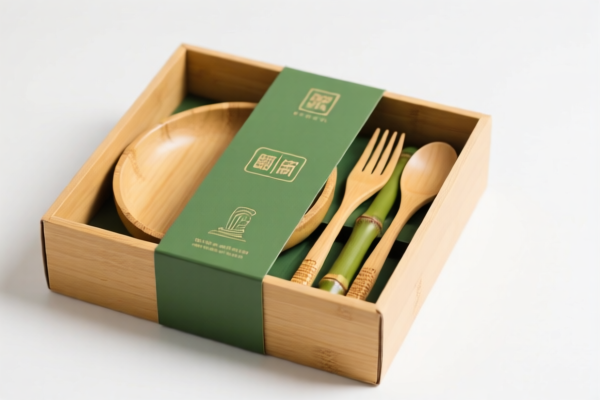
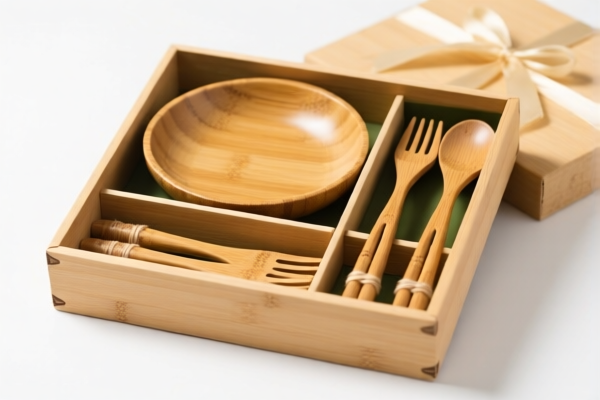
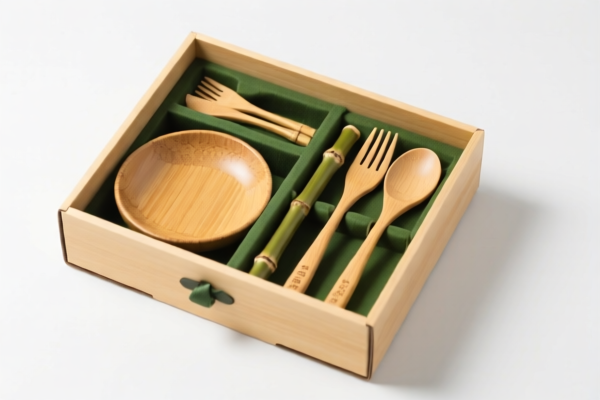
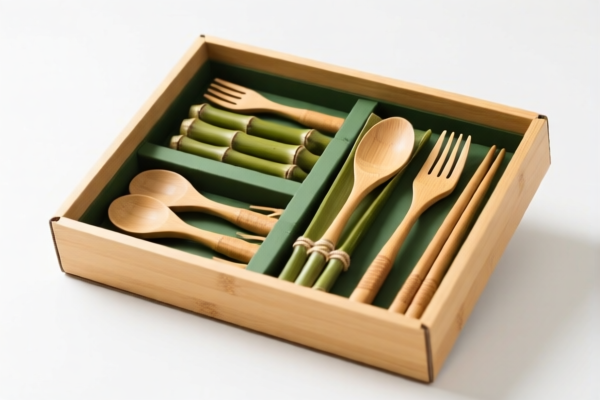
AI Analysis
🍽️ Tableware Box (Crockery/Tabletop Storage)
🌐 HS Code Reference & Customs Clearance Guide | 2026 Latest Tariff Analysis | Professional Entry Strategy
📌 I. Product Definition & Classification: What Exactly Is a "Tableware Box"?
A Tableware Box is a general term for a container designed to store, protect, and organize tableware (plates, bowls, cutlery, etc.). In international trade, the Harmonized System (HS) classification does not have a single dedicated code for "Tableware Box." Instead, classification is strictly determined by Material Composition and Specific Design.
⚠️ Key Classification Logic:
- Wooden? → Classified under Chapter 44 (Wood articles) or Chapter 96 (if specifically for jewelry/toiletries, but often 44 for general storage).
- Plastic? → Classified under Chapter 39 (Plastic articles).
- Textile/Vinyl/Covered? → Classified under Chapter 42 (Articles of leather/plastic sheeting/textile materials).
- Metal? → Not listed in the provided data, but typically Chapter 73 or 83.📌 Critical Distinction:
- If it is a rigid wooden box for storage → 4420.90.80.00
- If it is a textile-covered or plastic-lined case (like a jewelry box shape but for dishes) → 4202.92.93.15 or 4202.92.60.10
- If it is a pure plastic container (buckety/pail style) → 3926.90.10.00 or 3926.90.99.89
📦 II. HS Code Classification Details (2026 Latest Tariff Alignment)
Based on the provided data, here are the 5 possible classifications for a "Tableware Box," depending on its inferred material. The tax rates vary significantly based on this choice.
| HS Code | Product Description (Inferred) | Material Basis | Total Tax Rate | Primary Conflict/Note |
|---|---|---|---|---|
4420.90.80.00 |
Wooden Tableware/Jewelry Box & Similar | Wood | 38.2% | High due to 25% Section 301 Tariff. No material conflict. |
4202.92.93.15 |
Container with Textile Surface | Textile/Fabric | 52.6% | Highest Tax. Assumes outer surface is textile. Heavy Section 301 penalty. |
3926.90.10.00 |
Plastic Container (Buckets/Pails style) | Plastic | 20.9% | Lowest Tax. Assumes plastic material, bucket/pail shape. Lower Section 301 (7.5%). |
4202.92.60.10 |
Jewelry Box / Similar Container | Plastic/Textile (Mixed) | 41.3% | "Other" category. Assumes plastic or textile exterior. High Section 301 (25%). |
3926.90.99.89 |
Plastic Other Articles | Plastic | 22.8% | Low Tax. Assumes generic plastic container. Lower Section 301 (7.5%). |
🔍 Key Insight:
- Material is King: The same physical box can incur 20.9% tax (if plastic) or 52.6% tax (if textile-covered) depending on how it is described and constructed. - Section 301 Impact: The 25% additional tariff (Section 301) applies heavily to wood, textiles, and general plastic articles, driving rates up. - IEEPA 122 Clause: A 10% surcharge applies to almost all Chinese-origin goods in this category, significantly impacting the total cost.
💰 III. 2026 Latest Tariff Rate Breakdown (Detailed)
✅ Applicable Country: United States (US)
✅ Country of Origin: China (CN)
✅ Effective Time: Current rates apply (Section 301 & IEEPA active)
🎯 1. 3926.90.10.00 —— Plastic Container (Buckets/Pails) [MOST ECONOMICAL]
| Item | Detail |
|---|---|
| Base Tariff | 3.4% (ad valorem) |
| USITC Section 301 | +7.5% (Specific to this subheading for Chinese goods) |
| IEEPA 122 Clause | +10% (China/HK origin surcharge) |
| Total Effective Rate | 20.9% |
| Tax Calculation | CIF Value × 20.9% |
| De Minimis Exemption | ❌ Not Applicable (Section 301 applies) |
| Legal Basis | IEEPA:9903.01.25 → USITC:3926.90.10.00 |
📌 Explanation:
- This is the lowest tax bracket among the options. - It assumes the product is a plastic container resembling a bucket or pail. - The Section 301 rate is 7.5%, not 25%, making it highly cost-effective if the product can be classified here.
🎯 2. 3926.90.99.89 —— Plastic Other Articles [LOW TAX]
| Item | Detail |
|---|---|
| Base Tariff | 5.3% (ad valorem) |
| USITC Section 301 | +7.5% |
| IEEPA 122 Clause | +10% |
| Total Effective Rate | 22.8% |
| Tax Calculation | CIF Value × 22.8% |
| De Minimis Exemption | ❌ Not Applicable |
| Legal Basis | IEEPA:9903.01.25 → USITC:3926.90.99.89 |
📌 Explanation:
- Similar to above, but categorized as "Other plastic articles." - Slightly higher base rate (5.3% vs 3.4%) leads to a 22.8% total. - Still significantly cheaper than textile or wood options.
🎯 3. 4420.90.80.00 —— Wooden Box (Jewelry/Tableware) [MEDIUM-HIGH TAX]
| Item | Detail |
|---|---|
| Base Tariff | 3.2% (ad valorem) |
| USITC Section 301 | +25.0% |
| IEEPA 122 Clause | +10% |
| Total Effective Rate | 38.2% |
| Tax Calculation | CIF Value × 38.2% |
| De Minimis Exemption | ❌ Not Applicable |
| Legal Basis | IEEPA:9903.01.25 → USITC:4420.90.80.00 |
📌 Explanation:
- If the box is wooden, it falls here. - The 25% Section 301 tariff is the main cost driver. - Despite a low base rate (3.2%), the total is high due to trade policies.
🎯 4. 4202.92.60.10 —— Jewelry Box / Similar Container [HIGH TAX]
| Item | Detail |
|---|---|
| Base Tariff | 6.3% (ad valorem) |
| USITC Section 301 | +25.0% |
| IEEPA 122 Clause | +10% |
| Total Effective Rate | 41.3% |
| Tax Calculation | CIF Value × 41.3% |
| De Minimis Exemption | ❌ Not Applicable |
| Legal Basis | IEEPA:9903.01.25 → USITC:4202.92.60.10 |
📌 Explanation:
- Applies if the box is shaped like a jewelry/toiletry box but made of plastic or mixed materials. - High Section 301 (25%) makes this expensive.
🎯 5. 4202.92.93.15 —— Textile Surface Container [HIGHEST TAX]
| Item | Detail |
|---|---|
| Base Tariff | 17.6% (ad valorem) |
| USITC Section 301 | +25.0% |
| IEEPA 122 Clause | +10% |
| Total Effective Rate | 52.6% |
| Tax Calculation | CIF Value × 52.6% |
| De Minimis Exemption | ❌ Not Applicable |
| Legal Basis | IEEPA:9903.01.25 → USITC:4202.92.93.15 |
📌 Explanation:
- WARNING: This is the most expensive classification. - Applies if the outer surface is textile/fabric. - High base rate (17.6%) + 25% Section 301 + 10% IEEPA = 52.6%. - Avoid this classification unless the product is explicitly textile-covered.
🛠️ IV. Customs Clearance Practical Advice (Pitfall Avoidance Guide)
✅ 1. Preparation Checklist (Must-Haves)
| Document | Mandatory? | Notes |
|---|---|---|
| ✅ Product Photos | ✔️ | Show material clearly (Wood grain? Plastic texture? Fabric?). |
| ✅ Bill of Materials | ✔️ | Specify outer material vs. inner lining. |
| ✅ Commercial Invoice | ✔️ | Describe as "Plastic Tableware Organizer" or "Wooden Storage Box" EXACTLY matching the HS code. |
| ✅ Packing List | ✔️ | Ensure weights/dimensions match. |
| ✅ Structure Diagram | ✔️ | Helpful if customs questions the "container" aspect. |
✅ 2. Classification Strategy (Key Mantra)
🔥 “Material First, Shape Second, Avoid Textile, Choose Plastic!”
| Scenario | Recommended HS Code | Why? |
|---|---|---|
| Product is Plastic | 3926.90.10.00 |
Lowest tax (20.9%). Best for cost optimization. |
| Product is Wood | 4420.90.80.00 |
Standard for wood. Higher tax, but unavoidable if material is wood. |
| Product is Fabric/Cloth | AVOID 4202.92.93.15 |
Too expensive (52.6%). If possible, modify design to plastic/wood. |
| Mixed Materials | 4202.92.60.10 or 3926.90.99.89 |
Depends on dominant material. Plastic dominates → 3926.... Textile dominates → 4202.... |
✅ 3. Special Considerations
| Situation | Handling Advice |
|---|---|
| OEM Custom Boxes | Provide design specs. If the client wants a "wooden look" but it's plastic (laminated), declare as Plastic (3926...) with evidence of material composition. |
| Sets with Cutlery | If the box is sold with cutlery, the box may be classified as part of the cutlery set. However, if sold empty, classify the box itself. |
| "Tableware Box" Ambiguity | Do NOT use "Tableware Box" as the sole description. Use "Plastic Storage Container for Kitchen Utensils" or "Wooden Crockery Box" to align with HS codes. |
| IEEPA 122 Clause | Remember, the 10% surcharge is automatic for Chinese origin. It is not waived by the HS code. |
🌍 V. Global Market Comparison (2026)
| Region | Likely HS Code | Est. Tax (China Origin) | Notes |
|---|---|---|---|
| 🇺🇸 USA | 3926.90.10.00 |
20.9% | Low tax for plastic. High for wood/textile due to Section 301. |
| 🇺🇸 USA | 4420.90.80.00 |
38.2% | Wood classification penalty. |
| 🇺🇸 USA | 4202.92.93.15 |
52.6% | Avoid this code for cost reasons. |
| 🇪🇺 EU | Various | Varies | EU does not have Section 301. Taxes depend on base rate (often 0-6.5%). |
| 🇨🇳 China | Various | Varies | Import taxes apply. Domestic consumption tax may apply. |
📌 Conclusion:
- USA is the critical market where material choice impacts tax by 30+ percentage points. - Plastic (3926) is the most cost-effective classification for the US market. - Textile (4202) is the most expensive.
📌 VI. Common Mistakes & Pitfalls (Blood Lessons)
❌ Mistake 1: Declaring a Plastic Box as "Wooden" to match aesthetic photos.
👉 Consequence: Customs inspection reveals plastic → False Declaration Penalty + Retrospective Tax + Seizure Risk.
❌ Mistake 2: Declaring a Textile Box as "Plastic" to save tax.
👉 Consequence: Customs inspects and finds fabric → Downgrade to 4202.92.93.15 (52.6%) + Back Taxes.
❌ Mistake 3: Using "Tableware Box" as the Product Name without material specification.
👉 Consequence: Customs officer uses "Most Favored Nation" or default rates, often resulting in higher tariffs or delayed clearance.
❌ Mistake 4: Ignoring the IEEPA 122 Clause.
👉 Consequence: Assuming 20.9% is the final cost, but forgetting the 10% surcharge is already included in the "Total Tax" figures above. Clarify with your broker.
✅ Correct Approach:
"Plastic Kitchen Organizer, Resin, Black, Model XYZ, Made in China"
→ Aligns with3926.90.10.00→ 20.9% Tax.
🎯 VII. Conclusion: Professional Declaration, Cost Optimization!
🎯 Remember the Mantra:
🔹 “Plastic Box, 20% Tax; Wood Box, 38% Tax; Fabric Box, 52% Tax!”
🔹 “Declare Material, Not Just Shape; Save Thousands in Duties!”
📌 Pro Tip:
If your supply chain allows, switching from Wood/Textile to Plastic can save you 15-30% in total landed costs due to lower Section 301 rates.
Consider Advance Rulings (Pre-classification) with US CBP if the product design is unique.
📣 Immediate Action:
📞 Confirm material composition with your supplier.
📦 Declare as "Plastic Storage Container" if applicable.
🚀 Minimize Tariffs, Maximize Profit!
✨ Professional Customs Clearance Starts with Accurate Classification!
💼 Every Percent of Tax Saves Is Pure Profit!
Customer Reviews
About HS Code Classification
The Harmonized System (HS) is an internationally standardized nomenclature developed by the World Customs Organization (WCO) to classify traded products. Over 200 countries use the HS system as the basis for customs tariffs, trade statistics, and import/export regulations.
Each HS code follows a hierarchical structure:
- Chapter (2 digits) — Broad category of goods (e.g., Chapter 84: Machinery and Mechanical Appliances)
- Heading (4 digits) — More specific grouping within the chapter
- Subheading (6 digits) — Internationally standardized breakdown, used by all WCO member countries
- National subdivisions (8-10 digits) — Country-specific extensions for further classification, such as US HTSUS 10-digit codes
Correct HS code classification is essential for smooth customs clearance, accurate duty payment, and compliance with trade regulations. Misclassification can lead to customs delays, overpayment of duties, or penalties.
When importing from CN to US, the applicable tariff rates may include:
- Most-Favored-Nation (MFN) rate — The standard duty rate applied to WTO members
- General rate — Applied to countries without trade agreements
- Trade remedy duties — Additional tariffs such as Section 301 (anti-dumping), Section 232 (national security), or countervailing duties
The information provided on this page is for reference purposes only. For official classification, please consult with your local customs authority or a licensed customs broker.