tableware china
CN → US| HS Code | Tariff Rate | Origin | Destination | Doc |
|---|---|---|---|---|
| 6911101000 | 42.5% | CN | US | Official Doc |
| 6911108010 | 38.3% | CN | US | Official Doc |
| 6912004810 | 19.8% | CN | US | Official Doc |
| 6912004890 | 19.8% | CN | US | Official Doc |
| 3924102000 | 24.0% | CN | US | Official Doc |
| 3924104000 | 13.4% | CN | US | Official Doc |
Product Images
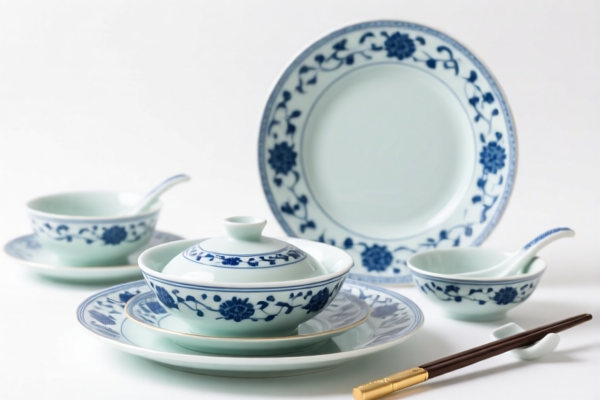
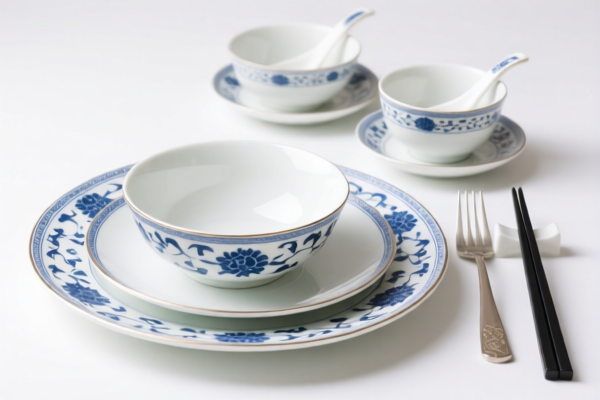
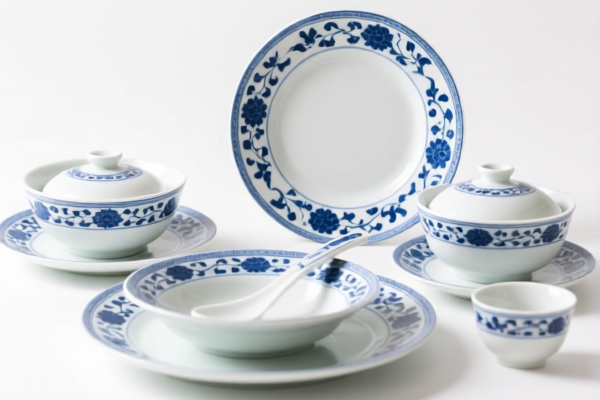
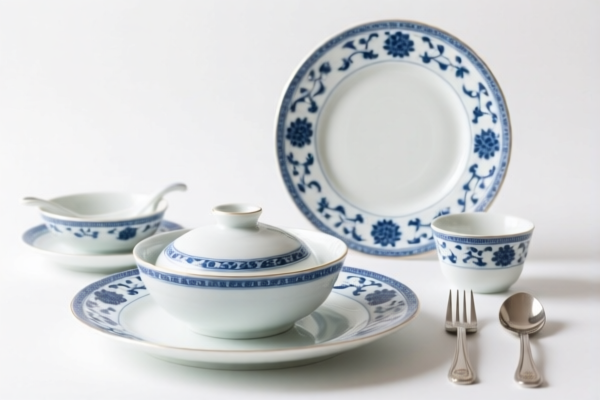
AI Analysis
🍽️ Tableware from China: The Ultimate HS Code & Tariff Guide 2024/2025
🌐 HS Code Reference & Customs Clearance Strategy | Plastic, Porcelain & Ceramic | Professional Classification Guide
📌 One Product, Multiple Categories: Why "Tableware" is NOT a Simple HS Code
In international trade, "Tableware" is a broad term covering everything from a disposable plastic spoon to a luxury fine china dinner set. Misclassification leads to massive tariff shocks and customs delays.
Below is the precise breakdown based on Material and Intended Use (Household vs. Hotel/Restaurant) as per the provided data.
⚠️ Critical Distinction:
- Plastic Tableware: Generally lower duties.
- Porcelain/China Tableware: VERY HIGH duties due to "Hotel/Restaurant" classifications.
- Other Ceramic (Stoneware/Pottery): Moderate duties.
📦 二、HS Code Classification Matrix (Based on Provided Data)
| HS Code | Product Description | Material | Intended Use | Base Duty | Additional Duty | Total Tax |
|---|---|---|---|---|---|---|
3924.10.20.00 |
Tableware: Plates, cups, saucers, bowls, etc. | Plastic | Household | 6.5% | 7.5% | 14.0% |
3924.10.40.00 |
Tableware & Kitchenware: Other | Plastic | Household (Others) | 3.4% | 0.0% | 3.4% |
6911.10.10.00 |
Tableware of Porcelain/China: Hotel/Restaurant Ware | Porcelain/China | Non-Household (Hotel/Restaurant) | 25.0% | 7.5% | 32.5% |
6911.10.80.10 |
Tableware of Porcelain/China: Other | Porcelain/China | Household (Food Contact) | 20.8% | 7.5% | 28.3% |
6912.00.48.10 |
Ceramic Tableware: Suitable for Food/Drink | Other Ceramic | Household (Food Contact) | 9.8% | 0.0% | 9.8% |
6912.00.48.90 |
Ceramic Tableware: Other | Other Ceramic | Household (Non-Food/Special) | 9.8% | 0.0% | 9.8% |
🔍 Key Insight:
- Porcelain/China items destined for Hotels/Restaurants face the highest barrier (32.5%).
- Plastic tableware is relatively low-cost in terms of duty (3.4% - 14.0%).
- "Other Ceramic" (e.g., stoneware, earthenware) is significantly cheaper to import than Porcelain/China if not for hotel use.
💰 三、Detailed Tariff Breakdown & Policy Analysis
🎯 1. Plastic Tableware (3924.10.20.00 & 3924.10.40.00)
| Item | Content |
|---|---|
| HS Code | 3924.10.20.00 (Standard Household) / 3924.10.40.00 (Other Plastic) |
| Base Tariff | 6.5% (for standard) / 3.4% (for other) |
| Additional Duty (Sect. 301) | 7.5% (applies to 3924.10.20.00) / 0.0% (for 3924.10.40.00) |
| Total Tax Rate | 14.0% (Standard) / 3.4% (Other) |
| Legal Basis | HTSUS 3924.10.20/40 + Section 301 Footnotes |
📌 Explanation:
- Plastic plates, cups, sugar bowls, creamers fall under3924.10.20.00. These incur a 7.5% additional duty, bringing the total to 14.0%.
- "Other" plastic items (not standard plates/cups) may qualify for3924.10.40.00, which has NO additional duty (Total 3.4%).
- 💡 Strategy: If your plastic item is not a standard plate/cup/bowl, classify under "Other" to save 10.6% in tariffs.
🎯 2. Porcelain & China Tableware (6911.10.10.00 & 6911.10.80.10)
| Item | Content |
|---|---|
| HS Code | 6911.10.10.00 (Hotel/Restaurant) / 6911.10.80.10 (Household/Other) |
| Base Tariff | 25.0% (Hotel) / 20.8% (Household) |
| Additional Duty (Sect. 301) | 7.5% (applies to both) |
| Total Tax Rate | 32.5% (Hotel) / 28.3% (Household) |
| Legal Basis | HTSUS 6911.10 + Section 301 Footnotes |
📌 Explanation:
- Porcelain/China is heavily taxed.
- If the ware is intended for Hotels, Restaurants, or Institutions (not household), it is classified as6911.10.10.00with a base rate of 25.0% + 7.5% additional = 32.5%.
- Even if intended for Household use (6911.10.80.10), the base rate is 20.8% + 7.5% additional = 28.3%.
- 💡 Strategy: This is the most expensive category. Ensure accurate declaration of "Household Use" to avoid the 32.5% rate, but note that the 7.5% additional duty is unavoidable for China-origin porcelain.
🎯 3. Other Ceramic Tableware (6912.00.48.10 & 6912.00.48.90)
| Item | Content |
|---|---|
| HS Code | 6912.00.48.10 (Food Contact) / 6912.00.48.90 (Other) |
| Base Tariff | 9.8% (Both categories) |
| Additional Duty (Sect. 301) | 0.0% (None) |
| Total Tax Rate | 9.8% |
| Legal Basis | HTSUS 6912.00 |
📌 Explanation:
- "Other Ceramic" includes stoneware, earthenware, and pottery (non-porcelain/non-china).
- These items benefit from ZERO additional duties (Section 301 does not apply).
- Total tax is a flat 9.8% regardless of food-contact status.
- 💡 Strategy: If your product can be classified as "Other Ceramic" rather than "Porcelain/China," you save ~18-23% in total duties compared to porcelain.
🛠️ 四、Customs Clearance Best Practices (Avoiding Penalties)
✅ 1. Critical Documentation Checklist
| Document | Requirement | Reason |
|---|---|---|
| Commercial Invoice | Must specify Material (Plastic, Porcelain, Ceramic) and Use (Household vs. Commercial) | Determines HS Code and Base Duty |
| Product Photos | Clear images showing logo, markings, and item type | Distinguishes "Hotel Ware" from "Household Ware" |
| Ingredients/Material Spec | For plastics: Type (PP, PE, etc.); For ceramics: Composition | Verifies 3924 vs 6911 vs 6912 |
| FCC/FDA Certification | For food-contact items (especially plastics and ceramics) | Required for safety compliance in many markets |
| Certificate of Origin | Proof of China Origin | Triggers Section 301 Additional Duties |
✅ 2. Common Misclassification Pitfalls
❌ Pitfall 1: Classifying Stoneware as Porcelain
👉 Consequence: You pay 32.5% instead of 9.8%.
✅ Fix: Ensure the material is truly "Porcelain/China" (high-fired, translucent, white) to use 6911. If it’s opaque or earthenware, use 6912.
❌ Pitfall 2: Declaring Restaurant Ware as Household Ware
👉 Consequence: Customs may flag it as "Hotel/Restaurant Ware" (6911.10.10.00) if the quantity or style suggests commercial use. Even if misclassified, the 7.5% additional duty still applies.
✅ Fix: Provide end-use statements if explicitly for household resale.
❌ Pitfall 3: Splitting Plastic Tableware into "Other" incorrectly
👉 Consequence: If you declare a standard plastic plate as "Other Plastic" (3924.10.40.00) to save tax, customs will reclassify it as 3924.10.20.00 and charge 14% instead of 3.4%, plus penalties.
✅ Fix: Only use "Other" for non-standard items (e.g., plastic utensils, trays not classified as plates/cups).
🌍 五、Global Market Comparison (2026 Outlook)
| Market | Primary HS Code for Tableware | Approx. Total Duty (China Origin) | Notes |
|---|---|---|---|
| 🇺🇸 USA | Varies by material (see above) | 3.4% - 32.5% | High additional duties on plastics & ceramics. |
| 🇨🇳 China (Import) | Similar structure | 0% - 10% | Generally lower base rates; no Section 301. |
| 🇪🇺 EU | Varies by material | 0% - 6.5% | No additional retaliatory tariffs. |
| 🇬🇧 UK | Varies by material | 0% - 6.5% | Post-Brexit tariffs generally lower than US. |
📌 Conclusion:
- The US market is the most challenging due to Section 301 additional duties.
- Plastic tableware is the most tax-efficient category (3.4% - 14.0%).
- Porcelain/China is the most expensive (28.3% - 32.5%).
- "Other Ceramic" offers a sweet spot (9.8%) with no additional taxes.
📌 六、Final Recommendations for Exporters
- Material Declaration is Key: Clearly state if the item is Plastic, Porcelain/China, or Other Ceramic. This is the single biggest driver of duty difference.
- Avoid "Hotel/Restaurant" Label for Household Goods: If selling to retailers for home use, ensure packaging and marketing clearly indicate Household Use to justify
6911.10.80.10(28.3%) over6911.10.10.00(32.5%). - Consider "Other Ceramic" Alternatives: If possible, design products using stoneware or earthenware to qualify for
6912.00.48.10(9.8% total), saving nearly 20% compared to porcelain. - Plastic "Other" Strategy: For non-standard plastic items (e.g., cutting boards, specialized trays), classify under
3924.10.40.00to benefit from the 3.4% rate.
🎯 Remember:
🔹 "Plastic is cheap, Porcelain is expensive, Ceramic is the middle ground."
🔹 "Check the 7.5% Additional Duty – it applies to almost all China-origin tableware except 'Other' plastics and 'Other' ceramics."
✨ Professional Clearance Starts with Accurate Classification!
💼 Your profit margin depends on getting the HS Code right!
Customer Reviews
About HS Code Classification
The Harmonized System (HS) is an internationally standardized nomenclature developed by the World Customs Organization (WCO) to classify traded products. Over 200 countries use the HS system as the basis for customs tariffs, trade statistics, and import/export regulations.
Each HS code follows a hierarchical structure:
- Chapter (2 digits) — Broad category of goods (e.g., Chapter 84: Machinery and Mechanical Appliances)
- Heading (4 digits) — More specific grouping within the chapter
- Subheading (6 digits) — Internationally standardized breakdown, used by all WCO member countries
- National subdivisions (8-10 digits) — Country-specific extensions for further classification, such as US HTSUS 10-digit codes
Correct HS code classification is essential for smooth customs clearance, accurate duty payment, and compliance with trade regulations. Misclassification can lead to customs delays, overpayment of duties, or penalties.
When importing from CN to US, the applicable tariff rates may include:
- Most-Favored-Nation (MFN) rate — The standard duty rate applied to WTO members
- General rate — Applied to countries without trade agreements
- Trade remedy duties — Additional tariffs such as Section 301 (anti-dumping), Section 232 (national security), or countervailing duties
The information provided on this page is for reference purposes only. For official classification, please consult with your local customs authority or a licensed customs broker.