tallow granules
CN → US| HS Code | Tariff Rate | Origin | Destination | Doc |
|---|---|---|---|---|
| 1502100020 | 0.0% | CN | US | Official Doc |
| 1502100040 | 0.0% | CN | US | Official Doc |
Product Images
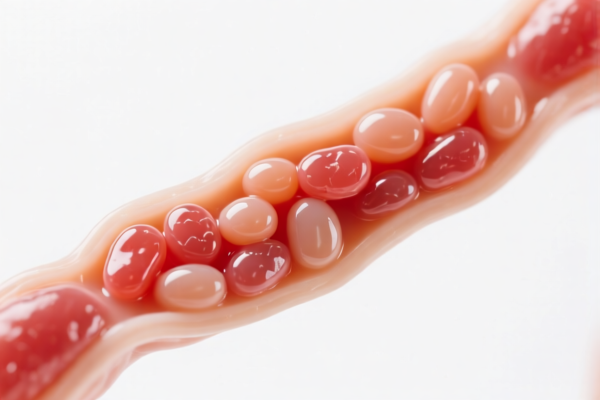
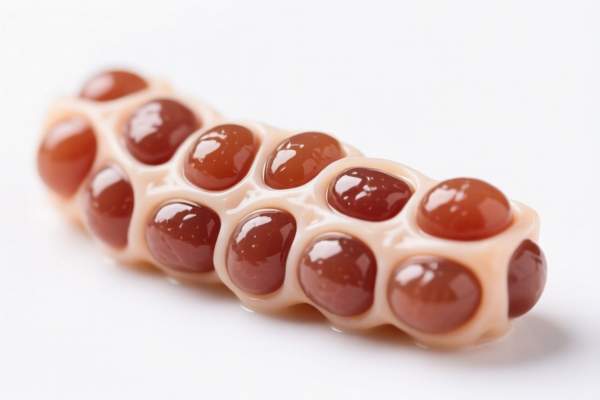
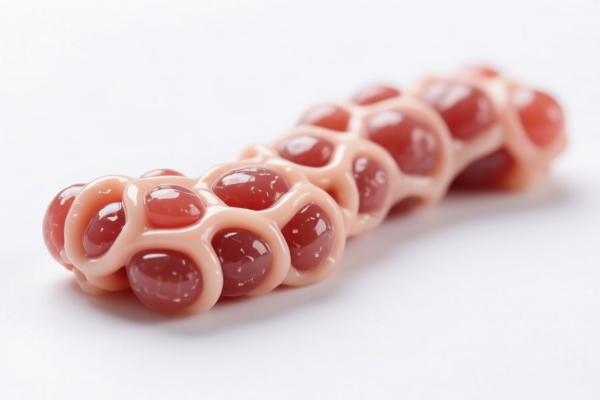
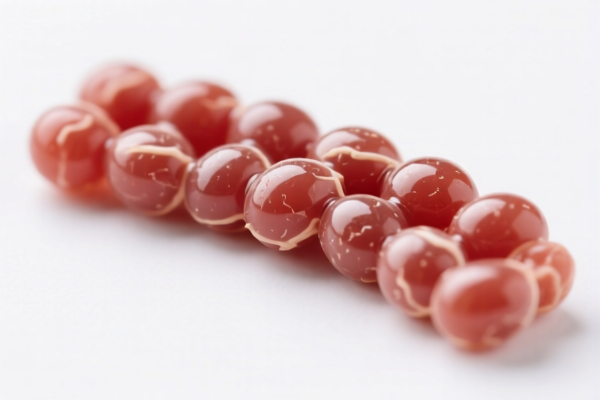
AI Analysis
🐄 Tallow Granules (Bovine/Sheep/Goat Fat)
🌐 HS Code Reference & Customs Clearance Guide | 2024/2025 Latest Tariff Analysis | Professional Entry Strategy
📌 Part I: Product Definition & Classification: What Exactly is "Tallow Granules"?
Tallow granules are a processed form of animal fat, typically rendered from the tissues of bovine (cattle), sheep, or goats. In international trade, they are strictly differentiated by purpose:
1. Edible Tallow (Food Grade)
Fat purified for human consumption, baking, or food processing. It requires strict hygiene and food safety certifications.
2. Inedible Tallow (Industrial Grade)
Fat used for soap manufacturing, cosmetics, lubricants, or animal feed. It does not meet food-grade standards and may contain higher impurities.
⚠️ Key Distinction Point:
- If the product is intended for human consumption → Classified as Edible Tallow
- If the product is intended for industrial/commercial use only → Classified as Inedible Tallow
- Note: "Granules" refer to the physical form (pellets/chips), which facilitates melting and transport, but does not change the HS code classification from Heading 1502.
📦 Part II: HS Code Classification Details (Authoritative 2024/2025 Tariff Mapping)
Based on the provided data, Tallow falls under Heading 1502 (Fats of bovine animals, sheep or goats). The classification splits based on edibility.
| HS Code | Product Description | Use Case | Edibility |
|---|---|---|---|
1502.10.00.20 |
Fats of bovine animals, sheep or goats: Tallow Edible | Food industry, margarine production, human consumption | ✅ Edible |
1502.10.00.40 |
Fats of bovine animals, sheep or goats: Tallow Inedible | Soap, cosmetics, lubricants, technical uses | ❌ Inedible |
🔍 Critical Reminder:
- Physical form (Granules) does NOT dictate the HS code; Intended Use does.
- If you import1502.10.00.20(Edible) but the product is found to be contaminated or non-food grade, you will face penalties for misclassification.
- Conversely, declaring Inedible Tallow when it is actually food-grade may lead to rejection by food safety authorities.
💰 Part III: 2024/2025 Latest Tariff Rate Breakdown (Detailed Tax Analysis)
✅ Applicable Country: United States (US)
✅ Origin: China (CN) (Assumed based on typical trade context; verify if origin differs)
✅ Status: Active
🎯 1. 1502.10.00.20 —— Tallow Edible
| Item | Detail |
|---|---|
| Base Tariff | 0.43¢/kg (Specific Duty) |
| Section 301 / Additional Tariff | 7.5% (Ad Valorem) |
| Total Tax Structure | Specific Duty + Ad Valorem Rate |
| Calculation Method | (Weight in kg × $0.0043) + (CIF Value × 7.5%) |
| De Minimis Exemption | ❌ Not Applicable (Food products are generally excluded from de minimis thresholds for tariff calculations) |
| Legal Basis Path | HTSUS: 1502.10.00.20 → USITC Footnotes → Section 301 Tariff List |
📌 Explanation:
- The 0.43¢/kg is a small fixed fee per kilogram, regardless of value.
- The 7.5% is applied to the total customs value (CIF).
- Example: For 1,000 kg of tallow with a CIF value of $5,000:
- Specific Duty: 1,000 × $0.0043 = $4.30
- Ad Valorem Tax: $5,000 × 7.5% = $375.00
- Total Tax: $379.30
🎯 2. 1502.10.00.40 —— Tallow Inedible
| Item | Detail |
|---|---|
| Base Tariff | 0.0% |
| Section 301 / Additional Tariff | 0.0% |
| Total Tax Structure | Free (0%) |
| Calculation Method | No duty payable |
| De Minimis Exemption | ❌ Not Applicable (Though tax is 0%, proper documentation is still required) |
| Legal Basis Path | HTSUS: 1502.10.00.40 |
📌 Note:
- Industrial-grade tallow is often duty-free to support manufacturing sectors.
- However, ensure the product is clearly marked "NOT FOR HUMAN CONSUMPTION" to avoid FDA rejection or customs scrutiny.
🛠️ Part IV: Customs Clearance Practical Advice (Pro Tips)
✅ 1. Required Documentation Checklist (Non-Negotiable)
| Document | Mandatory? | Notes |
|---|---|---|
| ✅ Product Specification Sheet | ✔️ | Must specify melting point, free fatty acid content, origin of animal. |
| ✅ Certificate of Origin (CO) | ✔️ | To prove origin and apply correct tariff (especially for Section 301). |
| ✅ FDA Prior Notice | ✔️ | Critical for Edible Tallow (1502.10.00.20). Must file before arrival. |
| ✅ Non-Food Declaration | ✔️ | Critical for Inedible Tallow (1502.10.00.40). Label must state "Industrial Use Only". |
| ✅ Commercial Invoice | ✔️ | Clearly state "Tallow Granules" and specify Edible/Inedible. |
| ✅ Packing List | ✔️ | Net/Gross weight must be accurate for specific duty calculation. |
✅ 2. Declaration Tips (Key Mantra)
🔥 "Granules don't matter, Edibility does! Mark clearly, avoid FDA blows!"
| Scenario | Correct Declaration | Wrong Practice |
|---|---|---|
| Edible Tallow | 1502.10.00.20 |
Declare as Inedible to avoid tax → Fraud Risk |
| Inedible Tallow | 1502.10.00.40 |
Declare as Edible to avoid labeling → FDA Rejection |
| Mixed Batch | Separate Shipments | Mixing edible and inedible in one container → Confusion & Delays |
| Labeling | "For Industrial Use Only" (for Inedible) | No label or vague "Tallow" → Inspection Delay |
✅ 3. Special Handling
| Situation | Advice |
|---|---|
| OEM/Private Label | Ensure labels match the declared HS code (Edible vs. Inedible). |
| Temperature Control | Tallow melts at ~40-50°C. Ensure shipping containers have adequate ventilation or temperature monitoring if needed to prevent clumping/melt damage. |
| FDA Inspection | Edible tallow may be subject to random FDA sampling for contaminants (dioxins, heavy metals). |
| Animal By-Product Regulations | Ensure compliance withAPHIS/USDA regulations regarding animal fats to prevent disease concerns. |
🌍 Part V: Global Market Comparison (2024/2025)
| Country/Region | Recommended HS Code | Tariff | Certification | Notes |
|---|---|---|---|---|
| 🇺🇸 USA | 1502.10.00.20 / .40 |
7.5% + $0.0043/kg (Edible) 0% (Inedible) |
FDA + CO | High scrutiny on Edible tallow origin. |
| 🇪🇺 EU | 1502.10.00 |
Variable (Check local) | EFSA + REACH | Strict on animal by-products. |
| 🇨🇳 China | 1502.10.00 |
~5-10% | CIQ | Import quotas may apply. |
| 🇬🇧 UK | 1502.10.00 |
~5-10% | FSA | Post-Brexit rules apply. |
📌 Conclusion:
- The US is significantly more expensive for Edible Tallow due to the 7.5% Section 301 tariff.
- Inedible Tallow is tariff-free in the US, making it a cost-effective industrial import.
- FDA compliance is the biggest hurdle for Edible Tallow, not just tariffs.
📌 Part VI: Common Errors & Pitfalls (Blood Lessons)
❌ Mistake 1: Declaring Edible Tallow as Inedible to save 7.5% tax.
👉 Consequence: FDA seizure, fines, and blacklisting. Do not do this.
❌ Mistake 2: Ignoring the "Granules" form.
👉 Consequence: No tax difference, but poor packaging can lead to melt damage. Ensure proper palletizing.
❌ Mistake 3: Missing FDA Prior Notice for Edible Tallow.
👉 Consequence: Cargo held at port for weeks, potential destruction. Always file Prior Notice.
❌ Mistake 4: Vague Description "Animal Fat".
👉 Consequence: Customs cannot classify correctly → Delay. Use "Tallow Granules, Edible/Inedible".
✅ Correct Practice:
"Tallow Granules, Rendered from Bovine, Edible Grade, MFGR: [Factory], FDA Prior Notice No: [Number], Batch No: [Number]"
🎯 Part VII: Conclusion: Precision Classification, Smooth Clearance!
🎯 Remember the Mantra:
🔹 "Granules are just shape, Edibility sets the tax!"
🔹 "Edible: 7.5% + 0.43¢/kg; Inedible: 0% but watch FDA!"
🔹 "Mark it clearly, declare it honestly, save time and money!"
📌 Pro Tip:
If your tallow is intended for specialty food applications (e.g., halal/kosher), provide Halal/Kosher Certificates to speed up FDA clearance.
For industrial buyers, ensure the "Not For Human Consumption" label is visible on both packaging and commercial invoice.
📣 Immediate Action:
📞 Contact your customs broker with Product Specs + Intended Use.
🚀 File FDA Prior Notice (if edible) or Prepare Industrial Declarations (if inedible).
💼 Let your tallow flow smoothly, legally, and profitably!
✨ Professional customs clearance starts with precise classification!
💼 Your every cent of tax, worth precise calculation!
Customer Reviews
About HS Code Classification
The Harmonized System (HS) is an internationally standardized nomenclature developed by the World Customs Organization (WCO) to classify traded products. Over 200 countries use the HS system as the basis for customs tariffs, trade statistics, and import/export regulations.
Each HS code follows a hierarchical structure:
- Chapter (2 digits) — Broad category of goods (e.g., Chapter 84: Machinery and Mechanical Appliances)
- Heading (4 digits) — More specific grouping within the chapter
- Subheading (6 digits) — Internationally standardized breakdown, used by all WCO member countries
- National subdivisions (8-10 digits) — Country-specific extensions for further classification, such as US HTSUS 10-digit codes
Correct HS code classification is essential for smooth customs clearance, accurate duty payment, and compliance with trade regulations. Misclassification can lead to customs delays, overpayment of duties, or penalties.
When importing from CN to US, the applicable tariff rates may include:
- Most-Favored-Nation (MFN) rate — The standard duty rate applied to WTO members
- General rate — Applied to countries without trade agreements
- Trade remedy duties — Additional tariffs such as Section 301 (anti-dumping), Section 232 (national security), or countervailing duties
The information provided on this page is for reference purposes only. For official classification, please consult with your local customs authority or a licensed customs broker.