tanned bovine upper leather
CN → US| HS Code | Tariff Rate | Origin | Destination | Doc |
|---|---|---|---|---|
| 4107111020 | 35.0% | CN | US | Official Doc |
| 4107191020 | 35.0% | CN | US | Official Doc |
Product Images
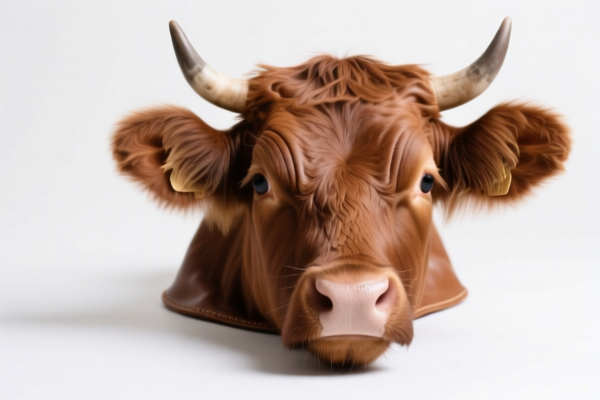
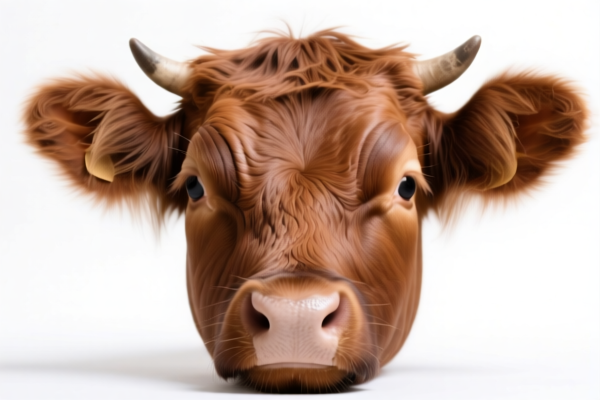
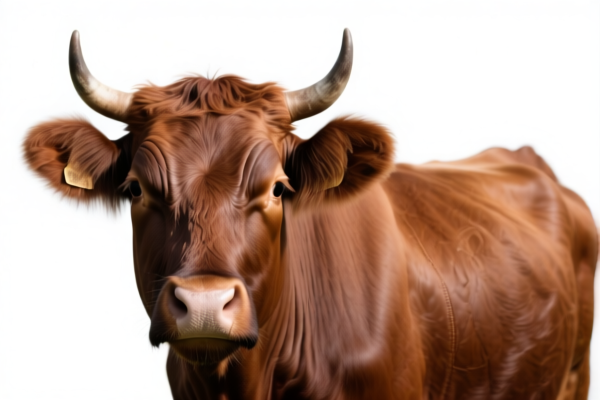
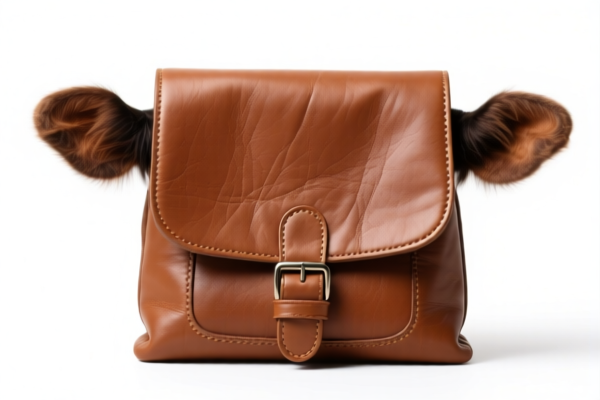
AI Analysis
🐄 Bovine Upper Leather (Tanned, Not Split)
🌐 HS Code Reference & Customs Clearance Guide | 2026 Latest Tariff Analysis | Professional Compliance Strategy
📌 I. Product Definition & Classification: Do You Know "Upper Leather"?
Bovine upper leather is a premium material derived from bovine hides (cattle/buffalo), specifically selected for high-end footwear and accessory manufacturing. In international trade, it is strictly defined by two critical factors:
1. Surface Area Limit: The unit surface area must not exceed 28 square feet (2.6 m²).
2. Finish & Use: It is "further prepared after tanning or crusting," meaning it is finished for visible parts (uppers) of shoes or bags, without hair on, and not split (i.e., the full grain layer is intact).
⚠️ Key Distinction Point:
- If the surface area exceeds 28 sq ft (2.6 m²) → It falls under "Whole Hides" (Heading 4104/4105), not Heading 4107.
- If it is split leather (lower layer) or chrome-tanned suede used for lining → It may fall under different subheadings (e.g., 4107.19.90 or 4114).
- If it is parchment-dressed or reassembled → It is still included under 4107 if it meets the bovine/full-grain criteria.
📦 II. HS Code Classification Details (2026 Latest Tariff Authority)
Based on the provided data, there are two specific HS Codes for Bovine Upper Leather, distinguished by whether they are classified under "Full grains, unsplit" or "Other."
| HS Code | Product Description | Key Characteristics | Application Scenario |
|---|---|---|---|
| 4107.11.10.20 | Full grains, unsplit: Of bovines, surface area ≤ 28 sq ft. Upper leather; lining leather | ✅ Full Grain: The natural surface is intact. ✅ Unsplit: Not divided into layers. ✅ Upper/Lining: Specifically for visible parts or linings of bovine origin. |
High-end leather shoes, luxury handbags, premium belts. |
| 4107.19.10.20 | Other: Of bovines, surface area ≤ 28 sq ft. Upper leather; lining leather | ✅ Other Finish: May include corrected grain, heavily finished, or non-full-grain but still classified as "upper leather." ✅ Unsplit: Still whole skin, not split into layers. ✅ Upper/Lining: For bovine origin. |
Corrected grain leather shoes, coated leather goods, where natural grain is not fully preserved but quality is still "upper" grade. |
🔍 Critical Note:
- Both codes require the leather to be without hair on and further prepared after tanning.
- Both codes exclude leather of heading 4114 (e.g., reconstituted leather, metalized leather, or patent leather).
- The distinction between11and19is primarily based on whether the leather retains its full natural grain (11) or is considered "other" (19) due to finishing processes that alter the surface significantly.
💰 III. 2026 Latest Tariff Rate Details (Including Additional Taxes)
✅ Applicable Country: United States (US)
✅ Origin: China (CN) (Implied by the "Additional Tax 25.0%" which is typical for Section 301 tariffs on Chinese goods)
✅ Effective Date: Current (Section 301 Tariffs remain in force)
🎯 1. HS Code 4107.11.10.20 —— Full Grain Bovine Upper Leather
| Item | Details |
|---|---|
| Basic Tariff | 0.0% (Ad Valorem) |
| Section 301 Additional Tariff | +25.0% |
| Total Tariff Rate | 25.0% |
| Tax Calculation | CIF Value × 25% |
| De Minimis Exemption | ❌ Not Applicable (De Minimis only applies to shipments under $800; Section 301 tariffs generally apply to formal entries regardless of value if formal entry is required, but for small packages, they may still be subject to inspection/tax if declared correctly. However, typically, high-value commercial leather goods are formal entries.) |
| Legal Basis Path | HTSUS 4107.11.10 → USITC Footnote 25 (Section 301) |
📌 Explanation:
- The 0% base rate reflects the US preferential or standard MFN rate for certain leathers.
- The 25% additional tariff is a direct result of Section 301 of the Trade Act of 1974, targeting Chinese imports.
- Total Cost Impact: For every $10,000 CIF value, you pay $2,500 in duties.
🎯 2. HS Code 4107.19.10.20 —— Other Bovine Upper Leather
| Item | Details |
|---|---|
| Basic Tariff | 0.0% (Ad Valorem) |
| Section 301 Additional Tariff | +25.0% |
| Total Tariff Rate | 25.0% |
| Tax Calculation | CIF Value × 25% |
| De Minimis Exemption | ❌ Not Applicable (Same as above) |
| Legal Basis Path | HTSUS 4107.19.10 → USITC Footnote 25 (Section 301) |
📌 Note:
- The tax rate is identical to4107.11.10.20.
- The classification difference (11vs19) does not affect the duty rate in this context, but it does affect customs compliance and potential scrutiny. Misclassification can lead to penalties.
🛠️ IV. Customs Clearance Practical Advice (Real-World Pitfall Guide)
✅ 1. Required Documentation Checklist (Non-Negotiable)
| Document | Must Provide | Explanation |
|---|---|---|
| ✅ Commercial Invoice | ✔️ | Must clearly state: "Bovine Leather, Tanned, Upper Grade, No Hair On, Not Split." |
| ✅ Packing List | ✔️ | Detail each roll/bale, including gross/net weight and surface area per hide/skin. |
| ✅ Leather Certificate / Mill Certificate | ✔️ | Proof of origin, tanning method (Chrome/Vegetable), and confirmation of "Upper Grade" and "Not Split". |
| ✅ Product Photos | ✔️ | Show the grain surface to prove it is "full grain" or "corrected" (to support 11 vs 19). |
| ✅ Bill of Lading/Air Waybill | ✔️ | Standard shipping documents. |
| ✅ ISF (10+2) Filing | ✔️ | Required for ocean freight. Must declare manufacturer and supplier accurately. |
⚠️ Critical Warning:
- If you declare Full Grain (4107.11) but the leather is Corrected Grain (heavily embossed/coated), customs may reclassify it to4107.19. While the tax is the same, it flags your compliance for future audits.
- If you declare Split Leather but it is Whole, you risk penalty for undervaluation of the product class.
✅ 2. Declaration Tips (Key Mnemonics)
🔥 "Surface Under 28, No Hair, No Split, Tax is 25%"
| Scenario | Correct Declaration | Wrong Practice | Consequence |
|---|---|---|---|
| Large Hides (>28 sq ft) | Do NOT use 4107. Use 4104/4105. | Using 4107 codes | Rejected Entry or Penalty for wrong classification. |
| Split Leather | Use Heading 4107 only if it's not split. If split, it may fall under 4107.19.90 (other) or 4115. | Mislabeling split as "upper leather" | Seizure or Fine for misrepresentation. |
| Hair-On Leather | Must be removed. If hair remains, it’s Heading 4101/4102 (raw) or 4104 (further processed but with hair). | Declaring "Upper Leather" with hair on | Rejection because "Upper Leather" implies hair removed for visible use. |
| Non-Bovine (e.g., Sheep, Pig) | Use correct heading for that animal (e.g., 4106 for sheep). | Declaring "Bovine" | Penalty for false origin/species declaration. |
✅ 3. Special Cases Handling
| Situation | Handling Advice |
|---|---|
| Mixed Bales (Bovine + Non-Bovine) | Must separate and declare separately. Mixed shipments will be rejected or assessed at the highest rate. |
| Parchment-Dressed Leather | Can be classified under 4107 if it meets bovine/full grain criteria. Provide certificate of parchment dressing. |
| Reassembled Leather | If hides are sewn together to meet size requirements, ensure they are declared as such and not as single large hides. |
| USMCA Origin | If the leather is not of Chinese origin (e.g., from Mexico or Canada), the 25% additional tariff does NOT apply. Ensure Certificate of Origin is provided. |
🌍 V. Global Market Comparison (2026 Latest)
| Country/Region | Recommended HS Code | Basic Tariff | Additional Tariff (CN Origin) | Total Tariff | Certification |
|---|---|---|---|---|---|
| 🇺🇸 USA | 4107.11.10.20 / 4107.19.10.20 |
0% | +25% (Section 301) | 25% | None (but strict compliance) |
| 🇨🇳 China | 4107.11 / 4107.19 | 5-10%* | 0% | 5-10% | None |
| 🇪🇺 EU | 4107.11 / 4107.19 | 6.5% | 0% | 6.5% | REACH Compliance |
| 🇯🇵 Japan | 4107.11 / 4107.19 | 5.3% | 0% | 5.3% | None |
| 🇬🇧 UK | 4107.11 / 4107.19 | 5.3% | 0% | 5.3% | None |
📌 Conclusion:
- The USA is significantly more expensive due to the 25% Section 301 tariff.
- EU, Japan, and UK have lower basic tariffs (5-6.5%) and no additional punitive tariffs on Chinese leather.
- Strategy: If possible, consider transshipment (with proper origin rules) or sourcing from non-China origins to avoid the 25% surcharge.
📌 VI. Common Errors & Pitfall Guide (Blood & Tears Lessons)
❌ Error 1: Declaring Large Hides (>28 sq ft) under 4107.
👉 Consequence: Customs will reclassify to 4104.40 or 4105, potentially leading to back taxes and fines for incorrect declaration.
❌ Error 2: Misclassifying Split Leather as "Upper Leather" (Full Grain).
👉 Consequence: While tax may be similar, it damages your compliance record. If caught repeatedly, you may face higher scrutiny rates and audits.
❌ Error 3: Ignoring the "Without Hair On" requirement.
👉 Consequence: If hair is present, the goods are not "upper leather" in the trade sense. They may be classified as 4101 (Raw) or 4104 (Further Processed), leading to different duty rates and documentation errors.
❌ Error 4: Not providing Mill Certificates for "Upper Grade" status.
👉 Consequence: Customs may doubt the value and apply highest possible tariff or reject the entry due to lack of proof of product nature.
✅ Correct Approach:
"Bovine Leather, Tanned, Full Grain, Surface Area 25 sq ft, No Hair, Upper Grade, Model XYZ, Mill Certificate Attached"
🎯 VII. Conclusion: Precision Saves Money!
🎯 Remember the Mantra:
🔹 "Under 28 SQ FT, No Hair, No Split, Tax is 25%."
🔹 "Full Grain is 11, Other is 19, Same Tax, Different Proof."
🔹 "If Over 28 SQ FT, You're in 4104, Not 4107!"
📌 Pro Tip:
If your leather is not of Chinese origin (e.g., from Italy, Brazil, or Mexico), the 25% additional tariff DOES NOT APPLY. Ensure your Certificate of Origin is flawless to save 25% on every shipment!
📣 Immediate Action Required:
📞 Contact Your Customs Broker: Confirm if your specific leather batch is "Full Grain" (
4107.11) or "Other" (4107.19).
📄 Prepare Mill Certificates: Prove surface area and "Upper Grade" status.
🚀 Avoid the 25% Hit: Consider non-China origins if volume is high.
✨ Professional Customs Clearance Starts with Accurate Classification!
💼 Every Dollar of Duty Counts – Don’t Leave Money on the Table!
Customer Reviews
About HS Code Classification
The Harmonized System (HS) is an internationally standardized nomenclature developed by the World Customs Organization (WCO) to classify traded products. Over 200 countries use the HS system as the basis for customs tariffs, trade statistics, and import/export regulations.
Each HS code follows a hierarchical structure:
- Chapter (2 digits) — Broad category of goods (e.g., Chapter 84: Machinery and Mechanical Appliances)
- Heading (4 digits) — More specific grouping within the chapter
- Subheading (6 digits) — Internationally standardized breakdown, used by all WCO member countries
- National subdivisions (8-10 digits) — Country-specific extensions for further classification, such as US HTSUS 10-digit codes
Correct HS code classification is essential for smooth customs clearance, accurate duty payment, and compliance with trade regulations. Misclassification can lead to customs delays, overpayment of duties, or penalties.
When importing from CN to US, the applicable tariff rates may include:
- Most-Favored-Nation (MFN) rate — The standard duty rate applied to WTO members
- General rate — Applied to countries without trade agreements
- Trade remedy duties — Additional tariffs such as Section 301 (anti-dumping), Section 232 (national security), or countervailing duties
The information provided on this page is for reference purposes only. For official classification, please consult with your local customs authority or a licensed customs broker.