tanned leather stationery
CN → US| HS Code | Tariff Rate | Origin | Destination | Doc |
|---|---|---|---|---|
| 4202316000 | 43.0% | CN | US | Official Doc |
| 4202110030 | 43.0% | CN | US | Official Doc |
Product Images
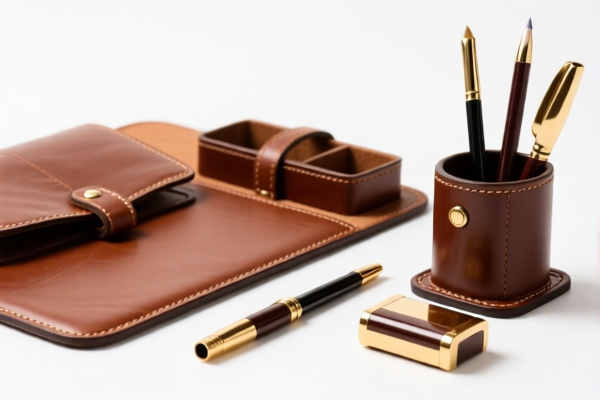
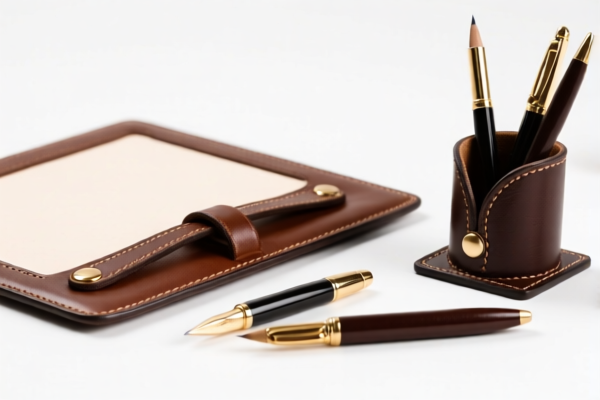
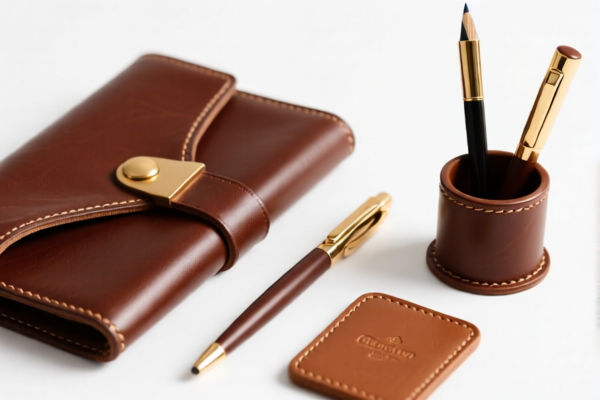
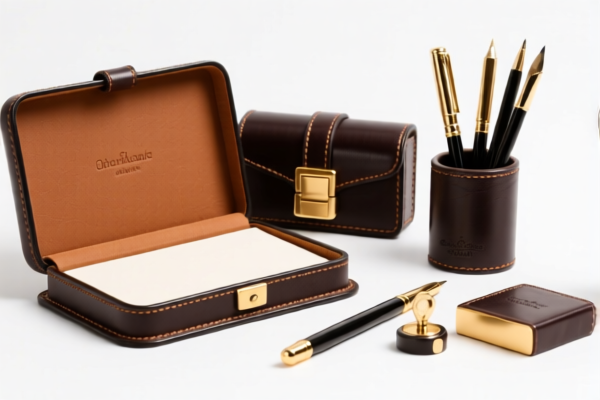
AI Analysis
👜 Tanned Leather Stationery (Leather Goods & Stationery Cases)
🌐 HS Code Reference & Customs Clearance Guide | 2026 Latest Tariff Analysis | Professional Entry Strategy
📌 I. Product Definition & Classification: Do You Really Know "Tanned Leather Stationery"?
"Tanned Leather Stationery" in international trade usually refers to leather-made containers for carrying personal items, specifically those designed to hold documents, writing instruments, or small essentials. It is NOT paper-based stationery (like notebooks or pens). Instead, it falls under the category of "Articles of a kind normally carried in the pocket or in the handbag" made of leather or composition leather.
Key distinctions include: - Leather Wallets/Purses: Small containers for money, cards, and keys. - Leather Document Holders/Map Cases: Containers for holding papers, maps, or files. - Tobacco Pouches/Cigarette Cases: Specific leather containers for smoking accessories. - Toiletry Bags/Travel Bags: If specifically designed for leather goods, these may also fall under broader leather container codes, but "stationery" usually implies smaller, pocket/handbag-sized items.
⚠️ Key Distinction:
- If the item is a wallet, purse, map case, cigarette case, or similar small leather container → It falls under 4202.31.60.00.
- If the item is a briefcase, attache case, or school satchel (larger, structured containers) → It falls under 4202.11.00.30.
- Material Matters: Must be of leather, composition leather, plastics sheeting, textile materials, vulcanized fiber, or paperboard, or wholly/mainly covered with such materials.
📦 II. HS Code Classification Details (2026 Latest Tariff Authority Comparison)
| HS Code | Product Description | Applicable Scenario | Material Requirement |
|---|---|---|---|
4202.31.60.00 |
Articles of a kind normally carried in the pocket or in the handbag: With outer surface of leather or composition leather: Other | Wallets, purses, map cases, cigarette cases, tobacco pouches, small leather document holders | Leather/Composition Leather |
4202.11.00.30 |
Trunks, suitcases, vanity cases, attache cases, briefcases, school satchels and similar containers: With outer surface of leather or composition leather: Attache cases, briefcases, school satchels, occupational luggage cases and similar containers | Briefcases, attache cases, school satchels, occupational luggage cases | Leather/Composition Leather |
🔍 Critical Reminder:
- "Stationery" in this context means containers for stationery items, not the stationery itself.
- If the item is a wallet, purse, or small pouch → Use4202.31.60.00.
- If the item is a briefcase or large document case → Use4202.11.00.30.
- Material Check: If the outer surface is not leather/composition leather (e.g., textile or plastic), different subheadings apply. The data provided specifies leather/composition leather.
💰 III. 2026 Latest Tariff Rate Details (Including Additional Taxes, Policy Add-ons)
✅ Applicable Country: USA (US)
✅ Country of Origin: China (CN)
✅ Effective Date: 2025年11月10日起 (from November 10, 2025, including subsequent imports)
🎯 1. 4202.31.60.00 —— Articles Carried in Pocket/Handbag (Leather)
| Item | Content |
|---|---|
| Base Duty Rate | 0% (ad valorem) |
| Section 301 Additional Duty | 0.0% (as per provided data) |
| IEEPA Additional Duty | 0.0% (as per provided data) |
| Total Tax Rate | 0.0% |
| Tax Calculation | CIF Value × 0.0% = $0 |
| De Minimis Eligibility | ✅ Yes (0% total tax means no high barrier) |
| Legal Basis Path | HTSUS:4202.31.60.00 → Section 301: No Additional |
📌 Explanation:
- The provided data explicitly states "基础关税: 0.0%, 加征关税: 0.0%" (Base Tariff: 0.0%, Additional Tariff: 0.0%).
- This means leather wallets, purses, and small leather containers classified under4202.31.60.00currently face NO additional tariffs from the US, even for Chinese-origin goods (as per this specific dataset).
- Note: This is highly favorable. Many other leather goods may face higher tariffs, but this specific subheading shows 0% in the provided data.
🎯 2. 4202.11.00.30 —— Attache Cases, Briefcases, School Satchels (Leather)
| Item | Content |
|---|---|
| Base Duty Rate | 0% (ad valorem) |
| Section 301 Additional Duty | 0.0% (as per provided data) |
| IEEPA Additional Duty | 0.0% (as per provided data) |
| Total Tax Rate | 0.0% |
| Tax Calculation | CIF Value × 0.0% = $0 |
| De Minimis Eligibility | ✅ Yes |
| Legal Basis Path | HTSUS:4202.11.00.30 → Section 301: No Additional |
📌 Explanation:
- Similarly, leather briefcases, attache cases, and school satchels under4202.11.00.30also show 0% total tax in the provided data.
- This suggests that high-quality leather work accessories are currently tariff-free or have minimal tax impact under this specific classification.
🛠️ IV. Customs Clearance Practical Advice (Real-World Pitfall Avoidance Guide)
✅ 1. Preparation Checklist (None Missing)
| Document | Must Provide | Description |
|---|---|---|
| ✅ Product Description | ✔️ | Clear name: "Leather Wallet," "Leather Attache Case," etc. Avoid vague terms like "Leather Good." |
| ✅ Material Declaration | ✔️ | Specify: "100% Tanned Leather," "Composition Leather," or "Leather-covered." |
| ✅ Product Photos | ✔️ | Show outer surface material, interior, and any hardware (zippers, clasps). |
| ✅ Commercial Invoice | ✔️ | Must match the HS Code exactly. Itemize by type (e.g., "10 Leather Wallets, Model A"). |
| ✅ Packing List | ✔️ | Detail dimensions and weight to prove it’s a "pocket/handbag" sized item vs. a "briefcase." |
| ✅ Origin Certificate | ✔️ | If applicable for any preferential treatments (though currently 0% anyway). |
✅ 2. Declaration Tips (Key Mnemonics)
🔥 "Small is Pocket, Large is Briefcase; Leather is Key, Material Matters!"
| Scenario | Correct HS Code | Wrong Practice |
|---|---|---|
| Wallet, Purse, Cardholder | 4202.31.60.00 |
Misdeclaring as "Briefcase" → Potential reclassification issues |
| Attache Case, Briefcase | 4202.11.00.30 |
Misdeclaring as "Wallet" → Undervaluation risk |
| Textile/Plastic Covered | NOT 4202.31/4202.11 |
Using these codes for non-leather items → Customs Penalty! |
| Mixed Materials | Depends on Main Covering | Assuming "leather lining" makes it leather → Incorrect if outer surface is not leather |
✅ 3. Special Case Handling
| Scenario | Handling Advice |
|---|---|
| OEM Leather Goods | Provide customer design specs to prove "normal carrying in pocket/handbag" use. |
| Leather-Plastic Mix | If outer surface is >50% leather, use leather codes. If not, use textile/plastic codes. |
| Sample Items | Clearly mark "Sample" but declare value accurately; duty still applies unless de minimis threshold met. |
| High-Value Leather | Ensure material is genuine tanned leather. If it’s "faux leather" (PVC/PU), it may fall under different codes with different duties. |
🌍 V. Global Main Market Clearance Comparison (2026 Latest)
| Country/Region | Recommended HS Code | Tariff (China Origin) | Certification Requirements | Notes |
|---|---|---|---|---|
| 🇺🇸 USA | 4202.31.60.00 / 4202.11.00.30 |
0.0% (as per data) | None specific for leather | Favorable under current data |
| 🇨🇳 China | 4202.31.60.00 / 4202.11.00.30 |
Varies (Export Duty) | CCC (if applicable) | Check import duties |
| 🇪🇺 EU | 4202.31.60 / 4202.11.00 |
0% - 4% (depending on exact type) | CE (if electronic parts) | Standard leather duties |
| 🇬🇧 UK | 4202.31.60 / 4202.11.00 |
0% - 4% | UKCA (if applicable) | Post-Brexit tariffs apply |
| 🇯🇵 Japan | 4202.31.60 / 4202.11.00 |
0% - 6% | PSE (if electronic) | Free Trade Agreement benefits may apply |
📌 Conclusion:
- USA offers 0% total tax for these specific leather goods under the provided data, making it a highly competitive market for tanned leather stationery.
- EU/UK/Japan have low but non-zero tariffs; check for FTA benefits.
- Key Risk: Misclassification as non-leather goods could lead to higher duties or rejection.
📌 VI. Common Errors & Pitfall Guide (Blood-Teaching Lessons)
❌ Error 1: Calling "Leather Notebook Cover" a "Stationery"
👉 Consequence: If it’s a case, it’s 4202.31.60.00. If it’s just a paper cover, it’s Chapter 49 (Paper). Misclassification leads to duty underpayment.
❌ Error 2: Using "Plastic" HS Code for Leather Goods
👉 Consequence: If outer surface is leather, using plastic codes → Customs Penalty + Back Taxes.
❌ Error 3: Ignoring "Outer Surface" Rule
👉 Consequence: If a bag has leather lining but plastic exterior, it does not qualify for 4202.31/4202.11 leather codes. It must be classified under textile/plastic codes.
❌ Error 4: Vague Description "Leather Goods"
👉 Consequence: Customs may seize goods for lack of clarity. Always specify: "Leather Wallet," "Leather Attache Case," etc.
✅ Correct Practice:
"100% Tanned Leather Wallet, Black, Model XYZ, Outer Surface: Leather, Interior: Fabric, For Carrying Money/Cards"
🎯 VII. Conclusion: Professional Declaration, Save Time & Money!
🎯 Remember the Mnemonic:
🔹 "Small = Wallet (
4202.31), Large = Briefcase (4202.11)"
🔹 "Leather Outer = 0% Tax (in this dataset), Plastic/Textile = Different Codes"
🔹 "Be Specific: No Vague 'Leather Goods'!"
📌 Pro Tip:
- Since the tax rate is 0%, compliance is even more critical. Any misclassification could lead to audit flags or penalties for incorrect reporting.
- Ensure material certificates are ready to prove the outer surface is indeed tanned leather.
- For high-volume shipments, consider Advance Rulings from US Customs to confirm HS Code classification.
📣 Immediate Action:
📞 Contact Professional Customs Broker + Provide Product Photos + Confirm Outer Material
🚀 Your Leather Stationery, 0% Tax, Smooth Clearance, Maximum Profit!
✨ Professional Clearance Starts with Accurate Classification!
💼 Every Dollar Saved is a Dollar Earned!
Customer Reviews
About HS Code Classification
The Harmonized System (HS) is an internationally standardized nomenclature developed by the World Customs Organization (WCO) to classify traded products. Over 200 countries use the HS system as the basis for customs tariffs, trade statistics, and import/export regulations.
Each HS code follows a hierarchical structure:
- Chapter (2 digits) — Broad category of goods (e.g., Chapter 84: Machinery and Mechanical Appliances)
- Heading (4 digits) — More specific grouping within the chapter
- Subheading (6 digits) — Internationally standardized breakdown, used by all WCO member countries
- National subdivisions (8-10 digits) — Country-specific extensions for further classification, such as US HTSUS 10-digit codes
Correct HS code classification is essential for smooth customs clearance, accurate duty payment, and compliance with trade regulations. Misclassification can lead to customs delays, overpayment of duties, or penalties.
When importing from CN to US, the applicable tariff rates may include:
- Most-Favored-Nation (MFN) rate — The standard duty rate applied to WTO members
- General rate — Applied to countries without trade agreements
- Trade remedy duties — Additional tariffs such as Section 301 (anti-dumping), Section 232 (national security), or countervailing duties
The information provided on this page is for reference purposes only. For official classification, please consult with your local customs authority or a licensed customs broker.