tea bag squeezer
CN → US| HS Code | Tariff Rate | Origin | Destination | Doc |
|---|---|---|---|---|
| 3924101000 | 13.4% | CN | US | Official Doc |
| 3924104000 | 13.4% | CN | US | Official Doc |
| 7323930080 | 62.0% | CN | US | Official Doc |
| 7323999080 | 88.4% | CN | US | Official Doc |
| 8215995000 | 15.3% | CN | US | Official Doc |
| 8215994060 | 15.0% | CN | US | Official Doc |
Product Images
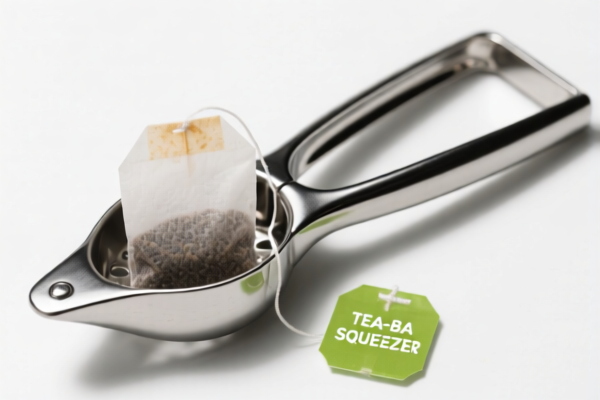
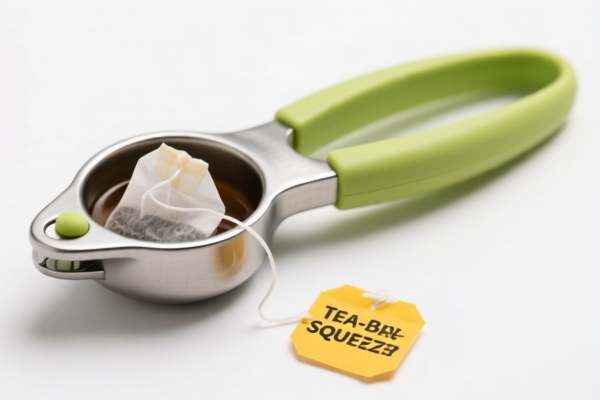
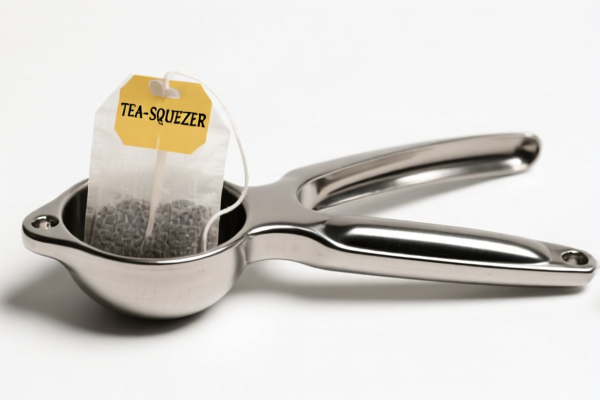
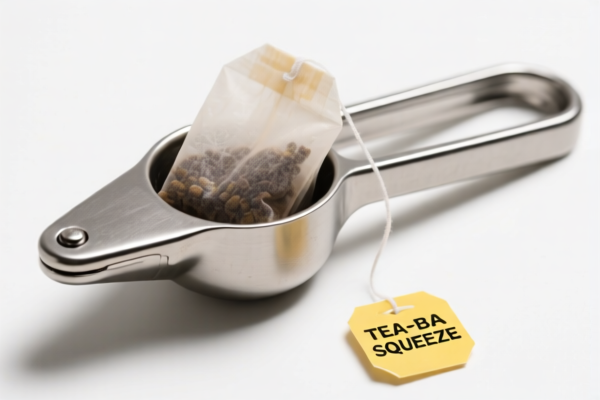
AI Analysis
🍵 Tea Bag Squeezer (Tea Bag Pressers & Stirrers)
🌐 HS Code Reference & Customs Clearance Guide | 2026 Latest Tariff Analysis | Professional Clearance Strategy
📌 I. Product Definition & Classification: Do You Really Understand the "Tea Bag Squeezer"?
A Tea Bag Squeezer (often called a tea bag presser, stirrer, or press) is a small kitchen or tableware accessory used to press tea bags for better extraction or stir beverages. In international trade, its classification depends strictly on the material and function. It falls under two main categories:
1. Plastic Household Articles: If made entirely of plastic, it is classified as "other household articles" or "tableware." 2. Base Metal Tableware: If made of stainless steel or other base metals (even if used for tea), it is classified under "Spoons, forks... and similar kitchen or tableware."
⚠️ Key Distinction Point: - If it is plastic → It is Household/Kitchenware (Chapter 39). - If it is Metal (Stainless Steel, Alloy, etc.) → It is Tableware (Chapter 82 or 73/83 depending on specific form, but typically 8215 for utensils). - Crucial Note: Do not classify metal tea stirrers/squeezeers as "Parts of Machinery" or "Tools." They are explicitly Tableware.
📦 II. HS Code Classification Details (2026 Latest Tariff Authority Comparison)
Based on the provided data, here are the specific HS Codes for Tea Bag Squeezeers, differentiated by material.
| HS Code | Product Description | Material Type | Typical Use Case |
|---|---|---|---|
3924.10.10.00 |
Tableware and kitchenware: Salt, pepper, mustard... and similar dispensers | Plastic | Plastic tea bag holders/stirrers often grouped here as "similar household articles" or kitchen accessories. |
3924.10.40.00 |
Tableware and kitchenware: Other | Plastic | General plastic tea bag squeezer not fitting specific "dispenser" description. |
8215.99.50.00 |
Spoons, forks... and similar kitchen or tableware: Other: Other: Other (including parts) | Base Metal (Non-Stainless or Complex) | Metal tea bag pressers/stirrers that don't fit standard "spoon/ladle" definitions. |
8215.99.40.60 |
...Spoons and ladles: With base metal (except stainless steel) or nonmetal handles | Base Metal | Metal tea bag squeezer with a non-metal handle (e.g., wood/plastic) or non-stainless metal body. |
7323.93.00.80 |
Table, kitchen... articles... of iron or steel: Other: Of stainless steel Other | Stainless Steel | Note: Only applicable if the item is a general household article, not a utensil. Rare for squeezer. |
7323.99.90.80 |
...Other: Other: Not coated...: Other Other | Iron/Steel | Note: High tariff. Generally NOT recommended for tea squeezer unless it's a non-utensil household item. |
🔍 Important Note: - Most standard metal tea bag squeezer/stirrer is best classified under 8215.99.50.00 as "Similar kitchen or tableware." - Most standard plastic tea bag squeezer is best classified under 3924.10.40.00 as "Other" tableware/kitchenware. - Avoid
7323codes unless the item is a large structural household item, as these attract massive additional tariffs (see below).
💰 III. 2026 Latest Tariff Rate Details (Including Surcharges & Policy Add-ons)
✅ Applicable Country: United States (US) ✅ Origin: China (CN) ✅ Effective Time: 2025/2026 (Current Trade Environment)
🎯 1. Plastic Tea Bag Squeezer (3924.10.10.00 / 3924.10.40.00)
| Item | Content |
|---|---|
| Base Tariff | 3.4% (Ad Valorem) |
| Additional Tariff (Section 301) | 0.0% |
| Total Tax Rate | 3.4% |
| Tax Calculation | CIF Value × 3.4% |
| De Minimis Exemption | ❌ Not Applicable for China (Section 301 applies if applicable, but here it's 0%) |
| Legal Basis | HTSUS Chapter 39, Section 301 Footnotes (Low/Zero for this subheading) |
📌 Explanation: - Plastic kitchen/tableware items generally have low or zero Section 301 additional tariffs. - The total landed tariff cost is very low at 3.4%. - This is the most cost-effective classification for plastic squeezeers.
🎯 2. Base Metal Tea Bag Squeezer (8215.99.50.00 / 8215.99.40.60)
| Item | Content |
|---|---|
| Base Tariff | 5.0% - 5.3% (Ad Valorem) |
| Additional Tariff (Section 301) | 0.0% |
| Total Tax Rate | 5.0% - 5.3% |
| Tax Calculation | CIF Value × (5.0% to 5.3%) |
| De Minimis Exemption | ❌ Not Applicable for China |
| Legal Basis | HTSUS Chapter 82, Section 301 Footnotes |
📌 Explanation: - Base metal utensils (spoons, forks, similar items) have slightly higher base tariffs than plastic. - However, they also benefit from 0% additional Section 301 tariffs. - Total cost remains low at ~5%.
⚠️ 3. STAINLESS STEEL & IRON/STEEL HOUSEHOLD ARTICLES (7323.93.00.80 / 7323.99.90.80)
🚨 CRITICAL WARNING: DO NOT CLASSIFY Tea Bag SqueezeERs HERE UNLESS THEY ARE NON-UTENSIL HOUSEHOLD ITEMS. These codes carry extremely high tariffs due to the "Steel, Aluminum, Copper Products" surcharge.
A. 7323.93.00.80 – Stainless Steel Household Articles
| Item | Content |
|---|---|
| Base Tariff | 2.0% |
| Additional Tariff (Section 301 + Special) | 50.0% ("Steel, Aluminum, Copper Products Surcharge") |
| Total Tax Rate | 52.0% |
| Legal Basis | Base 2.0% + 50% Surcharge |
B. 7323.99.90.80 – Other Iron/Steel Household Articles
| Item | Content |
|---|---|
| Base Tariff | 3.4% |
| Section 301 Surcharge | 25.0% |
| Special Surcharge (Steel/Al/Cu) | 50.0% |
| Total Tax Rate | 78.4% |
| Legal Basis | Base 3.4% + 25% (301) + 50% (Special) |
📌 Explanation: - These codes are for general stainless steel kitchen items (e.g., pots, pans, serving trays) NOT for small utensils like spoons/forks/squeezer-stirrers. - Misclassifying a small metal tea squeezer as a "household article" under Chapter 73 instead of a "utensil" under Chapter 82 can lead to a 78.4% tariff instead of 5.3%. - This is a major customs audit risk.
🛠️ IV. Customs Clearance Practical Advice (Battle-Tested Pitfall Avoidance)
✅ 1. Preparation Checklist (Non-Negotiable)
| Material | Required Docs | Description |
|---|---|---|
| Plastic | ✅ Product Photos | Show clear plastic construction, no metal parts. |
| ✅ Material Certificate | Confirm non-metal composition. | |
| ✅ Commercial Invoice | Declare as "Plastic Tea Bag Squeezer/Kitchen Accessory." | |
| Metal | ✅ Product Photos | Show metal construction. |
| ✅ Function Description | Specify "Utensil/Tableware" not "Household Article." | |
| ✅ Commercial Invoice | Declare as "Metal Tea Bag Stirrer/Presser (Tableware)." |
✅ 2. Declaration Tips (Key Mantras)
🔥 "Plastic to 39, Metal to 82. Never use 73 for small utensils!"
| Scenario | Correct Declaration | Wrong Declaration | Consequence |
|---|---|---|---|
| Plastic Squeezer | 3924.10.40.00 |
3924.90.90.00 (Generic) |
Slight rate difference, but 3924.10 is safer for tableware. |
| Metal Squeezer | 8215.99.50.00 |
7323.93.00.80 |
78.4% vs 5.3% Tax! Huge penalty risk. |
| Mixed Material (Metal Handle + Plastic Head) | 8215.99.40.60 |
3924.10.40.00 |
Misclassification as plastic → 50% surcharge if audited. |
✅ 3. Special Handling for "Tea Bag Squeezer"
| Situation | Handling Advice |
|---|---|
| OEM Custom Design | Provide photos showing the pressing/stirring function. If it looks like a spoon, it's 8215. If it looks like a clip, ensure material classification is clear. |
| Gift Sets | If sold as a set with a tea pot, ensure the squeezer is declared separately if possible. If included, the squeezer's tariff applies to its value. |
| Stainless Steel | Strongly recommend classifying under 8215.99.50.00 ("Similar Tableware") rather than 7323.93.00.80 ("Household Article"). The former is 5.3%, the latter is 52.0%. |
| Packaging | Do not ship in bulk without clear labeling. Customs may inspect and reclassify if the item is ambiguous. |
🌍 V. Global Market Customs Comparison (2026 Latest)
| Country/Region | Recommended HS Code | Tariff Rate | Certification Requirement | Remarks |
|---|---|---|---|---|
| 🇺🇸 USA | 3924.10.40.00 (Plastic)8215.99.50.00 (Metal) |
3.4% (Plastic) 5.3% (Metal) |
FDA (if food contact) | Avoid 7323 codes! |
| 🇨🇳 China | 3924.10.40.008215.99.50.00 |
Low/Zero | None | Import duties are minimal. |
| 🇪🇺 EU | 3924.10.90 (Plastic)8215.99.00 (Metal) |
0% - 2% | LFGB/Food Contact Safe | Strict food safety tests. |
| 🇦🇺 Australia | 3924.10.90.008215.99.90.00 |
5% - 10% | None | Standard GST applies. |
📌 Conclusion: - USA is the most critical market for tariff optimization. - Plastic: Safe at 3.4%. - Metal: Safe at 5.3% if classified as "Utensils" (8215). - Stainless Steel Household Items (7323) are traps with 52-78% tariffs.
📌 VI. Common Mistakes & Pitfall Guide (Blood & Tears Lessons)
❌ Mistake 1: Classifying a Stainless Steel Tea Squeezer as 7323.93.00.80 (Stainless Steel Household Article).
👉 Consequence: Tax jumps from 5.3% to 52.0%. Loss of profit margin!
❌ Mistake 2: Classifying a Plastic Tea Squeezer as 3924.90.90.00 (Generic Plastic).
👉 Consequence: May incur higher duty or require more documentation. Stick to 3924.10 for tableware.
❌ Mistake 3: Mixing Metal Handles with Plastic Heads and declaring only as Plastic. 👉 Consequence: Customs may assess as "Base Metal" (5.3%) or even "Steel Article" (50%+) depending on dominant material. Declare accurately.
❌ Mistake 4: Not providing Function Description. 👉 Consequence: Customs may classify as "Other Plastic Articles" (higher rate) or "Utensils" if metal, leading to disputes.
✅ Correct Declaration Example:
Plastic: "Plastic Tea Bag Squeezer, Kitchen Accessory, Model XYZ, FDA Compliant" →
3924.10.40.00Metal: "Stainless Steel Tea Bag Presser/Stirrer, Tableware, Model XYZ" →8215.99.50.00
🎯 VII. Conclusion: Professional Declaration, Save Cost, Ensure Smooth Clearance!
🎯 Remember the Mantra:
🔹 "Plastic to 39 (3.4%), Metal to 82 (5.3%). NEVER use 73 for squeezeers!" 🔹 "HS Code decides your cost. 70% difference between 5% and 78%." 🔹 "If it's a utensil, it's Chapter 82. If it's a pot/pans, it's Chapter 73. Don't mix them up!"
📌 Pro Tip: If your tea bag squeezer is made of high-quality stainless steel, ensure your supplier provides a material certificate confirming it is not a "coated or plated" item if claiming lower rates, but more importantly, classify it as Tableware (8215) to avoid the 50% steel surcharge.
📣 Immediate Action:
📞 Contact your customs broker with photos of the product. 🚀 Ask specifically: "Should I classify this as Tableware (8215) or Household Article (7323)?" 💼 Get an Advance Ruling (ISF/Pre-classification) to lock in the 5.3% rate instead of 52%!
✨ Professional Clearance Starts with Precise Classification! 💼 Every percentage point saved is pure profit!
Customer Reviews
About HS Code Classification
The Harmonized System (HS) is an internationally standardized nomenclature developed by the World Customs Organization (WCO) to classify traded products. Over 200 countries use the HS system as the basis for customs tariffs, trade statistics, and import/export regulations.
Each HS code follows a hierarchical structure:
- Chapter (2 digits) — Broad category of goods (e.g., Chapter 84: Machinery and Mechanical Appliances)
- Heading (4 digits) — More specific grouping within the chapter
- Subheading (6 digits) — Internationally standardized breakdown, used by all WCO member countries
- National subdivisions (8-10 digits) — Country-specific extensions for further classification, such as US HTSUS 10-digit codes
Correct HS code classification is essential for smooth customs clearance, accurate duty payment, and compliance with trade regulations. Misclassification can lead to customs delays, overpayment of duties, or penalties.
When importing from CN to US, the applicable tariff rates may include:
- Most-Favored-Nation (MFN) rate — The standard duty rate applied to WTO members
- General rate — Applied to countries without trade agreements
- Trade remedy duties — Additional tariffs such as Section 301 (anti-dumping), Section 232 (national security), or countervailing duties
The information provided on this page is for reference purposes only. For official classification, please consult with your local customs authority or a licensed customs broker.