telegraph machine kit
CN → US| HS Code | Tariff Rate | Origin | Destination | Doc |
|---|---|---|---|---|
| 9023000000 | 17.5% | CN | US | Official Doc |
Product Images
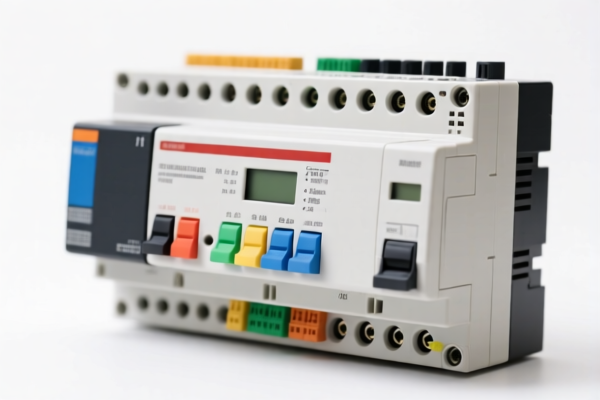
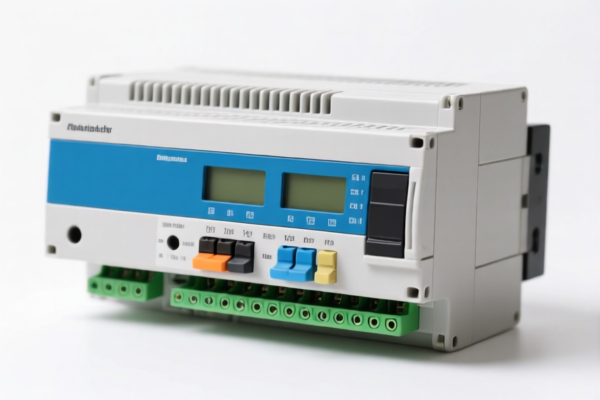
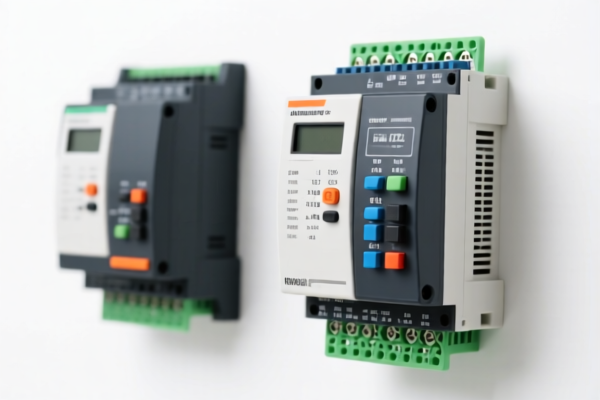
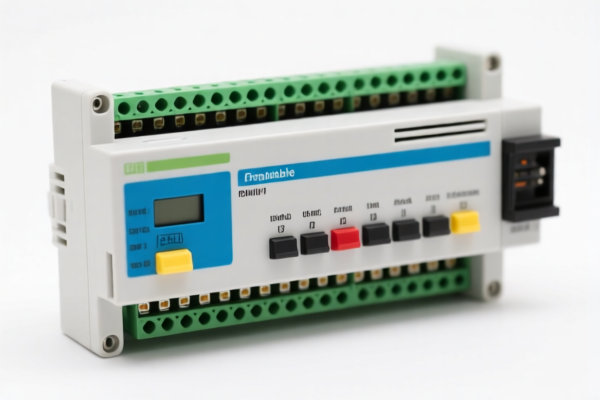
AI Analysis
📜 Telegraph Machine Kit (Demonstrational Educational Models)
🌐 HS Code Reference & Clearance Guide | 2026 Latest Tariff Analysis | Professional Clearance Strategy
📌 I. Product Definition and Classification: What is a "Telegraph Machine Kit"?
A Telegraph Machine Kit in the context of international trade is typically NOT a functional telecommunications device intended for actual signal transmission. Instead, it is an educational or demonstrational instrument designed for teaching history, electromagnetism, or basic circuitry.
Key Distinction: * Functional Telegraph: If the device is capable of actual telegraphic communication over distances, it might fall under telecommunications equipment (e.g., 8517). * Demonstrational Model: If the device is designed solely for demonstration purposes (e.g., in schools, museums, or exhibitions) and is unsuitable for other uses (cannot function as a real communication tool), it falls under Chapter 90.
⚠️ Critical Classification Point:
- If the kit includes a hand-crank generator, buzzers, keys, and wires intended only for classroom demonstration → HS Code 9023.00.00.00
- If the kit is a fully functional antique-style device capable of real-world use → Likely 8517.xxxx (High Risk for Misclassification)
📦 II. HS Code Classification Details (2026 Latest Tariff Authority)
| HS Code | Product Description | Applicable Scenario | Functional Capability |
|---|---|---|---|
9023.00.00.00 |
Instruments, apparatus and models, designed for demonstrational purposes (e.g., in education or exhibitions), unsuitable for other uses | School science kits, museum replicas, physics teaching aids | ❌ No (Cannot transmit real signals) |
8517.62.00.00 |
Other apparatus for the transmission or reception of voice, images or other data | Functional telegraph units, vintage communication equipment | ✅ Yes (Actual communication capability) |
8537.10.80.00 |
Boards, panels, consoles, desks, cabinets and other bases | If sold as separate components (rare for kits) | N/A |
🔍 Key Reminder:
- The phrase "unsuitable for other uses" is crucial. If your kit can be plugged into a real network or used for actual signaling, it is not 9023.00.00.00.
- Educational kits with simple circuits (battery, bulb, key) are almost always classified under 9023.00.00.00.
💰 III. 2026 Latest Tariff Rate Breakdown (Detailed Tax Clauses)
✅ Applicable Country: United States (US)
✅ Origin: China (CN)
✅ Effective Date: 2025–2026 Current Regulations
🎯 1. 9023.00.00.00 —— Demonstrational Instruments & Models
| Item | Content |
|---|---|
| Base Tariff (MFN) | 0.0% (Ad Valorem) |
| Section 301 Additional Tariff | +7.5% |
| Total Effective Tax Rate | 7.5% |
| Tax Calculation | CIF Value × 7.5% |
| De Minimis Exemption | ❌ Not Applicable for Section 301 goods from China |
| Legal Basis Path | USITC:9023.00.00.00 → USITC:9903.88.01 (Section 301 Footnote) |
📌 Explanation:
- Base Rate: Historically low for scientific/educational instruments (0%).
- Section 301 Tariff: The US imposes a 7.5% additional duty on certain Chinese imports under Section 301 of the Trade Act.
- Total Cost: You pay 7.5% on the declared value.
- No Other Surcharges: Unlike electronics (e.g., monitors), demonstrational models under 9023 do not attract the 10% IEEPA surcharge or higher 301 rates (25%+), making this a cost-effective classification if justified correctly.
🛠️ IV. Practical Customs Clearance Advice (Avoid Pitfalls)
✅ 1. Documentation Checklist (Mandatory)
| Document | Must Provide | Explanation |
|---|---|---|
| ✅ Product Brochure/Manual | ✔️ | Must explicitly state: "For educational/demonstrational purposes only. Not a functional telecommunications device." |
| ✅ Component List | ✔️ | List wires, keys, buzzers, batteries. Show they are simple components, not complex telecom modules. |
| ✅ Photos of the Kit | ✔️ | Show the packaging, labeling, and simple internal structure. |
| ✅ Commercial Invoice | ✔️ | Description: "Telegraph Machine Educational Kit for Demonstrational Purposes" |
| ✅ HS Code Pre-ruling (Optional) | ✔️ | Recommended for large shipments to avoid delays. |
✅ 2. Declaration Tips (Golden Rules)
🔥 "Demo Only, No Telecom Function! Label Clearly!"
| Scenario | Correct Declaration | Wrong Practice |
|---|---|---|
| Educational Kit | "Telegraph Machine Model, for Educational Demonstration Only, No Real Communication Capability" |
"Telegraph Machine" (Too vague → Risk of 8517 classification) |
| Antique Replica | "Replica Telegraph Instrument, Demonstrational Use, Unfit for Real Communication" |
"Antique Telegraph" (May require vintage goods scrutiny) |
| Functional Device | "Telegraph Transmitter, Functional" |
❌ Do NOT use 9023.00.00.00 for functional devices |
✅ 3. Special Cases & Handling
| Case | Handling Advice |
|---|---|
| Kit Includes Batteries | Declare batteries separately if lithium; otherwise, include in total weight/value. |
| Sold as "Science Experiment" | Emphasize "Science Experiment" or "Physics Teaching Aid" in the description to reinforce 9023 classification. |
| Customs Questioning | If asked, provide a technical diagram showing the circuit is simple and cannot interface with public telecom networks. |
🌍 V. Global Market Comparison (2026 Latest)
| Country/Region | Recommended HS Code | Tariff Rate | Certification | Notes |
|---|---|---|---|---|
| 🇺🇸 USA | 9023.00.00.00 |
7.5% | None | Low tax, but strict on "functional" vs "demo" |
| 🇨🇳 China | 9023.00.00.00 |
0% | None | Imports of educational tools are often tax-exempt |
| 🇪🇺 EU | 9023.00.00 |
0% | CE (if electrical) | No customs duty for demonstrational models |
| 🇬🇧 UK | 9023.00.00 |
0% | UKCA | Post-Brexit rules still favor educational tools |
📌 Conclusion:
- USA: 7.5% is manageable. Ensure documentation proves it's not a real telecom device.
- EU/UK: 0% duty makes this an excellent classification for educational exports.
📌 VI. Common Mistakes & Pitfalls (Lessons Learned)
❌ Mistake 1: Describing the product as "Telegraph Machine" without specifying "Educational/Demonstrational".
👉 Consequence: Customs may classify it under 8517 (Telecom Equipment) → Tariff 0%–10% (Base) + Potential Section 301 25% → Total 25%+.
👉 Fix: Always add "for Demonstrational Purposes Only".
❌ Mistake 2: Including complex RF modules or Wi-Fi/Bluetooth chips in the kit.
👉 Consequence: Customs will deem it a functional electronic device → Reject 9023 classification.
👉 Fix: Ensure the kit uses simple circuits (battery, bulb, buzzer).
❌ Mistake 3: Not providing a product description that explicitly denies real-world telecom functionality.
👉 Consequence: Customs request for additional info → Delayed clearance.
👉 Fix: Include a signed letter from the manufacturer stating the device is non-functional for actual communication.
🎯 VII. Conclusion: Professional Declaration, Cost Optimization!
🎯 Remember the Key Phrase:
🔹 "Demonstrational Only, Not for Real Communication, HS 9023, Tax 7.5%!"
🔹 "If it can send real signals, it's NOT 9023!"
📌 Pro Tip:
- If your kit is very simple (e.g., paper circuits, dry cells), you might even consider HS 9503 (Toys), but 9023 is safer for educational instruments.
- Always attach a data sheet to the invoice clarifying the non-functional nature of the device for telecom purposes.
📣 Immediate Action:
📞 Contact your customs broker with the product manual and photos.
🚀 Declare accurately: "Educational Telegraph Machine Model for Demonstrational Use Only."
💰 Save costs: Avoid misclassification into high-tariff telecom categories!
✨ Professional Clearance Starts with Accurate Classification!
💼 Your Every Cent Matters – Declaring Correctly Saves Money!
Customer Reviews
About HS Code Classification
The Harmonized System (HS) is an internationally standardized nomenclature developed by the World Customs Organization (WCO) to classify traded products. Over 200 countries use the HS system as the basis for customs tariffs, trade statistics, and import/export regulations.
Each HS code follows a hierarchical structure:
- Chapter (2 digits) — Broad category of goods (e.g., Chapter 84: Machinery and Mechanical Appliances)
- Heading (4 digits) — More specific grouping within the chapter
- Subheading (6 digits) — Internationally standardized breakdown, used by all WCO member countries
- National subdivisions (8-10 digits) — Country-specific extensions for further classification, such as US HTSUS 10-digit codes
Correct HS code classification is essential for smooth customs clearance, accurate duty payment, and compliance with trade regulations. Misclassification can lead to customs delays, overpayment of duties, or penalties.
When importing from CN to US, the applicable tariff rates may include:
- Most-Favored-Nation (MFN) rate — The standard duty rate applied to WTO members
- General rate — Applied to countries without trade agreements
- Trade remedy duties — Additional tariffs such as Section 301 (anti-dumping), Section 232 (national security), or countervailing duties
The information provided on this page is for reference purposes only. For official classification, please consult with your local customs authority or a licensed customs broker.