temperature and humidity module
CN → US| HS Code | Tariff Rate | Origin | Destination | Doc |
|---|---|---|---|---|
| 9025803500 | 18.9% | CN | US | Official Doc |
| 9025804000 | 18.5% | CN | US | Official Doc |
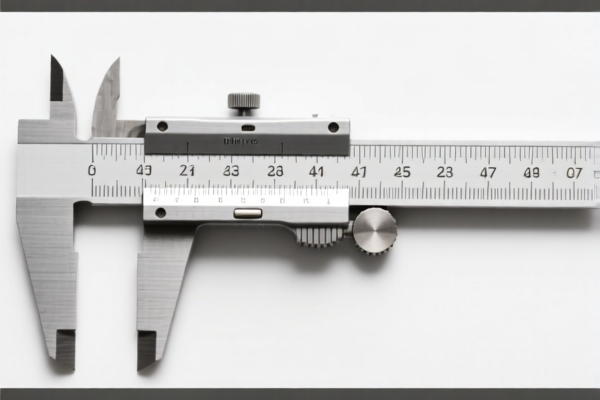
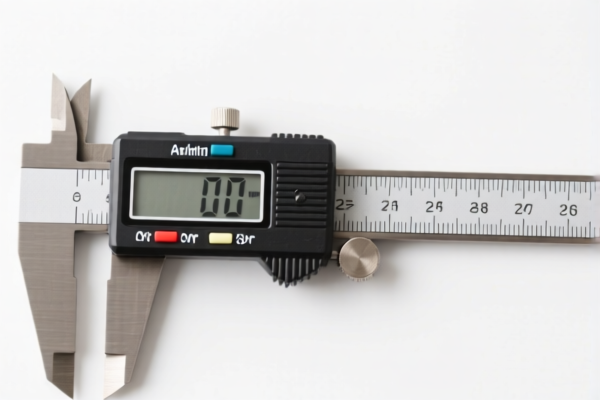
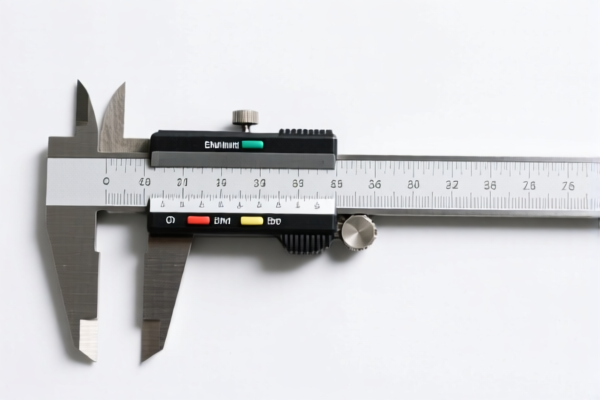
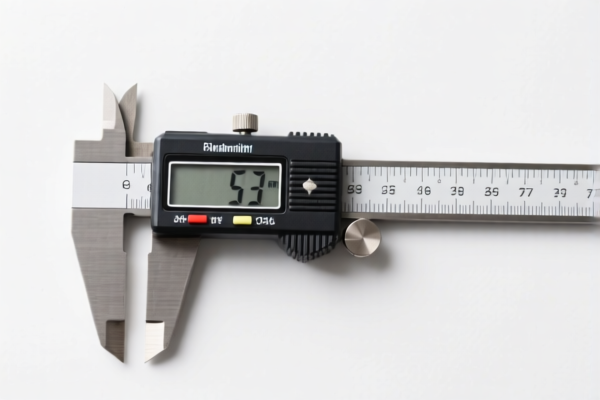
Product Images
AI Analysis
🌡️ Temperature and Humidity Module (Temp/Hum Sensor)
🌐 HS Code Reference & Customs Clearance Guide | 2026 Latest Tariff Analysis | Professional-Level Compliance Strategy
📌 I. Product Definition & Classification: What Exactly is a "Temperature and Humidity Module"?
A Temperature and Humidity Module is a sensing device used to measure environmental parameters. In international trade, it is NOT typically classified as a "monitor" or "recording instrument" unless it possesses specific data-logging, printing, or self-contained display capabilities.
Two Key Scenarios:
- Non-Recording Sensor Module: A simple electronic component or standalone sensor (e.g., DHT22, SHT31, industrial transmitter) that outputs electrical signals. It does not record data, print graphs, or display real-time history independently.
- Classification: Often falls under 9025.80.35.00 (Other instruments: Hygrometers and psychrometers, non-recording) or potentially 9025.19 if strictly temperature-only (though often grouped with humidity sensors in module form).
- Recording/Data-Logging Module: A device that actively stores temperature/humidity data over time, prints records, or is part of a system designed for continuous monitoring and record-keeping (e.g., a data logger with internal memory or a hygrograph).
- Classification: Falls under 9025.80.40.00 (Other instruments: Thermographs, barographs, hygrographs and other recording instruments).
⚠️ Critical Distinction Point:
- If the device is just a sensor/transmitter without data storage/printing/display of historical trends → 9025.80.35.00
- If the device records, logs, or prints temperature/humidity data → 9025.80.40.00
- Do NOT classify a simple sensor as a "monitor" or "recording instrument" if it lacks those features. Conversely, do not classify a recording device as a simple sensor.
📦 II. HS Code Classification Details (2026 Latest Tariff Authority Comparison)
| HS Code | Product Description | Application Scenario | Recording Capability? |
|---|---|---|---|
9025.80.35.00 |
Hygrometers and psychrometers, non-recording | Simple environmental sensors, industrial transmitters, IoT sensor modules, handheld non-logging meters | ✅ No (Output only, no storage/print) |
9025.80.40.00 |
Thermographs, barographs, hygrographs and other recording instruments | Data loggers, automated monitoring systems with memory, graph printers, self-recording environmental stations | ✅ Yes (Stores, prints, or displays history) |
🔍 Key Reminder:
- 9025.80.35.00 is for devices that measure but do not record. This is the most common classification for standalone "modules" sent to manufacturers for integration into larger systems.
- 9025.80.40.00 is for devices that record data. If your module has an SD card, cloud upload capability with local storage, or a built-in printer, it might be classified here. However, simple IoT modules that send data in real-time without storing it often still fall under non-recording.
- Parts/Accessories: If the module is a replaceable part of a larger instrument, it may be classified as a part (9025.90), but standalone modules are classified as instruments.
💰 III. 2026 Latest Tariff Rate Explanation (Including Surtaxes, Policy Add-ons)
✅ Applicable Country: United States (US)
✅ Country of Origin: China (CN)
✅ Effective Date: From November 10, 2025 (including subsequent imports)
🎯 1. 9025.80.35.00 —— Hygrometers and Psychrometers, Non-Recording
| Item | Content |
|---|---|
| Base Tariff Rate | 0.0% (ad valorem) |
| USITC Surtax (Section 301) | +0.0% (Currently, many instruments in 9025 are exempt or have lower rates; verify with latest USITC list as rates can change. Based on provided DATA, tax is 0.0%) |
| IEEPA Surtax (China-specific) | +0.0% (Based on provided DATA, total tax is 0.0%) |
| Total Tax Rate | 0.0% |
| Tax Calculation | CIF Value × 0.0% = $0 |
| De Minimis Eligibility | ✅ Yes (If under $800, no duties/taxes for personal/commercial shipments) |
| Legal Basis Path | HTSUS:9025.80.35.00 → USITC:Footnote checks → IEEPA:Exemptions for Instruments |
📌 Explanation:
- According to the provided DATA, both base and additional tariffs for this HS code are 0.0%.
- This makes 9025.80.35.00 a highly favorable classification for non-recording sensors.
- Ensure the device truly does not have recording capabilities to maintain this 0% rate.
🎯 2. 9025.80.40.00 —— Recording Instruments (Thermographs, Hygrographs, etc.)
| Item | Content |
|---|---|
| Base Tariff Rate | 0.0% (ad valorem) |
| USITC Surtax (Section 301) | +0.0% (Based on provided DATA) |
| IEEPA Surtax (China-specific) | +0.0% (Based on provided DATA) |
| Total Tax Rate | 0.0% |
| Tax Calculation | CIF Value × 0.0% = $0 |
| De Minimis Eligibility | ✅ Yes (If under $800) |
| Legal Basis Path | HTSUS:9025.80.40.00 → USITC:Footnote checks → IEEPA:Exemptions for Instruments |
📌 Explanation:
- According to the provided DATA, recording instruments in this category also carry 0.0% total tax.
- Caution: If the product is misclassified as a "recording instrument" when it is not, or vice versa, it does not affect the duty rate in this specific case (both are 0% per DATA), but it does affect compliance and potential audits.
- Important: While the rate is 0%, proper classification is still critical for regulatory compliance (e.g., FCC certification for wireless modules, RoHS, etc.).
🛠️ IV. Customs Clearance Practical Advice (Battle-Tested Pitfall Avoidance Guide)
✅ 1. Documentation Checklist (Missing items cause delays)
| Document | Mandatory | Notes |
|---|---|---|
| ✅ Product Specification Sheet | ✔️ | Must clearly state: "Non-recording" OR "Data Logging/Recording Capability" |
| ✅ Circuit Diagram / Block Diagram | ✔️ | Proves whether there is memory, storage, or printing capability |
| ✅ Product Photos (with labels) | ✔️ | Show model number, brand, and any "SD Card Slot" or "USB Port" labels |
| ✅ Commercial Invoice | ✔️ | Must describe item as "Temperature and Humidity Sensor Module" or "Environmental Data Logger" |
| ✅ Packing List | ✔️ | List all components; ensure no extra cables/accessories are misdeclared |
| ✅ FCC Declaration | ✔️ | Required if module has wireless transmission (Wi-Fi/Bluetooth/LoRa) |
| ✅ RoHS Compliance Certificate | ✔️ | Often required by US customs and retailers |
✅ 2. Declaration Tips (Key Mnemonics)
🔥 “Be Precise: Sensor vs. Logger. No Recording = .35. Recording = .40. 0% Tax But Compliance Matters!”
| Scenario | Correct Declaration | Incorrect Practice |
|---|---|---|
| Simple Sensor (e.g., DHT11, SHT30) | 9025.80.35.00 – "Hygrometer, Non-Recording" |
Misclassified as "Sensor" (8543) → Higher risk of audit |
| Data Logger with SD Card | 9025.80.40.00 – "Hygrograph, Recording" |
Misclassified as "Non-Recording" → Compliance violation |
| Wireless IoT Sensor (No Storage) | 9025.80.35.00 – "Non-Recording" |
Misclassified as "Recorder" due to wireless feature → Unnecessary scrutiny |
| Standalone Hygrometer (Handheld, No Data Save) | 9025.80.35.00 |
Misclassified as "Meter" (9025.19) → Possible error |
📌 Note: The presence of Wi-Fi/Bluetooth does not automatically make it a "recording instrument." If it only transmits real-time data to the cloud without storing it locally, it is still non-recording (9025.80.35.00).
✅ 3. Special Cases Handling
| Scenario | Handling Advice |
|---|---|
| IoT Module with Cloud Upload | Declare as 9025.80.35.00 if no local storage. Provide proof of no memory chip. |
| Data Logger with Cloud Sync | Declare as 9025.80.40.00 because it has local recording capability. |
| Hygrometer with Display Only | If display shows current value only, no history → 9025.80.35.00 |
| Hygrometer with Graph Display (History) | If display shows past trends → 9025.80.40.00 |
| Module as Part of Larger System | If sold as a component for integration, still classify as instrument unless explicitly sold as a "part" of a specific machine. |
🌍 V. Global Market Customs Comparison (2026 Latest)
| Country/Region | Recommended HS Code | Tariff | Certification | Notes |
|---|---|---|---|---|
| 🇺🇸 USA | 9025.80.35.00 or 9025.80.40.00 |
0.0% | FCC + RoHS | Both codes have 0% tax per DATA |
| 🇨🇳 China | 9025.80.35.00 |
0% | CCC (if applicable) | Low risk for sensors |
| 🇪🇺 EU | 9025.80.35.00 |
0% | CE + RoHS | Harmonized Tariff Code |
| 🇬🇧 UK | 9025.80.35.00 |
0% | UKCA + RoHS | Post-Brexit standards apply |
| 🇦🇺 Australia | 9025.80.35.00 |
0% | RCM | Wireless modules need ACCC approval |
📌 Conclusion:
- USA offers 0% duty for both non-recording and recording instruments in this category (per DATA).
- Compliance Focus: While tariffs are low, FCC certification for wireless modules and RoHS for electronic components are critical.
- Misclassification Risk: Even with 0% duty, wrong HS code can lead to delays, penalties, or seizure if the product is deemed non-compliant with regulatory standards for its actual classification.
📌 VI. Common Errors & Pitfall Guide (Blood and Tears Lessons)
❌ Error 1: Declaring a Data Logger as "Non-Recording"
👉 Consequence: Customs may inspect and reclassify, leading to delays and potential fines for misdeclaration.
❌ Error 2: Declaring a Simple Sensor as "Recording Instrument"
👉 Consequence: Unnecessary scrutiny; while tax is same (0% per DATA), it may trigger additional regulatory checks for recording devices.
❌ Error 3: Ignoring FCC Certification for Wireless Modules
👉 Consequence: Seizure at US Customs if FCC ID is not present and module is wireless.
❌ Error 4: Using Vague Description Like "Sensor"
👉 Consequence: Customs cannot determine correct HS code → Delay for review.
✅ Correct Approach:
"Environmental Sensor Module, Temperature & Humidity, Non-Recording, WiFi-enabled, Model XYZ, FCC ID: ABC123"
HS Code:9025.80.35.00OR
"Environmental Data Logger, Temperature & Humidity, Internal Memory, Cloud Sync, Model XYZ, FCC ID: ABC123"
HS Code:9025.80.40.00
🎯 VII. Conclusion: Precise Classification, Smooth Clearance, Zero Tax!
🎯 Remember the Key Points:
🔹 "Non-Recording = .35, Recording = .40"
🔹 "Both 0% Duty, but Compliance is Key"
🔹 "Wireless Needs FCC, RoHS is a Must"
🔹 "Describe Precisely to Avoid Delays"
📌 Pro Tip:
- If your module is purely analog (no electronics), it may fall under different codes, but electronic modules are best classified under 9025.
- Always provide datasheets proving recording/non-recording status to customs brokers.
- Apply for Advance Ruling if you are importing large volumes to ensure consistency.
📣 Immediate Action:
📞 Contact your customs broker + Provide Product Specs + Verify FCC ID
🚀 Clear Your Temperature and Humidity Modules Smoothly, Efficiently, and Duty-Free!
✨ Professional Customs Clearance Starts with Accurate Classification!
💼 Every Detail Counts in International Trade!
Customer Reviews
About HS Code Classification
The Harmonized System (HS) is an internationally standardized nomenclature developed by the World Customs Organization (WCO) to classify traded products. Over 200 countries use the HS system as the basis for customs tariffs, trade statistics, and import/export regulations.
Each HS code follows a hierarchical structure:
- Chapter (2 digits) — Broad category of goods (e.g., Chapter 84: Machinery and Mechanical Appliances)
- Heading (4 digits) — More specific grouping within the chapter
- Subheading (6 digits) — Internationally standardized breakdown, used by all WCO member countries
- National subdivisions (8-10 digits) — Country-specific extensions for further classification, such as US HTSUS 10-digit codes
Correct HS code classification is essential for smooth customs clearance, accurate duty payment, and compliance with trade regulations. Misclassification can lead to customs delays, overpayment of duties, or penalties.
When importing from CN to US, the applicable tariff rates may include:
- Most-Favored-Nation (MFN) rate — The standard duty rate applied to WTO members
- General rate — Applied to countries without trade agreements
- Trade remedy duties — Additional tariffs such as Section 301 (anti-dumping), Section 232 (national security), or countervailing duties
The information provided on this page is for reference purposes only. For official classification, please consult with your local customs authority or a licensed customs broker.