textile articles hs 6307101090
CN → US| HS Code | Tariff Rate | Origin | Destination | Doc |
|---|---|---|---|---|
| 6307909870 | 24.5% | CN | US | Official Doc |
| 6307909875 | 24.5% | CN | US | Official Doc |
| 6307909891 | 24.5% | CN | US | Official Doc |
| 6307909875 | 24.5% | CN | US | Official Doc |
| 6307909870 | 24.5% | CN | US | Official Doc |
Product Images
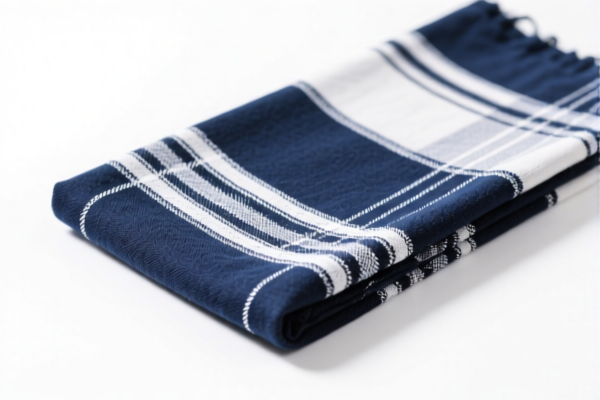
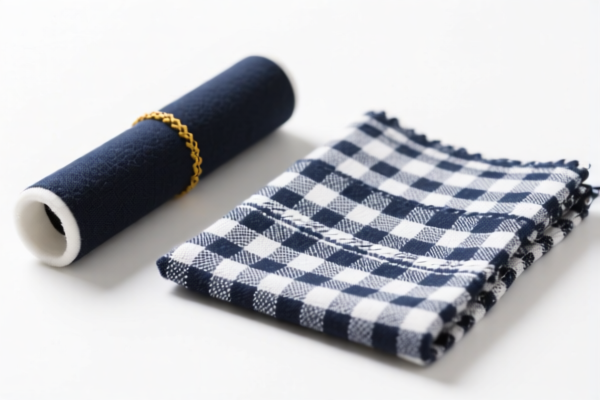
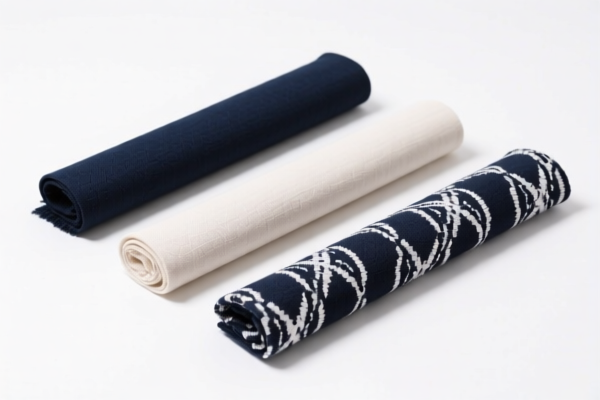
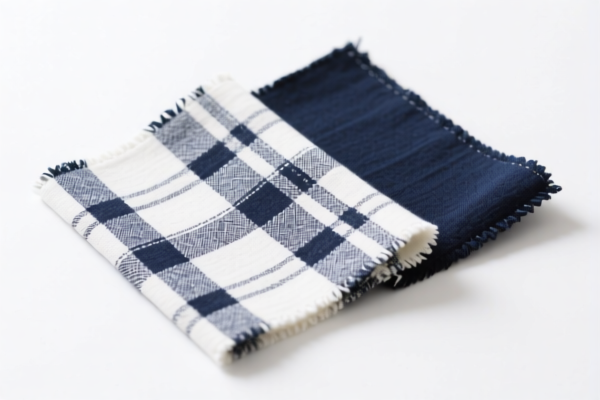
AI Analysis
🧵 Textile Articles (HS 6307.10.10.90 & Related Subheadings)
🌐 HS Code Reference & Customs Clearance Guide | 2026 Latest Tariff Analysis | Professional-Level Clearance Strategy
📌 1. Product Definition & Classification: Do You Really Understand "Textile Articles"?
In international trade, Textile Articles under Chapter 63 generally refer to made-up textile articles (e.g., banners, sacks, flags, cleaning cloths, etc.) that do not fall under other more specific chapters. The HS code 6307.10.10.90 specifically refers to "Other made-up articles, including dress patterns, other made-up textile articles, n.e.s. (not elsewhere specified)."
However, based on the provided data , the goods in question are classified under HS 6307.90 (Other made-up articles) rather than 6307.10. This suggests the goods are general textile制成的制品 (made-up items) that do not fit the specific narrow categories of 6307.10 (which often refers to specific items like banners or sacks in some national sub-tariffs) but are broadly categorized under "Other" in the 6307.90 series.
⚠️ Key Distinction:
- If the item is a specific type like a banner, flag, or cleaning cloth, it might fall under 6307.10 or 6307.90 depending on national definitions.
- The provided data explicitly maps the goods to 6307.90.98.70, 6307.90.98.75, and 6307.90.98.91, indicating they are "Other" made-up textile articles that are not specifically listed elsewhere in 6307.
- Material Consistency: The goods are textile-based and match the material attributes of "other made-up articles." There is no conflict in material or form.
📦 2. HS Code Classification Details (Based on Provided Data )
According to the input data , the textile articles are classified under the following HS codes within the 6307.90 category. Note that 6307.10.10.90 is not directly listed in the provided data, but the goods are classified under 6307.90 subheadings due to their general nature as "other made-up textile articles."
| HS Code | Product Description | Applicability | Material/Form Conflict? |
|---|---|---|---|
| 6307.90.98.70 | Other made-up textile articles, not specified elsewhere. Matches textile material attributes and HS 6307 category definition. | General textile-made items (e.g., bags, covers, etc.) | ❌ None |
| 6307.90.98.75 | Other made-up textile articles. Matches general description under Chapter 63. No material or form conflict. | General textile-made items | ❌ None |
| 6307.90.98.91 | Other made-up textile articles (Fallback category). Matches textile material attributes. No material or form conflict. | General textile-made items | ❌ None |
🔍 Important Note:
- The HS codes 6307.90.98.70, 6307.90.98.75, and 6307.90.98.91 are all "Other" (兜底) subheadings under 6307.90.
- They are used when the textile article does not fit into more specific categories like banners (6307.10) or flags (6307.90.90.40 in some tariffs).
- No material or form conflicts exist for these codes, meaning the goods are clearly textile-based and made-up.
💰 3. 2026 Latest Tariff Rate Details (Including Additional Taxes)
✅ Applicable Country: United States (US)
✅ Country of Origin: China (CN)
✅ Effective Date: As of 2025/2026 (Subject to current trade policies)
🎯 1. HS Code: 6307.90.98.70 / 6307.90.98.75 / 6307.90.98.91
| Item | Content |
|---|---|
| Base Tariff Rate | 7.0% |
| Additional Tariff (Section 301) | 7.5% |
| 122 Clause Tariff | 10.0% |
| Total Tariff Rate | 24.5% |
| Tax Calculation | CIF Value × 24.5% |
| De Minimis Exemption | ❌ Not Available (Deny De Minimis) |
| Legal Basis Path | Base Tariff: 7.0% → Section 301 Tariff: 7.5% → Section 122 Tariff: 10.0% |
📌 Explanation:
- Base Tariff (7.0%): Standard most-favored-nation (MFN) rate for "Other made-up textile articles."
- Section 301 Tariff (7.5%): Additional tariff imposed on Chinese goods under the US Trade Representative’s Section 301 investigation.
- Section 122 Tariff (10.0%): Additional tariff under Section 122 of the Trade Expansion Act of 1962 (often applied to specific categories of goods from China).
- Total Rate: 24.5% is the effective total tariff rate for these textile articles. This is a significant cost that must be factored into pricing and clearance strategies.
🛠️ 4. Customs Clearance Practical Advice (Avoiding Pitfalls)
✅ 1. Required Documentation Checklist
| Document | Required | Explanation |
|---|---|---|
| ✅ Product Specification Sheet | ✔️ | Must clearly describe the item as a "Textile Article" and specify its use (e.g., bag, cover, etc.). |
| ✅ Material Composition | ✔️ | Must confirm the item is 100% textile or primarily textile-based to avoid classification errors. |
| ✅ Product Photos | ✔️ | Clear images showing the item’s form, texture, and any labels. |
| ✅ Commercial Invoice | ✔️ | Must state "Textile Articles" and use the correct HS code (e.g., 6307.90.98.70). |
| ✅ Packing List | ✔️ | Detail the quantity and weight to ensure accurate CIF valuation. |
| ✅ Certificate of Origin | ✔️ | If applicable, to prove origin as China (to confirm tariff applicability). |
✅ 2. Declaration Tips
🔥 "Be Specific, Avoid Generalities!"
| Scenario | Correct Declaration | Incorrect Declaration |
|---|---|---|
| General textile bag/cloth | 6307.90.98.70 (or 75/91) | "Textile Bag" → Ambiguous, may cause delays |
| Banner or Flag | 6307.10.xxxx (if applicable) | "Textile Article" → Incorrect if it fits a specific category |
| Non-textile item (e.g., plastic) | Not 6307 | "Textile Article" → Severe misclassification, penalties |
📌 Key Tip:
- Always describe the item specifically (e.g., "Canvas Tote Bag," "Cotton Cleaning Cloth") rather than just "Textile Article."
- Ensure the material composition is clearly stated (e.g., "100% Cotton," "Polyester Blend") to avoid disputes over whether it is truly a "textile article."
✅ 3. Special Cases
| Scenario | Handling Advice |
|---|---|
| Mixed Material Items | If the item is 50% textile + 50% plastic, it may not qualify under 6307. Check Chapter 39 or 61/62 for appropriate classification. |
| Items with Metal Parts | If the item has metal hardware (e.g., zippers, buckles), it may still be classified under 6307 if the textile component is dominant. |
| Customs Audits | Be prepared to provide material certificates and product samples if requested. |
🌍 5. Global Customs Comparison (2026)
| Country/Region | Recommended HS Code | Tariff Rate | Certification | Notes |
|---|---|---|---|---|
| 🇺🇸 United States | 6307.90.98.70/75/91 | 24.5% (7% base + 7.5% 301 + 10% 122) | None | High tariff due to Section 301 & 122 |
| 🇨🇳 China | 6307.90 | Low/Zero (if imported) | None | Domestic production may have different rates |
| 🇪🇺 EU | 6307.90 | ~0-2% | CE (if applicable) | No Section 301 or 122 tariffs |
| 🇬🇧 UK | 6307.90 | ~0-2% | UKCA (if applicable) | Post-Brexit rules may vary |
| 🇯🇵 Japan | 6307.90 | 0-3% | PSE (if applicable) | Low tariffs, no additional charges |
📌 Conclusion:
- The United States imposes the highest tariff (24.5%) on Chinese textile articles under 6307.90 due to Section 301 and Section 122 tariffs.
- Other major markets (EU, UK, Japan) have significantly lower tariffs (0-3%).
- Strategy: If possible, consider supply chain diversification (e.g., manufacturing in Vietnam, Mexico) to avoid US tariffs.
📌 6. Common Errors & Pitfalls (Lessons Learned)
❌ Error 1: Using "Textile Article" as a generic description
👉 Consequence: Customs may delay clearance to determine the correct subheading.
✅ Solution: Be specific (e.g., "Cotton Tote Bag," "Polyester Banner").
❌ Error 2: Misclassifying as 6307.10 when it fits 6307.90
👉 Consequence: Potential penalty for incorrect classification.
✅ Solution: Verify if the item fits specific categories (e.g., banners, flags) before using 6307.90.
❌ Error 3: Ignoring Section 301 and 122 Tariffs
👉 Consequence: Underpaying duties, leading to back taxes + penalties.
✅ Solution: Always calculate the 24.5% total rate for US-bound Chinese goods.
🎯 7. Conclusion: Precise Classification Saves Costs!
🎯 Key Takeaway:
🔹 HS Code 6307.90.98.70/75/91 is the correct classification for general textile-made articles that do not fit specific categories.
🔹 Total Tariff Rate for US-bound goods from China: 24.5%.
🔹 Avoid Generic Descriptions: Be specific to prevent clearance delays.
🔹 Consider Supply Chain Alternatives: Look into Vietnam, Mexico, or EU to reduce tariff burdens.
📌 Pro Tip:
If you are importing into the US, consider applying for an Advance Ruling from CBP (Customs and Border Protection) to confirm the HS code and avoid unexpected tariffs.
For other markets, ensure compliance with local certification requirements (e.g., CE, UKCA).
📣 Immediate Action:
📞 Contact a professional customs broker + Provide detailed product specifications + Apply for an Advance Ruling (if applicable).
🚀 Ensure smooth customs clearance, minimize costs, and optimize your supply chain!
✨ Professional Clearance Starts with Accurate Classification!
💼 Every percentage point of tariff difference matters!
Customer Reviews
About HS Code Classification
The Harmonized System (HS) is an internationally standardized nomenclature developed by the World Customs Organization (WCO) to classify traded products. Over 200 countries use the HS system as the basis for customs tariffs, trade statistics, and import/export regulations.
Each HS code follows a hierarchical structure:
- Chapter (2 digits) — Broad category of goods (e.g., Chapter 84: Machinery and Mechanical Appliances)
- Heading (4 digits) — More specific grouping within the chapter
- Subheading (6 digits) — Internationally standardized breakdown, used by all WCO member countries
- National subdivisions (8-10 digits) — Country-specific extensions for further classification, such as US HTSUS 10-digit codes
Correct HS code classification is essential for smooth customs clearance, accurate duty payment, and compliance with trade regulations. Misclassification can lead to customs delays, overpayment of duties, or penalties.
When importing from CN to US, the applicable tariff rates may include:
- Most-Favored-Nation (MFN) rate — The standard duty rate applied to WTO members
- General rate — Applied to countries without trade agreements
- Trade remedy duties — Additional tariffs such as Section 301 (anti-dumping), Section 232 (national security), or countervailing duties
The information provided on this page is for reference purposes only. For official classification, please consult with your local customs authority or a licensed customs broker.