textile articles hs 6307908500
CN → US| HS Code | Tariff Rate | Origin | Destination | Doc |
|---|---|---|---|---|
| 6307909891 | 24.5% | CN | US | Official Doc |
| 6307909887 | 24.5% | CN | US | Official Doc |
| 6307909885 | 24.5% | CN | US | Official Doc |
| 6304996040 | 20.7% | CN | US | Official Doc |
| 6304910170 | 23.3% | CN | US | Official Doc |
Product Images
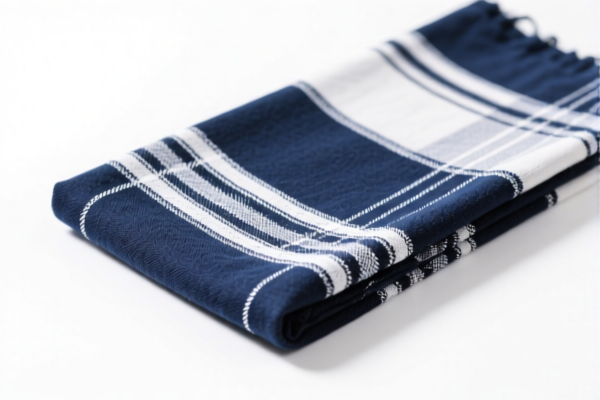
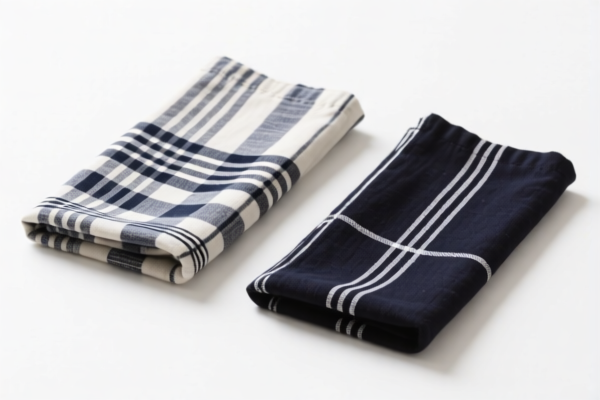
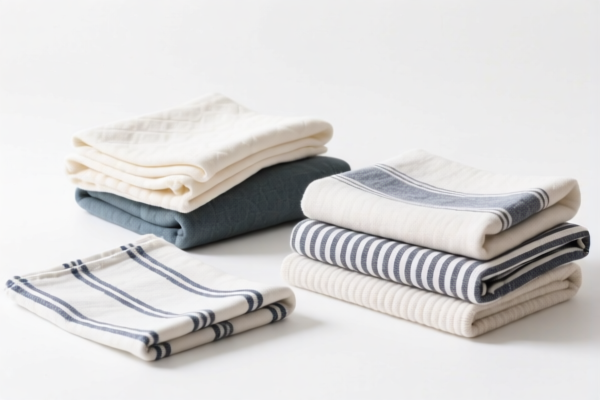
AI Analysis
🧵 Textile Articles (HS Code: 6307.90.85.00)
🌐 HS Code Reference & Customs Clearance Guide | 2026 Latest Tariff Analysis | Professional Compliance Strategy
📌 I. Product Definition: What Are "Textile Articles"?
In international trade, HS Code 6307 covers "Made-up clothing accessories, other made-up textile articles, and textile rags." It is a catch-all category for textile products that do not fall under specific headings like clothing (Chapter 61/62) or curtains (6303/6304).
Key Characteristics of HS 6307.90.85.00: * Material: Typically refers to articles made of man-made fibers (synthetic or artificial). * Form: "Other made-up textile articles" – implying items not specified elsewhere (e.g., not bags, not floor coverings, not flags). * Common Examples: Decorative textile cushions, textile wall hangings, specialized textile packaging, craft items, or non-apparel textile goods.
⚠️ Critical Distinction:
- If the item is knitted or crocheted, it likely belongs to 6304.91.01.70 (Knitted/Crocheted).
- If it is non-knitted and made of other materials (e.g., cotton/wool), it may fall under 6307.90.98.91 or 6307.90.98.87.
- 6307.90.85.00 is specifically reserved for man-made fiber articles in this category.
📦 II. HS Code Classification Details (2026 Tariff Book)
Based on the provided data, here are the 5 valid HS Code matches for generic "Textile Articles," ranked by material and form consistency:
| HS Code | Product Description | Material/Form Match | Tax Rate (Total) | Key Notes |
|---|---|---|---|---|
6307.90.85.00 |
Textile articles (Man-made fibers) | ✅ Direct Match Matches "textile articles" + "man-made fibers" |
24.5% | Best fit if material is synthetic (polyester, nylon, etc.) |
6307.90.98.91 |
Other made-up textile articles | ✅ Broad Match "Textile articles" fits under "Other made-up items"; No material conflict |
24.5% | General fallback for textile articles without specific fiber match |
6307.90.98.87 |
Textile articles (Possible Man-made) | ⚠️ Partial Match Form matches; "Possible man-made fibers" implies uncertainty |
24.5% | Use if fiber composition is ambiguous but likely synthetic |
6304.99.60.40 |
Non-knitted Textile Articles | ✅ No Conflict Non-knitted/hooked; Non-apparel textile material |
20.7% | Lower tax! Applies if non-knitted and not specific apparel |
6304.91.01.70 |
Knitted/Crocheted Textile Articles | ✅ No Conflict Knitted/hooked property; No material conflict |
23.3% | Lower tax! Applies if the item is knitted or crocheted |
🔍 Key Takeaway:
-6307.90.85.00is the most accurate for general synthetic textile articles.
-6304.99.60.40offers the lowest total tax (20.7%) if the item is non-knitted.
-6304.91.01.70offers 23.3% tax if the item is knitted/crocheted.
- Always verify fiber content to avoid misclassification penalties!
💰 III. 2026 Tariff Rate Breakdown (Including Surcharge)
✅ Applicable Country: United States (US)
✅ Origin: China (CN)
✅ Effective Date: November 10, 2025 (and subsequent imports)
🎯 1. 6307.90.85.00 – Textile Articles (Man-made Fibers)
| Item | Detail |
|---|---|
| Base Tariff | 7.0% |
| Section 301 Surcharge | +7.5% |
| Section 122 Tariff | +10.0% |
| Total Tax Rate | 24.5% |
| Calculation | CIF Value × 24.5% |
| De Minimis Exemption? | ❌ No (Deny de minimis for textiles under certain conditions) |
| Legal Basis | Base: 6307.90.85.00 → Section 301: Footnote 9903.88.01 → Section 122: IEEPA 9903.01.24 |
📌 Explanation:
- Base 7%: Standard MFN rate for textile articles.
- 7.5% Section 301: Additional duty on Chinese goods under US Trade Act Section 301.
- 10% Section 122: Additional duty on Chinese textile/garment imports under IEEPA.
- Total 24.5%: High duty burden; accurate classification is critical.
🎯 2. 6307.90.98.91 & 6307.90.98.87 – Other Textile Articles
| Item | Detail |
|---|---|
| Base Tariff | 7.0% |
| Section 301 Surcharge | +7.5% |
| Section 122 Tariff | +10.0% |
| Total Tax Rate | 24.5% |
| De Minimis Exemption? | ❌ No |
📌 Note: Same tax structure as above. These codes are alternatives if
6307.90.85.00does not apply.
🎯 3. 6304.99.60.40 – Non-Knitted Textile Articles
| Item | Detail |
|---|---|
| Base Tariff | 3.2% |
| Section 301 Surcharge | +7.5% |
| Section 122 Tariff | +10.0% |
| Total Tax Rate | 20.7% |
| De Minimis Exemption? | ❌ No |
📌 Savings Alert:
- This code saves 3.8% compared to6307.90.85.00.
- Only applicable if the item is not knitted or crocheted.
🎯 4. 6304.91.01.70 – Knitted/Crocheted Textile Articles
| Item | Detail |
|---|---|
| Base Tariff | 5.8% |
| Section 301 Surcharge | +7.5% |
| Section 122 Tariff | +10.0% |
| Total Tax Rate | 23.3% |
| De Minimis Exemption? | ❌ No |
📌 Note:
- Saves 1.2% compared to6307.90.85.00.
- Only applicable if the item is knitted or crocheted.
🛠️ IV. Customs Clearance Practical Advice
✅ 1. Required Documentation Checklist
| Document | Required | Purpose |
|---|---|---|
| Product Spec Sheet | ✔️ | Details composition (fiber %, knit/weave type, dimensions) |
| Material Certificate | ✔️ | Proves "Man-made fibers" vs. Natural fibers |
| Photos (Clear) | ✔️ | Shows product form (knitted vs. woven, use case) |
| Commercial Invoice | ✔️ | Must accurately describe "Textile Articles" with HS code |
| Packing List | ✔️ | Itemizes contents to avoid "undisclosed goods" flags |
| Origin Certificate (CO) | ✔️ | Required for Section 122/301 determination |
✅ 2. Classification Strategy (Key Mnemonic)
🔥 “Check Knit First, Then Fiber, Then Form!”
| Scenario | Recommended HS Code | Why? |
|---|---|---|
| Item is Knitted/Crocheted | 6304.91.01.70 |
Chapter 6304 covers knitted/crocheted textile goods |
| Item is Non-Knitted & Non-Crocheted | 6304.99.60.40 |
Chapter 6304 covers other non-knitted textile goods |
| Item is Man-made Fiber (Woven/Non-Knitted) | 6307.90.85.00 |
Chapter 6307.90 covers other made-up textile articles |
| Material Uncertain | 6307.90.98.87 |
"Possible man-made fibers" – use as fallback |
✅ 3. Special Case Handling
| Case | Advice |
|---|---|
| Mixed Materials | Declare the principal material. If >50% man-made, use 6307.90.85.00 |
| Decorative vs. Functional | If functional (e.g., textile filter), may still fall under 6307, but check technical specs |
| OEM/Custom Goods | Provide design drawings to prove "made-up" status vs. raw fabric |
| Sample Imports | Even samples are subject to duties; declare value accurately |
🌍 V. Global Market Comparison (2026)
| Country/Region | Recommended HS Code | Tariff | Certification | Notes |
|---|---|---|---|---|
| 🇺🇸 USA | 6307.90.85.00 |
24.5% | None specific | High due to Section 301 + 122 |
| 🇨🇳 China | 6307.90.85.00 |
5-10% | None | Lower base rate |
| 🇪🇺 EU | 6307.90.85.00 |
0-12% | CE (if applicable) | Varies by fiber content |
| 🇬🇧 UK | 6307.90.85.00 |
0-12% | UKCA | Post-Brexit rules apply |
| 🇯🇵 Japan | 6307.90.85.00 |
0-10% | PSE (if electronic) | Generally low tariff |
📌 Conclusion:
- USA has the highest total duty (24.5%) for textile articles due to Section 301 and Section 122.
- Accurate fiber classification can save up to 3.8% (by using 6304.99.60.40).
- Pre-classification ruling is recommended for high-value shipments.
📌 VI. Common Mistakes & Pitfalls (Lessons Learned)
❌ Mistake 1: Classifying knitted items under 6307.90.85.00
👉 Result: Wrong code → Potential penalty + higher tax if 6304.91.01.70 was correct.
❌ Mistake 2: Ignoring fiber content
👉 Result: If item is cotton (natural), 6307.90.85.00 (man-made) is wrong. Use 6307.90.98.91 instead.
❌ Mistake 3: Declaring as "Other" without details
👉 Result: CBP may audit → Delay + possible seizure.
✅ Correct Practice:
"Textile Cushion Cover, 100% Polyester, Woven, Decorative, Non-Knitted, Model XYZ, Made in China"
🎯 VII. Final Recommendations: Professional Compliance, Cost Optimization!
🎯 Remember This Rule:
🔹 “Knit → 6304.91; Non-Knit → 6304.99; Other Synthetic → 6307.90.85”
🔹 “Check fiber first, then form, then tax!”
📌 Pro Tip:
If your textile articles are imported from Vietnam, Mexico, or Thailand, you may qualify for IEEPA exemptions, reducing total tax to 0-5%.
Always apply for an Advance Ruling to avoid clearance risks.
📣 Take Action Now:
📞 Consult a customs broker + Provide product images + Apply for HS Code advance ruling
🚀 Ensure smooth clearance, efficient export, and maximized profit margins!
✨ Professional clearance starts with accurate classification!
💼 Every cent saved is a cent earned!
Customer Reviews
About HS Code Classification
The Harmonized System (HS) is an internationally standardized nomenclature developed by the World Customs Organization (WCO) to classify traded products. Over 200 countries use the HS system as the basis for customs tariffs, trade statistics, and import/export regulations.
Each HS code follows a hierarchical structure:
- Chapter (2 digits) — Broad category of goods (e.g., Chapter 84: Machinery and Mechanical Appliances)
- Heading (4 digits) — More specific grouping within the chapter
- Subheading (6 digits) — Internationally standardized breakdown, used by all WCO member countries
- National subdivisions (8-10 digits) — Country-specific extensions for further classification, such as US HTSUS 10-digit codes
Correct HS code classification is essential for smooth customs clearance, accurate duty payment, and compliance with trade regulations. Misclassification can lead to customs delays, overpayment of duties, or penalties.
When importing from CN to US, the applicable tariff rates may include:
- Most-Favored-Nation (MFN) rate — The standard duty rate applied to WTO members
- General rate — Applied to countries without trade agreements
- Trade remedy duties — Additional tariffs such as Section 301 (anti-dumping), Section 232 (national security), or countervailing duties
The information provided on this page is for reference purposes only. For official classification, please consult with your local customs authority or a licensed customs broker.