textile clothing hs 6113009082
CN → US| HS Code | Tariff Rate | Origin | Destination | Doc |
|---|---|---|---|---|
| 6113001010 | 21.3% | CN | US | Official Doc |
| 6113001005 | 21.3% | CN | US | Official Doc |
| 6113009082 | 24.6% | CN | US | Official Doc |
Product Images
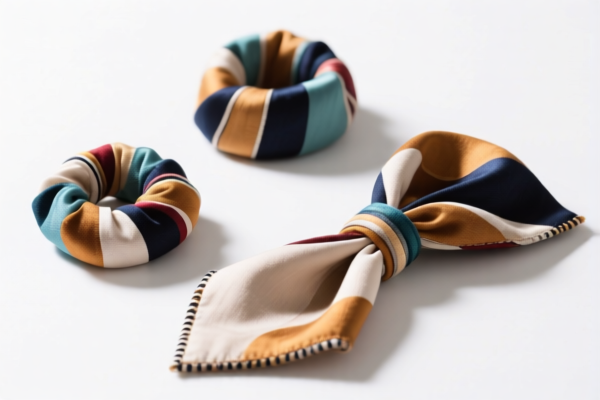

AI Analysis
👕 Textile Clothing (HS Code 6113.00.90.82)
🌐 HS Code Reference & Customs Clearance Guide | 2026 Latest Tariff Analysis | Professional Clearance Strategy
📌 I. Product Definition & Classification: What Exactly Is This "Textile Clothing"?
Textile Clothing, specifically classified under HS Code 6113.00.90.82, refers to garments made from knit or crochet fabrics (other than those of heading 6113.00.10). In international trade, this code is distinct from general textile products or specific men's/boys' outerwear. It typically covers specific types of knitted/crocheted apparel that do not fall under the standard "men's jackets" category (which uses a different sub-code).
⚠️ Key Distinction:
- If the item is a standard men's/boys' jacket or coat made of knit fabric → It likely falls under 6113.00.10.05 (lower tax base).
- If the item is a different type of textile clothing (e.g., specific suits, trousers, or other knitted garments not listed as standard jackets) → It falls under 6113.00.90.82 (higher tax base due to higher basic tariff).
- Crucial Point: The classification difference lies in the specific type of garment. Misclassifying a "specific clothing item" as a "standard jacket" can lead to severe penalties, while misclassifying a jacket as "other clothing" results in overpayment.
📦 II. HS Code Classification Details (2026 Latest Tariff Authority)
| HS Code | Product Description | Scenario | Basic Tariff Rate |
|---|---|---|---|
6113.00.90.82 |
Textile Clothing (Knitted/Crocheted, Specific Sub-category) | Specific knitted garments not classified as standard men's/boys' jackets | 7.1% |
6113.00.10.10 |
Textile Products (General Knit/Crochet Fabric Products) | General textile products, fabric rolls, or non-apparel knit items | 3.8% |
6113.00.10.05 |
Textile Products (Men's/Boys' Jackets & Coats) | Standard men's or boys' knitted jackets and coats | 3.8% |
🔍 Important Note:
- 6113.00.90.82 has a significantly higher Basic Tariff (7.1%) compared to the standard jacket code 6113.00.10.05 (3.8%).
- This means the total tax burden for6113.00.90.82is higher due to the higher base rate.
- Ensure your product description clearly defines why it is not a "men's/boys' jacket" to justify using this code.
💰 III. 2026 Latest Tariff Rate Breakdown (Including Surcharges & Policy Add-ons)
✅ Applicable Country: United States (US)
✅ Country of Origin: China (CN)
✅ Effective Date: From November 10, 2025 (including subsequent imports)
🎯 1. 6113.00.90.82 —— Textile Clothing (Specific Knitted/Crocheted Items)
| Item | Details |
|---|---|
| Basic Tariff Rate | 7.1% (Ad Valorem) |
| Additional Tariff (Section 301) | +7.5% |
| 122 Clause Tariff | +10% |
| Total Tax Rate | 24.6% |
| Tax Calculation | CIF Value × 24.6% |
| De Minimis Exemption | ❌ Not Applicable (denied for these specific textile codes under current trade policies) |
| Legal Basis Path | USITC:6113.00.90.82 → Section 301:7.5% → 122 Clause:10% |
📌 Explanation:
- Basic Tariff (7.1%): This is the standard Most Favored Nation (MFN) rate for this specific sub-category of textile clothing. It is nearly double the basic rate of standard jackets (3.8%).
- Section 301 Surcharge (+7.5%): This is the standard additional tariff applied to most Chinese goods.
- 122 Clause Surcharge (+10%): This is a specific surcharge applied under certain trade enforcement clauses for textile products.
- Total (24.6%): This is the final landed cost tax burden. It is 3.3% higher than the total tax for standard men's jackets (21.3%), solely due to the higher basic tariff base.
🎯 2. Comparison: Why 6113.00.90.82 vs 6113.00.10.05?
| Feature | 6113.00.90.82 (Specific Clothing) |
6113.00.10.05 (Men's/Boys' Jackets) |
|---|---|---|
| Basic Tariff | 7.1% | 3.8% |
| Additional Tariff | 7.5% | 7.5% |
| 122 Clause | 10% | 10% |
| Total Tax | 24.6% | 21.3% |
| Tax Difference | Higher by 3.3% | Lower |
💡 Strategic Insight:
If your product is a standard men's or boys' jacket, always classify it under 6113.00.10.05 if possible. Using6113.00.90.82for a standard jacket would result in unnecessary overpayment of 3.3% on the CIF value. Conversely, do not misclassify non-jacket items as jackets to save tax; this is customs fraud.
🛠️ IV. Customs Clearance Practical Advice (Real-World Pitfall Guide)
✅ 1. Documentation Checklist (Must-Haves)
| Document | Required | Description |
|---|---|---|
| ✅ Product Spec Sheet | ✔️ | Detailed description: fabric composition (e.g., 100% Cotton), knitting type, garment type (e.g., pants, top, suit) |
| ✅ Product Photos | ✔️ | Clear images showing the garment type, labels, and construction. Must clearly distinguish if it is a "jacket" or "other clothing." |
| ✅ Commercial Invoice | ✔️ | Accurate description: "Textile Clothing, Knitted, [Material], [Style]" |
| ✅ Packing List | ✔️ | Itemized list, matching the invoice and customs declaration |
| ✅ Origin Certificate | ✔️ | If not China-origin, to claim preferential rates (if applicable) |
✅ 2. Declaration Tips (Key Mnemonic)
🔥 "Be Precise: Jacket vs. Other. Don't Guess, Verify!"
| Scenario | Correct Declaration | Incorrect Declaration |
|---|---|---|
| Men's Knitted Jacket | 6113.00.10.05 (21.3%) |
6113.00.90.82 (24.6%) → Overpay |
| Men's Knitted Trousers | 6113.00.90.82 (24.6%) |
6113.00.10.10 (21.3%) → Underpay (Penalty Risk) |
| Knitted Fabric Rolls | 6113.00.10.10 (21.3%) |
6113.00.90.82 (24.6%) → Overpay |
⚠️ Warning:
- If you declare a pair of knitted trousers as a "jacket," you risk under-declaration of tax. Customs may audit, impose penalties, and back-taxes.
- If you declare a jacket as "other clothing," you overpay taxes. While less risky legally, it hurts your competitiveness.
✅ 3. Special Cases
| Situation | Handling Advice |
|---|---|
| Mixed Garments | If a set includes a jacket and trousers, declare them separately or as a set if allowed. Do not force one code. |
| New Style Jackets | If the jacket design is highly unconventional, ensure it still fits the "jacket" definition. If not, use 6113.00.90.82. |
| OEM/Private Label | Provide the original design sheets to prove the intended use and classification. |
🌍 V. Global Market Customs Comparison (2026 Latest)
| Country/Region | Recommended HS Code | Tariff (China Origin) | Certification | Note |
|---|---|---|---|---|
| 🇺🇸 USA | 6113.00.90.82 |
24.6% (Total) | N/A | High tariffs due to Section 301 & 122 Clause |
| 🇨🇳 China | 6113.00.90.82 |
~7-10% | CCC (if applicable) | Domestic trade rules differ |
| 🇪🇺 EU | 6113.00.90.82 |
Varies (0-12%) | CE/RoHS | No Section 301 or 122 Clause surcharges |
| 🇦🇺 Australia | 6113.00.90.82 |
~5-10% | RCM | No additional US-style surcharges |
📌 Conclusion:
- USA is the most challenging market due to 24.6% total tax for6113.00.90.82.
- EU/Australia/China do not apply the 122 Clause or Section 301 tariffs, making them more cost-effective for textile exports.
- Consider supply chain diversification (e.g., manufacturing in Vietnam or Bangladesh) to avoid US-specific surcharges if targeting the US market.
📌 VI. Common Mistakes & Pitfalls (Lessons Learned)
❌ Mistake 1: Calling a pair of knitted pants "Jackets" to get the lower 3.8% basic rate
👉 Consequence: Customs audit, penalty, and back-payment of 3.3% + interest.
❌ Mistake 2: Using 6113.00.10.10 (General Textile Products) for finished garments
👉 Consequence: Misclassification. Finished garments usually have different tariff rates than fabric/rolls. This can lead to rejection.
❌ Mistake 3: Ignoring the 122 Clause (10%)
👉 Consequence: Unexpected high tax burden. Always factor in 24.6% for 6113.00.90.82 in your pricing model.
✅ Correct Approach:
"Knitted Men's Trousers, 100% Cotton, Model ABC, Made in China"
- Clearly state the garment type (Trousers, not Jacket).
- Use 6113.00.90.82.
- Budget for 24.6% total tax.
🎯 VII. Conclusion: Precise Classification Saves Money!
🎯 Remember the Rule:
🔹 "Jackets = 6113.00.10.05 (21.3%)"
🔹 "Other Textile Clothing = 6113.00.90.82 (24.6%)"
🔹 "Fabric Rolls = 6113.00.10.10 (21.3%)"
📌 Pro Tip:
If your product is borderline (e.g., a vest that could be considered a jacket), seek a Customs Binding Ruling or consult a licensed customs broker to determine the most accurate code. A small difference in classification can lead to significant cost variations.
📣 Immediate Action:
📞 Contact a Customs Broker + Provide Product Photos + Confirm Garment Type
🚀 Optimize Your Supply Chain to mitigate high US tariffs!
✨ Professional Clearance Starts with Accurate Classification!
💼 Every Percent Counts in International Trade!
Customer Reviews
About HS Code Classification
The Harmonized System (HS) is an internationally standardized nomenclature developed by the World Customs Organization (WCO) to classify traded products. Over 200 countries use the HS system as the basis for customs tariffs, trade statistics, and import/export regulations.
Each HS code follows a hierarchical structure:
- Chapter (2 digits) — Broad category of goods (e.g., Chapter 84: Machinery and Mechanical Appliances)
- Heading (4 digits) — More specific grouping within the chapter
- Subheading (6 digits) — Internationally standardized breakdown, used by all WCO member countries
- National subdivisions (8-10 digits) — Country-specific extensions for further classification, such as US HTSUS 10-digit codes
Correct HS code classification is essential for smooth customs clearance, accurate duty payment, and compliance with trade regulations. Misclassification can lead to customs delays, overpayment of duties, or penalties.
When importing from CN to US, the applicable tariff rates may include:
- Most-Favored-Nation (MFN) rate — The standard duty rate applied to WTO members
- General rate — Applied to countries without trade agreements
- Trade remedy duties — Additional tariffs such as Section 301 (anti-dumping), Section 232 (national security), or countervailing duties
The information provided on this page is for reference purposes only. For official classification, please consult with your local customs authority or a licensed customs broker.