textile composite polyurethane cutting board
CN → US| HS Code | Tariff Rate | Origin | Destination | Doc |
|---|---|---|---|---|
| 6810990080 | 35.0% | CN | US | Official Doc |
| 3921131500 | 41.5% | CN | US | Official Doc |
| 3921131950 | 40.3% | CN | US | Official Doc |
| 5903202500 | 42.5% | CN | US | Official Doc |
| 5903202000 | 35.0% | CN | US | Official Doc |
Product Images
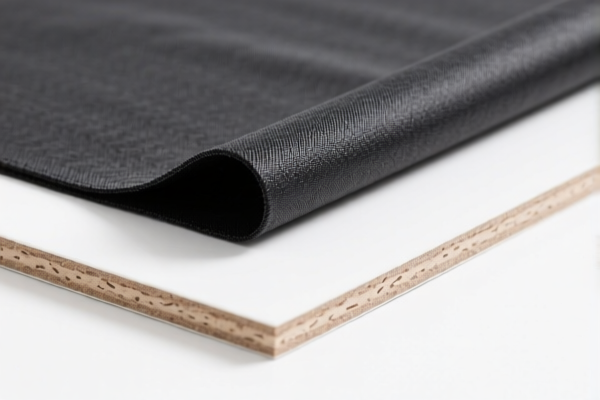
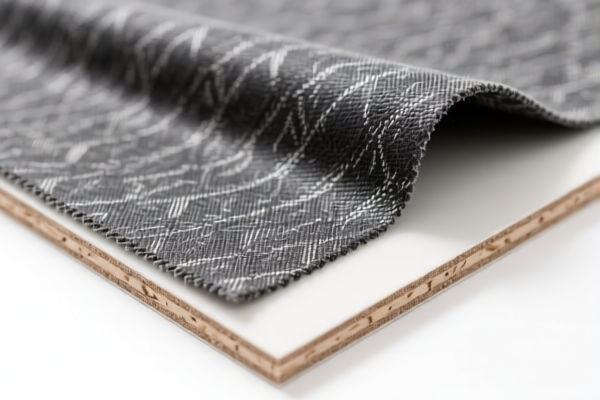
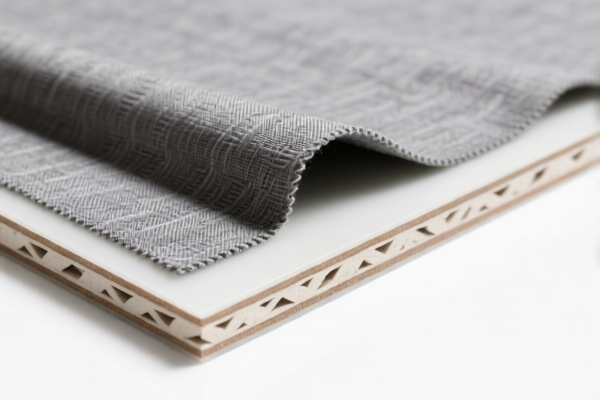

AI Analysis
🔪 Textile Composite Polyurethane Cutting Board
🌐 HS Code Reference & Customs Clearance Guide | 2026 Latest Tariff Analysis | Professional Compliance Strategy
📌 I. Product Definition & Classification: Do You Really Understand "Textile Composite Polyurethane Cutting Board"?
A Textile Composite Polyurethane Cutting Board is a specialized kitchen or industrial utensil composed of a Polyurethane (PU) matrix reinforced or backed with Textile materials (e.g., fiberglass, polyester, or non-woven fibers). Its primary function is cutting/slicing preparation, but from a customs perspective, its classification hinges on its material composition and structural form rather than its end-use alone.
In international trade, this product sits at the intersection of Plastics (Chapter 39) and Textiles (Chapter 59). The key to accurate classification lies in determining whether the PU acts as the primary binding material (favoring Chapter 39) or if the product is essentially a textile fabric treated with plastic (favoring Chapter 59).
⚠️ Critical Distinction Point:
- If the product is a rigid board/panel where PU is the main constituent and text
ile provides structural backing → Likely Chapter 39 (Plastics).
- If the product is essentially a flexible or semi-rigid textile fabric impregnated/coated with PU → Likely Chapter 59 (Impregnated Textiles).
- If the product is considered a generic construction/building material due to specific composite properties → May fall under Chapter 68 (Stone/Cement/Plaster).
📦 II. HS Code Classification Details (2026 Latest Tariff Authority Cross-Reference)
Based on the provided data, here are the five potential HS Code classifications, ranging from Construction Materials to Plastics and Textiles.
| HS Code | Product Description | Key Matching Criteria | Primary Material/Structure |
|---|---|---|---|
6810.99.00.80 |
Other Articles of Cement, Concrete or Artificial Stone | Classified as "Other Articles" under construction boards. PU composite structure is treated as a non-specific quartz aggregate board variant. | Construction/Composite Board (Non-specific) |
3921.13.15.00 |
Polyurethane Plates/Sheets, Combined with Textile | Success Match: Material is PU; Form is Composite Board; Use is Building/Cutting; Fits PU + Textile combination features (inferred textile fiber layer). | PU + Textile Composite |
3921.13.19.50 |
Other Polyurethane Plates/Sheets, with Textile | Match Basis: Material is 'Polyurethane'; Form is 'Board'; Use is 'Building'. Fits description of 'Polyurethane', 'Plates/Sheets', and 'Other'. | PU + Textile Composite |
5903.20.25.00 |
Textile Fabric Impregnated/Coated/Laminated with PU | Match Basis: Explicitly contains "Polyurethane" material and "Textile" form. PU-treated synthetic fiber textile fabric features. Cutting board as composite application does not conflict. | Impregnated Textile Fabric |
5903.20.20.00 |
Textile Fabric Impregnated/Coated/Laminated with PU | Success Match: "Polyurethane" matches material req; "Textile Composite" matches impregnation/lamination form; "Cutting Board" is a downstream application, no conflict. | Impregnated Textile Fabric |
🔍 Key Takeaway:
- Chapter 39 (Plastics) focuses on the plate/sheet nature of the PU.
- Chapter 59 (Textiles) focuses on the fabric/impregnation aspect.
- Chapter 68 (Cement/Stone) is a broader "catch-all" for composite construction-like boards where material specificity is less emphasized.
- Tax rates vary significantly based on which chapter is selected (from 35% to 42.5% total).
💰 III. 2026 Latest Tariff Rate Breakdown (Including Surtaxes & Policy Add-ons)
✅ Applicable Country: United States (US)
✅ Country of Origin: China (CN)
✅ Effective Date: From November 10, 2025 (for subsequent imports)
🎯 1. 6810.99.00.80 – Other Articles of Cement/Concrete/Artificial Stone
| Item | Content |
|---|---|
| Base Tariff | 0.0% (ad valorem) |
| USITC Surtax (Section 301) | +25.0% |
| IEEPA Surtax | +10.0% (122 Clause: Targeted China/HK products) |
| Total Tax Rate | 35.0% |
| Tax Calculation | CIF Value × 35% |
| De Minimis Exemption | ❌ Not Eligible |
| Legal Path | Base: 6810.99.00.80 → 301: +25% → IEEPA: +10% |
📌 Explanation:
- Although the base rate is 0%, the 35% total burden is high due to trade war surcharges. - This classification is often used for construction-grade composite boards where the PU/textile blend is viewed as a generic building material.
🎯 2. 3921.13.15.00 – Polyurethane Plates, with Textile
| Item | Content |
|---|---|
| Base Tariff | 6.5% |
| USITC Surtax (Section 301) | +25.0% |
| IEEPA Surtax | +10.0% |
| Total Tax Rate | 41.5% |
| Tax Calculation | CIF Value × 41.5% |
| De Minimis Exemption | ❌ Not Eligible |
| Legal Path | Base: 3921.13.15.00 → 301: +25% → IEEPA: +10% |
📌 Explanation:
- This is a premium classification for PU-Textile composites, acknowledging the textile integration. - Higher base rate (6.5%) leads to a higher total duty compared to other PU categories.
🎯 3. 3921.13.19.50 – Other Polyurethane Plates, with Textile
| Item | Content |
|---|---|
| Base Tariff | 5.3% |
| USITC Surtax (Section 301) | +25.0% |
| IEEPA Surtax | +10.0% |
| Total Tax Rate | 40.3% |
| Tax Calculation | CIF Value × 40.3% |
| De Minimis Exemption | ❌ Not Eligible |
| Legal Path | Base: 3921.13.19.50 → 301: +25% → IEEPA: +10% |
📌 Explanation:
- Slightly cheaper than3921.13.15.00due to a lower base rate (5.3% vs 6.5%). - Used when the textile integration is present but doesn't fit the specific "primary" textile combo definition of 15.00.
🎯 4. 5903.20.25.00 – Impregnated Textile Fabric (PU)
| Item | Content |
|---|---|
| Base Tariff | 7.5% |
| USITC Surtax (Section 301) | +25.0% |
| IEEPA Surtax | +10.0% |
| Total Tax Rate | 42.5% |
| Tax Calculation | CIF Value × 42.5% |
| De Minimis Exemption | ❌ Not Eligible |
| Legal Path | Base: 5903.20.25.00 → 301: +25% → IEEPA: +10% |
📌 Explanation:
- This is the highest total tax rate (42.5%) among the options. - Classifying the cutting board as a textile fabric rather than a plastic board increases the base duty, making this the most expensive option for importers.
🎯 5. 5903.20.20.00 – Impregnated Textile Fabric (PU)
| Item | Content |
|---|---|
| Base Tariff | 0.0% |
| USITC Surtax (Section 301) | +25.0% |
| IEEPA Surtax | +10.0% |
| Total Tax Rate | 35.0% |
| Tax Calculation | CIF Value × 35.0% |
| De Minimis Exemption | ❌ Not Eligible |
| Legal Path | Base: 5903.20.20.00 → 301: +25% → IEEPA: +10% |
📌 Explanation:
- Interestingly, this textile classification has the same total rate (35%) as the construction material (6810.99.00.80) because its base rate is 0%. - This is the most competitive tax rate if the product can be legally justified as an impregnated textile fabric.
🛠️ IV. Customs Clearance Practical Advice (Real-World Pitfall Guide)
✅ 1. Documentation Checklist (Mandatory)
| Document | Required | Notes |
|---|---|---|
| ✅ Product Specification Sheet | ✔️ | Must detail: PU content %, Textile type (e.g., fiberglass, polyester), Lamination process. |
| ✅ Material Safety Data Sheet (MSDS) | ✔️ | Confirms PU chemical composition and curing agents. |
| ✅ Product Photos (Clear) | ✔️ | Show cross-section to prove composite structure (PU + Textile layers). |
| ✅ Commercial Invoice | ✔️ | Must accurately describe: "Textile Composite Polyurethane Board for Cutting" or similar. Avoid vague terms like "Plastic Board." |
| ✅ Packing List | ✔️ | Specify weight breakdown if possible (PU weight vs Textile weight). |
| ✅ Origin Certificate (CO) | ✔️ | Essential for verifying CN origin to apply correct 301/IEEPA rates. |
✅ 2. Declaration Strategy (Key Mantras)
🔥 "Define the Structure, Declare the Material, Avoid the 'Kitchen' Trap!"
| Scenario | Correct Declaration Approach | Incorrect Approach |
|---|---|---|
| Product is Rigid Board | Use Chapter 39 (3921.13.xx). Emphasize "Polyurethane Plate/Board." |
Calling it a "Kitchen Utensil" → May be misclassified to wrong chapter. |
| Product is Flexible/Semi-Flexible | Use Chapter 59 (5903.20.xx). Emphasize "Textile Fabric Impregnated with PU." |
Calling it a "Board" when it's flexible → Risk of re-classification to 59.03. |
| Product is Construction-Grade | Use Chapter 68 (6810.99.xx). Emphasize "Composite Building Material." |
Using "Cutting Board" if used in industrial/construction settings. |
| Misclassification Risk | If declared as "Cutting Board" (HS 3924), it may be rejected if structure doesn't match. | ❌ Do not declare as 3924.90.00 (Household Plastics) without strong justification. |
✅ 3. Special Handling Tips
| Situation | Recommendation |
|---|---|
| OEM Custom Boards | Provide customer design drawings showing the PU-Textile laminate structure. |
| Multi-Layer Composite | Clearly state which layer is primary. If PU > 50% by weight/volume, Chapter 39 is stronger. |
| Small Quantity (De Minimis) | ❌ Warning: Even for small shipments (e.g., < $800), if the HS Code is subject to IEEPA/301, de minimis exemption does NOT apply. Tax is still due. |
| Pre-Ruling Request | Highly recommended. Submit a Binding Ruling Request to CBP with sample photos and specs to lock in 3921.13 or 5903.20. |
🌍 V. Global Market Comparison (2026 Latest)
| Country/Region | Recommended HS Code | Est. Total Tariff (China Origin) | Certification Notes |
|---|---|---|---|
| 🇺🇸 USA | 3921.13.15.00 or 5903.20.20.00 |
35% - 42.5% | FCC (if electronic), FDA (if food-contact PU) |
| 🇨🇳 China | 3921.13.15.00 |
~5-6% (Base) | No heavy surtaxes |
| 🇪🇺 EU | 3921.13.15.00 |
~5-7% | REACH, Food-Contact Compliance |
| 🇯🇵 Japan | 3921.13.15.00 |
~5-7% | PSE (if electrical), Food Sanitation Law |
📌 Conclusion:
- The USA is the most challenging market due to Section 301 + IEEPA surcharges. - Chapter 39 (Plastics) and Chapter 59 (Textiles) are the most defensible categories for this product. - Chapter 68 is a viable alternative if the board is marketed as a construction or industrial surface.
📌 VI. Common Errors & Pitfall Avoidance (Lessons Learned)
❌ Error 1: Declaring as "Household Plastic Cutting Board" (3924.90)
👉 Consequence: CBP may reject it because the composite structure (PU+Textile) doesn't fit standard household plastic utensils. Re-classification leads to delays and penalties.
❌ Error 2: Ignoring the "Textile" component in description
👉 Consequence: If the textile layer is significant, misclassifying as pure plastic (3921.13) without mentioning textile may trigger a material analysis audit.
❌ Error 3: Assuming De Minimis ($800) Exemption Applies
👉 Consequence: For Chinese-origin goods under IEEPA/301, taxes are still owed even on small shipments. Do not rely on $800 exemption.
❌ Error 4: Using vague terms like "Composite Board" without material breakdown
👉 Consequence: CBP will assign a "Catch-all" code, likely resulting in the highest possible duty rate.
✅ Correct Declaration Example:
"Polyurethane Composite Board for Cutting, Reinforced with Textile Fibers, 10mm Thickness, Model XYZ, FDA-Compliant PU Material"
🎯 VII. Conclusion: Precision Classification, Cost Optimization!
🎯 Remember the Mantra:
🔹 "Structure Defines HS: PU+Textile = 39 or 59.
🔹 "Kitchen Use" is Secondary: Material Matters Most.
🔹 "US Import? Expect 35-42%: Plan Your Margin!"
📌 Pro Tip:
- If your PU content is > 50% by weight, lean towards Chapter 39 (
3921.13).- If the product is flexible textile-like, lean towards Chapter 59 (
5903.20).- Always apply for a Pre-Ruling (CBP Binding Ruling) to secure the correct HS Code and avoid post-import audits.
📣 Immediate Action:
📞 Consult a licensed customs broker.
📸 Provide clear cross-section photos of the PU-Textile bond.
🚀 Secure your HS Code, minimize tax liability, and ensure smooth customs clearance!
✨ Professional Customs Clearance Starts with Precise Classification!
💼 Every cent saved in duty is pure profit!
Customer Reviews
About HS Code Classification
The Harmonized System (HS) is an internationally standardized nomenclature developed by the World Customs Organization (WCO) to classify traded products. Over 200 countries use the HS system as the basis for customs tariffs, trade statistics, and import/export regulations.
Each HS code follows a hierarchical structure:
- Chapter (2 digits) — Broad category of goods (e.g., Chapter 84: Machinery and Mechanical Appliances)
- Heading (4 digits) — More specific grouping within the chapter
- Subheading (6 digits) — Internationally standardized breakdown, used by all WCO member countries
- National subdivisions (8-10 digits) — Country-specific extensions for further classification, such as US HTSUS 10-digit codes
Correct HS code classification is essential for smooth customs clearance, accurate duty payment, and compliance with trade regulations. Misclassification can lead to customs delays, overpayment of duties, or penalties.
When importing from CN to US, the applicable tariff rates may include:
- Most-Favored-Nation (MFN) rate — The standard duty rate applied to WTO members
- General rate — Applied to countries without trade agreements
- Trade remedy duties — Additional tariffs such as Section 301 (anti-dumping), Section 232 (national security), or countervailing duties
The information provided on this page is for reference purposes only. For official classification, please consult with your local customs authority or a licensed customs broker.