textile hs code 6113009020
CN → US| HS Code | Tariff Rate | Origin | Destination | Doc |
|---|---|---|---|---|
| 6113001010 | 21.3% | CN | US | Official Doc |
| 6113001005 | 21.3% | CN | US | Official Doc |
| 6113009082 | 24.6% | CN | US | Official Doc |
| 6113009086 | 24.6% | CN | US | Official Doc |
| 5905001000 | 35.0% | CN | US | Official Doc |
Product Images


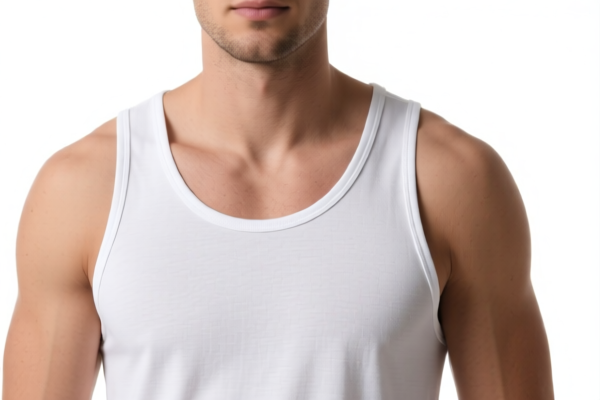
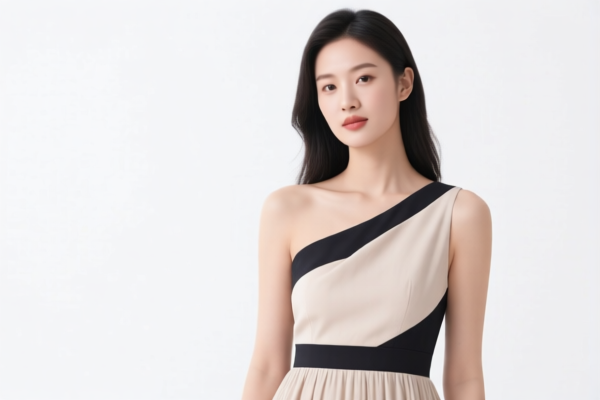
AI Analysis
🧵 Textile Products (HS Code: 6113.00.90.20 & Related Codes)
🌐 HS Code Reference & Customs Clearance Guide | 2026 Latest Tariff Breakdown | Professional-Level Clearance Strategy
📌 I. Product Definition & Classification: What Exactly Are "Textile Products" in HS 6113?
In international trade, HS Code 6113 refers to "Garments and clothing accessories, of knit or crochet fabrics impregnated, coated, covered or laminated with plastics or other materials."
Unlike standard woven or plain knitted fabrics, 6113 items are functional textiles with specific coatings, laminations, or impregnations (e.g., waterproof, windproof, UV-protective, or antimicrobial finishes). They are often used in outdoor gear, medical textiles, industrial protective wear, and technical apparel.
⚠️ Key Distinction:
- If the fabric is plain knit/crochet without coating/lamination → It belongs to other HS codes (e.g., 6101–6111).
- If it is impregnated, coated, covered, or laminated → It falls under 6113.
- Sub-classification depends on the gender/age group (Men’s, Women’s, Children’s) and final product type (Coats, Jackets, General Apparel).
📦 II. HS Code Classification Details (2026 Latest Tariff Alignment)
Based on the provided data, here are the specific HS codes and their tax implications for products classified under the 6113 series:
| HS Code | Product Description | Application Scenario | Gender/Age Group | Total Tax Rate |
|---|---|---|---|---|
| 6113.00.10.10 | Textile Products (Knitted/Crocheted Fabrics) | General technical textiles, unisex or unspecified | Unisex/General | 21.3% |
| 6113.00.10.05 | Men’s or Boys’ Coats & Jackets | Outerwear for males, technical coatings | Men’s/Boys’ | 21.3% |
| 6113.00.90.82 | Women’s or Girls’ Garments | Apparel for females, coated/laminated fabrics | Women’s/Girls’ | 24.6% |
| 6113.00.90.86 | Other Garments (Fallback Category) | Items not specifically categorized elsewhere | Unisex/Other | 24.6% |
| 5905.00.10.00 | Textile Materials (Raw/Basic Textiles) | Basic textile materials, not yet garmentized | N/A (Material) | 35.0% |
🔍 Important Note:
- 6113.00.90.20 (Your input code) is likely a subset or variant of 6113.00.90.86 (Other Garments) or similar subcategories under the 90.xx series.
- The tax rates above are specific to Chinese-origin goods imported into the US, including all applicable surcharges.
💰 III. 2026 Latest Tariff Rate Breakdown (Including Surcharges & Policy Add-ons)
✅ Applicable Country: United States (US)
✅ Country of Origin: China (CN)
✅ Effective Date: November 10, 2025 (and subsequent imports)
🎯 1. 6113.00.10.10 & 6113.00.10.05 — General Textiles & Men’s/Boys’ Coats
| Item | Details |
|---|---|
| Base Tariff | 3.8% (ad valorem) |
| Section 301 Surcharge | +7.5% (Additional Tariff) |
| 122 Clause Tariff | +10% (Specific Policy Surcharge) |
| Total Tax Rate | 21.3% |
| Tax Calculation | CIF Value × 21.3% |
| De Minimis Exemption | ❌ Not Eligible (deny_de_minimis) |
| Legal Basis Path | Section 301 → 122 Clause → USITC:6113.00.10.x0 |
📌 Explanation:
- The 3.8% base tariff is the standard Most Favored Nation (MFN) rate for knit/crochet coated fabrics.
- The 7.5% Section 301 surcharge is a retaliatory tariff against Chinese goods.
- The 10% "122 Clause" is a specific US policy surcharge targeting certain textile categories.
- Combined total: 21.3%. This is a high-cost category for Chinese-origin textiles.
🎯 2. 6113.00.90.82 & 6113.00.90.86 — Women’s/Girls’ Garments & Other Fallback Categories
| Item | Details |
|---|---|
| Base Tariff | 7.1% (ad valorem) |
| Section 301 Surcharge | +7.5% (Additional Tariff) |
| 122 Clause Tariff | +10% (Specific Policy Surcharge) |
| Total Tax Rate | 24.6% |
| Tax Calculation | CIF Value × 24.6% |
| De Minimis Exemption | ❌ Not Eligible (deny_de_minimis) |
| Legal Basis Path | Section 301 → 122 Clause → USITC:6113.00.90.8x |
📌 Explanation:
- Women’s and girls’ garments often have a higher base tariff (7.1%) compared to general/men’s categories (3.8%).
- The Section 301 and 122 Clause surcharges remain constant at 7.5% and 10%, respectively.
- Combined total: 24.6%. This is even more expensive than the 21.3% category.
🎯 3. 5905.00.10.00 — Textile Materials (Raw/Basic)
| Item | Details |
|---|---|
| Base Tariff | 0.0% (ad valorem) |
| Section 301 Surcharge | +25% (Additional Tariff) |
| 122 Clause Tariff | +10% (Specific Policy Surcharge) |
| Total Tax Rate | 35.0% |
| Tax Calculation | CIF Value × 35.0% |
| De Minimis Exemption | ❌ Not Eligible (deny_de_minimis) |
| Legal Basis Path | Section 301 → 122 Clause → USITC:5905.00.10.00 |
📌 Explanation:
- While the base tariff is 0%, the Section 301 surcharge jumps to 25% for textile materials.
- The 122 Clause adds another 10%.
- Combined total: 35.0%. This is the highest tax rate in the provided dataset, reflecting strict US policy on raw/textile material imports from China.
🛠️ IV. Customs Clearance Practical Advice (Avoid Pitfalls)
✅ 1. Documentation Checklist (Mandatory)
| Document | Required? | Notes |
|---|---|---|
| ✅ Product Specification Sheet | ✔️ | Must detail coating/lamination type, fabric composition, and final use. |
| ✅ Commercial Invoice | ✔️ | Clearly state "Textile Products of Knitted/Crocheted Fabrics, Coated/Laminated" (HS 6113). |
| ✅ Packing List | ✔️ | Specify items by gender/age group if applicable (Men’s, Women’s, General). |
| ✅ Certificate of Origin (CO) | ✔️ | Prove Chinese origin to apply correct tariffs (or seek exemptions if applicable). |
| ✅ Third-Party Test Report | ✔️ | Proof of coating/lamination (e.g., waterproof, flame-retardant) to justify HS 6113. |
| ✅ FCC/CE/RoHS Certificates | ✔️ | If textiles are for electronic-integrated apparel (e.g., heated clothing). |
✅ 2. Classification Strategy (Key Rules)
🔥 "Coating Defines 6113, Gender Sets the Rate, No De Minimis for China!"
| Scenario | Correct HS Code | Tax Rate | Risk if Misclassified |
|---|---|---|---|
| Unisex technical textile with coating | 6113.00.10.10 |
21.3% | Misclassifying as general knit (6105) → Higher scrutiny, potential fines. |
| Men’s/Boys’ coated jacket | 6113.00.10.05 |
21.3% | Misclassifying as general coat (6101) → Different base rate, compliance risk. |
| Women’s/Girls’ coated apparel | 6113.00.90.82 |
24.6% | Misclassifying as unisex → Over/underpayment, audit risk. |
| Other coated garments (fallback) | 6113.00.90.86 |
24.6% | Must provide detailed description to avoid "catch-all" penalties. |
| Raw textile material with coating | 5905.00.10.00 |
35.0% | Highest risk! Ensure it’s not yet a garment. |
✅ 3. Special Considerations
| Situation | Recommendation |
|---|---|
| OEM Custom Textiles | Provide customer design specs and coating certificates to justify HS 6113. |
| Mixed Shipments | Separate HS codes by product type (e.g., men’s coats vs. raw materials) to avoid consolidated tariff errors. |
| De Minimis Loophole? | ❌ Not Available. All HS 6113 and 5905 items from China are excluded from the $800 de minimis exemption. |
| Section 301 Exemptions? | Check if your specific product was removed from the Section 301 list. Most textile coatings remain included. |
🌍 V. Global Market Comparison (2026)
| Country/Region | Recommended HS Code | Tax Rate (China Origin) | Certification Requirements | Notes |
|---|---|---|---|---|
| 🇺🇸 United States | 6113.00.x0.x0 / 5905.00.10.00 |
21.3% – 35.0% | ASTM, CPSIA (if children’s), FCC (if electronic) | Highest tariffs due to Section 301 + 122 Clause. |
| 🇨🇳 China | 6113.00.x0.x0 |
5–10% | GB Standards | No surcharges. |
| 🇪🇺 European Union | 6113.00.x0.x0 |
0–4% | REACH, OEKO-TEX | No Section 301 equivalent. |
| 🇬🇧 United Kingdom | 6113.00.x0.x0 |
0–4% | UKCA, REACH | Post-Brexit rules apply. |
| 🇯🇵 Japan | 6113.00.x0.x0 |
0–10% | JIS, PSE (if electronic) | Moderate tariffs. |
📌 Conclusion:
- The US is the most challenging market for Chinese-origin coated textiles due to cumulative surcharges (up to 35%).
- EU and Japan are far more favorable, with minimal or no surcharges.
- Consider supply chain diversification (e.g., Vietnam, Mexico) to avoid US tariffs if targeting the American market.
📌 VI. Common Mistakes & Pitfalls (Lessons Learned)
❌ Mistake 1: Classifying coated garments as plain knitwear (e.g., HS 6101)
👉 Consequence: Customs may reclassify as 6113, leading to higher tariffs + penalties for misdeclaration.
❌ Mistake 2: Ignoring the 122 Clause
👉 Consequence: Underpaying by 10%, resulting in back taxes + interest upon audit.
❌ Mistake 3: Attempting De Minimis shipment under $800
👉 Consequence: Seizure or return of goods, as 6113/5905 are excluded from the exemption.
❌ Mistake 4: Vague product descriptions ("Textile Cloth")
👉 Consequence: Customs holds shipment for classification verification, causing delays and demurrage fees.
✅ Best Practice:
"Women’s Waterproof Coated Knit Jacket, 100% Polyester, Laminated with TPU, Model XYZ, ASTM D4964 Tested"
🎯 VII. Final Recommendations: Smart Classification, Cost Efficiency
🎯 Key Takeaways:
🔹 "Coating = HS 6113, Gender = Tax Rate, No De Minimis for China!"
🔹 "21.3% for Men’s/General, 24.6% for Women’s, 35% for Raw Materials."
🔹 "Document everything: Coating proof, material composition, gender classification."
📌 Pro Tip:
If your products are sufficiently transformed in a third country (e.g., Vietnam, Mexico), you may avoid US tariffs.
However, simple assembly or minor processing does not qualify for Rules of Origin changes.
📣 Call to Action:
📞 Consult a Licensed Customs Broker + Provide Product Photos & Specs + Apply for HS Code Advance Ruling
🚀 Ensure Compliance, Avoid Penalties, and Optimize Your Supply Chain!
✨ Professional Clearance Starts with Accurate Classification!
💼 Every Percent Saved is Pure Profit!
Customer Reviews
About HS Code Classification
The Harmonized System (HS) is an internationally standardized nomenclature developed by the World Customs Organization (WCO) to classify traded products. Over 200 countries use the HS system as the basis for customs tariffs, trade statistics, and import/export regulations.
Each HS code follows a hierarchical structure:
- Chapter (2 digits) — Broad category of goods (e.g., Chapter 84: Machinery and Mechanical Appliances)
- Heading (4 digits) — More specific grouping within the chapter
- Subheading (6 digits) — Internationally standardized breakdown, used by all WCO member countries
- National subdivisions (8-10 digits) — Country-specific extensions for further classification, such as US HTSUS 10-digit codes
Correct HS code classification is essential for smooth customs clearance, accurate duty payment, and compliance with trade regulations. Misclassification can lead to customs delays, overpayment of duties, or penalties.
When importing from CN to US, the applicable tariff rates may include:
- Most-Favored-Nation (MFN) rate — The standard duty rate applied to WTO members
- General rate — Applied to countries without trade agreements
- Trade remedy duties — Additional tariffs such as Section 301 (anti-dumping), Section 232 (national security), or countervailing duties
The information provided on this page is for reference purposes only. For official classification, please consult with your local customs authority or a licensed customs broker.