textile reinforced plastic prototype board
CN → US| HS Code | Tariff Rate | Origin | Destination | Doc |
|---|---|---|---|---|
| 6815190000 | 35.0% | CN | US | Official Doc |
| 3921905010 | 39.8% | CN | US | Official Doc |
| 3921904010 | 39.2% | CN | US | Official Doc |
| 5903102090 | 35.0% | CN | US | Official Doc |
Product Images
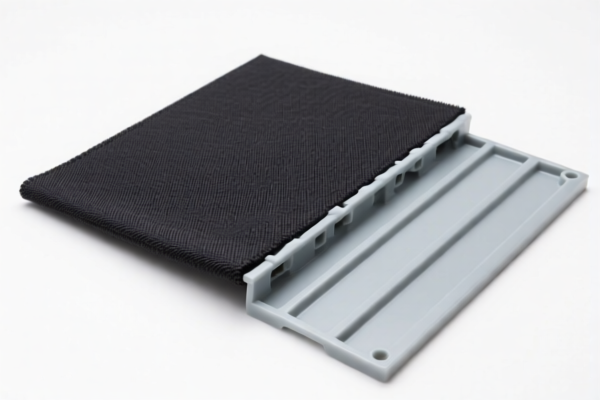
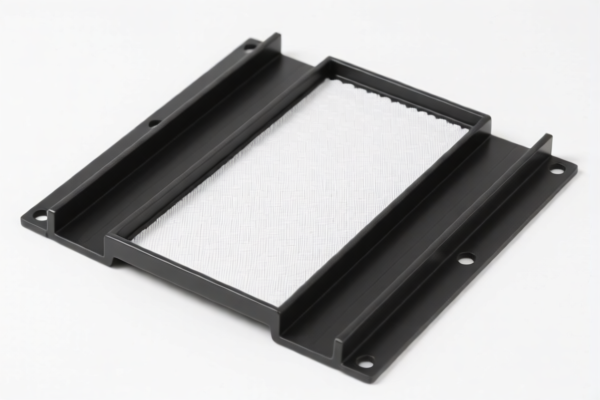
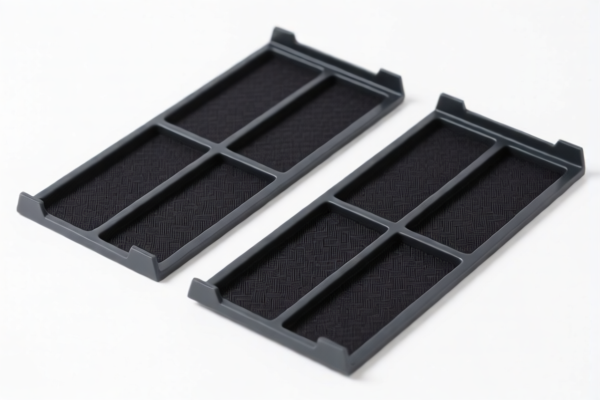
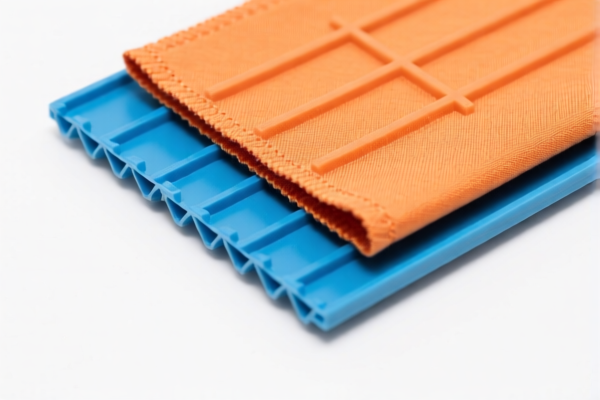
AI Analysis
🛠️ Textile Reinforced Plastic Prototype Board (TRP)
🌐 HS Code Reference & Customs Clearance Guide | 2026 Latest Tariff Analysis | Strategic Customs Strategy
📌 I. Product Definition & Classification: Do You Really Understand "Textile Reinforced Plastic"?
Textile Reinforced Plastic (TRP) Prototype Boards are composite materials formed by impregnating textile fabrics (such as glass fiber, carbon fiber, or synthetic fibers) with thermosetting or thermoplastic resins. They are primarily used in engineering prototyping, industrial manufacturing, and high-performance structural applications due to their high strength-to-weight ratio and dimensional stability.
In international trade, these boards are classified based on their primary material and structural composition: 1. Composite Boards (Chapter 68): If the textile reinforcement is the dominant feature, and it is mixed with other materials (like inorganic non-metallics), it may fall under mineral products. 2. Plastic Laminates/Sheets (Chapter 39): If the resin (plastic) forms the matrix that holds the textile reinforcement together, it is often classified as a plastic article, specifically laminated or reinforced plastic sheets.
⚠️ Key Distinction Point:
- If the product is primarily carbon/organic fiber reinforced with inorganic binders → Often falls under Chapter 68 (Articles of Stone, Plaster, Cement, Asbestos, Mica, or Similar Materials).
- If the product is primarily polymer matrix with textile reinforcement → Falls under Chapter 39 (Plastics and Articles Thereof).
📦 II. HS Code Classification Details (2026 Latest Tariff Authority Comparison)
| HS Code | Product Description | Application Scenario | Primary Material Basis |
|---|---|---|---|
6815.19.00.00 |
Articles of Stone or of Other Inorganic Non-Metallic Materials (Other) | Carbon fiber reinforced composite boards used for non-electrical structural purposes | Inorganic/Composite: Carbon/Mineral fiber reinforced |
3921.90.50.10 |
Other Plates, Sheets, Film, Foil and Strip, of Plastics: Of Plastic, Reinforced, Laminated, Supported or Combined with Other Materials | Decorative boards, high-pressure laminates, or plastic-based composite boards | Polymer Matrix: Plastic base with textile/reinforcement layer |
3921.90.40.10 |
Other Plates, Sheets, Film, Foil and Strip, of Plastics: Of Plastic, Reinforced, Laminated, Supported or Combined with Other Materials | General-purpose plastic sheets with textile reinforcement, not specified elsewhere | Polymer Matrix: General plastic reinforcement |
5903.10.20.90 |
Textile Fabrics Impregnated, Coated, Covered or Laminated with Plastic: With Polyvinyl Chloride: Other | Plastic-coated textile fabrics, if considered a textile product rather than a plastic sheet | Textile Base: Fabric with plastic coating |
🔍 Critical Note:
- Chapter 68 (6815.19.00.00) applies when the product is viewed as a mineral/carbon composite (e.g., carbon fiber boards used in aerospace/automotive structures).
- Chapter 39 (3921.90.xxxx) applies when the product is viewed as a plastic laminate (e.g., FRP boards, decorative laminates, or general industrial plastic sheets).
- Chapter 59 (5903.10.20.90) applies if the product is essentially a textile fabric with a plastic coating, rather than a rigid board.
💰 III. 2026 Latest Tariff Rate Breakdown (Including Surtaxes & Policy Add-ons)
✅ Applicable Country: United States (US)
✅ Origin: China (CN)
✅ Effective Date: From November 10, 2025 (and subsequent imports)
🎯 1. 6815.19.00.00 —— Articles of Carbon or Similar Fibers (Composite)
| Item | Content |
|---|---|
| Base Tariff | 0% (ad valorem) |
| USITC Surcharge | +25% (Under USITC Footnote 9903.88.01) |
| IEEPA Surcharge | +10% (Against Chinese/HK products, effective Nov 10, 2025) |
| Total Rate | 35.0% |
| Tax Calculation | CIF Value × 35% |
| De Minimis Eligibility | ❌ Not Eligible (deny_de_minimis) |
| Legal Basis Path | IEEPA:9903.01.25 → IEEPA:9903.01.24 → USITC:6815.19.00.00 → FOOTNOTE:9903.88.01 |
📌 Explanation:
- "USITC Surcharge 25%": Derived from Section 301 Tariffs under the US Trade Act.
- "IEEPA 10%": Additional tariff under the International Emergency Economic Powers Act targeting Chinese imports.
- Total 35%: This is a high tariff rate. Misclassification as a lower-tariff item can lead to severe penalties.
🎯 2. 3921.90.50.10 —— Plastic Plates, Reinforced/Decorative
| Item | Content |
|---|---|
| Base Tariff | 4.8% |
| USITC Surcharge | +25% |
| IEEPA Surcharge | +10% |
| Total Rate | 39.8% |
| Tax Calculation | CIF Value × 39.8% |
| De Minimis Eligibility | ❌ Not Eligible |
| Legal Basis Path | IEEPA:9903.01.25 → IEEPA:9903.01.24 → USITC:3921.90.50.10 → FOOTNOTE:9903.88.01 |
📌 Note:
- This code applies to plastic-based decorative or reinforced boards.
- The base rate is higher than Chapter 68, but the surcharges remain the same, leading to a higher total tax burden.
🎯 3. 3921.90.40.10 —— Plastic Plates, Reinforced (General)
| Item | Content |
|---|---|
| Base Tariff | 4.2% |
| USITC Surcharge | +25% |
| IEEPA Surcharge | +10% |
| Total Rate | 39.2% |
| Tax Calculation | CIF Value × 39.2% |
| De Minimis Eligibility | ❌ Not Eligible |
| Legal Basis Path | IEEPA:9903.01.25 → IEEPA:9903.01.24 → USITC:3921.90.40.10 → FOOTNOTE:9903.88.01 |
📌 Note:
- Similar to3921.90.50.10, this is a plastic laminate classification.
- Slightly lower base rate than3921.90.50.10, but still significantly higher than Chapter 68.
🎯 4. 5903.10.20.90 —— Plastic-Impregnated Textile Fabric
| Item | Content |
|---|---|
| Base Tariff | 0% (ad valorem) |
| USITC Surcharge | +25% |
| IEEPA Surcharge | +10% |
| Total Rate | 35.0% |
| Tax Calculation | CIF Value × 35.0% |
| De Minimis Eligibility | ❌ Not Eligible |
| Legal Basis Path | IEEPA:9903.01.25 → IEEPA:9903.01.24 → USITC:5903.10.20.90 → FOOTNOTE:9903.88.01 |
📌 Note:
- Applies if the product is classified as a textile fabric with plastic coating, not a rigid board.
- Same total rate as Chapter 68, but legal risk if the product is clearly a rigid board (not flexible fabric).
🛠️ IV. Customs Clearance Practical Advice (Battle-Tested Pitfall Avoidance)
✅ 1. Required Documentation Checklist (Mandatory)
| Document | Must Provide | Description |
|---|---|---|
| ✅ Product Specification Sheet | ✔️ | Material composition (e.g., % plastic, % fiber), resin type, curing process |
| ✅ Material Safety Data Sheet (MSDS) | ✔️ | For chemical handling and customs verification |
| ✅ Product Photos (Including Label) | ✔️ | Clear image of the board, thickness, surface finish, and labeling |
| ✅ Third-Party Test Report | ✔️ | ASTM/ISO standards for tensile strength, thermal resistance, etc. |
| ✅ Commercial Invoice | ✔️ | Must accurately describe product as "Textile Reinforced Plastic Board" |
| ✅ Certificate of Origin (CO) | ✔️ | Required for origin determination and tariff application |
| ✅ Packing List | ✔️ | Detail net/gross weight, dimensions, and packaging type |
✅ 2. Declaration Tips (Key Mantra)
🔥 "Material is King, Board vs. Fabric, Precise Name, Lower Risk!"
| Scenario | Correct Declaration | Wrong Action |
|---|---|---|
| Rigid Composite Board (Carbon/Fiber) | 6815.19.00.00 |
Misdeclare as plastic → 39%+ tax |
| Plastic-Laminated Decorative Board | 3921.90.50.10 |
Misdeclare as carbon fiber → 35% tax (or audit) |
| Flexible Plastic-Coated Fabric | 5903.10.20.90 |
Misdeclare as rigid board → 35% tax (but legal risk if flexible) |
| Mixed Material Claims | Provide detailed material breakdown | Vague description "Composite Board" → Delay/Seizure |
✅ 3. Special Situation Handling
| Situation | Handling Advice |
|---|---|
| OEM Custom Boards | Provide customer PO and design specs to prove commercial use |
| High-Performance Carbon Fiber | Emphasize "carbon fiber reinforcement" and "non-electrical use" for 6815.19.00.00 |
| Plastic-Fiber Hybrid | Provide ratio of plastic to fiber. If plastic > 50%, lean towards Chapter 39 |
| Prototyping Samples | Mark as "Samples" but do not undervalue; declare actual transaction value |
🌍 V. Global Market Customs Comparison (2026 Latest)
| Country/Region | Recommended HS Code | Tariff | Certification | Remarks |
|---|---|---|---|---|
| 🇺🇸 USA | 6815.19.00.00 or 3921.90.xxxx |
35% - 39.8% (China Origin) | None specific | High tariff environment; precise classification is critical |
| 🇨🇳 China | 6815.19.00.00 or 3921.90.xxxx |
5% - 8% | CCC (if applicable) | Lower base tariff, no surcharges |
| 🇪🇺 EU | 6815.19.00.00 or 3921.90.xxxx |
0% - 6.5% | REACH + RoHS | No Section 301-style tariffs |
| 🇦🇺 Australia | 6815.19.00.00 or 3921.90.xxxx |
5% | RCM | Moderate tariff |
| 🇯🇵 Japan | 6815.19.00.00 or 3921.90.xxxx |
0% - 5% | PSE (if electrical) | No surcharges |
📌 Conclusion:
- USA is the most challenging market due to Section 301 and IEEPA surcharges.
- Classification accuracy directly impacts cost: Choosing6815vs3921can save ~5% on total tax.
- China-origin goods face highest scrutiny; ensure documentation is flawless.
📌 VI. Common Errors & Pitfall Guide (Blood-Learning Lessons)
❌ Error 1: Calling a rigid board a "textile fabric" to avoid plastic tariffs
👉 Consequence: Customs rejects classification, applies penalty + back taxes
❌ Error 2: Under-declaring value as "Sample"
👉 Consequence: Customs seizure, fines, and blacklisting
❌ Error 3: Omitting material composition (e.g., not specifying carbon vs. glass fiber)
👉 Consequence: Customs cannot determine correct HS code → Delay for 2+ weeks
❌ Error 4: Using vague terms like "Composite Material" without detail
👉 Consequence: Audit risk, manual examination, demurrage charges
✅ Correct Approach:
"Textile Reinforced Plastic Board, Carbon Fiber/Epoxy Resin, 10mm Thickness, Non-Electrical Use, Model XYZ, ASTM D3039 Tested"
🎯 VII. Conclusion: Professional Declaration, Save Time, Reduce Cost!
🎯 Remember the Mantra:
🔹 "Rigid Board? Check Chapter 68. Plastic Laminate? Chapter 39. Fabric? Chapter 59. Wrong Chapter? Pay the Penalty!"
🔹 "35% vs 39%: A 4% Difference Can Save Thousands on Large Shipments!"
📌 Pro Tip:
If your product is originating from Vietnam, Mexico, Thailand, or Malaysia, you may qualify for IEEPA Exemptions or lower tariffs.
Recommendation: Apply for a Pre-Ruling (Advance Ruling) from US Customs and Border Protection (CBP) before shipment to lock in the correct HS Code and tariff rate.
📣 Take Action Now:
📞 Contact a Professional Broker + Provide Product Specs + Apply for CBP Pre-Ruling
🚀 Ensure Smooth Clearance, Efficient Export, and Maximized Profit!
✨ Professional Customs Clearance Starts with Accurate Classification!
💼 Every Dollar of Cost Deserves Precision!
Customer Reviews
About HS Code Classification
The Harmonized System (HS) is an internationally standardized nomenclature developed by the World Customs Organization (WCO) to classify traded products. Over 200 countries use the HS system as the basis for customs tariffs, trade statistics, and import/export regulations.
Each HS code follows a hierarchical structure:
- Chapter (2 digits) — Broad category of goods (e.g., Chapter 84: Machinery and Mechanical Appliances)
- Heading (4 digits) — More specific grouping within the chapter
- Subheading (6 digits) — Internationally standardized breakdown, used by all WCO member countries
- National subdivisions (8-10 digits) — Country-specific extensions for further classification, such as US HTSUS 10-digit codes
Correct HS code classification is essential for smooth customs clearance, accurate duty payment, and compliance with trade regulations. Misclassification can lead to customs delays, overpayment of duties, or penalties.
When importing from CN to US, the applicable tariff rates may include:
- Most-Favored-Nation (MFN) rate — The standard duty rate applied to WTO members
- General rate — Applied to countries without trade agreements
- Trade remedy duties — Additional tariffs such as Section 301 (anti-dumping), Section 232 (national security), or countervailing duties
The information provided on this page is for reference purposes only. For official classification, please consult with your local customs authority or a licensed customs broker.