Thermos
CN → US| HS Code | Tariff Rate | Origin | Destination | Doc |
|---|---|---|---|---|
| 9617001000 | 17.2% | CN | US | Official Doc |
| 9617003000 | 16.9% | CN | US | Official Doc |
| 7323930060 | 62.0% | CN | US | Official Doc |
| 7323999030 | 88.4% | CN | US | Official Doc |
| 7418100051 | 70.5% | CN | US | Official Doc |
Product Images
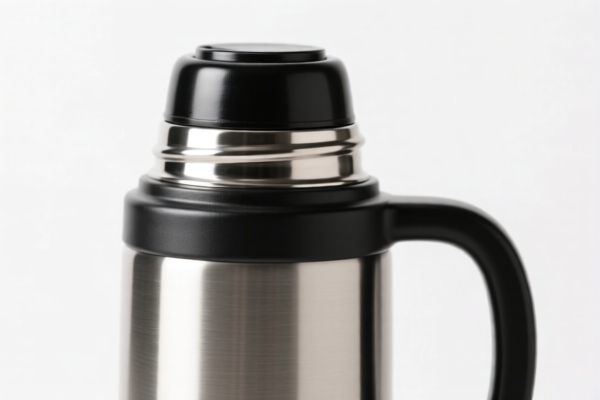
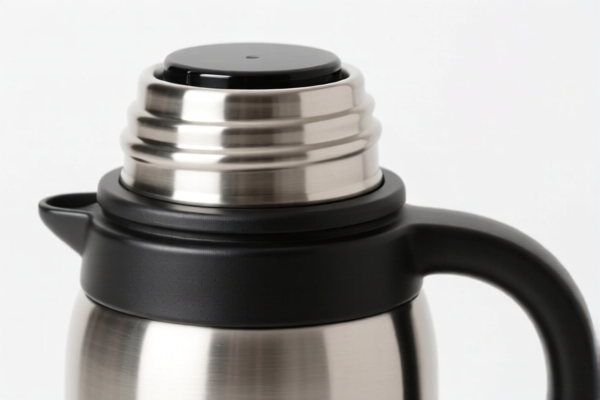
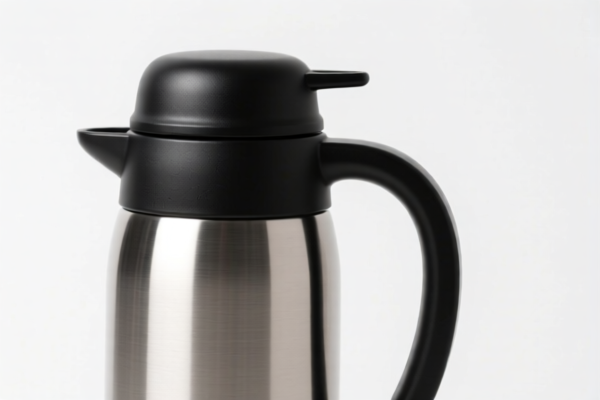
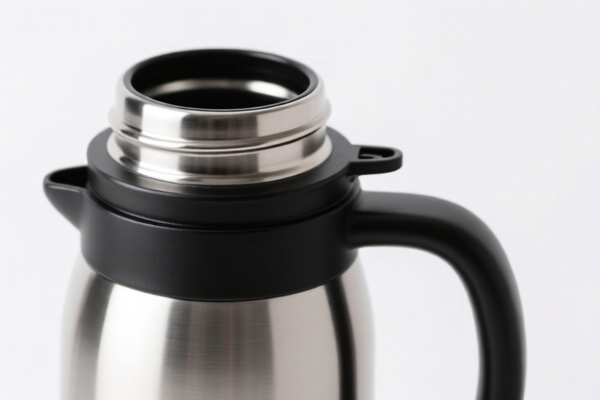
AI Analysis
🧊 Thermos / Vacuum Flasks (保温杯/真空容器)
🌐 HS Code Reference & Customs Clearance Guide | 2026 Latest Tariff Analysis | Professional Clearance Strategy
📌 I. Product Definition & Classification: Do You Really Know "Thermos"?
A "Thermos" (commonly known as a vacuum flask or thermal bottle) is a portable container designed to maintain the temperature of its contents, typically made of stainless steel, plastic, or glass with a vacuum layer. In international trade, especially for US Customs (CBP), the classification varies significantly based on material composition, intended use, and structural features.
⚠️ Key Distinction Point:
- If it is a finished consumer good specifically designed for holding liquids as a vessel → Often falls under 9617 (Vacuum containers).
- If it is classified primarily as tableware/kitchenware made of metal → Falls under Chapter 73 (Articles of iron or steel) or Chapter 74 (Articles of copper).
- Critical Note: The US has imposed significant additional tariffs (Section 301/IEEPA) on steel/copper goods vs. general household articles. Misclassification here can lead to tax rate differences of over 70%!
📦 II. HS Code Classification Details (2026 Latest Tariff Authority Reference)
Based on the provided data, here are the five potential HS Codes for Thermoses, ranging from lowest to highest tax burden.
| HS Code | Product Description | Summary from Data | Applicable Scenario |
|---|---|---|---|
| 9617.00.10.00 | Vacuum containers (Finished Consumer Goods) | "Thermos belongs to vacuum containers, fits finished consumer goods purpose." | Best Option: General purpose vacuum flasks/bottles. |
| 9617.00.30.00 | Vacuum containers (General) | "Thermos belongs to vacuum container category, fits container usage attribute." | Alternative: Other vacuum containers not specifically listed in .10. |
| 7323.93.00.60 | Kitchen/Tableware of Stainless Steel | "Thermos usually stainless steel, belongs to kitchen & household utensils." | High risk: Classified as steel tableware due to material. |
| 7418.10.00.51 | Household Non-Electric Heater | "Thermos is household drinking vessel, fits non-electric heater definition." | Misclassification Risk: Based on "heating/keeping warm" logic, but high tax. |
| 7323.99.90.30 | Other Household Utensils | "Thermos is household utensil, fits kitchen/tableware definition." | Worst Option: Generic household items with high surcharges. |
🔍 Important Reminder:
- 9617 Codes generally attract lower total tariffs (~17%) compared to 7323/7399 Codes (~62%-88%). - The drastic difference is due to "Steel/Aluminum/Copper Products Surtax" (50%) and Section 301/IEEPA duties applied to metal goods. - Do NOT classify stainless steel bottles as "Steel Articles" (Chapter 73) if they qualify as "Vacuum Containers" (Chapter 96), unless CBP specifically demands material-based classification for your specific product structure.
💰 III. 2026 Latest Tariff Rate Details (Including Surcharges)
✅ Applicable Country: United States (US)
✅ Origin: China (CN)
✅ Effective Time: Current US Trade Policy (Section 301 & IEEPA)
🎯 1. 9617.00.10.00 & 9617.00.30.00 —— Vacuum Containers (Recommended)
| Item | Content |
|---|---|
| Base Tariff | 7.2% (for .10) / 6.9% (for .30) |
| Surtax (Section 301/IEEPA) | 0.0% (No additional 122/301 surcharge explicitly listed for these HS codes in the provided data) |
| 122-Clause Tariff | 10% |
| Total Tax Rate | 17.2% (for .10) / 16.9% (for .30) |
| Tax Calculation | CIF Value × 17.2% (or 16.9%) |
| Legal Basis | HS:9617.00.10.00 + 122-Clause:10% |
📌 Explanation:
- This is the most cost-effective classification for standard vacuum flasks. - The "122-Clause Tariff 10%" refers to specific US trade provisions (often related to country-specific surcharges). - Savings: Compared to steel classification, you save ~45-70% in duties.
🎯 2. 7323.93.00.60 —— Stainless Steel Kitchen Utensils
| Item | Content |
|---|---|
| Base Tariff | 2.0% |
| Surtax (Section 301/IEEPA) | 0.0% (No additional 122/301 surcharge explicitly listed here, but see below) |
| 122-Clause Tariff | 10% |
| Steel/Aluminum/Copper Surtax | 50% (Explicitly listed in data) |
| Total Tax Rate | 62.0% |
| Tax Calculation | CIF Value × 62.0% |
| Legal Basis | HS:7323.93.00.60 + Steel Surtax:50% + 122-Clause:10% |
📌 Warning:
- The 50% surtax for Steel/Copper/Aluminum products is the primary driver. Even though the base rate is low (2%), the material surcharge is devastating. - This classification treats the thermos as a steel container, not a vacuum technology product.
🎯 3. 7418.10.00.51 —— Household Non-Electric Heater
| Item | Content |
|---|---|
| Base Tariff | 3.0% |
| Surtax (Section 301/IEEPA) | 7.5% |
| 122-Clause Tariff | 10% |
| Steel/Aluminum/Copper Surtax | 50% |
| Total Tax Rate | 70.5% |
| Tax Calculation | CIF Value × 70.5% |
| Legal Basis | HS:7418.10.00.51 + Steel Surtax:50% + IEEPA:7.5% + 122-Clause:10% |
📌 Note:
- High tax due to combination of IEEPA surcharge (7.5%) AND Steel Surtax (50%). - Rarely recommended for thermoses unless specific structural features force this classification.
🎯 4. 7323.99.90.30 —— Other Household Utensils
| Item | Content |
|---|---|
| Base Tariff | 3.4% |
| Surtax (Section 301/IEEPA) | 25.0% |
| 122-Clause Tariff | 10% |
| Steel/Aluminum/Copper Surtax | 50% |
| Total Tax Rate | 88.4% |
| Tax Calculation | CIF Value × 88.4% |
| Legal Basis | HS:7323.99.90.30 + Steel Surtax:50% + Section 301:25% + 122-Clause:10% |
📌 Critical Warning:
- This is the highest tariff option. - It combines the maximum steel surtax (50%) with the highest Section 301 surcharge (25%). - Only classify here if the product is a generic, non-vacuum, or improperly described household item.
🛠️ IV. Customs Clearance Practical Advice (Battle-Tested Pitfall Avoidance)
✅ 1. Preparation Checklist (Must-Haves)
| Document | Required | Description |
|---|---|---|
| ✅ Product Specifications | ✔️ | Must explicitly state "Vacuum Insulated", "Double-Walled", "Thermal Retention". |
| ✅ Material Declaration | ✔️ | Specify "Stainless Steel 304/316" BUT emphasize it is a Vacuum Container, not just a "Steel Cup". |
| ✅ Product Photos | ✔️ | Clear shots of the cross-section (showing vacuum layer) and usage as a beverage container. |
| ✅ Commercial Invoice | ✔️ | Use precise terminology: "Vacuum Flask" or "Thermal Bottle", avoid generic "Steel Cup". |
| ✅ HS Code Pre-Ruling | ✔️ | Strongly recommended to secure 9617 classification to avoid 50% steel surtax. |
✅ 2. Declaration Strategy (Key Mantra)
🔥 "Vacuum is King, Steel is the Trap!"
| Situation | Correct Declaration | Wrong Practice |
|---|---|---|
| Standard Vacuum Flask | 9617.00.10.00 (Vacuum Container) | Classify as 7323 (Steel Tableware) → 62% Tax |
| Plastic Vacuum Flask | 9617.00.10.00 | Classify as 3924 (Plastic Tableware) → May still be high, but 9617 is safer for function |
| Non-Vacuum Steel Cup | 7323.99.90.30 | Try to claim it as "Vacuum" → Customs Seizure/Fraud |
| Electric Thermal Mug | 7418 or 8516 | Classify as "Vacuum Flask" → Classification Error |
✅ 3. Special Circumstances Handling
| Situation | Handling Advice |
|---|---|
| OEM Custom Thermos | Provide design specs showing vacuum technology. Highlight "Thermal Insulation" as the primary function. |
| Mixed Orders (Vacuum + Non-Vacuum) | Split Declaration: Never lump them together. Vacuum items go to 9617; non-vacuum steel items go to 7323. |
| CBP Inquiry on Classification | Submit a Technical Data Sheet proving the vacuum seal mechanism. Emphasize that the "container" aspect is secondary to the "vacuum insulation" function. |
| High Value Luxury Flasks | Ensure "122-Clause" applicability is reviewed. Some high-end goods may have different tariff treatments if they qualify for specific exclusions. |
🌍 V. Global Main Market Clearance Comparison (2026 Latest)
| Country/Region | Recommended HS Code | Tariff (China Origin) | Key Requirement | Note |
|---|---|---|---|---|
| 🇺🇸 USA | 9617.00.10.00 |
17.2% | FCC/Prop65 (if applicable) | Avoid 7323 (62%+) due to steel surtax. |
| 🇨🇳 China | 9617.00.10.00 |
~5-10% | CCC (if electric) | Lower base tariffs. |
| 🇪🇺 EU | 9617.00.00 |
~2-4% | CE/RoHS | EU often classifies thermoses as tableware or vacuums, generally lower tariffs than US steel surtaxes. |
| 🇯🇵 Japan | 9617.00.00 |
~8-10% | PSE (if electric) | No equivalent to US "Steel Surtax". |
📌 Conclusion:
- USA is the most critical market for thermos classification due to the 50% Steel/Copper/Aluminum Surtax. - Securing 9617 classification is paramount to avoid paying 60-88% in duties instead of ~17%.
📌 VI. Common Mistakes & Pitfalls (Blood-Lessons)
❌ Mistake 1: Calling it a "Stainless Steel Cup" on the Invoice
👉 Consequence: CBP defaults to Chapter 73 (Steel Articles) → 62-88% Tax.
✅ Fix: Use "Vacuum Insulated Bottle" or "Thermal Flask".
❌ Mistake 2: Grouping Vacuum Flasks with Regular Steel Cups
👉 Consequence: Mixed shipment triggers detailed inspection. If one item is misclassified, the whole batch may be held.
✅ Fix: Separate Line Items on Invoice. Vacuum items = 9617. Non-vacuum = 7323.
❌ Mistake 3: Ignoring the "122-Clause" Surcharge
👉 Consequence: Unexpected 10% additional duty even on 9617 items.
✅ Fix: Include the 10% in your cost calculation for US shipments.
❌ Mistake 4: Assuming Plastic Parts = Plastic HS Code
👉 Consequence: If the core function is vacuum insulation, material composition (plastic lid) does not change the HS code to plastic tableware if 9617 is applicable.
✅ Fix: Focus on the primary function (vacuum insulation).
🎯 VII. Conclusion: Professional Declaration, Save Money, Ensure Smooth Clearance!
🎯 Remember the Mantra:
🔹 "Vacuum is Key, Steel is Costly!"
🔹 "9617 for 17%, 7323 for 62%+!"
🔹 "Describe Function, Not Just Material!"
📌 Pro Tip:
- If your thermos has electronic components (e.g., LED temperature display), it cannot be 9617. It may fall under 7418 or 8516.
- For pure mechanical vacuum flasks, always argue for 9617.00.10.00 to save ~50% in tariffs.
- Consider applying for a Customs Ruling before shipping large volumes to lock in the 17.2% rate.
📣 Immediate Action:
📞 Contact a specialized customs broker.
📝 Provide "Vacuum Insulation Technical Specs".
📦 Ensure Invoice reads "Vacuum Flask" NOT "Steel Cup".
🚀 Maximize your profit margin by minimizing duty costs!
✨ Professional Clearance Starts with Accurate Classification!
💼 Every dollar saved in duty is pure profit!
Customer Reviews
About HS Code Classification
The Harmonized System (HS) is an internationally standardized nomenclature developed by the World Customs Organization (WCO) to classify traded products. Over 200 countries use the HS system as the basis for customs tariffs, trade statistics, and import/export regulations.
Each HS code follows a hierarchical structure:
- Chapter (2 digits) — Broad category of goods (e.g., Chapter 84: Machinery and Mechanical Appliances)
- Heading (4 digits) — More specific grouping within the chapter
- Subheading (6 digits) — Internationally standardized breakdown, used by all WCO member countries
- National subdivisions (8-10 digits) — Country-specific extensions for further classification, such as US HTSUS 10-digit codes
Correct HS code classification is essential for smooth customs clearance, accurate duty payment, and compliance with trade regulations. Misclassification can lead to customs delays, overpayment of duties, or penalties.
When importing from CN to US, the applicable tariff rates may include:
- Most-Favored-Nation (MFN) rate — The standard duty rate applied to WTO members
- General rate — Applied to countries without trade agreements
- Trade remedy duties — Additional tariffs such as Section 301 (anti-dumping), Section 232 (national security), or countervailing duties
The information provided on this page is for reference purposes only. For official classification, please consult with your local customs authority or a licensed customs broker.