thermosetting resin with aromatic ring
CN → US| HS Code | Tariff Rate | Origin | Destination | Doc |
|---|---|---|---|---|
| 3907300000 | 41.1% | CN | US | Official Doc |
| 3907992000 | 35.0% | CN | US | Official Doc |
Product Images
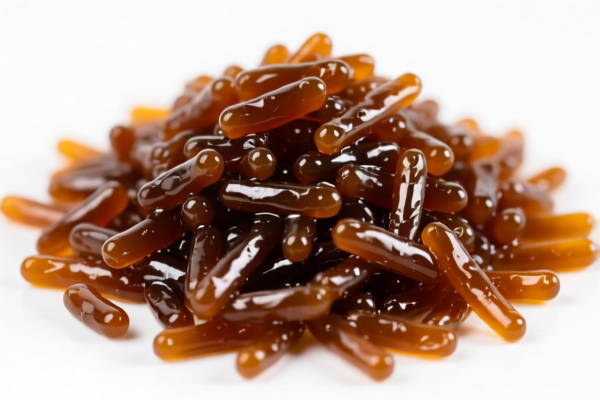
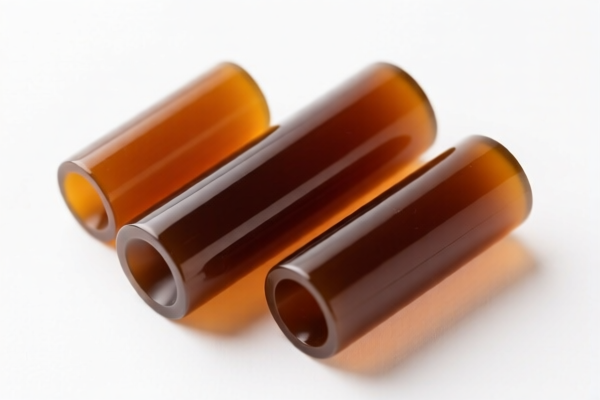
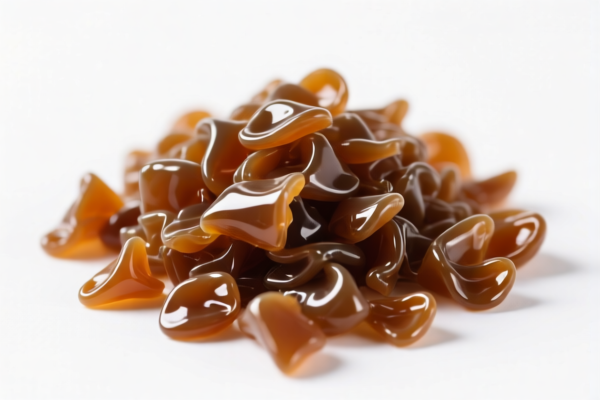
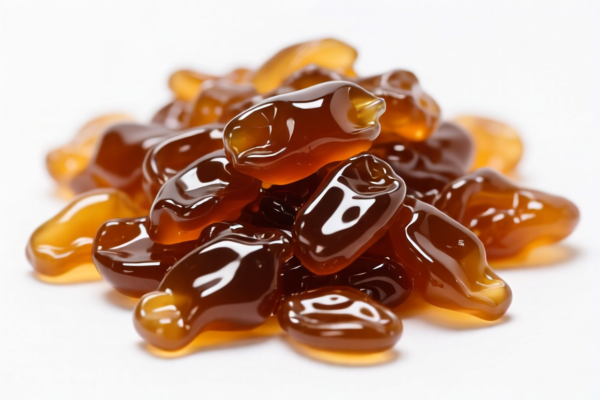
AI Analysis
🧪 Epoxide Resins (Thermosetting Resins with Aromatic Rings)
🌐 HS Code Reference & Customs Clearance Guide | 2026 Latest Tariff Analysis | Professional-Level Clearance Strategy
📌 I. Product Definition & Classification: Do You Really Understand "Epoxide Resins"?
Epoxide resins, often referred to as epoxy resins, are a class of reactive prepolymers and polymers which contain epoxide groups. When the prompt specifies "Thermosetting Resin with Aromatic Ring," it typically points to high-performance Epoxide Resins where the backbone contains aromatic rings (such as Bisphenol A epoxy resins or Novolac epoxy resins). These are distinct from thermoplastics and are characterized by their ability to cross-link and harden permanently when cured.
In international trade, they are primarily categorized under Chapter 39 (Plastics and Articles Thereof), specifically within the section for Polyacetals, Other Polyethers and Epoxide Resins.
⚠️ Key Distinction Point:
- If the resin is in a primary form (powders, granules, liquids, flakes) and is intended to be cured into a thermoset → It falls under 3907.30 (Epoxide Resins) or 3907.99 (Other Polyesters/Polyethers).
- If the resin is already partially cured or contains fillers forming a finished plastic product → It may fall under Chapter 39 but different subheadings, or even Chapter 35/38 if it's a prepared binder.
- Crucial Note: The provided data distinguishes between pure Epoxide Resins and specific "Thermoplastic liquid crystal aromatic polyester copolymers." Pure thermosetting epoxy resins with aromatic rings fall under 3907.30.
📦 II. HS Code Classification Details (2026 Latest Tariff Authority Comparison)
Based on the provided <DATA>, here is the precise breakdown for "Thermosetting Resin with Aromatic Ring" (interpreted as Epoxide Resins in primary forms):
| HS Code | Product Description | Application Scenario | Tax Rate (China Origin to US) |
|---|---|---|---|
3907.30.00.00 |
Epoxide resins (in primary forms) | High-performance coatings, adhesives, composite matrices, circuit boards (prepregs). Includes Bisphenol A, Novolac, and other aromatic epoxy resins. | 0.0% |
3907.99.20.00 |
Thermoplastic liquid crystal aromatic polyester copolymers | High-temperature engineering plastics, optical fibers, electronic components. NOT standard thermosetting epoxies. | 25.0% |
🔍 Critical Analysis:
- The term "Thermosetting Resin with Aromatic Ring" strongly aligns with Epoxide Resins (HS 3907.30.00.00).
- Do NOT confuse with3907.99.20.00, which refers to Thermoplastic Liquid Crystal Polyesters (LCPs). While LCPs also contain aromatic rings, they are thermoplastics, not thermosets. If your product is truly a thermosetting epoxide, it belongs to3907.30.
- If your product is mistakenly classified as a polyester or if the manufacturer claims it is a "thermoplastic" when it is actually a thermoset, the wrong HS code could lead to severe customs penalties.
💰 III. 2026 Latest Tariff Rate Details (Including Surcharges)
✅ Applicable Country: USA
✅ Origin: China (CN)
✅ 生效时间: 2025年11月10日起 (From November 10, 2025)
🎯 1. 3907.30.00.00 —— Epoxide Resins (Thermosetting, Aromatic)
| Item | Content |
|---|---|
| Basic Tariff | 0.0% (ad valorem) |
| Section 301 Surcharge (USITC) | 0.0% |
| IEEPA Surcharge | 0.0% |
| Total Tax Rate | 0.0% |
| Tax Calculation | CIF Value × 0% = $0 |
| De Minimis Eligibility | ✅ Yes (Standard rules apply, but verify volume/value limits) |
| Legal Basis | HTSUS 3907.30.00.00 |
📌 Explanation:
- Epoxide resins in primary forms currently enjoy 0% tariff under both the base schedule and Section 301/IEEPA measures.
- This makes them highly cost-effective compared to other chemical plastics.
- However, ensure the product is strictly not a mixture containing other taxed chemicals that might trigger different classifications.
⚠️ 2. Why NOT 3907.99.20.00?
| Item | Content |
|---|---|
| HS Code | 3907.99.20.00 |
| Description | Thermoplastic liquid crystal aromatic polyester copolymers |
| Total Tax Rate | 25.0% |
| Legal Basis | USITC:3907.99.20.00 + Footnote 9903.88.01 (if applicable to other categories, but here base is 0% + 25% surcharge) |
📌 Warning:
- If you incorrectly classify your thermosetting aromatic resin as "Other Polyesters" or "Liquid Crystal Polymers," you will be liable for a 25% tariff.
- The key difference is Chemical Structure:
- Epoxide (3907.30): Contains epoxide groups (oxirane), cures via cross-linking.
- LCP/Polyester (3907.99.20): Contains ester linkages, thermoplastic behavior.
- Do not mix these up.
🛠️ IV. Customs Clearance Practical Advice (Battlefield Pitfall Avoidance Guide)
✅ 1. Required Documentation Checklist (Non-Negotiable)
| Document | Must Provide | Notes |
|---|---|---|
| ✅ Chemical Structure Diagram | ✔️ | Must clearly show epoxide groups (oxirane rings) and aromatic rings. |
| ✅ Safety Data Sheet (SDS) | ✔️ | Section 3 (Composition) must identify as "Epoxy Resin" or "Glycidyl Ether." |
| ✅ Material Safety Data Sheet | ✔️ | Confirm it is uncured (primary form). |
| ✅ Certificate of Origin | ✔️ | Essential for proving origin (China) and applying correct tariff. |
| ✅ Commercial Invoice | ✔️ | Description: "Unpolymerized Epoxide Resin, Primary Form, Contains Aromatic Rings." |
| ✅ Packing List | ✔️ | Detail net/gross weight, packaging type (drums, jugs, bags). |
✅ 2. Declaration Tips (Key Mantra)
🔥 "Primary Form, Uncured, Epoxide Structure, Zero Tariff!"
| Scenario | Correct Declaration | Wrong Practice |
|---|---|---|
| Liquid/Powder Epoxy Resin | 3907.30.00.00 |
Declare as "Plastic Material" → Vague, may be audited |
| Cured Epoxy Blocks | Not in Primary Form → Possibly 3926.90.99 |
Declare as 3907.30 → Misclassification |
| Epoxy Adhesive (Mixed with Solvents) | Possibly 3506.91 or 3824.99 |
Declare as 3907.30 → Tax Risk! |
| Liquid Crystal Polyester | 3907.99.20.00 |
Declare as 3907.30 → 25% Penalty! |
✅ 3. Special Case Handling
| Situation | Handling Advice |
|---|---|
| Epoxy Resin with Hardener Mix | If shipped as a kit or pre-mixed, it may no longer be "primary form." It could be classified as a prepared adhesive (3506.91 or 3824.99), which may have different tax rates. Split shipment recommended if possible. |
| Novolac vs. Bisphenol A | Both are Epoxide Resins. Both fall under 3907.30.00.00. No tax difference. |
| Filled Epoxy Resin | If the resin is mixed with fillers (silica, glass fiber) and is no longer a pure "primary form," it may be excluded from 3907.30. Check if it's still considered "resin in primary forms." |
| Origin Fraud | Ensure the aromatic rings do not come from restricted entities. Provide full supply chain transparency. |
🌍 V. Global Main Market Clearance Comparison (2026 Latest)
| Country/Region | Recommended HS Code | Tariff (China Origin) | Certification Requirements | Notes |
|---|---|---|---|---|
| 🇺🇸 USA | 3907.30.00.00 |
0.0% | None (Base) | Best Market: No Section 301 tax for Epoxies |
| 🇨🇳 China | 3907.30.00.00 |
0% (Export) | N/A | N/A |
| 🇪🇺 EU | 3907.30.00 |
5.7% (General) | REACH Registration | High Barrier: REACH compliance is mandatory |
| 🇬🇧 UK | 3907.30.00 |
5.7% (General) | UK REACH | Similar to EU |
| 🇯🇵 Japan | 3907.30.00 |
3.2% (General) | PSE (if electrical) | Low tariff, strict quality standards |
📌 Conclusion:
- USA is the most favorable market for Epoxide Resins with 0% tariff.
- EU and UK have higher base tariffs (5.7%) and strict chemical regulations (REACH).
- Avoid misclassification into3907.99.20.00to prevent 25% unexpected costs.
📌 VI. Common Errors & Pitfall Guide (Blood and Tears Lessons)
❌ Error 1: Classifying Cured Epoxy Parts as 3907.30.00.00
👉 Consequence: Customs will reject because "primary forms" only apply to uncured/resin precursors. Cured parts are articles of plastic (3926), not resins.
❌ Error 2: Confusing Epoxide Resins with Liquid Crystal Polymers (LCP)
👉 Consequence: LCPs (3907.99.20.00) are thermoplastics. If you declare Epoxies as LCPs, you risk 25% tariff if the auditor proves it's not an LCP, or if you declare LCPs as Epoxies, you lose the 0% benefit. Chemical test reports are key.
❌ Error 3: Declaring Epoxy Adhesives as 3907.30.00.00
👉 Consequence: Adhesives are mixtures. 3907.30 is for pure resins in primary form. Adhesives should be declared under Chapter 35 or 38, which may have different tax implications.
✅ Correct Practice:
"Epoxide Resin, Bisphenol A Type, Uncured, Primary Form, Clear Liquid/Powder, Contains Aromatic Rings, HS 3907.30.00.00, 0% Tariff"
🎯 VII. Conclusion: Precise Classification, Maximize Profit!
🎯 Remember the Mantra:
🔹 "Primary Form, Uncured, Epoxide Structure → 0% Tariff!"
🔹 "Do Not Confuse with LCPs → 25% Tax Penalty!"
🔹 "Cured Parts Are Not Resins → Check Chapter 39 Articles!"
📌 Pro Tip:
If your epoxide resin is mixed with solvents or hardeners, it is no longer a "primary form". Consult a customs broker to determine if it should be classified as a prepared adhesive (3506.91 or 3824.99), which may have different tax rates and regulatory requirements.
📣 Immediate Action:
📞 Contact a professional customs broker + Provide SDS & Chemical Structure + Apply for HS Code Advance Ruling (if available)
🚀 Ensure your Epoxide Resins clear customs smoothly, avoid 25% taxes, and maximize profit!
✨ Professional Clearance Starts with Accurate Classification!
💼 Every dollar saved in tariffs is pure profit!
Customer Reviews
About HS Code Classification
The Harmonized System (HS) is an internationally standardized nomenclature developed by the World Customs Organization (WCO) to classify traded products. Over 200 countries use the HS system as the basis for customs tariffs, trade statistics, and import/export regulations.
Each HS code follows a hierarchical structure:
- Chapter (2 digits) — Broad category of goods (e.g., Chapter 84: Machinery and Mechanical Appliances)
- Heading (4 digits) — More specific grouping within the chapter
- Subheading (6 digits) — Internationally standardized breakdown, used by all WCO member countries
- National subdivisions (8-10 digits) — Country-specific extensions for further classification, such as US HTSUS 10-digit codes
Correct HS code classification is essential for smooth customs clearance, accurate duty payment, and compliance with trade regulations. Misclassification can lead to customs delays, overpayment of duties, or penalties.
When importing from CN to US, the applicable tariff rates may include:
- Most-Favored-Nation (MFN) rate — The standard duty rate applied to WTO members
- General rate — Applied to countries without trade agreements
- Trade remedy duties — Additional tariffs such as Section 301 (anti-dumping), Section 232 (national security), or countervailing duties
The information provided on this page is for reference purposes only. For official classification, please consult with your local customs authority or a licensed customs broker.