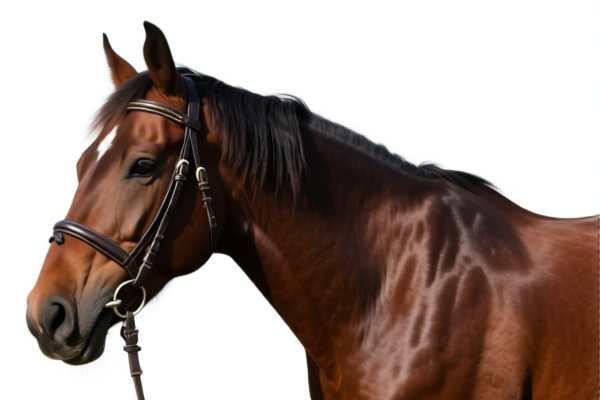
thoroughbred racehorse
CN → US| HS Code | Tariff Rate | Origin | Destination | Doc |
|---|---|---|---|---|
| 010121 | 0.0% | CN | US | Official Doc |
| 010129 | 0.0% | CN | US | Official Doc |
| 010121 | 0.0% | CN | US | Official Doc |
| 010129 | 0.0% | CN | US | Official Doc |
| 010121 | 0.0% | CN | US | Official Doc |
| 010129 | 0.0% | CN | US | Official Doc |
Product Images


AI Analysis
🐎 Thoroughbred Racehorse (Pure-Bred Breeding Horse)
🌐 HS Code Reference & Customs Clearance Guide | 2026 Latest Tariff Analysis | Professional Livestock Entry Strategy
📌 I. Product Definition & Classification: Do You Understand "Thoroughbred Racehorses"?
The Thoroughbred is a specific breed of horse developed primarily for flat racing. In international trade, the classification depends strictly on the animal's purpose (breeding vs. non-breeding) and status (live animal).
Key Distinction: * Pure-Bred Breeding Animals: Horses registered with recognized studbooks, intended for reproduction. * Other Horses: Horses that are Thoroughbreds or other breeds but are not classified as pure-bred breeding stock (e.g., racing prospects not yet registered for breeding, working horses, or horses for sport/leisure without breeding status).
⚠️ Critical Differentiation:
- If the horse is registered and intended for breeding → 0101.21
- If the horse is NOT pure-bred breeding stock (even if it is a Thoroughbred) → 0101.29
📦 II. HS Code Classification Details (2026 Tariff Authority Comparison)
| HS Code | Product Description | Applicable Scenario | Breeding Status |
|---|---|---|---|
0101.21 |
Live Pure-Bred Breeding Horses | Registered stud horses, broodmares intended for breeding | ✅ Yes |
0101.29 |
Live Horses (Other than Pure-Bred Breeding) | Racing prospects, performance horses, unregistered Thoroughbreds, other uses | ❌ No |
🔍 Key Reminder:
- The term "Thoroughbred" alone does not guarantee0101.21.
- If the horse is a Thoroughbred but not designated for breeding (e.g., a racehorse sold for riding or sport), it must be declared under 0101.29.
- Misclassification can lead to delays, as customs may require studbook registration certificates.
💰 III. 2026 Latest Tariff Rate Details (Including Surcharges & Policy Additions)
✅ Applicable Country: United States (US)
✅ Origin: China (CN)
✅ Effective Date: November 10, 2025 (including subsequent imports)
🎯 1. 0101.21 – Live Pure-Bred Breeding Horses
| Item | Content |
|---|---|
| Base Tariff Rate | 0% (ad valorem) |
| USITC Surtax | +25% (from USITC Footnote 9903.88.01) |
| IEEPA Surtax | +10% (For China/Hong Kong products, effective Nov 10, 2025) |
| Total Tax Rate | 35% |
| Tax Calculation | CIF Value × 35% |
| De Minimis Exemption | ❌ Not Available (deny_de_minimis) |
| Legal Basis Path | IEEPA:9903.01.25 → IEEPA:9903.01.24 → USITC:0101.21 → FOOTNOTE:9903.88.01 |
📌 Explanation:
- Despite being live animals, pure-bred breeding horses are subject to the same high surtaxes as technology goods under the current trade policies.
- The 35% total rate is significant and must be factored into the cost of importing breeding stock from China.
🎯 2. 0101.29 – Live Horses (Other than Pure-Bred Breeding)
| Item | Content |
|---|---|
| Base Tariff Rate | 0% |
| USITC Surtax | +25% |
| IEEPA Surtax | +10% |
| Total Tax Rate | 35% |
| Tax Calculation | CIF × 35% |
| De Minimis Exemption | ❌ Not Available |
| Legal Basis Path | IEEPA:9901.25 → IEEPA:9903.01.24 → USITC:0101.29 → FOOTNOTE:9903.88.01 |
📌 Note:
- Both subheadings under 0101.2x are subject to the identical tax structure.
- Whether the horse is a racehorse, a show jumper, or a gelding, if it is not "Pure-Bred Breeding Stock," it falls here.
- There is no tax advantage to misclassifying a breeding horse as "other" to avoid scrutiny, as the rate is the same.
🛠️ IV. Customs Clearance Practical Advice (Real-World Pitfall Guide)
✅ 1. Required Documentation Checklist (Mandatory)
| Document | Must Provide | Description |
|---|---|---|
| ✅ Veterinary Health Certificate | ✔️ | Issued by authorized government vet, confirming freedom from infectious diseases (Equine Influenza, EIA, etc.) |
| ✅ Import Permit | ✔️ | Required from USDA-APHIS (Animal and Plant Health Inspection Service) |
| ✅ Studbook Registration Certificate | ✔️ | Only if claiming 0101.21. Must prove "Pure-Bred Breeding" status. |
| ✅ Commercial Invoice | ✔️ | Must clearly state "Live Horse," breed, age, sex, and purpose (breeding vs. other) |
| ✅ Air Waybill / Bill of Lading | ✔️ | Standard transport document |
| ✅ Certificate of Origin | ✔️ | To determine applicable surtaxes (e.g., IEEPA) |
✅ 2. Declaration Tips (Key Mantra)
🔥 "Purpose Defines Code, Health Certs Clear the Gate, Breeding Proof for .21, Other Use for .29!"
| Scenario | Correct Declaration | Wrong Practice |
|---|---|---|
| Registered Breeding Stallion/Mare | 0101.21 |
Misclassifying as 0101.29 (minor error, but inconsistent with documents) |
| Racehorse for Sport (Not Breeding) | 0101.29 |
Claiming 0101.21 without Studbook Proof → Seizure/Return |
| Horse with Health Issues | Do Not Ship | Attempting to declare with incomplete veterinary docs → Quarantine/Rejection |
✅ 3. Special Case Handling
| Case | Handling Advice |
|---|---|
| Live Transport | Ensure compliance with IATA Live Animals Regulations. Provide animal handler details. |
| OEM/Broker Horses | If the horse is imported by a broker but intended for private breeding, the importer must prove breeding status if claiming 0101.21. |
| Mixed Shipments | If importing a group of horses (some breeding, some not), each must be listed separately with correct HS code. Do not bulk declare. |
| Veterinary Inspection | USDA may require quarantine upon arrival. Plan for logistics near the port of entry. |
🌍 V. Global Market Comparison for Horses (2026 Latest)
| Country/Region | Recommended HS Code | Tariff (China Origin) | Certification Requirements | Notes |
|---|---|---|---|---|
| 🇺🇸 United States | 0101.21 / 0101.29 |
35% (China) | USDA Permit + Health Cert | High duty; strict health checks |
| 🇪🇺 European Union | 0101.21 / 0101.29 |
0% (Most) | EU Health Cert + Tattoo/Chip | No IEEPA surtax; easier entry |
| 🇬🇧 United Kingdom | 0101.21 / 0101.29 |
0% | UK Health Cert | Post-Brexit rules apply |
| 🇯🇵 Japan | 0101.21 / 0101.29 |
0% | Japan Veterinary Inspection | High demand for thoroughbreds |
| 🇦🇺 Australia | 0101.21 / 0101.29 |
5% | AQIS Permit | Strict biosecurity |
📌 Conclusion:
- The US imposes the highest barrier due to the 35% combined tariff for horses from China.
- EU, UK, Japan, and Australia offer significantly lower or zero tariffs, making them more attractive markets for Chinese horse exports.
- Biosecurity and Veterinary Health are the primary non-tariff barriers globally.
📌 VI. Common Mistakes & Pitfall Guide (Blood & Tears Lessons)
❌ Mistake 1: Declaring a breeding horse as "Other" (0101.29) to simplify paperwork
👉 Consequence: While tax is the same, customs may request breeding proof later. If it’s actually a breeding horse, it’s correct. But if it’s not, you avoid no benefit. Consistency is key.
❌ Mistake 2: Failing to provide Studbook Registration for 0101.21
👉 Consequence: Customs will reclassify to 0101.29 and may penalize for inaccurate declaration. Always have the certificate ready.
❌ Mistake 3: Ignoring IEEPA Surtax
👉 Consequence: Underestimating landed cost by 10%. Budget for the full 35% for China-origin horses.
❌ Mistake 4: Incomplete Veterinary Health Certificate
👉 Consequence: Rejection at the border. Horses cannot be cleared without a USDA-approved health certificate.
✅ Correct Approach:
"Live Horse, Thoroughbred, Male, 3 Years, Intended for Breeding, Pure-Bred [Attach Studbook], Imported under USDA Permit #XXXX, HS Code
0101.21"
🎯 VII. Conclusion: Precision in Livestock Trade
🎯 Remember the Mantra:
🔹 "Breeding Needs Proof, Other Needs Clarity, 35% is the US Price, Health Certs are the Key."
🔹 "HS Code0101.21vs0101.29: Know the Purpose, Avoid the Dispute!"
📌 Pro Tip:
- For non-Chinese origins (e.g., Australia, UK, Ireland), the US tariff is often 0% for live horses, making the US a more competitive destination for global breeding stock.
- Always apply for an Advance Ruling from CBP if the breeding status is ambiguous.
📣 Immediate Action:
📞 Contact USDA-APHIS for Import Permits
📞 Engage a specialized veterinary customs broker
🚀 Ensure your horse’s documentation is airtight before departure!
✨ Professional Clearance Starts with Accurate Classification!
💼 Your Horse’s Journey, Smoothly Navigated!
Customer Reviews
About HS Code Classification
The Harmonized System (HS) is an internationally standardized nomenclature developed by the World Customs Organization (WCO) to classify traded products. Over 200 countries use the HS system as the basis for customs tariffs, trade statistics, and import/export regulations.
Each HS code follows a hierarchical structure:
- Chapter (2 digits) — Broad category of goods (e.g., Chapter 84: Machinery and Mechanical Appliances)
- Heading (4 digits) — More specific grouping within the chapter
- Subheading (6 digits) — Internationally standardized breakdown, used by all WCO member countries
- National subdivisions (8-10 digits) — Country-specific extensions for further classification, such as US HTSUS 10-digit codes
Correct HS code classification is essential for smooth customs clearance, accurate duty payment, and compliance with trade regulations. Misclassification can lead to customs delays, overpayment of duties, or penalties.
When importing from CN to US, the applicable tariff rates may include:
- Most-Favored-Nation (MFN) rate — The standard duty rate applied to WTO members
- General rate — Applied to countries without trade agreements
- Trade remedy duties — Additional tariffs such as Section 301 (anti-dumping), Section 232 (national security), or countervailing duties
The information provided on this page is for reference purposes only. For official classification, please consult with your local customs authority or a licensed customs broker.