tire hs code 4011205050
CN → US| HS Code | Tariff Rate | Origin | Destination | Doc |
|---|---|---|---|---|
| 4011205030 | 38.4% | CN | US | Official Doc |
| 4011205050 | 38.4% | CN | US | Official Doc |
| 4011300010 | 35.0% | CN | US | Official Doc |
| 4011300050 | 35.0% | CN | US | Official Doc |
| 4011201035 | 39.0% | CN | US | Official Doc |
Product Images
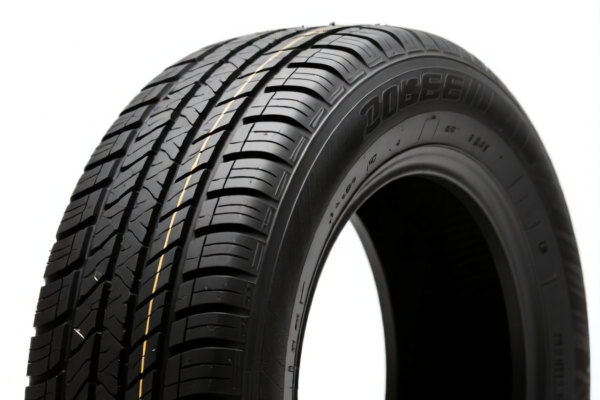
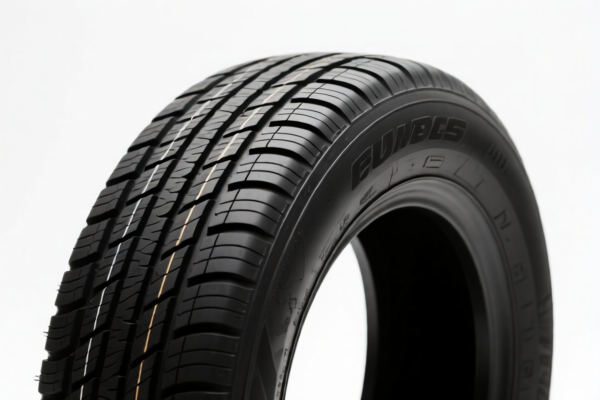
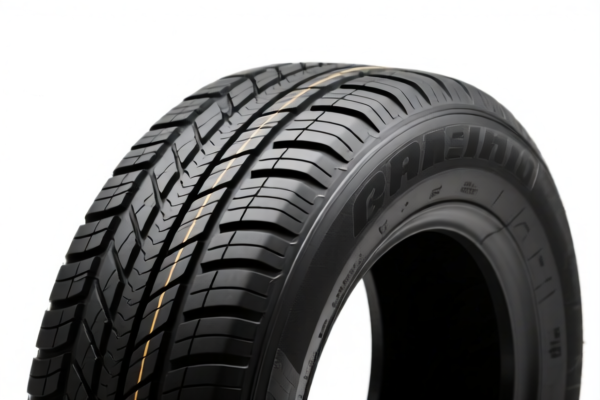
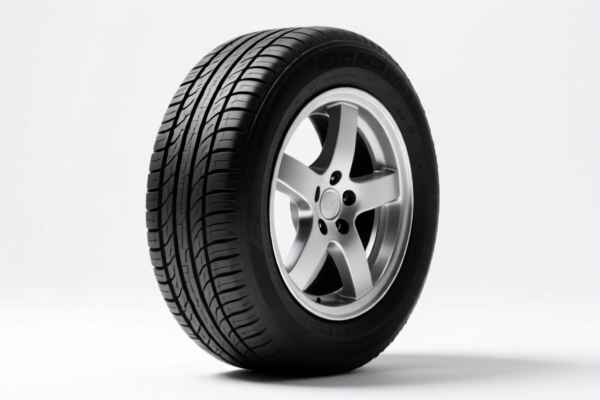
AI Analysis
🛞 Tires (General/Non-Specific Use)
🌐 HS Code Reference & Customs Clearance Guide | 2026 Latest Tariff Analysis | Professional Compliance Strategy
📌 I. Product Definition & Classification: Do You Truly Understand "Tires"?
Tires are essential rolling components for vehicles, ranging from passenger cars to heavy-duty trucks and off-road machinery. In international trade, they are strictly categorized by material (Rubber), structure (Pneumatic/Inflated), and intended use.
Pneumatic Rubber Tires: Tires filled with air or other gases, designed to absorb shock and provide traction. Non-Pneumatic Tires: Solid or foam-filled tires (excluded from this specific HS Code).
⚠️ Key Distinction for HS 4011.20.50.50:
- This code falls under 4011.20: "Pneumatic tires, of a kind used on motor cars (including station wagons and racing cars)" OR "Other" tires within the 4011.20 heading.
- Crucial Note: The summary for4011.20.50.50indicates it matches "Rubber Pneumatic Tires." While 4011.20 often implies passenger cars, the ".50" subheading in many national tariff schedules (like the US HTSUS) often captures "Other" pneumatic tires not specifically listed elsewhere in that subheading, or it is used when the specific vehicle application is not explicitly defined in the product name, requiring a broad inference.
- Conflict Check: There is no material or structural conflict. The item is Rubber + Pneumatic.
📦 II. HS Code Classification Details (2026 Authoritative Comparison)
Based on the provided data, here is the breakdown of why 4011.20.50.50 is selected alongside related codes:
| HS Code | Product Description | Application/Scope | Tax Rate (Total) |
|---|---|---|---|
4011.20.50.50 |
Rubber Pneumatic Tires (Other/General) | Used when the specific vehicle type (e.g., Bus/Truck vs. Car) is not explicitly stated in the product name ("tire"). Inferred as "Other" within the 4011.20 category. | 38.4% |
4011.20.50.30 |
Rubber Pneumatic Tires | Specifically matches Bus/Truck related tires. | 38.4% |
4011.20.10.35 |
Rubber Pneumatic Tires | Specifically matches Bus/Truck tires. | 39.0% |
4011.30.00.10 |
Other Pneumatic Tires | For tires other than those for cars, buses, or trucks (e.g., aircraft, motorcycles, heavy machinery). | 35.0% |
4011.30.00.50 |
Other Pneumatic Tires | Same as above, "Other" category for non-car/bus/truck tires. | 35.0% |
🔍 Why
4011.20.50.50?
- The input is simply "tire".
- The summary states: "Since the product name does not explicitly distinguish specific use, a reasonable inference is made for non-road-use and other细分 items... no material or shape conflict."
- It is chosen as a safe, broad categorization for rubber pneumatic tires when the exact vehicle type is unknown, falling under the "Other" bucket of the primary tire heading.
💰 III. 2026 Latest Tariff Rate Breakdown (Including Surtaxes & Policy Add-ons)
✅ Applicable Country: United States (US)
✅ Country of Origin: China (CN)
✅ Effective Date: November 10, 2025 (and subsequent imports)
🎯 1. 4011.20.50.50 —— Rubber Pneumatic Tires (General/Other)
| Item | Detail |
|---|---|
| Base Tariff Rate | 3.4% (ad valorem) |
| Section 301 Surcharge (USITC) | +25.0% (Additional tariff for Chinese origin) |
| Section 122 Tariff (IEEPA) | +10.0% (Additional tariff for Chinese origin, effective Nov 2025) |
| Total Tariff Rate | 38.4% |
| Tax Calculation | CIF Value × 38.4% |
| De Minimis Eligibility | ❌ Not Eligible (deny_de_minimis) |
| Legal Basis Path | IEEPA:9903.01.25 → USITC:4011.20.50.50 → FOOTNOTE:301 |
📌 Explanation:
- "Base 3.4%": The standard Most Favored Nation (MFN) rate for pneumatic tires.
- "301 Surcharge 25%": Imposed under U.S. Trade Law Section 301 against China.
- "Section 122 Tariff 10%": A new or updated surcharge under the International Emergency Economic Powers Act (IEEPA), specifically targeting goods from China, effective from November 2025.
- Total 38.4%: This is a high tariff rate. Importers must budget accordingly.
🛠️ IV. Customs Clearance Practical Advice (Real-World Pitfall Guide)
✅ 1. Required Documentation Checklist (None Can Be Missing)
| Document | Mandatory? | Description |
|---|---|---|
| ✅ Product Specification Sheet | ✔️ | Must specify: Size (e.g., 205/55R16), Load Index, Speed Rating, Tread Pattern. |
| ✅ Composition Statement | ✔️ | Confirm: "100% Rubber, Pneumatic, Inflatable." |
| ✅ Commercial Invoice | ✔️ | Must clearly state "Rubber Pneumatic Tires" and Country of Origin: China. |
| ✅ Packing List | ✔️ | Detail number of tires, weight, and dimensions per carton. |
| ✅ OECD/SAPF Certification (If applicable) | ⚠️ | For environmental compliance in some markets, though US focuses on tariff. |
| ✅ Bill of Lading (B/L) | ✔️ | Ensure HS Code 4011.20.50.50 matches the B/L description. |
✅ 2. Declaration Techniques (Key Mnemonics)
🔥 "Define Use, Avoid Misclassification, Watch the 10% Surcharge!"
| Scenario | Correct Declaration | Error Consequence |
|---|---|---|
| Generic "Tire" | 4011.20.50.50 (38.4%) |
If declared as specific (e.g., Truck) without proof → Audit risk. |
| Bus/Truck Tire | 4011.20.50.30 or 4011.20.10.35 |
Declaring as "Other" (50.50) when it's clearly for a truck may lead to misdeclaration penalties, though the rate is similar (38.4% vs 39.0%). |
| Aircraft/Motorcycle Tire | 4011.30.00.10 (35.0%) |
Declaring as Car/Truck tire (4011.20) → Incorrect classification, potential fines. |
| Solid/Rim-mounted Tire | N/A (Not in this list) | Declaring pneumatic code → Severe penalty (0% base + 35% surtax vs actual classification). |
✅ 3. Special Circumstances Handling
| Situation | Handling Advice |
|---|---|
| Tire with Valve Stems/Beading Included | Declare as Complete Tire. Do not separate parts. The value of accessories is included in the tire's value. |
| Recycled/Retreaded Tires | Different HS Code! Retreaded tires have a different classification. Ensure the product is New. |
| Tire with Smart Sensors (TPMS) | If sensors are permanently installed, declare as Complete Tire. If sold separately, declare as Tire + TPMS Unit (different HS Code, ~0-5% base). |
| Bulk Import vs. Retail | Tariff rate is the same, but bulk packaging must be clearly described to avoid "accessory" scrutiny. |
🌍 V. Global Market Clearance Comparison (2026 Latest)
| Country/Region | Recommended HS Code | Base Tariff | Additional Surtax | Total Effective Rate (China Origin) | Remarks |
|---|---|---|---|---|---|
| 🇺🇸 USA | 4011.20.50.50 |
3.4% | +25% (301) + 10% (122) | 38.4% | Highest cost. Must pay all surcharges. |
| 🇨🇳 China | 4011.20.50.50 |
0-10%* | None | ~5-10% | Import tax varies; no 301/122 tariffs. |
| 🇪🇺 EU | 4011.20.90 |
4.5% | None | 4.5% | No Section 301 or IEEPA tariffs. |
| 🇬🇧 UK | 4011.20.90 |
4.5% | None | 4.5% | Post-Brexit rates align with EU. |
| 🇲🇽 Mexico | 4011.20.50 |
0-15% | None | 0-15% | Depends on USMCA rules. |
📌 Conclusion:
- The USA is significantly more expensive due to Section 301 (25%) and Section 122 (10%) tariffs.
- Total tariff of 38.4% is among the highest globally for tires.
- Strategic Advice: Consider supply chain diversification if exporting to the US.
📌 VI. Common Errors & Pitfall Guide (Blood & Tears Lessons)
❌ Error 1: Declaring "Tire" without specifying "Pneumatic"
👉 Consequence: Customs may classify as Solid Tire (different code) → Delay + Re-classification fee.
✅ Fix: Always use "Rubber Pneumatic Tire".
❌ Error 2: Ignoring the "Section 122" 10% Surcharge
👉 Consequence: Underpayment of duty. Customs will demand back-payment + interest.
✅ Fix: Ensure your broker applies all three rates: 3.4% + 25% + 10%.
❌ Error 3: Misidentifying "Other" Tires as Car Tires
👉 Consequence: If the tire is for a motorcycle (4011.10) or truck (4011.80), using 4011.20 is misclassification.
✅ Fix: Verify the vehicle type on the invoice/packing list.
❌ Error 4: Not declaring Country of Origin as "China"
👉 Consequence: If origin is marked as "Vietnam" but rubber is from China → Anti-Dumping/Countervailing Duty triggers.
✅ Fix: Accurate Country of Origin marking is critical for surtax application.
🎯 VII. Conclusion: Professional Declaration, Cost Control, Risk Mitigation
🎯 Remember the Mnemonic:
🔹 "Rubber + Pneumatic = 4011.20"
🔹 "Generic Use = .50.50 (38.4%)"
🔹 "Car/Bus/Truck Specific = Other Subcodes (38.4%-39.0%)"
🔹 "China Origin = Pay 25% + 10% Surtax!"
📌 Pro Tip:
- For high-volume imports, consider applying for a Tariff Classification Ruling (TruRuling) from US CBP to confirm the exact subheading.
- If your tires are retreaded, do NOT use this code. Use the correct retreaded tire code.
- Always check for Anti-Dumping Duties (AD/CVD) on specific rubber compounds, though rare for finished tires, they exist in some categories.
📣 Immediate Action:
📞 Confirm with your freight forwarder: "Does the invoice clearly state 'Pneumatic Rubber Tire' and 'Made in China'?"
🚀 Ensure the 38.4% duty is budgeted in your landed cost calculation.
✨ Professional Clearance Starts with Accurate Classification!
💼 Your every cent of duty should be calculated precisely!
Customer Reviews
About HS Code Classification
The Harmonized System (HS) is an internationally standardized nomenclature developed by the World Customs Organization (WCO) to classify traded products. Over 200 countries use the HS system as the basis for customs tariffs, trade statistics, and import/export regulations.
Each HS code follows a hierarchical structure:
- Chapter (2 digits) — Broad category of goods (e.g., Chapter 84: Machinery and Mechanical Appliances)
- Heading (4 digits) — More specific grouping within the chapter
- Subheading (6 digits) — Internationally standardized breakdown, used by all WCO member countries
- National subdivisions (8-10 digits) — Country-specific extensions for further classification, such as US HTSUS 10-digit codes
Correct HS code classification is essential for smooth customs clearance, accurate duty payment, and compliance with trade regulations. Misclassification can lead to customs delays, overpayment of duties, or penalties.
When importing from CN to US, the applicable tariff rates may include:
- Most-Favored-Nation (MFN) rate — The standard duty rate applied to WTO members
- General rate — Applied to countries without trade agreements
- Trade remedy duties — Additional tariffs such as Section 301 (anti-dumping), Section 232 (national security), or countervailing duties
The information provided on this page is for reference purposes only. For official classification, please consult with your local customs authority or a licensed customs broker.