tire hs code 4011300010
CN → US| HS Code | Tariff Rate | Origin | Destination | Doc |
|---|---|---|---|---|
| 4011300050 | 35.0% | CN | US | Official Doc |
| 4011300010 | 35.0% | CN | US | Official Doc |
| 4011201035 | 39.0% | CN | US | Official Doc |
| 4011801010 | 35.0% | CN | US | Official Doc |
Product Images
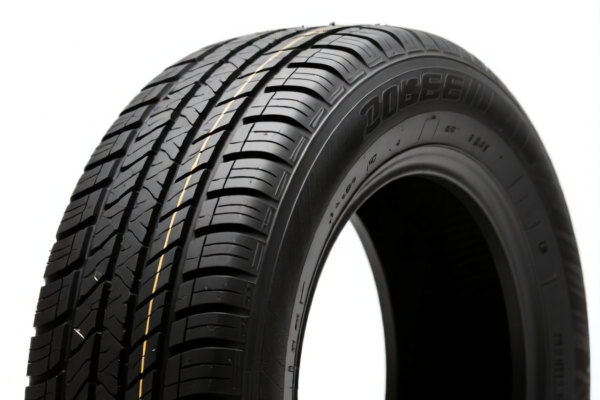
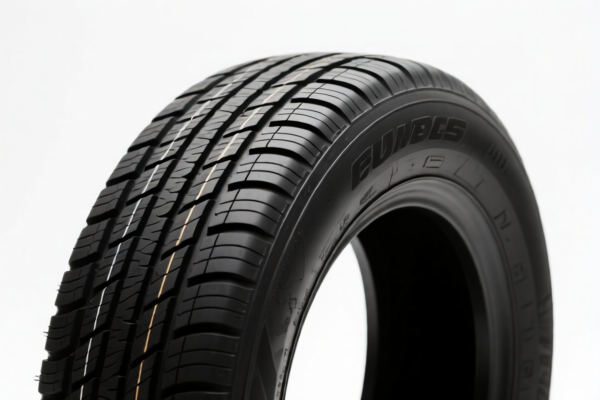
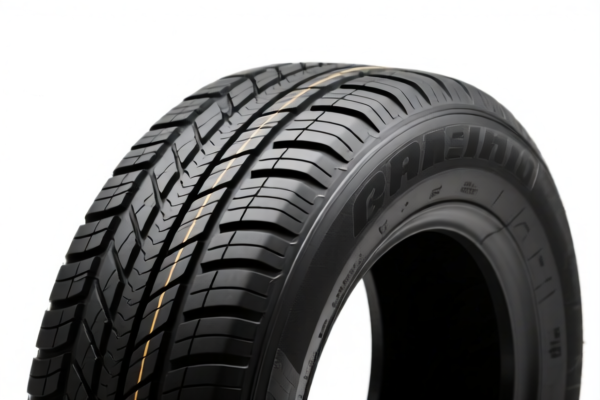
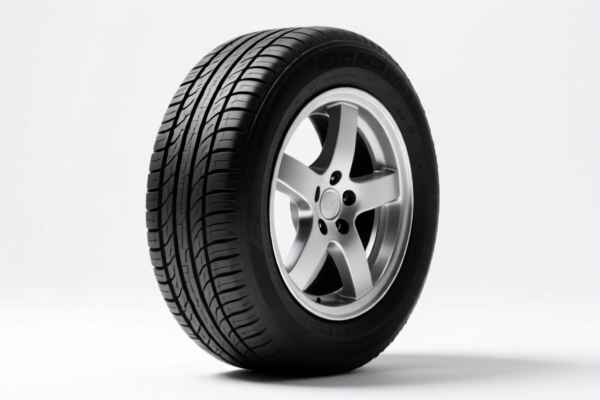
AI Analysis
✈️ Civil Aircraft Tires (New Pneumatic Rubber Tires)
🌐 HS Code 4011.30.00.10 | US Customs & Border Protection (CBP) Clearance Guide | 2024-2026 Tax Analysis
📌 1. Product Definition: What Exactly is HS Code 4011.30.00.10?
HS Code 4011.30.00.10 specifically identifies:
"New pneumatic tires, of rubber: Of a kind used on aircraft FOR USE IN CIVIL AIRCRAFT"
This is a highly specialized subset of rubber goods. It is NOT for cars, trucks, or military aircraft. It is strictly for civilian/commercial aviation.
⚠️ Critical Distinction:
- If the tire is for a military aircraft → It falls under a different subheading (often4011.30.00.50or other military-specific codes depending on the exact specification).
- If the tire is for a car/truck → It falls under4011.10,4011.20, etc.
- This code is exclusively for civil aviation tires.
📦 2. HS Code Classification & Tax Breakdown (US Import)
| HS Code | Product Description | Origin | Base Duty | Additional Duty (Sec. 301/IEEPA) | Total Tax Rate |
|---|---|---|---|---|---|
| 4011.30.00.10 | New pneumatic aircraft tires (Civil Use) | 🇨🇳 China | 0.0% | +25.0% | 25.0% |
| 4011.30.00.10 | New pneumatic aircraft tires (Civil Use) | 🇺🇸 USA / Non-China | 0.0% | 0.0% | 0.0% |
| 4011.30.00.50 | New pneumatic aircraft tires (Other/Military) | 🇨🇳 China | 0.0% | +25.0% | 25.0% |
🔍 Key Insight:
- The base duty is 0%, but the 25% Section 301/IEEPA surcharge applies to Chinese-origin goods.
- No de minimis exemption for aircraft tires.
- Military vs. Civil: Ensure your invoice and commercial description explicitly state "For Civil Aircraft Use" to justify4011.30.00.10over4011.30.00.50.
💰 3. Detailed Tax Clause Explanation
🎯 HS Code 4011.30.00.10 – Civil Aircraft Tires
| Item | Detail |
|---|---|
| Base Tariff Rate | 0.0% (Ad Valorem) |
| USITC Additional Duty (Section 301) | +25.0% (For goods of Chinese origin) |
| IEEPA Additional Duty | 0.0% (No additional IEEPA surcharge beyond Section 301 for this subheading in most cases, but check current OFAC/USTC lists) |
| Total Effective Rate | 25.0% (if imported from China) |
| Tax Calculation Basis | CIF Value (Cost + Insurance + Freight) |
| De Minimis Exemption? | ❌ No |
| > Legal Reference Path: | |
> HTSUS: 4011.30.00.10 → USITC Footnote: 301 Chapter 40 → Section 301 Enlistment |
📌 Explanation:
- Aircraft tires are considered "high-tech" or "strategic" rubber goods.
- The US government imposes a 25% punitive tariff on Chinese rubber products to protect domestic manufacturing.
- No loopholes: Unlike some consumer electronics, aircraft tires do not qualify for the $800 de minimis exemption.
🛠️ 4. Clearance Practical Advice (Avoid Delays & Seizures)
✅ 1. Documentation Checklist (Must-Have)
| Document | Requirement | Why It Matters |
|---|---|---|
| Commercial Invoice | Must explicitly state: "For use in Civil Aircraft Only" | Distinguishes from military tires (4011.30.00.50) |
| Packing List | List tire size, ply rating, load index, and DOT number | CBP verifies HS code against physical specs |
| Manufacturer Certificate | Proof of origin (if claiming non-China origin) | To avoid 25% duty if sourced from Thailand, Malaysia, etc. |
| FCC/FAA Compliance Docs | Optional but recommended | Proof of airworthiness compatibility |
| Bill of Lading/AWB | Clear description: "New Pneumatic Rubber Tires for Civil Aviation" | Prevents misclassification by customs brokers |
✅ 2. Declaration Best Practices
🔥 "Be Specific, Be Accurate!"
- Correct Description:
"New Pneumatic Rubber Tires, Aircraft Grade, for Civil Aviation Use, Size [X], Ply [Y], DOT [Number]"
- Incorrect Description:
"Rubber Tires" → Leads to generic classification (higher duty) or refusal.
"Military Aircraft Tires" → Wrong HS code (4011.30.00.50) → Potential penalties.
✅ 3. Special Scenarios
| Scenario | Recommendation |
|---|---|
| Tires for Maintenance/Repair | If re-treaded, they fall under 4012.10 (Retreaded Tires), not 4011.10.10.10. Different HS Code! |
| Military Aircraft | Use HS 4011.30.00.50. Same tax rate (25% if China), but different regulatory requirements (ITAR/EAR may apply). |
| Non-China Origin | If sourced from Thailand, Germany, or Japan, duty is 0%. Provide Certificate of Origin. |
| Used Tires | Prohibited in most cases under 19 CFR 12.37. Only new or retreaded (if eligible) are allowed. |
🌍 5. Global Market Comparison
| Country | HS Code | Base Duty | Additional Duty | Total (China Origin) | Notes |
|---|---|---|---|---|---|
| 🇺🇸 USA | 4011.30.00.10 | 0% | +25% | 25% | High tariff for China |
| 🇨🇳 China | 4011.30.00.10 | 0% | 0% | 0% | Export-friendly |
| 🇪🇺 EU | 4011.30.00 | 0% | 0% | 0% | No additional tariffs |
| 🇯🇵 Japan | 4011.30.00 | 0% | 0% | 0% | Free trade agreement |
📌 Conclusion:
- US market is the most expensive for Chinese aircraft tires due to 25% duty.
- EU/Japan/China are tariff-neutral.
- Strategy: If importing into the US, consider non-Chinese supply chains (e.g., Thai, German) to save 25%.
📌 6. Common Mistakes & Pitfalls
❌ Mistake 1: Misclassifying Retreaded Tires as New.
👉 Result: Retreaded tires are 4012.10.00.00, not 4011.30.00.10. Different duty rates!
❌ Mistake 2: Failing to specify "Civil Use" on Invoice.
👉 Result: CBP may default to 4011.30.00.50 (Other), which has the same tax but different regulatory scrutiny.
❌ Mistake 3: Assuming De Minimis applies.
👉 Result: Aircraft tires are excluded from $800 exemption. Full duty + processing fees apply.
❌ Mistake 4: Ignoring DOT Number.
👉 Result: US requires valid DOT number for safety compliance. Missing DOT = Rejection.
✅ Correct Practice:
"New Pneumatic Rubber Aircraft Tires, Civil Use Only, DOT-[Number], Size-[X], Ply-[Y]"
🎯 7. Final Recommendations for Importers
- Verify Origin: If from China, budget for 25% duty.
- Document Explicitly: State "Civil Aircraft Use" on all documents.
- Check Retread Status: If retreaded, use HS 4012.10.00.00.
- Pre-Submission Review: Use CBP’s ACE Portal or consult a licensed customs broker for Advance Ruling if unsure.
- Safety Compliance: Ensure tires meet FAA/DOT standards.
📌 Pro Tip:
🚀 "Civil Use" is your key word.
🚀 "No De Minimis" – Plan cash flow accordingly.
🚀 "DOT Number" – Non-negotiable for US entry.
📣 Immediate Action:
📞 Contact a Licensed Customs Broker to validate HS code and duty rate.
📄 Prepare Invoice with clear "Civil Aircraft Use" statement.
✅ Verify Origin Certificate if claiming non-China origin for 0% duty.
✨ Professional Clearance, Precision Classification, Cost Efficiency!
💼 Every Dollar Saved is a Dollar Earned!
Customer Reviews
About HS Code Classification
The Harmonized System (HS) is an internationally standardized nomenclature developed by the World Customs Organization (WCO) to classify traded products. Over 200 countries use the HS system as the basis for customs tariffs, trade statistics, and import/export regulations.
Each HS code follows a hierarchical structure:
- Chapter (2 digits) — Broad category of goods (e.g., Chapter 84: Machinery and Mechanical Appliances)
- Heading (4 digits) — More specific grouping within the chapter
- Subheading (6 digits) — Internationally standardized breakdown, used by all WCO member countries
- National subdivisions (8-10 digits) — Country-specific extensions for further classification, such as US HTSUS 10-digit codes
Correct HS code classification is essential for smooth customs clearance, accurate duty payment, and compliance with trade regulations. Misclassification can lead to customs delays, overpayment of duties, or penalties.
When importing from CN to US, the applicable tariff rates may include:
- Most-Favored-Nation (MFN) rate — The standard duty rate applied to WTO members
- General rate — Applied to countries without trade agreements
- Trade remedy duties — Additional tariffs such as Section 301 (anti-dumping), Section 232 (national security), or countervailing duties
The information provided on this page is for reference purposes only. For official classification, please consult with your local customs authority or a licensed customs broker.